[pageLogInLogOut]

#Composites

STFI at JEC

Chemnitz developers pave the way for natural and recycled fibres in aviation
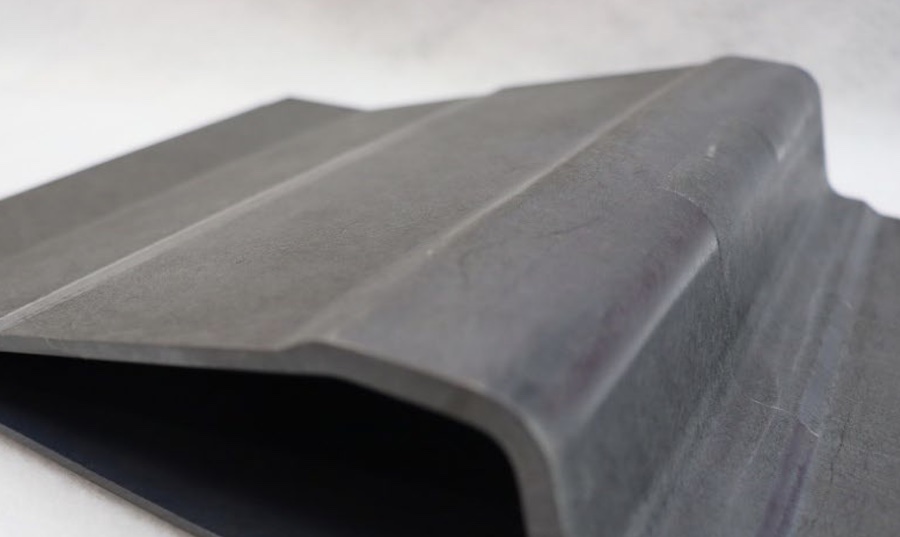
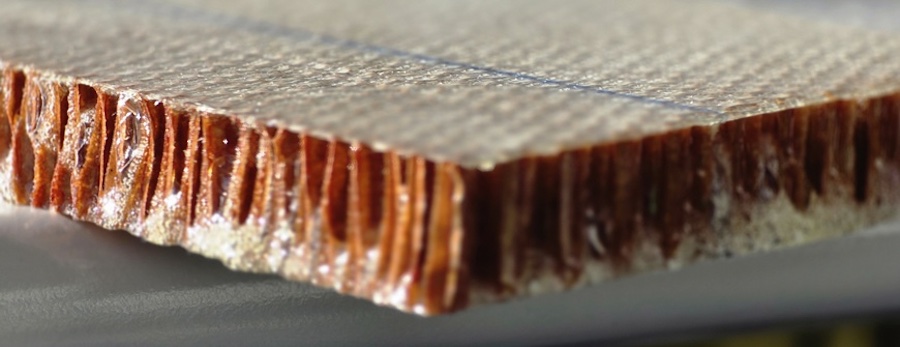
Demonstrator of a spoiler with integrated Z-spar, manufactured in a two-stage thermoforming and joining process – © 2026 Photo: STFI
The Sächsisches Textilforschungsinstitut e.V. (STFI) will present composites for aviation made from recycled carbon fibres and natural fibres, as well as printed lightweight elements for surface heating in electric vehicles at JEC World in Paris.

STFI will exhibit at the joint stand of Saxony Trade & Invest Corp. in Hall 5, Stand D97, where its team of lightweight construction and recycling experts will be available for discussions.

Aviation – Natural fibres and recycled carbon fibres as the basis for semi-finished textile products

In aviation, stringent fire safety requirements continue to limit the use of natural fibre composites (NFC). The LUFTIFLEX research project is therefore developing flexible NFC solutions suitable for aviation applications. Flexibility is achieved through knitted textile structures. Research results show that compatibility between natural fibres and matrix systems is crucial, particularly with regard to fire protection. Only precise coordination of all system components enables composite structures that meet the required project specifications.

The HIOS project has laid the foundation for the continuous production of component-specific organic sheets for secondary structures and cabin components in aviation. Hybrid nonwovens made from recycled carbon fibres (rCF) and aviation-certified PPS staple fibres form the basis for these organic sheets.

In the demonstrator component, local reinforcement using directional fibres, functionalisation via AFP and TFP technologies, as well as thickness transitions and local fibre volume adjustments were integrated into the consolidation process. The final component was manufactured using a two-stage thermoforming and joining process and demonstrated on a spoiler flap box structure with an integrated Z-spar. This exhibit will be presented at JEC World.

E-mobility – Printed heating systems to increase vehicle range

Within the INSIDE project, STFI is developing a new technological approach to seat and interior heating for electric vehicles. The concept enables direct interior heating using printed heating elements.

Individually controllable printed surface and dot heating conductors offer significant potential for energy savings and increased efficiency. These heating structures are applied to textile substrates and lightweight components using inkjet and laser technologies.

Hemp as a renewable raw material

In the field of natural fibre processing, STFI is conducting research within the HOTHEMP project to improve the mechanical properties of hemp bast laminates. This is achieved through chemical-thermal reduction of the biological matrix content.

By reducing the lignin content in hemp bast fibres, the performance potential of the fibres can be optimally exploited. The fibres, which can reach lengths of up to three metres, are further processed at the institute using warp knitting machines to produce warp-knitted structures. This enables mechanical properties comparable to conventional GRP laminates.

Visitors can meet the STFI team at the joint stand of Saxony Trade & Invest Corp. in Hall 5, Stand D97.

Further information on Chemnitz’s lightweight engineering expertise is available from CETEX, LSE – Lightweight Structures Engineering GmbH, Schmietex Engineering GmbH, silbaerg GmbH, and Chemnitz University of Technology (Professorships in Lightweight Structures and Plastics Processing and Textile Technologies).
More News from Sächsisches Textilforschungsinstitut e.V. (STFI)

#INDEX 2026

STFI highlights textile circular economy and alternative fibres at INDEX™ 2026

From 19 to 22 May 2026, INDEX will invite visitors to Lake Geneva for the world's leading nonwovens trade fair. The Centre of Excellence in Nonwovens at the Sächsisches Textilforschung- sinstitut e.V. (STFI) will be in attendance to present the latest developments in nonwovens research. In the field of the textile circular economy, the STFI will present acoustically effective nonwovens made from chemical recycling residues. The range also includes innovations aimed at replacing conventional raw materials, such as the biobased and biodegradable polymer polybutylene succinate (PBS) and Kendyr as an alternative to cotton.

#Research & Development

Regional hemp bast for lightweight construction profiles

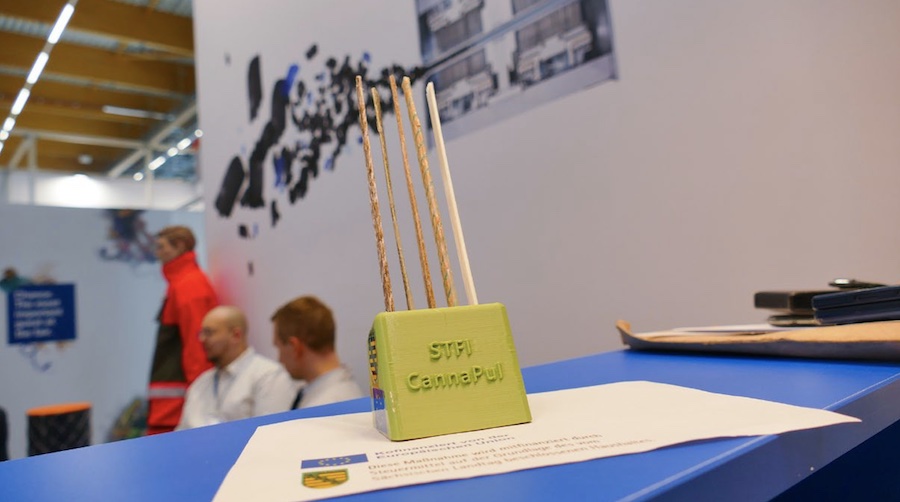
The cultivation of fibre hemp for the production of ropes and clothing has a long tradition in Saxony. Due to its excellent fibre properties, it is also suitable as a renewable raw material for reinforcement in fibre composites. At the STFI and IWU in Chemnitz, the CannaPul project is cur- rently investigating how a regional value chain for hemp-based lightweight construction profiles can be established. To this end, the technical processing of hemp fibres into continuous fibre strands and their embedding in a suitable bio-based matrix are being investigated.

#Techtextil 2026

STFI presents concepts for the textile circular economy and solutions for a healthy and safe life at Techtextil

Sächsisches Textilforschungsinstitut e.V. (STFI) has been supporting companies in developing marketable innovations for over 30 years. With a clear focus on sustainability, the environment, health and protection, the STFI offers future-oriented research, textile testing for tailor-made solutions and certification of per- sonal protective equipment. At Techtextil 2026, the institute will present ideas for the textile circular econ- omy and showcase solutions for healthy and safe living.

#Research & Development

The region of renewable raw materials: Central German Alliance for Bioplastics

The development of sustainable plastic solutions is rapidly gaining importance in light of global environ- mental pollution, dwindling fossil resources and ambitious climate protection targets. As part of the re- gional alliance RUBIO, which brings together 18 partners from central Germany and the Berlin-Branden- burg area, the bio-based and biodegradable plastic polybutylene succinate (PBS) was comprehensively investigated, starting with the raw material, through the manufacturing process, to industrial application.

More News on Composites

#Composites

JEC World 2026 confirms its standing as the unmissable event for composites and their applications

JEC World 2026 confirms its position as the leading global event for the composite materials industry and its applications across multiple sectors, bringing together the entire composites ecosystem in Paris for three days of business, innovation, and collaboration. True to its Pushing the Limits motto, the 2026 edition delivered outstanding results despite travel disruptions worldwide. The numbers speak for themselves: more than 1,400 exhibitors from over 50 countries, including over 150 first-timers, presented a global panorama of products, equipment, and services across the entire composites value chain.

#Composites

KARL MAYER strengthens partnerships in the composites industry at JEC World 2026

KARL MAYER further strengthened its role as a reliable and competent partner to the composites industry at JEC World 2026. The global market leader in textile machinery manufacturing used the trade show to meet key customers, establish numerous new contacts, and engage in in-depth technical discussions.

#Composites

Kordsa showcases its global expertise in material technologies at JEC World 2026

Kordsa, a subsidiary of Sabancı Holding, shared its global expertise in material technologies with participants at JEC World 2026, held in Paris. The company’s solutions developed for a wide range of industries—particularly aviation, energy, and automotive—stood out among its key innovations at the exhibition. Throughout the event, Kordsa also presented its vision for sustainable growth and its strategic transformation in composite technologies to international stakeholders.

#Composites

JEC Composites Startup Booster: 2026 winners announced

The leading global startup competition for composites and advanced materials has crowned its 2026 champions, ahead of a landmark 10th anniversary edition next year. The winners of the JEC Composites Startup Booster 2026 were announced on Wednesday, 11 March, at JEC World, recognizing the most promising emerging companies reshaping the future of composites and advanced materials.

Latest News

#INDEX 2026

INDEX 2026: Reicofil introduces RF 5.10 upgrade boosting output by 10 percent

At INDEX 2026, Reifenhäuser Reicofil will present its latest developments for the nonwovens industry under the guiding themes “Grow Together”, “Expand Together” and “Transform Together”. On this occasion, the leading manufacturer of nonwoven machinery will be unveiling two brand-new technology advancements – RF 5.10 upgrade and RF Core – at the show.

#Recycled Fibers

Lindex and BASF partner to bring textile-­to­-textile recycled polyamide to lingerie sector

Lindex has partnered with BASF’s loopamid® to accelerate textile-­to-­textile recycling and advance the shift towards more circular material solutions in the fashion industry. Together they introduce loopamid to the lingerie sector.

#Dyeing, Drying, Finishing

Tradition and Innovation – Phoenox Textiles Ltd. relies on state-of-the-art carpet back-coating line from Brückner

For more than 70 years, Phoenox Textiles Ltd. has been synonymous with quality, reliability, and inno-vation in the textile industry. Founded in 1954 in Huddersfield (Yorkshire, UK), a region with a long tradition in textiles, this family-owned business has continued to evolve without losing sight of its roots. Today, in its fourth generation under the leadership of the Mosley family, Phoenox successfully combines decades of experience with a clear, forward-looking corporate strategy.

#ITM 2026

Uster FiberQ excels for recycled raw materials too

Uster FiberQ is a complete solution for raw material utilization, supporting spinners to achieve consistent quality and profitability every day, building further growth for the future. The Turkish company ORTA relies on FiberQ with recycled yarn for its denim production. Data-driven knowledge puts the producer in control of raw material utilization – ready to make the correct decisions for process efficiency, quality and productivity.

TOP