[pageLogInLogOut]

#Digital Printing

Underscoring Mimaki’s commitment to greener print production

The print industry faces significant challenges in becoming sustainable, especially given its integral role in our daily lives. Each part of the industry has its own flaws that hinder environmental responsibility. From the chemical hazards of certain inks to the energy-intensive nature of printing technology, these issues collectively highlight that a shift towards more sustainable practices is urgently needed to reduce the industry's environmental impact.
TRAPIS provides a simplified workflow with significantly reduced water consumption © 2025 Mimaki

The textile industry has been particularly under scrutiny when it comes to unsustainable production practises, particularly regarding water use. According to research by the UN Trade and Development, the textile and fashion industry is the second-largest consumer of water, accounting for about 20% of global wastewater. The dyeing and finishing processes with the industry require approximately 93 billion cubic meters of water annually – enough water for five million people - while generating 2 to 8% of the world’s global greenhouse gas emissions[1]. It is estimated that fashion production comprises 10% of total global carbon emissions, as much as the emissions generated by the European Union.

And beyond the production itself, the microplastics and harmful chemicals in some inks end up in our oceans and natural surroundings, increasing the detrimental environmental impact of print. Addressing these challenges is crucial for reducing the industry's environmental footprint and ensuring a greener future.

Transforming Print for a Sustainable Future

Making the switch to digital printing alone is already much more environmentally friendly than conventional printing methods. This type of printing enables on-demand, personalised prints, with no inventory or storage space required, reducing waste of all types.

While digital printing is quickly becoming the norm and is often the clear choice to support changing brand and consumer demands, manufacturers and print service providers need to look beyond the shift to digital and further innovate how to create a more environmental-conscious printing ecosystem.

As a market leader in LED-UV technology, Mimaki’s UJF, JFX and UJV printers tackle energy consumption concerns with the use of ultra-violet light to instantly dry or cure the ink as it is being distributed across the substrate. According to Mimaki’s own research, the company’s UV roll-to-roll printers consume 5 times less power compared to solvent printers and 8 times less power compared to resin printers on the market. This is primarily due to the power consumption and heat generation of LED lights being remarkably lower than those of metal halide lamps, traditionally used to dry inks.
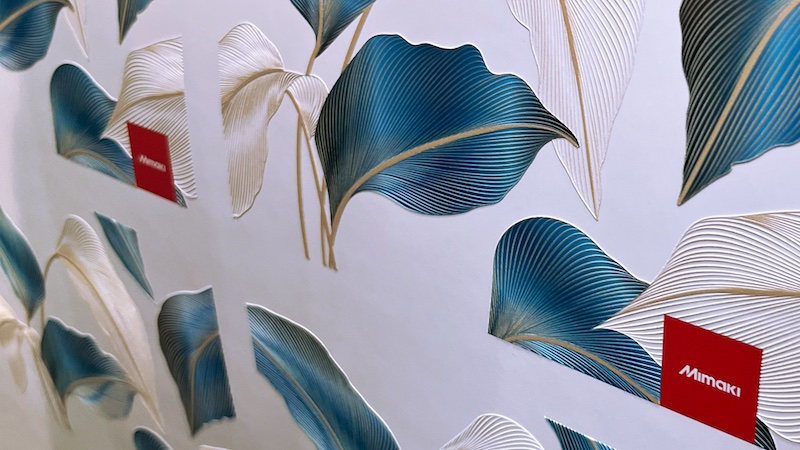
Application created with one of Mimaki’s LED-UV printer, the UCJV330-160 © 2025 Mimaki


It’s important to look to the small changes as well as the major technological innovations, for example with inks. The majority of Mimaki’s printer inks used with sign graphic and industrial printers have achieved the GREENGUARD Gold certification and last year, 84.7% of the company’s ink sales for these two markets were GREENGUARD Gold certified. For textiles, Mimaki offers a range of water-based pigment inks suitable for both direct-to-fabric and transfer printing. Many of these inks hold certifications such as OEKO-TEX® ECO PASSPORT or bluesign® APPROVED, ensuring compliance with safety and environmental standards in line with Mimaki’s sustainability pledges.

Even the packaging has been adapted. The popular SS21 ink now comes in a carton cartridge, and with this change, Mimaki can reduce annual plastic use by 29.2 tonnes, which equates to a reduction of 38 tonnes in carbon emissions. This move to carton will enable a 68% reduction in plastic use and is already being adopted in Europe following its success in Japan.

Innovations with a Common Thread – Sustainable Textile Production

Noting the concerns within textile printing, Mimaki focused on developing sustainable textile printing technologies, which tackle wastewater, energy consumption, while increasing efficiencies, and maintaining customers’ profitability.

Recently introduced to the market, TRAPIS (Transfer Pigment System) is more sustainable than both analogue and digital textile dye printing methods with zero water consumption, aside from any used in the production of the material, and substantially lower CO2 emissions. By simplifying the textile printing workflow to require only a large-format printer and a high-pressure calender, it eliminates the need for equipment like steaming or washing machines, making small-scale textile production more feasible and accessible locally.

The printing process involves three key elements: the Textile Pigment Ink, the Printing System and the Pigment Transfer paper, Mimaki Texcol.

Mimaki Texcol paper allows for transferring a digital print onto a wide range of materials, including natural fibres. The design is initially printed onto the paper using a slightly updated version of Mimaki TS330-1600 printer and Mimaki’s bluesign® APPROVED pigment inks developed for the process. In the final stage, the Mimaki Texcol paper undergoes a one-step waterless process, through a calender machine onto the textile of choice.

Mimaki's commitment to sustainability goes beyond the development of the company’s core solution. In an attempt to tackle one of the most pressing issues in the fashion and textile space, the company debuted a new unique concept set to revolutionise the reuse of coloured polyester textiles – the Neo-Chromato Process.

The growing awareness of sustainability has led to a significant disposal issue within the textile industry, with polyester textiles accounting for approximately 60% of 92 million tonnes of wasted textile materials worldwide[2]. Of this enormous amount of polyester waste, currently around only 15% is recycled. Mimaki's Neo-Chromato Process tackles this issue head on by utilizing a discolouring technology for dye sublimation inks. By decolourising polyester textiles that have been dyed, this innovative process allows materials to be re-printed or dyed immediately, contributing to a smaller circular economy. In fact, reused polyester can be repeatedly treated with the Neo-Chromato Process, which extends the lifecycle of materials.
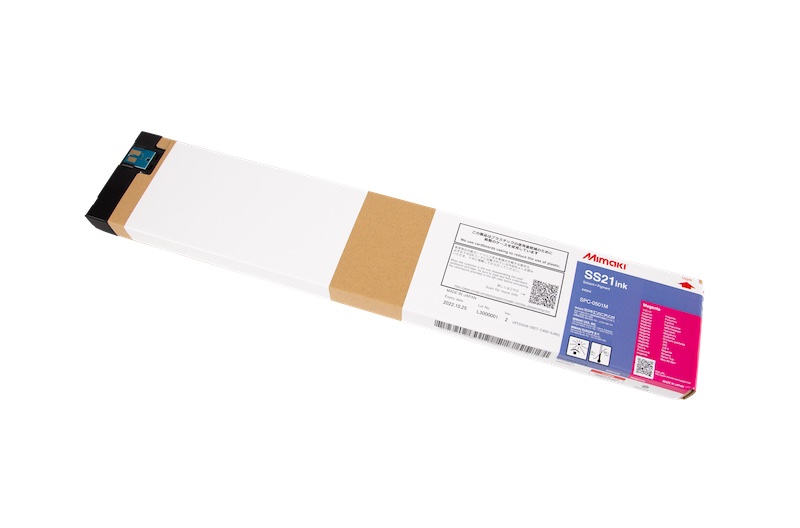
The revised carbon ink cartridge allows for a 68% reduction in plastic use © 2025 Mimaki


Working Towards a Greener Future

While the printing industry is taking on the responsibility of creating a more environmentally friendly landscape, there is always more that can be done to further this progress. Innovative and exciting developments in technology are continuously breaking new ground, but there is still a way to go to see them being implemented globally.

While legal regulations are demanding more of manufacturers when it comes to their sustainability efforts, this shouldn’t be the driving force behind the need for change. It is important for printing companies to be both ambitious and strategic with the implementation of eco-friendly products and practices, while remaining transparent and articulating this clearly with all the stakeholders involved.

[1] Source: https://unctad.org/news/report-maps-manufacturing-pollution-in-sub-saharan-africa-and-south-asia

[2] Based on Mimaki’s own research


More News from Mimaki Europe B.V.

#Digital Printing

Mimaki ‘Powers Possibilities’ with a market-diverse application and printer line-up at FESPA 2026

Mimaki Europe, a leading manufacturer of industrial inkjet printers and cutting plotters, is bringing its “Print Different - Powering Possibilities” theme to life at FESPA Global Print Expo 2026 (Fira de Barcelona, 19-22 May 2026), demonstrating how digital printing technology can turn ideas into high-value applications and new business opportunities.

#Digital Printing

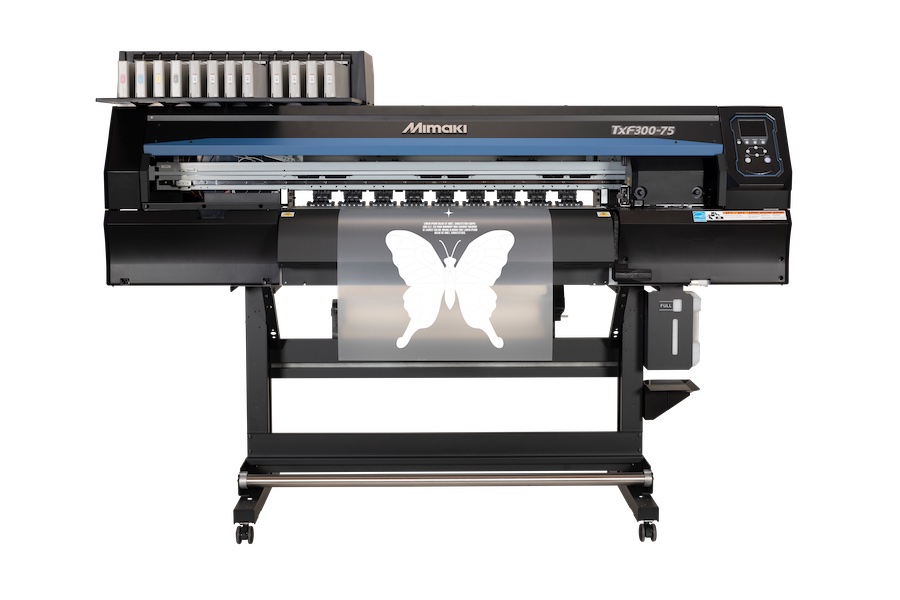
Mimaki takes DTF performance to the next level with TxF300-75Plus

Mimaki Europe, a leading manufacturer of industrial inkjet printers and cutting plotters, announces the TxF300-75Plus, an upgraded model within its high-productivity direct-to-film (DTF) printing portfolio. Following on from the success of the original TxF300-75, this enhanced version reflects Mimaki’s commitment to continuously evolving its solutions to meet the changing demands of the market.

#Digital Printing

Keeping print inclusive: Empowering women in the print industry

Across all industries, cultivating a diverse and inclusive workplace is increasingly recognised as valuable and essential to long-term success. However, despite the print industry’s significant advancements in technology and innovation, visible representation of women remains limited. As the sector grapples with low recruitment, it’s important to challenge outdated perceptions. Creating real change, however, requires collective effort - no single company can do it alone.

#Digital Printing

Express Print boosts production using an expanded fleet of Mimaki technologies

Express Print, a fast-growing Bulgarian provider of visual communication and soft signage solutions, has significantly enhanced its production workflow with a comprehensive portfolio of Mimaki digital printing systems. Based in Varna and active for more than 10 years, the company maintains a strong focus on the advertising sector. Over the years, it has steadily expanded its operations, driven by a clear vision to bring the full spectrum of large-format printing services in-house, avoiding outsourcing and ensuring complete control over production quality.

More News on Digital Printing

#Digital Printing

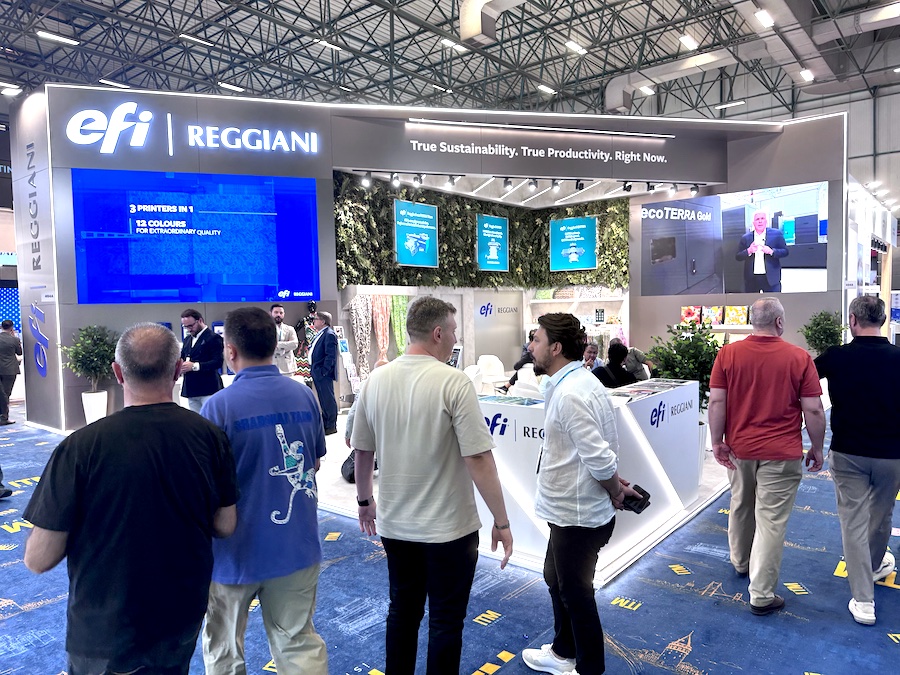
EFI brings high-performance display graphics, packaging, and textile printing innovations to FESPA 2026

Electronics For Imaging, Inc. (EFI™) is bringing a broad range of new hybrid, roll-to-roll, and textile inkjet innovations to FESPA Global Print Expo 2026, taking place 19-22 May at Fira Barcelona Gran Via. Visitors to the EFI stand (Hall 3, #C85) will see the new EFI VUTEk M3h X hybrid LED printer, new EFI VUTEk® FabriVU® 340 i8 eight-colour dye sublimation printer, the EFI VUTEk X5r roll-to-roll LED printer, and the EFI VUTEk Q3h XP seven-colour hybrid printer in action, each designed to help sign and display producers scale output, diversify applications, and drive more profitable growth.

#Digital Printing

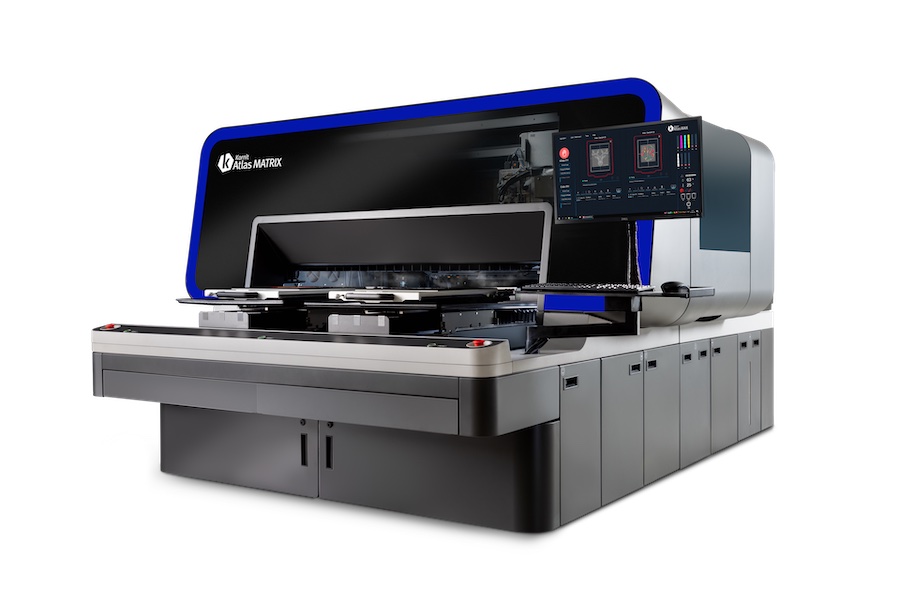
Kornit Digital announces commercial availability of Atlas MATRIX following successful global Beta program

Kornit Digital (NASDAQ: KRNT, "Kornit Digital", "Kornit", or the "Company"), a global leader in sustainable, on-demand digital fashion and textile production technologies, today announced the commercial availability of the Atlas MATRIX platform following the successful completion of a global beta program across leading production environments in Europe and North America. The announcement, made ahead of FESPA 2026 in Barcelona, marks a major milestone in the evolution of digital apparel production.

#Digital Printing

Kornit Digital launches Konnections 365

Kornit Digital (NASDAQ: KRNT) (“Kornit” or the “Company”), a global pioneer in sustainable, on-demand digital fashion and textile production today announced the launch of Konnections 365 - a year-round movement designed for the people moving the apparel, print, and retail industries forward. The strategy is built on the overwhelming success of Konnections 2026 held in Hollywood, Florida, featuring more than 500 customers, partners, and collaborators who together are driving the future of apparel and textiles.

#Digital Printing

FESPA’s new textile event set to debut in Barcelona this May

In less than one month, the first edition of FESPA’s new Textile event will take place at the Gran Via, Fira de Barcelona, from 19 – 22 May 2026. Co-located with FESPA Global Print Expo, European Sign Expo, Personalisation Experience, WrapFest and the brand-new Corrugated, each of the events will serve as the ideal meeting point for experts across each field to discover the latest technologies and trends, and explore cross-sector opportunities for business growth.

Latest News

#INDEX 2026

INDEX 2026: Reicofil introduces RF 5.10 upgrade boosting output by 10 percent

At INDEX 2026, Reifenhäuser Reicofil will present its latest developments for the nonwovens industry under the guiding themes “Grow Together”, “Expand Together” and “Transform Together”. On this occasion, the leading manufacturer of nonwoven machinery will be unveiling two brand-new technology advancements – RF 5.10 upgrade and RF Core – at the show.

#Recycled Fibers

Lindex and BASF partner to bring textile-­to­-textile recycled polyamide to lingerie sector

Lindex has partnered with BASF’s loopamid® to accelerate textile-­to-­textile recycling and advance the shift towards more circular material solutions in the fashion industry. Together they introduce loopamid to the lingerie sector.

#Dyeing, Drying, Finishing

Tradition and Innovation – Phoenox Textiles Ltd. relies on state-of-the-art carpet back-coating line from Brückner

For more than 70 years, Phoenox Textiles Ltd. has been synonymous with quality, reliability, and inno-vation in the textile industry. Founded in 1954 in Huddersfield (Yorkshire, UK), a region with a long tradition in textiles, this family-owned business has continued to evolve without losing sight of its roots. Today, in its fourth generation under the leadership of the Mosley family, Phoenox successfully combines decades of experience with a clear, forward-looking corporate strategy.

#ITM 2026

Uster FiberQ excels for recycled raw materials too

Uster FiberQ is a complete solution for raw material utilization, supporting spinners to achieve consistent quality and profitability every day, building further growth for the future. The Turkish company ORTA relies on FiberQ with recycled yarn for its denim production. Data-driven knowledge puts the producer in control of raw material utilization – ready to make the correct decisions for process efficiency, quality and productivity.

TOP