[pageLogInLogOut]

#Digital Printing

EFI and Fiery, LLC, reach agreement on Fiery acquisition of Inèdit software

Acquisition enables each company to focus on their core competencies while continuing their long-term relationship for the benefit of their respective customers and markets

Electronics For Imaging, Inc. (EFI™) today announced that it has signed an agreement for Fiery, LLC, to acquire all interests in Inèdit Software, the leading RIP and color management software company serving all brands of digital textile printers worldwide. Inèdit’s software products, including neoStampa, neoTextil and neoCatalog, serve the digital textile and specialty printing markets, and will enable Fiery to broaden its suite of solutions targeted at those markets. EFI Reggiani will continue its strong working relationship with Inèdit as an OEM partner.

“Fiery is a key OEM partner for EFI, supplying RIPs and color management tools for our packaging and display graphics businesses,” said Frank Pennisi, EFI’s CEO. “With this transaction, Fiery will now support our textile business as well, enabling EFI to focus on its core businesses of systems, production software, and ink. In addition, as part of Fiery, LLC, Inèdit will be able to take advantage of additional growth opportunities. We believe this transaction brings strong benefits to both companies while ensuring continued availability of software products that are important to the textile printing industry.”

Fiery plans to continue with the leading Inèdit brand as an independent product suite, supporting current and prospective partners and customers with its strong software development capabilities and deep understanding of the digital textile printing industry. Financial details and a timeline for completion of this transaction are not available at this time.

More News from Electronics for Imaging, Inc. (EFI)

More News on Digital Printing

#Digital Printing

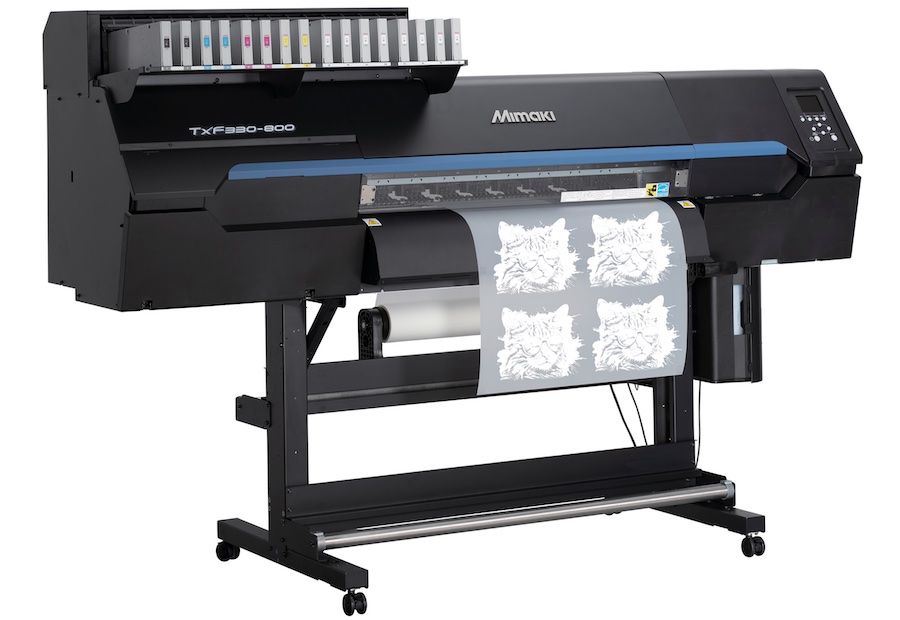
Mimaki takes DTF performance to the next level with TxF300-75Plus

Mimaki Europe, a leading manufacturer of industrial inkjet printers and cutting plotters, announces the TxF300-75Plus, an upgraded model within its high-productivity direct-to-film (DTF) printing portfolio. Following on from the success of the original TxF300-75, this enhanced version reflects Mimaki’s commitment to continuously evolving its solutions to meet the changing demands of the market.

#Digital Printing

Former ASOS CEO Nick Beighton joins Kornit Digital to help shape the future of on-demand fashion

Kornit Digital LTD. (NASDAQ: KRNT) ("Kornit" or the "Company"), a global leader in sustainable, on-demand digital fashion and textile production technologies, today announced it has appointed Nick Beighton, former Chief Executive Officer of ASOS, as a strategic advisor to the Company and its Board of Directors. His appointment reflects Kornit’s continued focus on strengthening its connection to global brands, retailers, and digital commerce platforms as the industry transitions toward on-demand production. The Company plans to nominate Mr. Beighton for election to the Board at Kornit’s 2026 Annual Shareholder Meeting.

#Digital Printing

FESPA confirms participation from leading exhibiting suppliers and brands for inaugural textile event

FESPA has confirmed a strong exhibitor line-up for its inaugural Textile show, a dedicated new event that will run as part of FESPA 2026, alongside co-located events: Global Print Expo, Personalisation Experience, European Sign Expo, WrapFest and the brand-new Corrugated.

#Digital Printing

UK Manufacturer Basic Prints commits to digital-first production model with dual investment in Kornit Digital’s Apollo

Kornit Digital, a global leader in sustainable, on-demand digital fashion and textile production technologies, today announced that UK clothing manufacturer Basic Prints has expanded its digital production capacity with a second Kornit Apollo Direct-to-Garment (DTG) system. This marks a strategic shift supporting Basic Prints’ digital-first manufacturing model.

Latest News

#Raw Materials

New study shows low environmental impact by Cotton made in Africa Organic Cotton from Tanzania

Today, the Aid by Trade Foundation (AbTF) is announcing the results of a comprehensive life-cycle analysis (LCA) for cotton produced in Tanzania under the Cotton made in Africa Organic (CmiA Organic) standard. The study emphasises the small ecological footprint of CmiA Organic verified cotton. This can largely be traced back to the absence of synthetic pesticides, artificial fertilisers, and artificial irrigation. Consequently, CmiA Organic cotton can help the textile industry meet regulatory requirements as well as science-based targets. The results also show that the consequences of climate change threaten the livelihoods of these cotton farmers, even though the type of agriculture they practise barely contributes to climate change.

#Raw Materials

Better Cotton Initiative strengthens regenerative focus in standard update

The Better Cotton Initiative (BCI) has strengthened the regenerative focus of its field-level standard with the launch of a new version of its Principles & Criteria (P&C), which marks the next step in the organisation’s journey to becoming a regenerative standards system.

#Man-Made Fibers

Selenis and Kintra Fibers partner to scale 100% bio-based synthetic fiber technology

Selenis, a leading global specialty polyester manufacturer, today announced a strategic manufacturing partnership with materials science company Kintra Fibers to scale Kintra’s patented fiber-grade PBS resin - a 100% bio-based and biodegradable material designed for textile applications.

#Functional Fabrics

PERFORMANCE DAYS proves its relevance as the industry’s key meeting point

Held on March 18–19, 2026, PERFORMANCE DAYS once again confirmed its position as a leading international platform for functional textiles. A total of 3.366 trade visitors and around 560 exhibitors gathered in Munich, with the event already kicking off successfully on DAY 0, which received highly positive feedback for its interactive format. Despite challenging conditions caused by the public transport strike in Munich, the event saw strong attendance and a consistently high level of activity across both exhibition days.

TOP