#Europe
Commission presents proposal for EU Inc. - unlocking the full potential of the Single Market for Europe's entrepreneurs
Today, for far too many entrepreneurs and innovative companies, expanding across EU borders means navigating a fragmented corporate legal landscape. European innovative companies are faced with 27 national legal systems and more than 60 company legal forms. This complexity can delay the setting-up of a company for weeks or even months, slowing growth, raising costs and discouraging scale.
EU Inc. is at the heart of the Commission's response to these challenges: coming in the form of a regulation, it will provide a single harmonised set of corporate rules that companies can choose instead of navigating multiple national regimes, unlocking the true potential of the Single Market.
The Draghi Report highlighted the urgent need to focus on improving the EU's competitiveness, including by making it easier for innovative companies to scale up in Europe. Announced in the Commission's political guidelines for 2024 – 2029 and President von der Leyen's SOTEU speech, the EU Inc. proposal aims to reduce fragmentation, boost EU competitiveness, and respond to the needs of innovative companies.
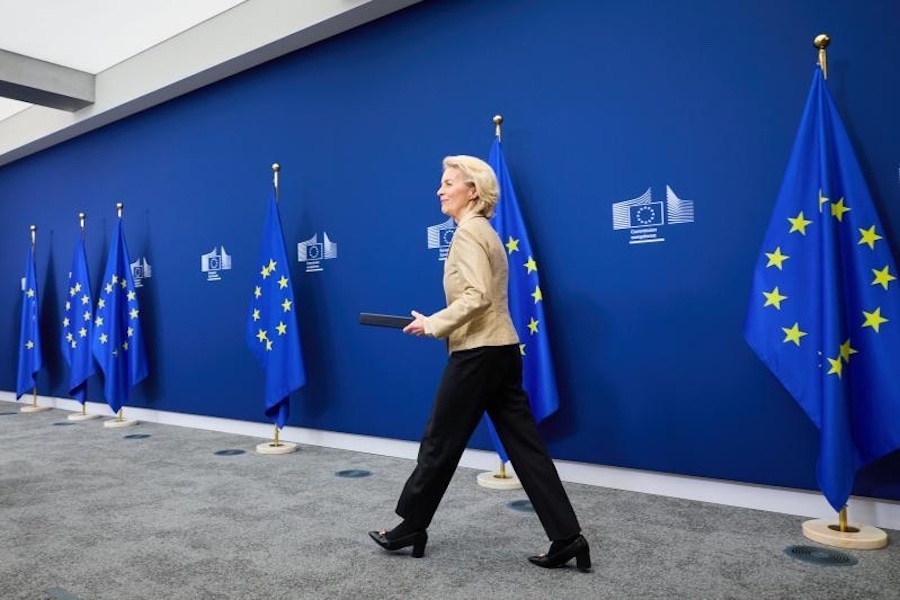
President Ursula von der Leyen said: “Europe has the talent, the ideas and the ambition to become the best place for innovators. Yet today, European entrepreneurs who want to scale up face 27 legal systems and more than 60 national company forms. With EU Inc., we are making it drastically easier to start and grow a business all across Europe. Any entrepreneur will be able to create a company within 48 hours, from anywhere in the European Union, and fully online. This crucial step is just the beginning. Our goal is clear: one Europe – one market – by 2028.”
Given its key importance for the EU's prosperity, the Commission calls on the European Parliament and the Council to reach an agreement on the EU Inc. proposal by the end of 2026.
Main features of EU inc. include:
- Faster registration: Entrepreneurs, founders, and companies will be able to found an EU Inc. company within 48 hours, for less than €100 and with no minimum share capital requirements.
- Simpler procedures: EU Inc. companies will only need to submit their company information once, via an EU-level interface connecting national business registers together. In a second step, the Commission will establish a new central EU register. EU Inc. companies will obtain their tax identification and VAT numbers without having to resubmit paperwork.
- Fully digital operations: Corporate processes will be digital by default throughout a company's lifecycle.
- Helping founders restart faster and cheaper: EU Inc. companies will have access to fully digital liquidation procedures. Innovative startups will have access to simplified insolvency procedures to facilitate the winding down of operations. This enables founders to try and test innovative ideas and start again if needed.
- Better conditions to attract investment: Today's proposal will remove in-person formalities, provide digital procedures for financing operations, and simplify the transfer of shares. There will be no more mandatory involvement of intermediaries for share transfers, and liquidation procedures.The proposal will also allow Member States to give EU Inc. companies access to the stock exchange.
- Better means to attract talents: EU Inc. companies will be able to set up EU-wide employee stock option plans. The stock option will only be taxed on the income generated once it is sold. This is a crucial factor in ensuring attractiveness, particularly for innovative startups.
- Full access to the Single Market: EU Inc. companies will be free to choose the Member State in which they incorporate. The proposal includes a blacklist of prohibited practices to ensure that EU Inc. companies are treated the same way as any other national companies.
- Strong safeguards against abuse: National employment and social laws are not affected by the proposal. They will apply to EU Inc. the same way they apply to any other business under national company law. The applicable safeguards of the Member State of registration will apply in full to the EU Inc. company, including when it comes to rules regarding co-determination.
- Flexibility of shares: EU Inc. companies will have the flexibility to create different classes of shares with varying economic or voting rights. This can, for example, help founders protect their business against hostile takeovers.
In addition, the Commission is adopting today a Communication outlining the ongoing and future initiatives to complete the 28th Regime in other policy areas.
The Communication proposes maximum digitalisation of interactions between companies and public authorities, for example with the European Business Wallet.
The Communication also calls on Member States to consider setting up specialised judicial chambers or courts with the authority to handle disputes on EU Inc. company law, allowing for an effective, efficient and uniform application of the EU Inc. rules.
The Commission will further explore the possibility to allow 100% cross-border telework for innovative start-ups and scale-ups across the Union with the forthcoming Fair Labour Mobility Package.
The Communication also announces measures for access to capital for startups and scaleups, building on the measures of the Savings and Investment Union, a potential revision of investment rules of pension fund, and the upcoming review of the European Venture Capital Funds. On taxation, the Commission has proposed a Head Office Tax (HOT) system that would allow small and medium-sized enterprises (SMEs) to apply the tax rules of their home country. In addition, the Business in Europe: Framework for Income Taxation (BEFIT) initiative aims to establish a single legislative framework for corporate taxation in the EU. The upcoming Omnibus simplification package on direct taxation is expected to remove additional administrative burdens of the EU businesses.
Finally, the Commission is adopting today a Recommendation on definitions of innovative enterprises, innovative startups and innovative scaleups. The Recommendation will ensure a coherent approach across the EU to ensure better monitoring of EU policies on businesses, providing certainty for companies, investors and decision-makers in the process.
Next steps
The EU Inc. proposal will now be discussed by the European Parliament and the Council. The Commission will do its utmost to support the co-legislators in this respect with the clear objective to reach an agreement by end of 2026.