[pageLogInLogOut]

#Home Textiles

New Sensitivity: Heimtextil Trends 24/25 focus on textile transformation
New Sensitivity / Credits: SPOTT trends & business for Heimtextil
Under the new theme "New Sensitivity", textile transformation is the focus of Heimtextil Trends 24/25. Three approaches show ways to a more sensitive world of textiles: the plant-based production of textiles, the support of textile cycles by technology and the bioengineered use of natural ingredients. In addition, Future Materials curates regenerative materials and designs.

Progressive theme setting and spectacular stagings for all textile professionals who want to constantly expand their knowledge: This is what the Heimtextil Trends stand for. After last year's focus on circular solutions, Heimtextil Trends 24/25 will once again shed light on transformative textile innovations: "At the upcoming event, Heimtextil Trends will again show ways in which the transformation of the home textiles industry is continuing. They thus form the inspirational heart of our trade fair and translate global megatrends into textile visions," says Olaf Schmidt, Vice President Textiles & Textile Technologies.


Under the title "New Sensitivity," the focus is on innovations and changes in the composition of textiles, in addition to aesthetic aspects. "In this context, sensitivity means considering the impact on the environment when making a decision or creating a product. Understanding how natural ecosystems work and prioritising balance as the default are key," says Anja Bisgaard Gaede, Founder of SPOTT trends & business.


How does New Sensitivity translate into something concrete in the lifestyle industry, and what does having a sensitive approach to design and products mean? Also the adoption of Artificial General Intelligence (AGI) is transforming current times. AGI has the potential to bring innovative solutions and help tackle significant challenges, also in the textile industry. However, AGI can have the opposite effect on society. AGI needs the mindset of New Sensitivity that helps simplify complexity, expand creativity, and find unseen solutions, also within the world of textiles.


Plant-based: textiles made from plant crops or plant by-products

Plant-based textiles mean that the fibres are derived from something that grows rather than being synthetically produced. The sustainable advantage of plant-based textiles is that their origin is natural and, therefore, more able to recirculate in existing ecosystems. They can be divided into two groups. The first group of textiles are made from plant crops. New resilient crops like cactus, hemp, abaca, seaweed, and rubber offer new sustainable textile solutions. Because of mechanical extraction, they can grow despite climate changes and require fewer chemicals in their development. The second group consists of textiles made of plant by-products which are leftover raw materials from production such as banana, olive, persimmon and hemp.
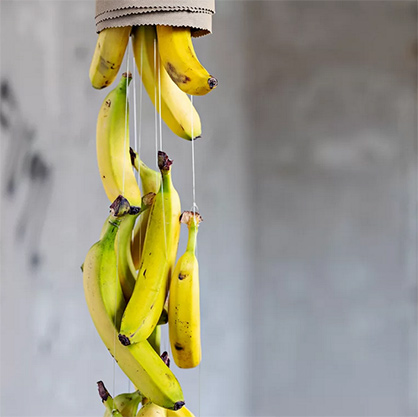
Bananatex / Credits: SPOTT trends & business for Heimtextil


Technological: technology and technical solutions transforming textiles

Technology can support the transformation of textiles through the use of different methods: upcycling and recycling of textiles, textile construction, and textile design. Due to decades of production, textiles are now a material available in abundance. Developing technologies for recycling textile waste and methods for upcycling textiles increases the circular usage of existing textiles. Furthermore, old textile construction techniques also offer pathways to sustainable solutions: For instance, using knitting technology for furniture upholstery produces less fabric waste; alternatively, weaving technique allows the creation of several colours using only a few coloured yarns. Textile Design Thinking is another method that addresses critical issues such as energy usage and durability of natural fibres and enhances these through technological textile advancement.
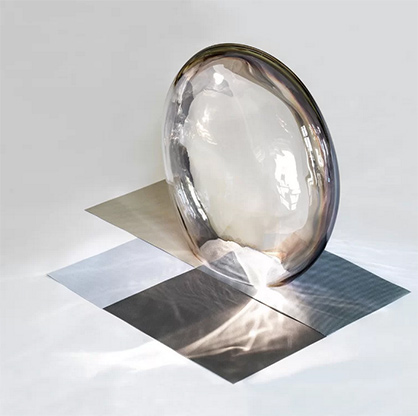
Kvadrat Clearview and Apo Reflections by Lise Vester / Credits: SPOTT trends & business for Heimtextil


Bio-engineered: engineered to enhance bio-degrading

To a certain degree, bio-engineered textiles represent a fusion of plant-based and technological textiles. Bio-engineering bridges nature and technology and transforms the way textiles are made. They can be divided into two directions: fully bio-engineered and bio-degradable textiles. In the production of fully bio-engineered textiles nature-inspired strategies are adopted. Instead of growing plants and extracting their fibres, textiles are made from the protein, carbohydrates, or bacteria in corn, grass, and cane sugar. Manufacturing involves a bio-molecular process that creates filaments which are made into yarn. The sustainable advantage of bio-engineered textiles is that they can have some of the same functionalities as synthetically produced textiles, while still being biodegradable because of their natural origin. Biodegradable fibres can be added to conventional textiles like polyester to enhance the conventional textiles’ ability to revert to materials found in nature and hence biodegrade in natural environments such as water or soil. Although not biodegrading completely, these bio-enhanced textiles will biodegrade up to 93 % compared to conventional textiles.
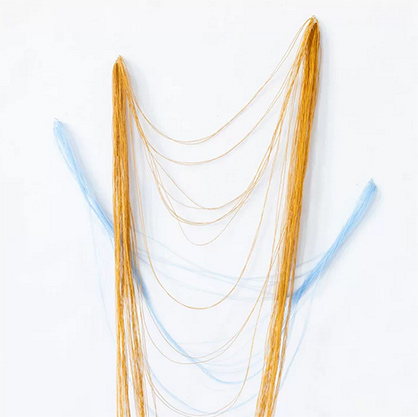
Ciclo yarns / Credits: SPOTT trends & business for Heimtextil


Heimtextil Trends 24/25: new colourways

A sensitive approach to colouring methods is expressed by a dynamic yet subtle colour palette created through natural pigments deriving from the earth, as traditional colouring processes are brought to the next level through innovative bioengineering technology. In pursuit of creating colours that evoke emotions in our senses while at the same time respecting our values in protecting the environment, we see colour bacteria growing pigments generating hues with great richness and depth. This New Sensitivity includes acceptance of natural colour flows, as colours may fade with time or morph into new colourways. The colourways for Heimtextil Trends 24/25 were inspired by natural colours deriving from avocado seeds, algae, living bacteria, antique pigments such as raw sienna, and bio-engineered indigo and cochineal. The high black component in most colours allows for widespread application and a greater variety of combinations. The punchy saturated accents enhance our senses as they lift our spirits. In contrast, the grounding neutrals in different shades of grey, terra and even dark purple allow for calmness and tranquillity.


Future Materials: regenerative design

How are regenerative textiles and materials defined? Regenerative design is dedicated to developing holistic creative practices that restore or renew resources, have a positive impact on the environment, and encourage communities to thrive. For Heimtextil 2024, design futures consultancy FranklinTill is curating a global showcase of cutting-edge textiles and materials to illustrate the principles of regenerative design and recognize pioneering designers, producers and manufacturers who are at the forefront of regenerative design.

The Trend Space at Heimtextil in Frankfurt, Germany, January 9-12, 2023, will showcase these pioneering solutions in an inspiring way. In addition, Heimtextil Trends will offer visitors orientation and insights into the future of home and contract textiles in the form of workshops, lectures and other interactive formats.

More News from Messe Frankfurt GmbH

#Heimtextil 2026

Texpertise Focus AI: Messe Frankfurt puts Artificial Intelligence centre stage at its international textile and apparel trade fairs

Under the banner 'Texpertise Focus AI, Messe Frankfurt will place a strong emphasis on Artificial Intelligence (AI) across its international textile and apparel trade fairs from 2026 onwards, setting a future-shaping signal for the industry. The initiative highlights the responsible use of AI along the entire textile value chain, from fibre production to the point of sale. The programme will launch at Heimtextil in Frankfurt in January 2026.

#Heimtextil 2026

Global market overview: Carpets & Rugs strengthens the carpet industry with trends, expertise and an expanded portfolio

Heimtextil 2026 rolls out Carpets & Rugs more extensively than ever before: With a new structure and an expanded offering, the leading trade fair for home and contract textiles and textile design brings together leading suppliers and relevant product categories under one roof. For the first time, premium unique pieces round off the global range.

#Textiles & Apparel / Garment

Texworld Apparel Sourcing Paris unveils redesigned show layout for 2026

From February 2 to 4, 2026, Texworld Apparel Sourcing Paris will once again bring together all the key players in textiles and clothing at the Paris-Le Bourget Exhibition Center. For 3 days, visitors will discover, compare and select among 1,300 suppliers who will shape the collections of tomorrow, from ready-to-wear to luxury.

#Heimtextil 2026

Patricia Urquiola creates a new design reality for Heimtextil 2026

Patricia Urquiola creates a completely new design experience for Heimtextil 2026. 'among-all' uses artificial intelligence to make visitors part of the installation. Sustainable and traditional materials meet new technologies and developments. Futuristic spatial elements such as hybrid sculptures, inflated figures and hanging grid structures showcase the interior design of tomorrow.

More News on Home Textiles

#Home Textiles

Intertextile Shanghai Home Textiles – Spring Edition 2026 returns to meet market demand with innovative bedding solutions

Returning in 2026, Intertextile Shanghai Home Textiles – Spring Edition will take place from 11 to 13 March at the National Exhibition and Convention Center in Shanghai. With rising daily pressures and increasing sleep disorders, demand for high-quality, functional, and sustainable bedding solutions is surging. The fair will spotlight innovative bedding products and technologies designed to meet these evolving consumer needs within this expanding market. Last year’s edition welcomed over 25,000 visitors from 85 countries and regions, reflecting a 7.5% increase in attendance and broader global participation.

#Heimtextil 2026

Mimaki demonstrates versatile, simple TRAPIS textile printing at Heimtextil 2026

Mimaki’s textile pigment transfer printing system, TRAPIS, is able to print on a diverse range of fabrics - unlike traditional processes - including natural fibres and synthetic fabrics. The full solution will be shown on Mimaki’s booth (Hall 3.0 Stand A97), as the company returns to Heimtextil to showcase its advancements in sustainable, high quality and efficient textile printing.

#Home Textiles

Culp reports improved operating results in Q2 as restructuring gains traction

Culp, Inc., a major supplier of mattress and upholstery fabrics, reported its fiscal Q2 2026 results with signs of operational improvement despite continued weakness in the global home furnishings market. Consolidated sales reached USD 53.2 million, slightly above the previous quarter, with the bedding segment growing both sequentially and year-over-year.

#Recycling / Circular Economy

ADVANSA launches ADVA®tex: A new step toward textile-to-textile recycling

ADVANSA has introduced ADVA®tex, a new filling fibre made entirely from recycled pre-consumer textile waste, positioning the material as a significant step forward in textile-to-textile (T2T) recycling. The fibre is designed for use in duvets, pillows, mattresses, and furniture applications and is available in three versions.

Latest News

#People

Happy Holidays!

Dear reader, the year 2025 is drawing to a close. We are entering what we hope will be a peaceful holiday season, spending time with our families and taking a moment to pause and reflect. We hope we have been able to support you once again this year with relevant news and articles, and we look forward to surprising you with many innovations in the coming year. Enjoy the festive season, stay healthy, and we wish you a happy and joyful holiday season.

#Weaving

Lindauer Dornier announces leadership transition in weaving machine business

After more than ten successful years at Lindauer DORNIER GmbH, Mr Wolfgang Schöffl will leave the family-owned company at the end of the year to enter well-deserved retirement.

#Technical Textiles

Autoneum and Polestar set new benchmarks for passenger experience and sustainability

As the global market leader in sustainable acoustic and thermal management, Autoneum is a key supplier of interior and exterior components for the highly anticipated Polestar 5 model. The successful collaboration between Autoneum and Polestar marks a significant milestone in sustainable automotive engineering: the electric grand tourer sports car features several innovations in lightweight, fully recyclable polyester-based components that ensure a superior driving experience. Polestar 5 was revealed at the IAA Mobility 2025 in Munich and is available in 24 markets.

#Natural Fibers

Cashmere producers stress the importance of The Good Cashmere Standard®

At the invitation of the Aid by Trade Foundation (AbTF), over 70 experts from the cashmere production and supply chain, as well as other specialists, met at the GCS Unit Meeting in Shanghai, China to discuss the progress and new objectives of The Good Cashmere Standard (GCS). The meeting focused on implementation and verification of the standard, important aspects of animal welfare and the importance of the standard in the global textile market.

TOP