[pageLogInLogOut]

#ITM 2024

Uster presents FiberQ and RSO 3D at ITM 2024

Spinners seeking profitable investments for sustainable mill operations would do well to check out Uster FiberQ and RSO 3D. Both these systems offer attractive ROI. They also help spinners control the most expensive stages in the mill process, cutting waste and boosting profits.

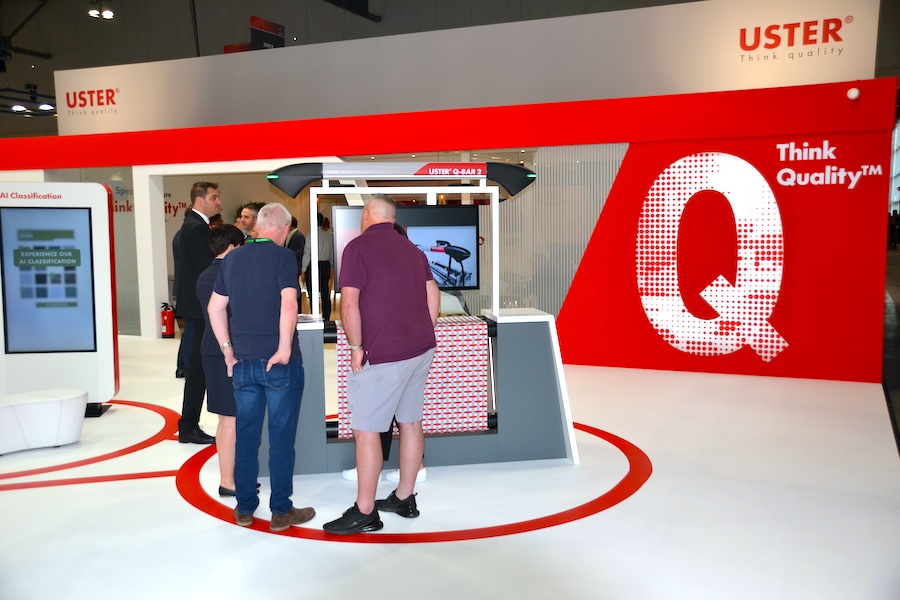
Field tests show that comprehensive raw material management can save 0.5% to 2% of waste. Every spinner wants maximum profitability from yarn production, so this evidence should be examined seriously. All the details will be available at ITM 2024, where Uster experts will welcome visitors to Booth 714B in Hall 7. Here we present some of the compelling attractions of these systems. For example, if barré faults and quality consistency are major headaches, spinners are recommended to read on.

Reduce waste and boost profits in spinning - <br />
FiberQ and RSO 3D which will be presented at ITM 2024 © 2024 Uster
Reduce waste and boost profits in spinning - FiberQ and RSO 3D which will be presented at ITM 2024 © 2024 Uster


Manage the big cost factor

Raw material accounts for 65% to 75% of the production costs for cotton yarn. Saving even a single percentage of waste here can be significant: a cost reduction of USD 255,000 (€ 239,000) per year, is typically achieved for a mill with 50,000 spindles, based on Ne 30 yarn with a price of 1.8 USD per kilogram of cotton. This savings potential can be tapped with Uster FiberQ – the complete solution for raw material utilization – supporting spinners’ daily processes, quality consistency, profitability and further growth.

Optimum sourcing and use of raw material needs to take account of inventory levels, required yarn quality, and cotton parameters. FiberQ software simplifies the process and integrated Uster Application Intelligence cuts through the complexity, unlocking maximum potential.

Uster FiberQ works with powerful software, analyzing fiber data from available inventories and creating consistent and reliable laydowns for optimum quality and performance. The basis is reliable raw material data, measured by Uster HVI1000. With FiberQ, the Uster fiber classification and analysis system is accessible through a subscription model.

Think Quality next level

FiberQ has three elements. It combines data-enabled software, cutting-edge hardware and textile expertise. So the global know-how and experience of Uster experts opens new perspectives for quality and profitability. Textile expertise brings all the capabilities of equipment, data and software tools into the mill context. Uster textile experts work with the mill’s own personnel to train them and help shorten the road from testing to real results.

The FiberQ quality promise is already proven in practice. Spinners report significant quality improvements. For example, no barré faults occurred after the FiberQ solution was installed. The overall IPI quality improvements showed a level of >25% and greater consistency was observed.

Potential in the most cost-intensive process

Many Uster customers are convinced that investing in quality equates to increasing profitability. Uster RSO 3D is another example of a secure investment in the mill’s future. It’s an intelligent combination of Uster Sentinel ring spinning optimization system, Uster Quantum 4.0 yarn clearers and a linked winding machine with spindle identification. It adds up to a unique preventive quality control for textile mills. These three dimensions of quality measurement in one system achieve the ultimate goals of process optimization and traceability.

Individual data for each spindle enables quality mapping throughout the ring spinning machine, and any poor quality production is indicated right there. Outlier cops are ejected through direct machine intervention, before winding. This significantly reduces winder stops and clearer cuts. The system also guides operators to the exact position where an issue is identified, enabling fast action for minimum losses – and maximum profitability.

Typically Uster

Spinners know they need to adopt innovative techniques and technologies to meet business challenges and ensure long-term sustainability and profits. Previously, quality management has been largely based on the experience of mill personnel, with available tools at the level of Excel files. This resulted in low utilization of data, because of the complicated and time-consuming processes – which even then could not offer best results.

Data-enabled software is the key to progress and success. Uster offers reliable measuring systems and powerful software, analyzing data from different sources for optimum yarn quality and performance, every day.
More News from Uster Technologies AG

#ITMA Asia + CITME Singapore 2025

Uster presents novelties at ITMA Asia + CITME 2025

There’s news from Uster Technologies to be announced for the industry’s upcoming event in Singapore. The Uster 360Q universe is growing with new products, solutions and services. Innovation developments can also be recorded in the fields of man-made fiber testing and fabric inspection. Uster innovations address the industry’s trending topics as mill management and process control, optimization of delivered fabric quality and yield.

#Spinning

Uster Technologies marks 150 years of empowering quality excellence

Uster Technologies marks 150 years of excellence – a milestone that reflects continuous adaptation to customer needs and industry change. Over the decades, Uster has evolved from manufacturing quality testing instruments into a trusted partner shaping the future of textile production.

#Recycling / Circular Economy

Challenges of making yarn from recycled fibers

What does it take to spin quality yarn from recycled fibers? Uster Technologies brought textile industry leaders together to discuss the role of technology, data and automation – as well as the current challenges in using recycled raw material. Experts from Rieter, Säntis Textiles, Otto Yarns, and TVU commented on the current situation and looked into the future of spinning in a panel discussion organized at Uster headquarters.

#Spinning

Uster Technologies wins another infringement lawsuit

In a ‘victory for innovation in China’ Uster Technologies has secured a decisive judgment in a patent infringement lawsuit against a competitor. The final ruling by the Supreme People’s Court of PR China confirms that the competitor’s actions in copying the patented yarn feeder of the Uster Tester 6 constitute unlawful infringement.

More News on ITM 2024

Latest News

#Recycling / Circular Economy

Circulose restarts commercial-scale production at Ortviken plant in Sundsvall

Circulose today announced the restart of its commercial-scale production plant at Ortviken in Sundsvall, Sweden, marking a significant step in scaling next-generation materials for the global fashion industry. The company plans to resume production of CIRCULOSE®, a recycled pulp made entirely from discarded cotton textiles, in the fourth quarter of 2026.

#Textiles & Apparel / Garment

VIATT 2026 to debut German Pavilion, strengthening European participation alongside key Asian textile hubs

Vietnam’s textile and garment sector continues to be a major contributor to the country’s economic growth, with export revenues expected to reach USD 46 billion in 2025, a 5.6% increase from 2024 . From 26 – 28 February, the Vietnam International Trade Fair for Apparel, Textiles and Textile Technologies (VIATT) is set to contribute to economic growth opportunities by accelerating digital transformation and green transition across the entire textile value chain. The upcoming edition will respond to the rising demand for advanced technologies and sustainable materials with the introduction of the German Pavilion, alongside strong exhibitor participation from key Asian sectors, as well as several high-profile fringe events.

#Sustainability

Ying McGuire becomes new CEO of Cascale

Cascale today announced the appointment of Ying McGuire as Chief Executive Officer, effective June 1, 2026.

#Technical Textiles

Sustainable, lightweight, and sound absorbing: Polyester-based front trunk solution for BEVs

As car manufacturers look to further reduce their carbon footprint, Autoneum has developed an innovative front trunk solution for battery electric vehicles (BEVs), made entirely from polyester-based textile. The Ultra-Silent Frunk offers significant weight reduction, improved acoustic and thermal insulation, and uses up to 70 percent recycled material, supporting sustainable and efficient vehicle design. Autoneum, global technology leader in acoustic and thermal management for vehicles, has already received orders for the new frunk from three major OEMs in Asia and Europe to be built in three BEV models. Series production for two BEVs has been underway in China and Germany since last year.

TOP