[pageLogInLogOut]

#Industry 4.0 / Digitalization

Promoting transparent supply chains and a more circular economy with digital product passports

Any prospective buyer of an electronic device interested in knowing more about the products they have set their eyes on will have to cope with limited information on print or online manuals or engage in time-consuming research. This may change soon, as the European Commission introduced a standardised digital product passport for the upcoming legislation.

A project consortium has been formed with partners from industry and academia to set ground for the developments. The idea is for the proposed passports, supported by EU regulations, to make all product information available along the entire value chain and easily accessible e.g. by QR code.

ID cards and passports are usually the first things packed when one goes on a journey. They are internationally recognized and accepted documents with all the necessary information about the holder: Commonplace items for people that will soon become just as common for electronic devices, textiles, or batteries. But mobile phones, tablet computers, and their kin usually do not travel with a passport pouch, so their digital product passports with all their “personal details” will soon be accessible at every link in the value chain via a QR code or RFID chip.

Consumers looking to buy a new piece of clothing, a piece of electronics, or even furniture or toys should have more means to understand important information about their products, including their energy efficiency, the labor conditions during manufacturing, or their reparability, in order to make informed and sustainable purchasing choices. Product passports also hold great potential for other actors, e.g. for repairs or recycling. Current electronic products, often highly miniaturized, make it hard to understand with materials, not least toxic substances are contained and how they could be separated from another. Use-specific certificates can regulate that this type of information is available to the people who need to know it.

No final decision has yet been made about the range of information that will be contained in the product passports. For the CIRPASS project, Eduard Wagner and his team at Fraunhofer ZM is currently surveying which types of information are already covered by current legal requirements and which additional information could be contained on a digital product passport. Their aim is to provide an information architecture that determines which types of information have added value for which actors in the value chain and at what cost this information could be provided. A reparability scale that shows how easily a product is to repair has been required in France since 2021 *¹ and might be a good inclusion in the digital, pan-European product passport. “Information about energy efficiency is already required, but this information still has to be prepared on a case-by-case basis, and there are no universal European disclosure requirements for other types of circularity related information. Meaningful standardization here is one of the top goals of the product passport. Imagine we could compare the durability of all t-shirts in the EU between each other.“, says sustainability expert Eduard Wagner.


For the first product passports to be ready by 2026, many actors still need to be brought on board and a consensus be found for which information is most relevant. “Our project has identified 23 groups of stakeholders that we are including in our survey of requirements, in all three  sectors”, Wagner explains. “We have suppliers of materials, manufacturers of electronics, and representatives of repair and recycling associations with us.” The results of these consultations will go to the European Commission to act as pointers for the political process en route to new  legal requirements for the product passport. Small to medium-sized enterprises are given special attention and support in this, as providing the required information can mean a considerable effort on their part.

© Nadine Glad<br />
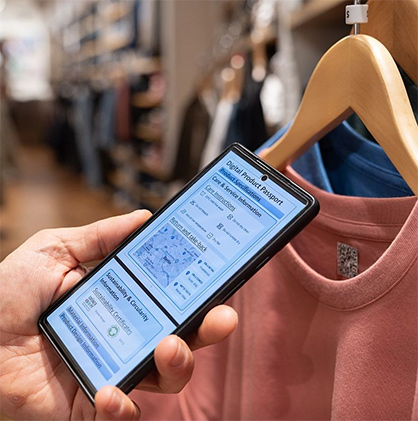
QR codes help consumers understand how their products were made and how they can be repaired.
© Nadine Glad QR codes help consumers understand how their products were made and how they can be repaired.


More News from TEXDATA International

#People

Happy Holidays!

Dear reader, the year 2025 is drawing to a close. We are entering what we hope will be a peaceful holiday season, spending time with our families and taking a moment to pause and reflect. We hope we have been able to support you once again this year with relevant news and articles, and we look forward to surprising you with many innovations in the coming year. Enjoy the festive season, stay healthy, and we wish you a happy and joyful holiday season.

#Recycling / Circular Economy

textile.4U publishes special edition “Top 100 Textile Recycling Companies 2025”

With a comprehensive 176-page special edition, textile.4U is dedicating its latest issue entirely to one of the most dynamic and influential topics in today’s textile industry: textile recycling. The new issue, published exclusively in high-quality print, presents the Top 100 textile recycling companies researched and selected by TexData – organizations that already play a key role in the transition to circular textiles or are expected to have a significant impact in the near future.

#Recycling / Circular Economy

Responsible Textile Recovery Act of 2024 signed by Governor

Senator Josh Newman (D-Fullerton) is proud to announce that Senate Bill 707 (SB 707), the Responsible Textile Recovery Act of 2024, has been signed into law by the Governor of California, Gavin Newsom. This groundbreaking legislation establishes the country’s first Extended Producer Responsibility (EPR) textile recycling program, marking a significant step forward in the state’s efforts to combat waste and promote sustainability.

#Textiles & Apparel / Garment

Modtissimo promotes sustainability with 28 coordinates in the Green Circle

Modtissimo is proving more and more to be a textile and clothing show that delivers the latest innovations in the area of sustainability, with the iTechStyle Green Circle being the main showcase for companies' creations. In this 60+4 edition, taking place on 12 and 13 September, 28 coordinates will be exhibited in a section organised by CITEVE and curated by Paulo Gomes.

More News on Industry 4.0 / Digitalization

#Industry 4.0 / Digitalization

Suzhou Tianyuan boosts costing accuracy to 98% with Coats Digital’s GSDCost

Coats Digital is delighted to announce that Suzhou Tianyuan Garments Co., Ltd., a leading manufacturer of high-quality sportswear and functional apparel for global brands such as Adidas, FILA, ANTA, and The North Face, has achieved remarkable productivity and cost management improvements following the implementation of Coats Digital’s award-winning method-time-cost optimisation solution, GSDCost.

#Industry 4.0 / Digitalization

Lenze receives IEC 62443-4-1 certification: TÜV Rheinland confirms cyber-secure development process

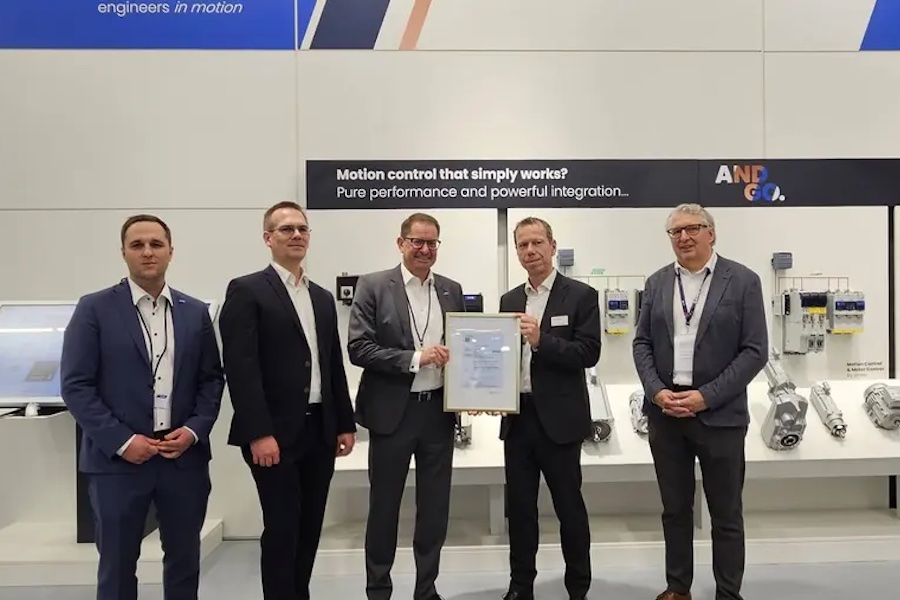
Lenze SE has been certified according to IEC 62443-4-1 since November 2025. TÜV Rheinland thus confirms that Lenze meets the requirements of this internationally recognized standard for a secure development process for industrial automation and drive products. The certification is an important milestone on the way to implementing the EU Cyber Resilience Act (CRA), which will become mandatory for machine manufacturers and their suppliers from December 2027.

#Industry 4.0 / Digitalization

Mango joins TextileGenesis pioneering traceability solution, a Lectra company, for a transparent value chain

Mango, one of the leading international fashion groups, has joined TextileGenesis, the pioneering traceability solution for the fashion and textile industries, to trace their natural and animal fibers, synthetics, man-made cellulosic fibers and leather. TextileGenesis, a Lectra company, offers a complete and secure cutting-edge technology with its six-dimensional (6D) offering and unique “fiber forwards” approach. Mango, has long been committed to maintaining a fully transparent supply chain, and TextileGenesis will reinforce this commitment.

#Sustainability

Cascale’s Higg FEM 2025 update unlocks new data-driven insights

Refreshed Higg FEM 2025 delivers data-driven insights, sharper emission metrics, and enhanced verification to accelerate industry-wide progress.

Latest News

#Weaving

Lindauer Dornier announces leadership transition in weaving machine business

After more than ten successful years at Lindauer DORNIER GmbH, Mr Wolfgang Schöffl will leave the family-owned company at the end of the year to enter well-deserved retirement.

#Heimtextil 2026

Texpertise Focus AI: Messe Frankfurt puts Artificial Intelligence centre stage at its international textile and apparel trade fairs

Under the banner 'Texpertise Focus AI, Messe Frankfurt will place a strong emphasis on Artificial Intelligence (AI) across its international textile and apparel trade fairs from 2026 onwards, setting a future-shaping signal for the industry. The initiative highlights the responsible use of AI along the entire textile value chain, from fibre production to the point of sale. The programme will launch at Heimtextil in Frankfurt in January 2026.

#Technical Textiles

Autoneum and Polestar set new benchmarks for passenger experience and sustainability

As the global market leader in sustainable acoustic and thermal management, Autoneum is a key supplier of interior and exterior components for the highly anticipated Polestar 5 model. The successful collaboration between Autoneum and Polestar marks a significant milestone in sustainable automotive engineering: the electric grand tourer sports car features several innovations in lightweight, fully recyclable polyester-based components that ensure a superior driving experience. Polestar 5 was revealed at the IAA Mobility 2025 in Munich and is available in 24 markets.

#Natural Fibers

Cashmere producers stress the importance of The Good Cashmere Standard®

At the invitation of the Aid by Trade Foundation (AbTF), over 70 experts from the cashmere production and supply chain, as well as other specialists, met at the GCS Unit Meeting in Shanghai, China to discuss the progress and new objectives of The Good Cashmere Standard (GCS). The meeting focused on implementation and verification of the standard, important aspects of animal welfare and the importance of the standard in the global textile market.

TOP