[pageLogInLogOut]

#Man-Made Fibers

“Lead Transformation – Generate Impact”: Lenzing presents its 2025 Annual and Sustainability Report
© 2026 Lenzing
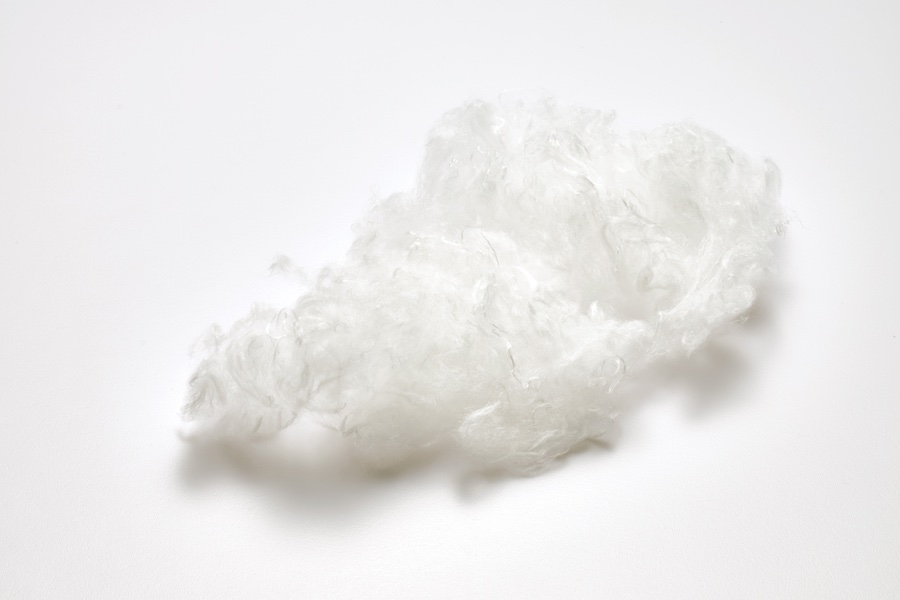
The Lenzing Group has published its 2025 Annual and Sustainability Report, entitled LEAD TRANSFORMATION – GENERATE IMPACT. The report shows how Lenzing is actively shaping change in the industry and making a lasting impact: economically, ecologically, and socially. Lenzing is consistently focused on the future: with targeted investments in premiumization, excellence, innovation, and sustainability, the company is strengthening its position as a leading provider of sustainable, cellulose-based premium fibers. The combined report is available in digital format.


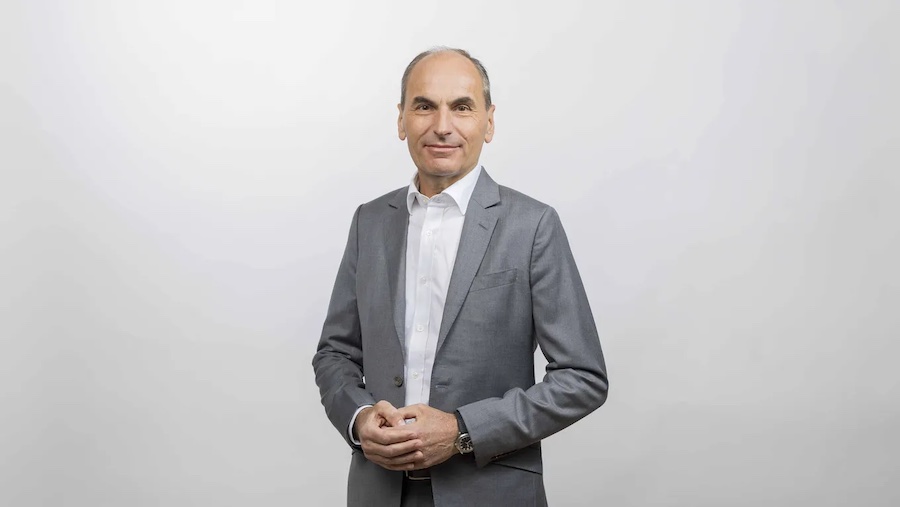
“2025 was a challenging year in which we, as the Lenzing Group, demonstrated the strength and unity embedded in our company. Under the guiding principle Lead Transformation – Generate Impact, we improved our performance, sharpened our profile, and consistently aligned Lenzing with the future. Our ambition remains clear: to achieve economic success while taking responsibility for the environment and society,” said the Lenzing Group Management Board: Mathias Breuer, CFO, Christian Skilich, CPO/CTO, and Georg Kasperkovitz, COO.

GENERATE IMPACT – Advancing sustainability, innovation and bio-economy

In addition to its business performance, Lenzing achieved major progress in sustainability and innovation in 2025. As a global company with a strong focus on sustainable solutions, Lenzing measures success by concrete results that generate positive impact for markets, customers, people, and the planet. These include new fiber innovations, sustainability ratings, and impactful partnerships across the textile and nonwovens value chains.

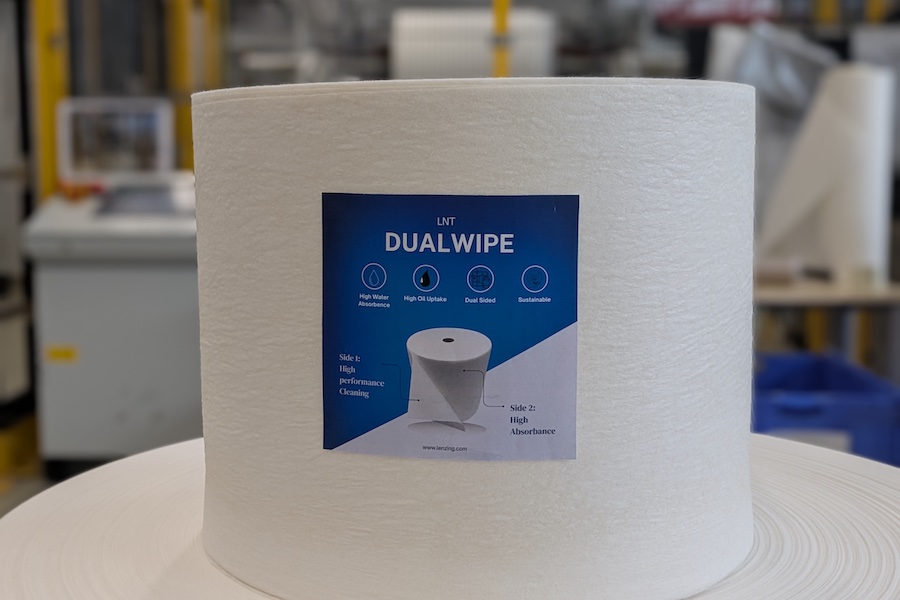
Lenzing also continued to expand its fiber portfolio: The enhanced LENZING™ Lyocell Fill fiber portfolio delivers improved thermal insulation, optimized moisture management, and greater dimensional stability. A new generation of VEOCEL™ Lyocell fibers increases the cleaning efficiency of wipes and provides a sustainable alternative to fossil-based materials – even in applications such as disinfection. With TENCEL™ Lyocell HV100 fibers, Lenzing enables natural, matte textures for denim thanks to its Variocut technology. Together with Edgewell, Lenzing also introduced hygiene products featuring VEOCEL™ Lyocell fibers to the North American market for the first time. These applications show that bio-based materials can provide superior performance and help advance bioeconomy.

External sustainability ratings once again confirmed Lenzing’s leading role in responsible fiber production. With its fifth consecutive EcoVadis Platinum rating, Lenzing ranks among the top one percent of all assessed companies worldwide – a strong indicator of sector leadership. Lenzing also secured the top one position in the Canopy Hot Button Report, the industry benchmark for responsible forestry and transparent supply chains. Combined with the CDP rating “Triple A” for climate, water and forests and the 2026 “Low Risk” / ESG‑Leader rating from Sustainalytics, these achievements reinforce Lenzing’s position as a global benchmark for integrating sustainability in core business and making progress in environmental, social, governance areas with transparency.

In the area of climate action, Lenzing made further progress, continued to pursue its science‑based targets, and invested in renewable energy – such as sourcing 100 percent grid-based renewable electricity for seven facilities globally and expanding the photovoltaic system at the Lenzing site, among others.

Technological developments and collaborative initiatives further accelerated the transformation process. Together with Adidas and the Niederrhein University of Applied Sciences, Lenzing developed a recycling process in a pilot and innovation project in which a sweater was produced in a closed loop using recycled Lyocell fibers. In the EU‑funded CELLFIL project, Lenzing is working on scaling Lyocell filaments as an alternative to synthetic fibers. With an investment of EUR 15 million to expand the production capacity of VEOCEL™ Viscostar fibers, Lenzing is further strengthening its position in nonwovens industry, particularly in feminine hygiene applications.

Lenzing’s commitment to research was also recognized – through a Top‑3 nomination for the “Matilda Award” for initiatives promoting women at Lenzing, particularly in research, and through the Lenzing Young Scientist Award, presented to young researchers outside the company.

The results for the 2025 financial year have already been published.

https://reports.lenzing.com/annual-and-sustainability-report/2025/


More News from Lenzing

#Nonwovens

VEOCEL™ Lyocell production expands to Asia – Launching a new chapter for nonwovens in the region

VEOCEL™, Lenzing's flagship specialty nonwovens brand, expands production at its Thai plant in Prachinburi. This is the first-ever production of its nonwoven-grade lyocell fibers in Asia. Built in 2022 with a 100,000-ton annual production capacity, the facility - previously focused on fibers for textile applications - now can directly meet the demand for VEOCEL™’s biodegradable¹, wood-based lyocell fibers for nonwovens products. These fibers are an essential ingredient for high-quality nonwovens products, ranging from baby wipes to facial sheet masks and everyday personal hygiene items.

#Man-Made Fibers

Lenzing advances its transformation: Higher EBITDA, stronger free cash flow and more than EUR 200 million in cost savings

The business performance of the Lenzing Group in 2025 was affected particularly in the second half of the year by external factors such as international tariff measures, subdued demand and declining market prices. As a result, revenue decreased slightly by 2.3 percent to EUR 2.6 billion, primarily due to lower fiber sales volumes and lower prices for fibers and pulp, which were further negatively impacted by currency developments. Nevertheless, thanks to the comprehensive Performance Program, Lenzing was able to improve its operating performance and key financial indicators compared with the previous year.

#Raw Materials

Lenzing Group positions bio‑based materials as a strategic asset for Europe’s economic security

The Lenzing Group, a leading supplier of regenerated cellulose fibers for the textile and nonwovens industries, hosted a high‑level roundtable in Brussels to discuss how bio‑based materials can strengthen Europe’s economic security and support the shift toward a fossil‑free future. Organized in cooperation with Euractiv, the event brought together representatives of the European Commission, the UK Mission to the EU, academia, civil society, and industry.

#Man-Made Fibers

Lenzing AG to become majority owner of TreeToTextile AB and accelerates industrialization of new fibers

The Lenzing Group is taking another strategic milestone by acquiring a controlling majority in the Swedish innovation company TreeToTextile AB. This step strengthens Lenzing’s position as a leading provider of sustainable, wood‑based specialty fibers and expands its innovation pipeline with a highly scalable, patent‑protected technology platform. The transaction is executed through the issuance of new shares.

More News on Man-Made Fibers

#Man-Made Fibers

Selenis and Kintra Fibers partner to scale 100% bio-based synthetic fiber technology

Selenis, a leading global specialty polyester manufacturer, today announced a strategic manufacturing partnership with materials science company Kintra Fibers to scale Kintra’s patented fiber-grade PBS resin - a 100% bio-based and biodegradable material designed for textile applications.

#Man-Made Fibers

Swiss industrial engineering and manufacturing company Sulzer joins Spinnova’s ecosystem

Sulzer, a Swiss industrial engineering and manufacturing company, has joined Spinnova’s ecosystem (consortium) to enable the availability of SPINNOVA® fibre in the textile materials market. Sulzer will contribute its expertise to support Spinnova’s development work.

#Research & Development

Fraunhofer IAP paves the way for "Green" carbon fibers

A new pilot plant in Guben is set to enable the production of bio-based carbon fibers. The plant is part of the Carbon Lab Factory Lausitz and will make an important contribution to the transformation of the Lausitz region—from a traditionally raw material- and basic industry-oriented region to a hub for innovative high-performance materials. The German federal government and the state of Brandenburg are providing the Fraunhofer Institute for Applied Polymer Research IAP with 53.3 million euros for this purpose.

#Raw Materials

Textile Exchange publishes cotton Life Cycle Assessment study to strengthen impact data

Textile Exchange has published the first in a series of seven Life Cycle Assessment (LCA) studies designed to improve the quality and robustness of environmental impact data for raw material production across the fashion, textile, and apparel industry. The first LCA study focuses on cotton and addresses critical data gaps and methodology variability through new high-quality data across key producing countries. The study includes organic, regenerative, recycled, and country averages for conventional cotton production systems, providing a clearer picture of the associated environmental impact.

Latest News

#Raw Materials

New study shows low environmental impact by Cotton made in Africa Organic Cotton from Tanzania

Today, the Aid by Trade Foundation (AbTF) is announcing the results of a comprehensive life-cycle analysis (LCA) for cotton produced in Tanzania under the Cotton made in Africa Organic (CmiA Organic) standard. The study emphasises the small ecological footprint of CmiA Organic verified cotton. This can largely be traced back to the absence of synthetic pesticides, artificial fertilisers, and artificial irrigation. Consequently, CmiA Organic cotton can help the textile industry meet regulatory requirements as well as science-based targets. The results also show that the consequences of climate change threaten the livelihoods of these cotton farmers, even though the type of agriculture they practise barely contributes to climate change.

#Raw Materials

Better Cotton Initiative strengthens regenerative focus in standard update

The Better Cotton Initiative (BCI) has strengthened the regenerative focus of its field-level standard with the launch of a new version of its Principles & Criteria (P&C), which marks the next step in the organisation’s journey to becoming a regenerative standards system.

#Functional Fabrics

PERFORMANCE DAYS proves its relevance as the industry’s key meeting point

Held on March 18–19, 2026, PERFORMANCE DAYS once again confirmed its position as a leading international platform for functional textiles. A total of 3.366 trade visitors and around 560 exhibitors gathered in Munich, with the event already kicking off successfully on DAY 0, which received highly positive feedback for its interactive format. Despite challenging conditions caused by the public transport strike in Munich, the event saw strong attendance and a consistently high level of activity across both exhibition days.

#Recycling / Circular Economy

Reju secures €135 Million in Dutch NIKI Funding for industrial-scale textile-to-textile regeneration hub at Chemelot Industrial Park, the Netherlands

Reju™, the progressive textile-to-textile regeneration company, has been awarded €135 million in funding under the Netherlands’ Nationale Investeringsregeling Klimaatprojecten Industrie (NIKI) program. The funding will support Reju’s planned industrial-scale Regeneration Hub at Chemelot Industrial Park in Sittard-Geleen, covering both the investment phase and ongoing operations, and represents a critical milestone on the path toward final investment decision.

RETECH expert at drawing your fibers to perfection
TOP