[pageLogInLogOut]

#Man-Made Fibers

OnceMore® from Södra brings end-to-end traceability for circular Man-made Cellulosic Fibers (MMCF) using TextileGenesis
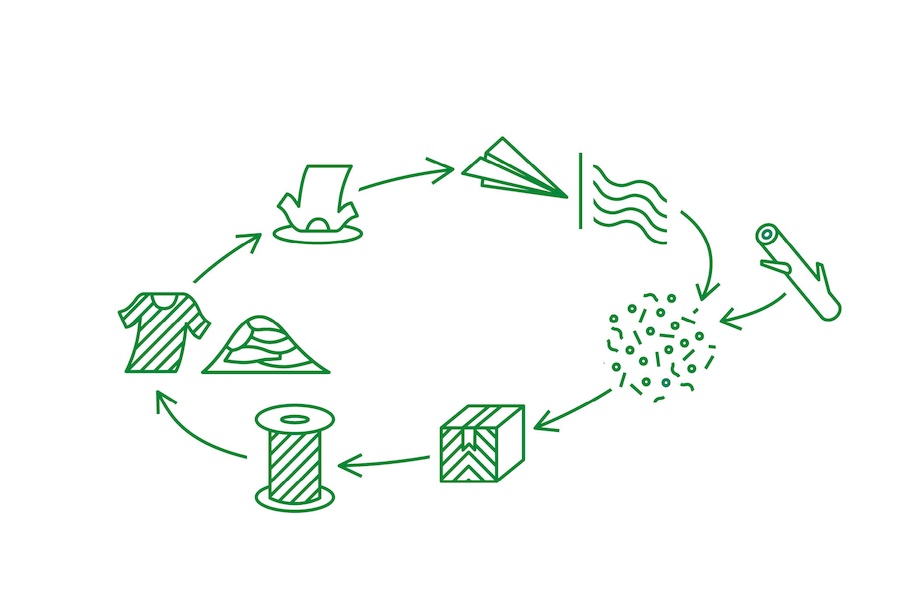
OnceMore® from Södra, the world’s first large-scale process for recycling blended fabrics into high‐quality dissolving pulp, will begin using TextileGenesis, a Lectra company, to strengthen traceability from raw material to retail across the value chain. OnceMore® produces dissolving pulp made from blended textile waste and wood sourced from responsibly managed Swedish forests. By integrating TextileGenesis, OnceMore® supports the growing need for verified data and secure, transparent tracking throughout increasingly complex supply chain.


Traceability as a foundation for circular MMCF and regulatory readiness

The implementation marks a key milestone for scaling circular MMCF, highlighting the role of digital traceability. It establishes a verified digital chain for OnceMore® materials, ensuring full chain-of-custody from pulp and fiber production through to finished garments. By unifying material movement and supply‐chain data into a single system, the rollout enhances transparency across tiers and geographies and increases supplier participation. Traceability from raw material to retail will give OnceMore® and its brand partners access to a verified digital chain of custody. This strengthens authenticated recycled‐content claims and provides a stronger data foundation for product‐level disclosures, reporting, and upcoming regulatory requirements, particularly in preparation for the EU Digital Product Passport (:).

TextileGenesis’ FibercoinTM token technology will be used to generate digital tokens linked to material volumes, creating a secure and verified digital footprint at each transformation stage. This approach strengthens integrity across complex supply chains and supports scalable circularity programs beyond fragmented, manual documentation.

“Traceability across the value chain relies on reliable data and clear documentation,” said Tina Lemke, Marketing & Brand Experience Manager at OnceMore®. “By introducing [waste and wood-to-retail] traceability through the TextileGenesis solution, we strengthen the integrity of our chain of custody and give our customers verified information about how materials move through each production step.”

Delivering scalable traceability through supplier enablement and platform excellence

OnceMore® supply chain partners are being onboarded to the TextileGenesis solution with structured implementation support. Suppliers will conduct transactions using TextileGenesis’ FibercoinTM modules, enabling consistent data capture across the chain and creating visibility into material flow and supply chain participation.

“OnceMore® is one of the strongest circular innovations in MMCF today, and this rollout shows what it looks like to operationalize traceability at scale,” said Amit Gautam, Founder & CEO of TextileGenesis. “By embedding traceability directly into material transactions, this rollout creates the verified data infrastructure needed for regulatory compliance, brand accountability, and credible circularity claims.”

More News from Soedra

More News on Man-Made Fibers

#Man-Made Fibers

Selenis and Kintra Fibers partner to scale 100% bio-based synthetic fiber technology

Selenis, a leading global specialty polyester manufacturer, today announced a strategic manufacturing partnership with materials science company Kintra Fibers to scale Kintra’s patented fiber-grade PBS resin - a 100% bio-based and biodegradable material designed for textile applications.

#Man-Made Fibers

Swiss industrial engineering and manufacturing company Sulzer joins Spinnova’s ecosystem

Sulzer, a Swiss industrial engineering and manufacturing company, has joined Spinnova’s ecosystem (consortium) to enable the availability of SPINNOVA® fibre in the textile materials market. Sulzer will contribute its expertise to support Spinnova’s development work.

#Research & Development

Fraunhofer IAP paves the way for "Green" carbon fibers

A new pilot plant in Guben is set to enable the production of bio-based carbon fibers. The plant is part of the Carbon Lab Factory Lausitz and will make an important contribution to the transformation of the Lausitz region—from a traditionally raw material- and basic industry-oriented region to a hub for innovative high-performance materials. The German federal government and the state of Brandenburg are providing the Fraunhofer Institute for Applied Polymer Research IAP with 53.3 million euros for this purpose.

#Nonwovens

VEOCEL™ Lyocell production expands to Asia – Launching a new chapter for nonwovens in the region

VEOCEL™, Lenzing's flagship specialty nonwovens brand, expands production at its Thai plant in Prachinburi. This is the first-ever production of its nonwoven-grade lyocell fibers in Asia. Built in 2022 with a 100,000-ton annual production capacity, the facility - previously focused on fibers for textile applications - now can directly meet the demand for VEOCEL™’s biodegradable¹, wood-based lyocell fibers for nonwovens products. These fibers are an essential ingredient for high-quality nonwovens products, ranging from baby wipes to facial sheet masks and everyday personal hygiene items.

Latest News

#Raw Materials

New study shows low environmental impact by Cotton made in Africa Organic Cotton from Tanzania

Today, the Aid by Trade Foundation (AbTF) is announcing the results of a comprehensive life-cycle analysis (LCA) for cotton produced in Tanzania under the Cotton made in Africa Organic (CmiA Organic) standard. The study emphasises the small ecological footprint of CmiA Organic verified cotton. This can largely be traced back to the absence of synthetic pesticides, artificial fertilisers, and artificial irrigation. Consequently, CmiA Organic cotton can help the textile industry meet regulatory requirements as well as science-based targets. The results also show that the consequences of climate change threaten the livelihoods of these cotton farmers, even though the type of agriculture they practise barely contributes to climate change.

#Raw Materials

Better Cotton Initiative strengthens regenerative focus in standard update

The Better Cotton Initiative (BCI) has strengthened the regenerative focus of its field-level standard with the launch of a new version of its Principles & Criteria (P&C), which marks the next step in the organisation’s journey to becoming a regenerative standards system.

#Functional Fabrics

PERFORMANCE DAYS proves its relevance as the industry’s key meeting point

Held on March 18–19, 2026, PERFORMANCE DAYS once again confirmed its position as a leading international platform for functional textiles. A total of 3.366 trade visitors and around 560 exhibitors gathered in Munich, with the event already kicking off successfully on DAY 0, which received highly positive feedback for its interactive format. Despite challenging conditions caused by the public transport strike in Munich, the event saw strong attendance and a consistently high level of activity across both exhibition days.

#Recycling / Circular Economy

Reju secures €135 Million in Dutch NIKI Funding for industrial-scale textile-to-textile regeneration hub at Chemelot Industrial Park, the Netherlands

Reju™, the progressive textile-to-textile regeneration company, has been awarded €135 million in funding under the Netherlands’ Nationale Investeringsregeling Klimaatprojecten Industrie (NIKI) program. The funding will support Reju’s planned industrial-scale Regeneration Hub at Chemelot Industrial Park in Sittard-Geleen, covering both the investment phase and ongoing operations, and represents a critical milestone on the path toward final investment decision.

RETECH expert at drawing your fibers to perfection
TOP