[pageLogInLogOut]

#Natural Fibers

Better Cotton enhances due diligence and decent work approaches in Uzbekistan

Better Cotton, the world’s largest cotton sustainability initiative, has announced significant progress in the delivery of its Uzbekistan programme, including the adoption of stronger and more refined approaches to due diligence and decent work activities.
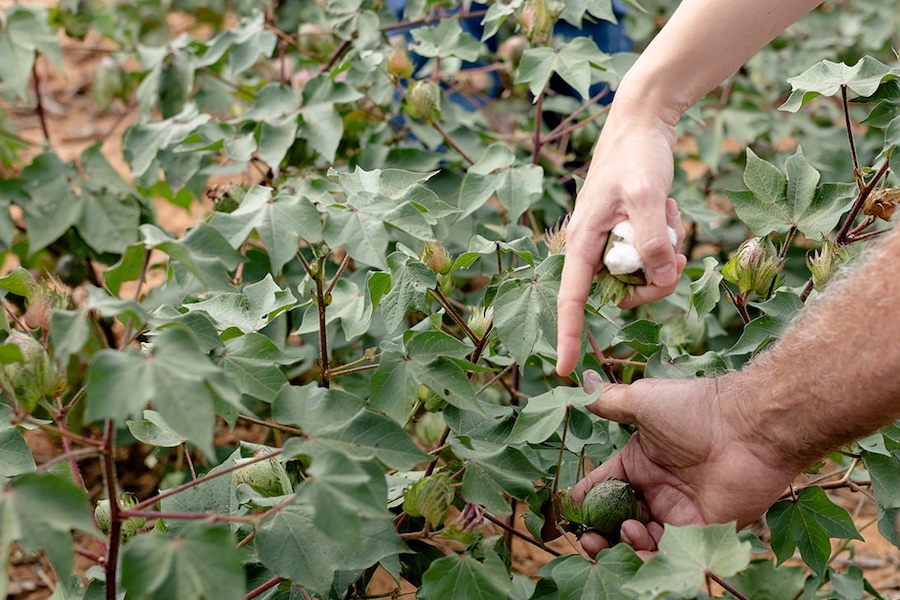
Woman working at a cotton field in Uzbekistan. © 2025 Photo credit: Uzbekistan’s Ministry of Agriculture


Katerina Gorbunova, Head of Better Cotton’s programme in Uzbekistan, said: “In collaboration with our Programme Partner, the German Agency for International Cooperation (GIZ), we have strengthened the programme’s framework and the services we offer to accelerate change across the country’s cotton sector.” 

Better Cotton’s Uzbek programme has strengthened in-country verification of licensed clusters by building the capacity of independent civil society groups and third-party auditors, plus implementing an updated due diligence methodology to ensure more robust and local oversight. 

This new-and-improved approach includes in-depth interviews and questionnaires with both cluster management and workers. It also consists of checks on financial health, ethics, and governance, providing a more comprehensive view of risk and performance across participating enterprises. The insights generated through this process are used to inform targeted interventions. 

Decent work-related actions have also evolved in light of Better Cotton recently becoming a certification scheme. The organisation now conducts preliminary assessments of newly onboarded clusters before the season begins to determine their readiness for certification and if requirements are not met, audits are postponed to the following season. 

For clusters with active licences, second party checks by qualified Better Cotton staff are conducted to identify potential decent work-related issues and, if necessary, trigger a more comprehensive examination by external labour rights monitoring organisations. 

Since August 2024, Better Cotton and GIZ have expanded training to cover not only innovative and regenerative agricultural practices, but also social sustainability and decent work principles following recent changes to Uzbek labour laws. 

This effort deployed a cascading training methodology to target cotton cluster management on the basis that they can subsequently educate workers, who can then support their peers. 

Gorbunova said: “The Uzbek cotton sector has tremendous potential to be a leader in the production of more sustainably produced cotton. This can only be achieved through collaboration, robust and transparent processes, and perseverance. Better Cotton is uniquely positioned to help unlock this potential and will continue to engage stakeholders across the country to make our vision a reality.” 

Paul Schumacher, Cotton Project Manager at GIZ Uzbekistan, added: “Today, sustainable agricultural methods, trade facilitations and decent work are no longer parallel efforts, they are parts of one sustainable system. With the right networks and shared effort, as we created within the frame of Better Cotton, we turn individual action into systemic change.”

More News from Better Cotton

#Natural Fibers

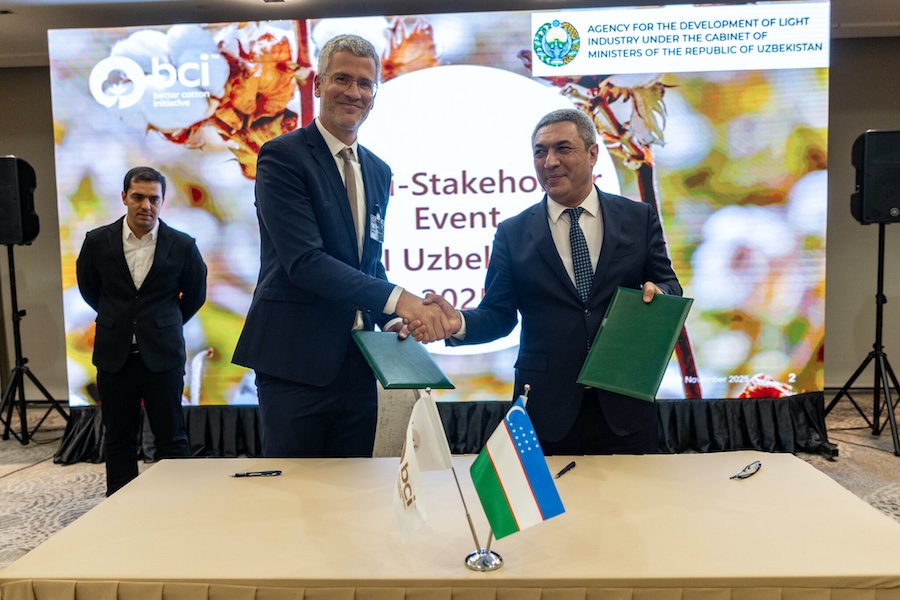
Better Cotton Initiative partners with Uzbek government agency to offset certification costs

The Better Cotton Initiative (BCI) has today announced a strategic agreement with Uzbekistan’s Light Industry Agency to increase financial support for cotton farming clusters adopting sustainable agricultural practices.

#Natural Fibers

Better Cotton Initiative surpasses 50% traceable BCI Cotton milestone

Two years since the launch of its traceability solution, the Better Cotton Initiative (BCI) has announced that over 50% of BCI Cotton volumes entering global fashion and textile supply chains are now traceable, deriving from 15 countries.

#Natural Fibers

BCI warns against ‘dangerous dilution’ of EU corporate directives

The approval of the European Commission’s Omnibus I proposal by the European Parliament’s Committee on Legal Affairs, accepting controversial changes to key sustainability directives is of great concern. These changes, namely to the Corporate Sustainability Reporting Directive (CSRD) and the Corporate Sustainability Due Diligence Directive (CSDDD), threaten to significantly dilute business reporting and due diligence obligations.

#Natural Fibers

Better Cotton Initiative marks World Cotton Day with launch of innovative product label

The Better Cotton Initiative (BCI) has launched an innovative product label for the fashion and textile sectors which allows retailer and brand members to provide consumers with greater clarity about the origin and percentage of BCI Cotton in their products.

More News on Natural Fibers

#Natural Fibers

Cashmere producers stress the importance of The Good Cashmere Standard®

At the invitation of the Aid by Trade Foundation (AbTF), over 70 experts from the cashmere production and supply chain, as well as other specialists, met at the GCS Unit Meeting in Shanghai, China to discuss the progress and new objectives of The Good Cashmere Standard (GCS). The meeting focused on implementation and verification of the standard, important aspects of animal welfare and the importance of the standard in the global textile market.

#Natural Fibers

38th International Cotton Conference Bremen: Let´s Talk about Cotton!

The 38th International Cotton Conference Bremen, to be held on 25-27 March 2026 in Bremen’s parliament building on market square, once again sends a powerful signal for professional excellence and international dialogue. The focus is on the latest market trends and technical innovations throughout the entire value chain – from agriculture and quality assurance to processing and the circular economy. With its high-calibre speakers, the conference remains an indispensable forum for anyone involved in shaping the cotton industry scientifically, technically, or economically.

#Natural Fibers

Human Rights Day: Cotton made in Africa reinforces its commitment to ensuring respect for human rights in cotton production

The sustainable cotton standard Cotton made in Africa (CmiA) has always focussed on respect for human rights, including by prohibiting child labour and discrimination. With the new version of the CmiA standard coming into force, AbTF raises requirements for due diligence in the areas of human rights and risk management.

Latest News

#People

Happy Holidays!

Dear reader, the year 2025 is drawing to a close. We are entering what we hope will be a peaceful holiday season, spending time with our families and taking a moment to pause and reflect. We hope we have been able to support you once again this year with relevant news and articles, and we look forward to surprising you with many innovations in the coming year. Enjoy the festive season, stay healthy, and we wish you a happy and joyful holiday season.

#Weaving

Lindauer Dornier announces leadership transition in weaving machine business

After more than ten successful years at Lindauer DORNIER GmbH, Mr Wolfgang Schöffl will leave the family-owned company at the end of the year to enter well-deserved retirement.

#Heimtextil 2026

Texpertise Focus AI: Messe Frankfurt puts Artificial Intelligence centre stage at its international textile and apparel trade fairs

Under the banner 'Texpertise Focus AI, Messe Frankfurt will place a strong emphasis on Artificial Intelligence (AI) across its international textile and apparel trade fairs from 2026 onwards, setting a future-shaping signal for the industry. The initiative highlights the responsible use of AI along the entire textile value chain, from fibre production to the point of sale. The programme will launch at Heimtextil in Frankfurt in January 2026.

#Technical Textiles

Autoneum and Polestar set new benchmarks for passenger experience and sustainability

As the global market leader in sustainable acoustic and thermal management, Autoneum is a key supplier of interior and exterior components for the highly anticipated Polestar 5 model. The successful collaboration between Autoneum and Polestar marks a significant milestone in sustainable automotive engineering: the electric grand tourer sports car features several innovations in lightweight, fully recyclable polyester-based components that ensure a superior driving experience. Polestar 5 was revealed at the IAA Mobility 2025 in Munich and is available in 24 markets.

TOP