[pageLogInLogOut]

#Raw Materials

38th Bremen Cotton Conference

Beyond the wardrobe – innovative cotton takes the spotlight
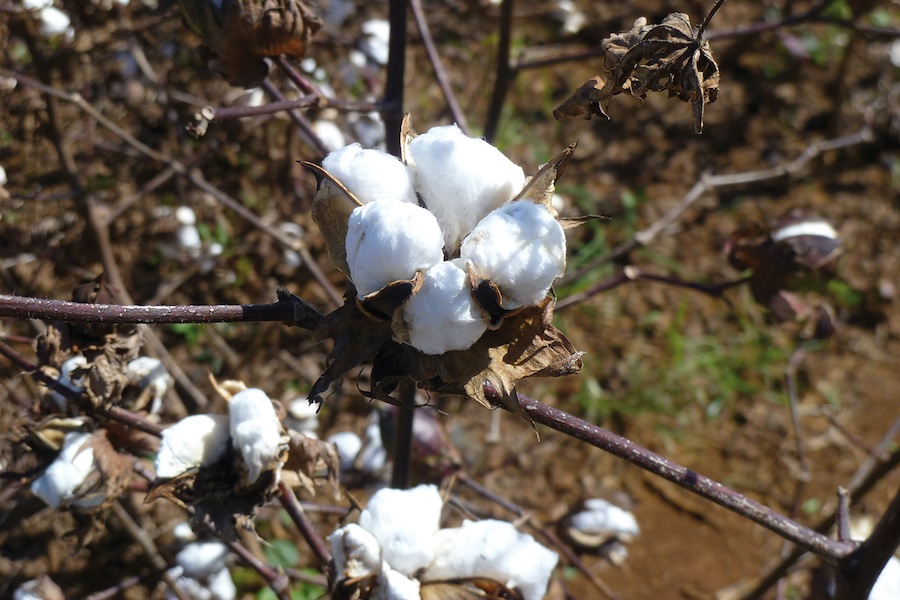
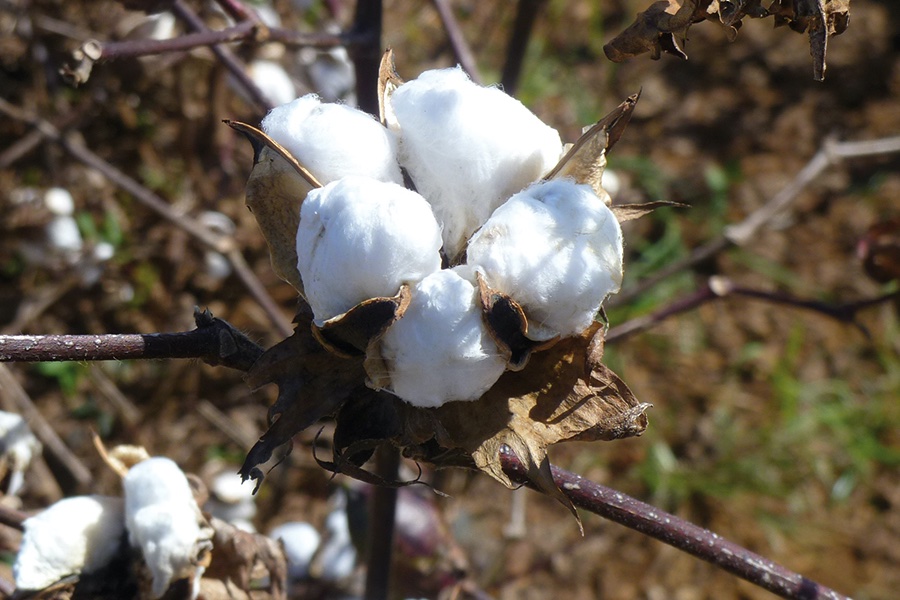
Cotton plant in Brasil © 2026 Bremen Cotton Exchange
Cotton can do more – a lot more. Cutting-edge textiles and high-tech products made from 100% cotton prove just how powerfully performance and sustainability can come together. That very surge of innovation is front and centre at the 38th Bremen Cotton Conference, taking place March 25–27, 2026, at Bremen’s Parliament on the historic market square – culminating in a bold and dedicated closing session on Friday. In the spotlight: performance upgrades for pure cotton, smart strategies for circular textile waste solutions, and pioneering concepts for demanding technical applications. From natural fibre–reinforced composites to highly effective flame-retardant solutions, cotton steps out of the closet and shows the future potential woven into every fibre.

Cotton is so much more than just a T-shirt. As a renewable resource, it’s biodegradable, free from microplastics, naturally breathable, and delivers comfort you can actually feel. But this fibre has long since broken free from the fashion rack. Cotton is evolving into a versatile high-tech material.Thanks to advanced finishing technologies, functional coatings, innovative hybrid yarns, and bio-based material blends, its range of applications is expanding fast – far beyond traditional textiles. For companies, that means real opportunity: replacing fossil-based resources with sustainable alternatives, staying ahead of regulatory demands, and unlocking new high-performance markets. Cotton is transforming from a natural product into a true engine of innovation.

Cotton textile waste as a resource

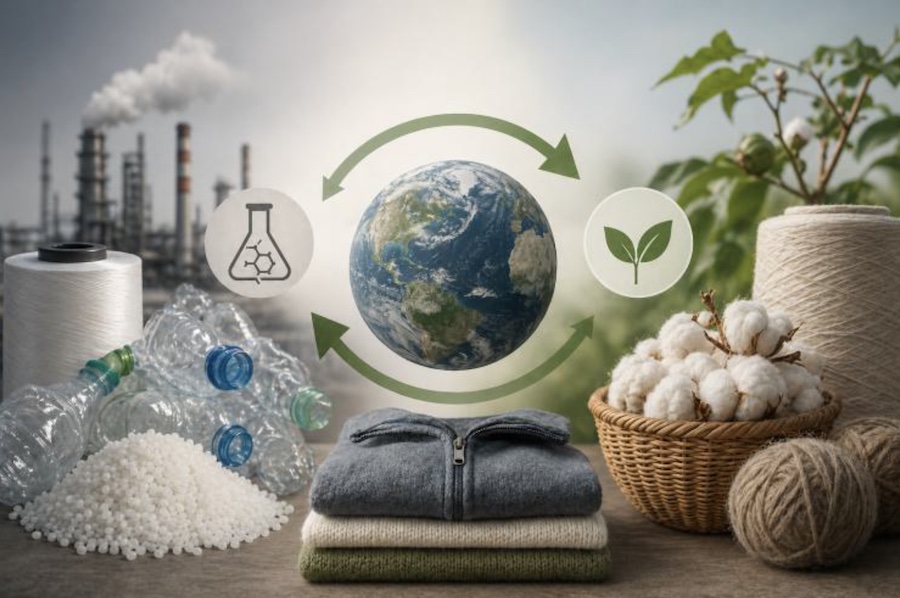
Future-ready innovation means thinking across the entire product lifecycle. Production scraps, offcuts, and post-consumer textiles are not just a growing waste problem — they are also a valuable and largely untapped resource. In his presentation, Dr. Matthew Farrell of Cotton Incorporated (USA) demonstrates how cotton textile waste can be converted into glucose. Since these materials consist primarily of cellulose — aside from dyes and finishes — they can be broken down into their sugar building blocks through hydrolysis.* The resulting glucose serves as a bio-based platform feedstock for a wide range of value-added products. Drawing on two processes developed in recent years, Farrell illustrates how used cotton textiles can be integrated into viable circular economy concepts.

* Note: During hydrolysis, cellulose chains are broken down into glucose using water — often supported by acids or enzymes.

Natural fibre systems and flame retardancy

At the same time, the market for natural fibre-reinforced composites is expanding rapidly, as industry and research increasingly turn to renewable, lightweight, and resource-efficient materials. Natural fibres generally offer a lower carbon footprint than glass or carbon fibre reinforcements and are especially attractive for applications driven by clear sustainability targets. However, fire performance presents specific challenges. As plant-based fibres are inherently combustible, natural fibre composites often exhibit less favourable fire behaviour than their glass- or carbon-fibre-reinforced counterparts. Meanwhile, regulatory and safety requirements are becoming more stringent: beyond flammability itself, parameters such as heat release rate, smoke development, and smoke toxicity are moving into sharper focus.

At the Bremen conference, Dr. Thomas Mayer-Gall from the German Institutes of Textile and Fibre Research North-West (DTNW), Krefeld, will present newly developed, halogen-free flame-retardant systems from DTNW research designed for these demanding applications.

More performance from 100% cotton

Complementing the circularity perspective, Seth Winner of Cotton Incorporated turns the spotlight on enhancing the performance of textiles made from pure cotton. The goal: to elevate 100% cotton fabrics with targeted functional upgrades — improving breathability, thermal insulation, and stretch, among other properties.

He will present innovative approaches that enable the precise functionalization of cotton textiles, using both new and established technologies to unlock the full performance potential of pure cotton.

Innovation meets circularity

Against the backdrop of rising demands for resource efficiency, circular economy solutions, and product safety, the closing session of the Bremen Cotton Conference sends a strong message. It delivers fresh, hands-on impulses for manufacturers, finishers, and developers — and showcases the remarkable innovative power of cotton.

Cotton is no longer just a traditional apparel fibre. It is evolving into a high-performance raw material platform for technical and sustainable applications — with strategic relevance for the textile and materials industries of tomorrow.



More News from Bremer Baumwollbörse

#Raw Materials

A Powerful Opening: Global thought leaders launch the International Cotton Conference Bremen

The International Cotton Conference Bremen will open on 25 March 2026 in the Parliament building of the Free Hanseatic City of Bremen with a keynote session of exceptional calibre. Distinguished international experts will set the stage for the conference by offering incisive perspectives on the most pressing challenges and the defining trends shaping the future of the global cotton trade. Their insights will span a broad spectrum — from geopolitically driven disruptions affecting global supply chains to the opportunities emerging from innovation-led agriculture capable of supporting a growing world population. Together, these opening keynotes will frame the dialogue of the conference, highlighting both the complexity of today’s market environment and the pathways toward a resilient and forward-looking cotton sector.

#Natural Fibers

Beyond Cotton: Natural Fibres in the Spotlight at the Bremen Cotton Conference - Branded by DNFI

Climate targets, fragile supply chains, and rising regulatory requirements are fundamentally changing the perspective of the textile industry - the focus is increasingly shifting toward the base material. Not only cotton, but natural fibres are gaining significant importance: they stand out not only because of their outstanding functional properties, but also because they make a valuable contribution to the bioeconomy and responsible product development.

#Raw Materials

Modern testing methods for raw cotton

The 38th International Cotton Conference Bremen will take place from 25 to 27 March 2026 at the Bremen Parliament. This conference has traditionally stood for in-depth expertise and international exchange. The program will focus on technical innovations, market trends, and regulatory frameworks across the entire value chain – from agriculture to the circular economy. With high-profile speakers, the conference is regarded as the key meeting point for the global cotton industry. Today’s focus: Cotton quality and testing methods.

#Natural Fibers

Modern testing methods for raw cotton

The 38th International Cotton Conference Bremen will take place from 25 to 27 March 2026 at the Bremen Parliament. This conference has traditionally stood for in-depth expertise and international exchange. The program will focus on technical innovations, market trends, and regulatory frameworks across the entire value chain – from agriculture to the circular economy. With high-profile speakers, the conference is regarded as the key meeting point for the global cotton industry. Today’s focus: Cotton quality and testing methods.

More News on Raw Materials

#Raw Materials

New study shows low environmental impact by Cotton made in Africa Organic Cotton from Tanzania

Today, the Aid by Trade Foundation (AbTF) is announcing the results of a comprehensive life-cycle analysis (LCA) for cotton produced in Tanzania under the Cotton made in Africa Organic (CmiA Organic) standard. The study emphasises the small ecological footprint of CmiA Organic verified cotton. This can largely be traced back to the absence of synthetic pesticides, artificial fertilisers, and artificial irrigation. Consequently, CmiA Organic cotton can help the textile industry meet regulatory requirements as well as science-based targets. The results also show that the consequences of climate change threaten the livelihoods of these cotton farmers, even though the type of agriculture they practise barely contributes to climate change.

#Raw Materials

Better Cotton Initiative strengthens regenerative focus in standard update

The Better Cotton Initiative (BCI) has strengthened the regenerative focus of its field-level standard with the launch of a new version of its Principles & Criteria (P&C), which marks the next step in the organisation’s journey to becoming a regenerative standards system.

#Raw Materials

Global production expected to decline in 2026/27 as policy shifts and weak demand reshape trade

Early projections for the 2026/27 season indicate that global cotton lint production will decline by 4% to 24.9 million tonnes, while world consumption is expected to remain stable at approximately 25 million tonnes, according to the April 2026 issue of Cotton This Month.

#Raw Materials

Textile Exchange publishes cotton Life Cycle Assessment study to strengthen impact data

Textile Exchange has published the first in a series of seven Life Cycle Assessment (LCA) studies designed to improve the quality and robustness of environmental impact data for raw material production across the fashion, textile, and apparel industry. The first LCA study focuses on cotton and addresses critical data gaps and methodology variability through new high-quality data across key producing countries. The study includes organic, regenerative, recycled, and country averages for conventional cotton production systems, providing a clearer picture of the associated environmental impact.

Latest News

#Man-Made Fibers

Selenis and Kintra Fibers partner to scale 100% bio-based synthetic fiber technology

Selenis, a leading global specialty polyester manufacturer, today announced a strategic manufacturing partnership with materials science company Kintra Fibers to scale Kintra’s patented fiber-grade PBS resin - a 100% bio-based and biodegradable material designed for textile applications.

#Functional Fabrics

PERFORMANCE DAYS proves its relevance as the industry’s key meeting point

Held on March 18–19, 2026, PERFORMANCE DAYS once again confirmed its position as a leading international platform for functional textiles. A total of 3.366 trade visitors and around 560 exhibitors gathered in Munich, with the event already kicking off successfully on DAY 0, which received highly positive feedback for its interactive format. Despite challenging conditions caused by the public transport strike in Munich, the event saw strong attendance and a consistently high level of activity across both exhibition days.

#Recycling / Circular Economy

Reju secures €135 Million in Dutch NIKI Funding for industrial-scale textile-to-textile regeneration hub at Chemelot Industrial Park, the Netherlands

Reju™, the progressive textile-to-textile regeneration company, has been awarded €135 million in funding under the Netherlands’ Nationale Investeringsregeling Klimaatprojecten Industrie (NIKI) program. The funding will support Reju’s planned industrial-scale Regeneration Hub at Chemelot Industrial Park in Sittard-Geleen, covering both the investment phase and ongoing operations, and represents a critical milestone on the path toward final investment decision.

#Techtextil 2026

TTL showcases nonwoven and needlefelt solutions at Techtextil 2026

Technische Textilien Lörrach GmbH & Co. KG (TTL), part of the Yanpai Group, will present its latest nonwoven and needlefelt solutions for industrial applications at Techtextil 2026 in Frankfurt.

TOP