[pageLogInLogOut]

#Recycled Fibers

Worn Again Technologies unveils the Accelerator

The Accelerator fiber recycling system by Worn Again Technologies © 2026 Worn Again Technologies
Worn Again Technologies unveils the Accelerator, the next major step towards commercialising its pioneering Textile-to-Fibre recycling process and proving the technical and economic feasibility of polycotton recycling.

A Textile-to-Fibre Accelerator plant – which the company has started up in Winterthur, Switzerland – showcases Worn Again’s proprietary chemical recycling technology at scale, providing a real-world validation of a process that recovers and regenerates polyester and cellulose from end-of-life textiles. This marks a significant milestone in Worn Again’s journey to transform textile waste into circular fibres.

Less than 1% of clothes are recycled. Meanwhile, textile production already exceeds a staggering 120 million tonnes per annum, a figure that continues to grow, exacerbated by consumer demand for fast fashion. The time is now to scale solutions designed to tackle the textile waste crisis.

“The fashion industry is at a pivotal point,” said Michael Weiss, CEO of Worn Again Technologies. “Blended polycottons, once nearly impossible to recycle efficiently, are now being reimagined through our groundbreaking process. This technology maintains material value, minimises waste, and unlocks significant economic opportunities.”

From laboratory to scaled application

The Accelerator represents the evolution from laboratory innovation to industrial demonstration. In recent years, Worn Again has refined the process chemistry and engineering design – optimising solvent systems and separation techniques – to enable efficient, high-purity recovery of polyester and cellulose fibres. Crucially, the process recovers over 95% of solvents used, reinforcing environmental responsibility.

The technology’s multi-solvent approach allows effective separation of complex materials, including dyes and elastane, which are major challenges for traditional recycling methods. Since 2024, the company achieved breakthroughs by successfully spinning fibres from recovered outputs, reaching new heights in product purity and quality – critical milestones underpinning the deployment of larger-scale operations.

Ongoing scale-up engineering activities continue to enable process efficiencies that weren’t feasible in the laboratory – enhancing the value proposition of the recycling technology as it scales.

The Accelerator plant is being delivered in modules. The first module is to recover spinnable polyester from waste textiles, including post-consumer polycotton blends sourced from Switzerland, the EU & UK. The recovered, Circular Polyester, will soon be available for downstream piloting & product application testing. The next module (which has entered detailed engineering) will produce Next-Gen Cellulosic Fibres and other advanced cellulosic materials.

Advancing towards commercial deployment

The Accelerator provides a platform for testing the technology’s real-world applications. Partner companies will be able to evaluate their feedstocks and validate the process across diverse textile streams, generating critical data to refine and scale operations.

Worn Again is progressing towards a full-scale manufacturing facility designed to process significant volumes of textile waste and produce high-value circular products. “The Accelerator is a critical asset for building towards our first commercial plant.” said Toby Moss, Chief Commercial Officer, “Testing at this scale will expand our solutions to a broader range of feedstocks, ensuring that we stay ahead by valorising more material streams and creating a growing portfolio of high-value, downstream product applications.”

Worn Again has gathered a growing network of strategic partners who will now receive priority access the Accelerator plant and its circular products. As production capacities continue to grow, it will further develop these partnerships and new ones to deliver binding commitments for supply and offtakes of a planned first commercial scale production plant. With the Accelerator now operational, Worn Again is open for business and ready to work with brands, manufacturers and waste handlers to “clean up fashion”.

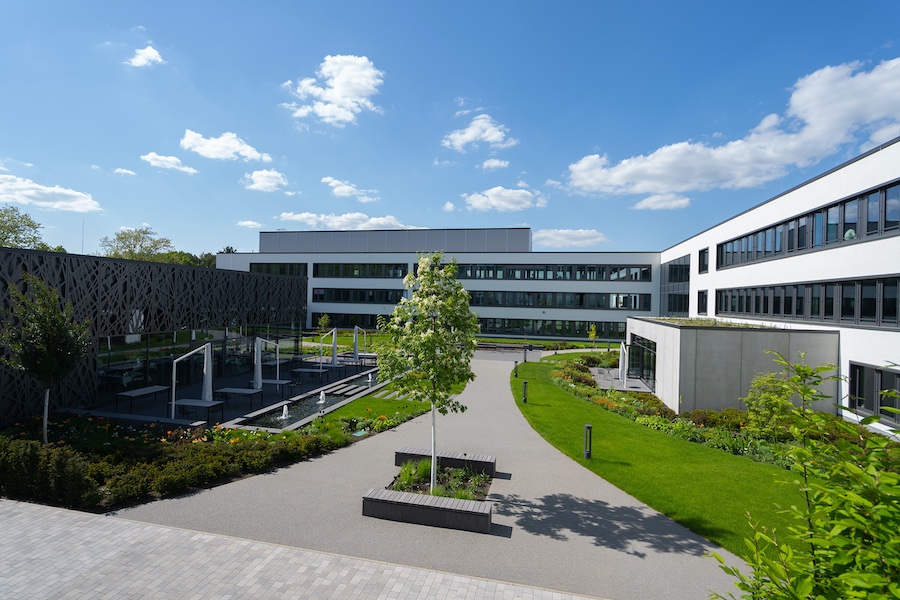
Delivery of the Worn Again Textile-to-Fibre Accelerator plant in Winterthur, Switzerland © 2026 Worn Again
More News from Worn Again

More News on Recycled Fibers

#Recycling / Circular Economy

Reju secures €135 Million in Dutch NIKI Funding for industrial-scale textile-to-textile regeneration hub at Chemelot Industrial Park, the Netherlands

Reju™, the progressive textile-to-textile regeneration company, has been awarded €135 million in funding under the Netherlands’ Nationale Investeringsregeling Klimaatprojecten Industrie (NIKI) program. The funding will support Reju’s planned industrial-scale Regeneration Hub at Chemelot Industrial Park in Sittard-Geleen, covering both the investment phase and ongoing operations, and represents a critical milestone on the path toward final investment decision.

#Recycling / Circular Economy

eeden is now a Canopy partner

eeden is committed to enable circular textiles by developing recycling technologies that turn textile waste into valuable raw materials. But the commitment goes further – eeden advocates for supply chain solutions that uphold responsible environmental and ethical standards, protecting global ecosystems including Ancient and Endangered Forests.

#Recycling / Circular Economy

Infinited Fiber Company’s environmental permit for Kemi advances to statutory appeal phase

Infinited Fiber has reached an important regulatory milestone in Finland, as the environmental permit process for a potential facility in Kemi has progressed to the statutory appeal phase.

#Recycling / Circular Economy

Carbios confirms Longlaville plant in France following financing progress

Carbios has reaffirmed its plans to build its Longlaville plant in France within a project financing framework, targeting the start of production in the first half of 2028. The company also reports a solid cash position of around €60 million at the end of 2025 and has appointed Benoît Grenot as Deputy Chief Executive Officer to support the execution of its strategic projects.

Latest News

#Raw Materials

New study shows low environmental impact by Cotton made in Africa Organic Cotton from Tanzania

Today, the Aid by Trade Foundation (AbTF) is announcing the results of a comprehensive life-cycle analysis (LCA) for cotton produced in Tanzania under the Cotton made in Africa Organic (CmiA Organic) standard. The study emphasises the small ecological footprint of CmiA Organic verified cotton. This can largely be traced back to the absence of synthetic pesticides, artificial fertilisers, and artificial irrigation. Consequently, CmiA Organic cotton can help the textile industry meet regulatory requirements as well as science-based targets. The results also show that the consequences of climate change threaten the livelihoods of these cotton farmers, even though the type of agriculture they practise barely contributes to climate change.

#Raw Materials

Better Cotton Initiative strengthens regenerative focus in standard update

The Better Cotton Initiative (BCI) has strengthened the regenerative focus of its field-level standard with the launch of a new version of its Principles & Criteria (P&C), which marks the next step in the organisation’s journey to becoming a regenerative standards system.

#Man-Made Fibers

Selenis and Kintra Fibers partner to scale 100% bio-based synthetic fiber technology

Selenis, a leading global specialty polyester manufacturer, today announced a strategic manufacturing partnership with materials science company Kintra Fibers to scale Kintra’s patented fiber-grade PBS resin - a 100% bio-based and biodegradable material designed for textile applications.

#Functional Fabrics

PERFORMANCE DAYS proves its relevance as the industry’s key meeting point

Held on March 18–19, 2026, PERFORMANCE DAYS once again confirmed its position as a leading international platform for functional textiles. A total of 3.366 trade visitors and around 560 exhibitors gathered in Munich, with the event already kicking off successfully on DAY 0, which received highly positive feedback for its interactive format. Despite challenging conditions caused by the public transport strike in Munich, the event saw strong attendance and a consistently high level of activity across both exhibition days.

TOP