#Recycling / Circular Economy
Turning waste into value: Borealis delivers circular breakthroughs in 2024
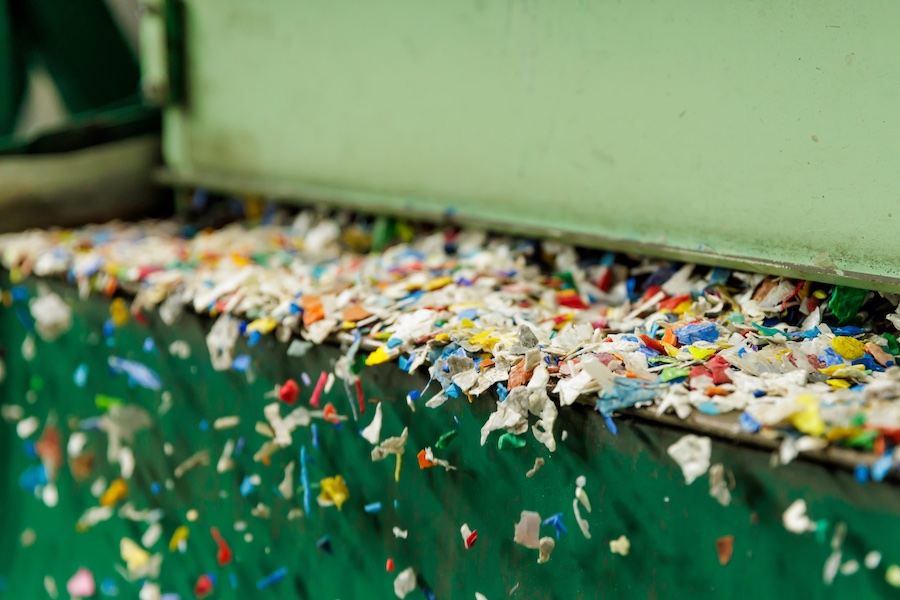
Alongside these capacity increases, Borealis strengthened its circular product portfolio, supporting customers across an even wider range of sectors to reduce their environmental impact. New introductions included ten Bornewables™ grades based on renewable feedstock, seven Borcycle™ C grades based on chemical recycling, and four Borcycle™ M grades based on advanced mechanical recycling, as well as materials designed for reuse and recycling. This progress has been achieved despite a challenging economic climate and ongoing uncertainty around regulation in Europe, where short-term demand for recycled polymers has stagnated.
Key capacity and technology milestones in 2024
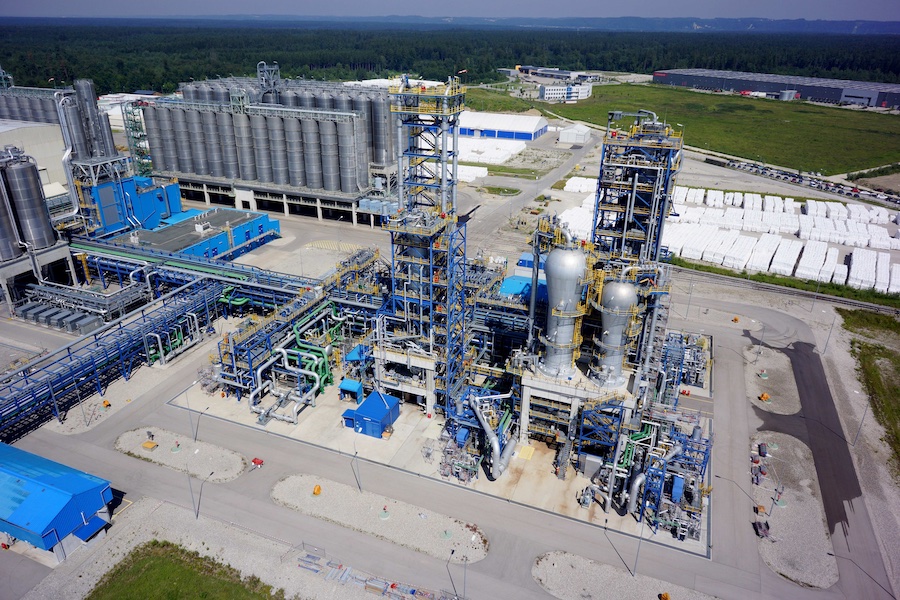
Borealis’ significant increase in circular production capacity in 2024 was underpinned by a number of strategic investments and acquisitions.
The acquisition of Integra Plastics AD in Bulgaria added more than 20,000 metric tons of advanced mechanical recycling capacity, expanding the recyclate processing capabilities and providing valuable operational experience and technological insight into recyclate handling.
They also invested EUR 4.5 million in upgrading a steam cracker in Porvoo, Finland, to enable increased use of circular and renewable feedstocks, and signed a long-term supply agreement with TOMRA to ensure a consistent supply of sustainable raw materials for recycling operations. Borealis also entered into a partnership with Infinium, who converts captured carbon emissions into feedstocks for the production of plastics with a low carbon footprint.
Circular progress across products and applications
Important progress was made across Borealis’ circular portfolios in 2024, with product launches, key approvals, and breakthrough applications across core markets.
In consumer goods, they secured FDA clearance for selected Borcycle™ M grades to be used in food and cosmetics packaging.
In automotive, they launched a Borcycle™ M-based glass-fiber reinforced PP grade with 65% PCR content. In addition, collaborations with Neste and Covestro enabled end-of-life processing of tires, allowing them to be chemically recycled into materials that can be used in new car parts such as headlamps or grilles.
In infrastructure, a value chain collaboration with Pipelife and Wiener Wasser led to chemically recycled drinking water pipes being installed in Austria.
In the energy sector, they introduced a Borcycle™ M-based jacketing solution for low- and medium-voltage cables.
Borealis achieved another important milestone with the first commercial sales from its Borvida™ portfolio of circular base chemicals. Borvida C, made from chemically recycled post-consumer waste, and Borvida B Ethylene, derived from non-food waste biomass, were sold for the first time in 2024, helping to advance circularity in the chemicals supply chain.
“We’re proud of the substantial progress we made this year - growing our circular capacity and serving our customers with bespoke solutions,” says Dirk Langhammer, Borealis Vice President Circular Economy Solutions. “These achievements show we’re not just talking about circularity — we’re executing our plans as part of Borealis Strategy 2030 through innovation, investment, and ambitious partnerships. We deliver timely, value-added solutions that support our customers to become more sustainable.”
Driving circularity from design to end-of-life
These advances reflect Borealis’ approach to enable circularity across the value chain — from developing materials which are more resource- and processing-efficient and designed with maximum recyclability in mind, to the increased use of mechanically- and chemically-recycled and renewable feedstocks, and continuously improving end-of-life recycling technologies.
Borealis also drives the development of waste collection infrastructure in regions where such systems are lacking. In Indonesia, Project STOP, co-founded with Systemiq, creates sustainable waste management systems that prevent plastics from leaking into the environment and oceans. From its launch in 2017 to the end of 2024, it has provided waste collection access to over 517,000 people, collected 79,000 metric tons of waste — including 12,000 metric tons of plastic — and created around 280 full-time jobs in the local waste sector.
Looking ahead
Borealis remains committed to help its customers adopt more circular practices with a full portfolio of high-quality circular solutions for key end markets. With deep expertise in technology, application development, and collaboration across the value chain, we are well positioned to unlock new opportunities for innovation that drive margin growth and support the transition from a linear to a truly circular plastics industry.