[pageLogInLogOut]

#Recycling / Circular Economy

EURATEX calls for a competitive and harmonised Circular Economy Act For Textiles
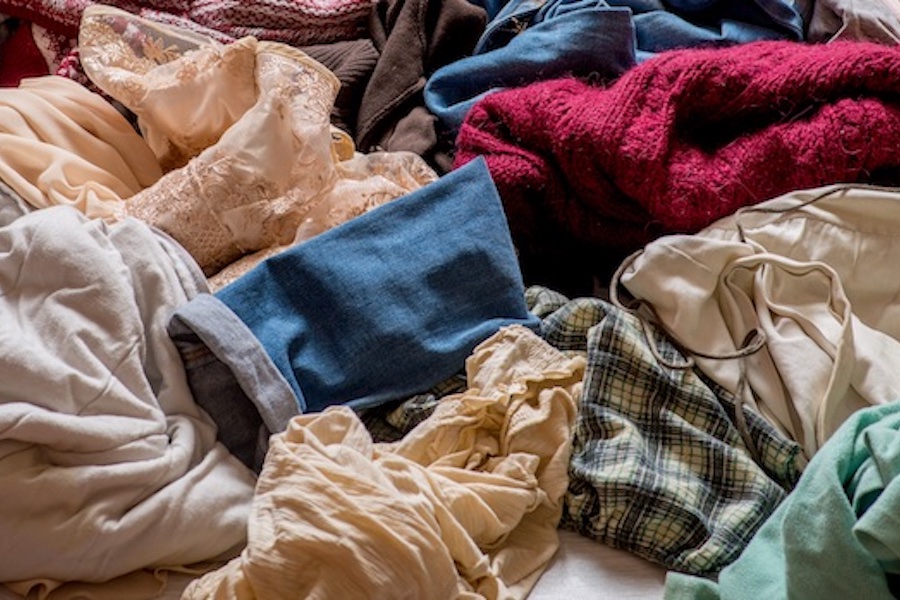
Used textiles © 2025 EURATEX
EURATEX, representing Europe’s textile and clothing industry with over 200,000 companies and 1.3 million workers, has submitted its official position paper to the European Commission’s consultation on the upcoming Circular Economy Act (CEA). The association welcomes the Commission’s initiative to shape a framework that strengthens Europe’s circular economy while maintaining industrial competitiveness.


A Simplified and competitive circular single market for textiles

In its 4-page position paper, EURATEX outlines a clear vision: the Circular Economy Act must simplify, not multiply, the regulatory landscape for textiles. The new legislation should create a level playing field across the EU, reducing administrative complexity and supporting sustainable innovation.

The proposal aligns with the Draghi Report on European Competitiveness, emphasizing that circularity and competitiveness must go hand in hand. For the textile and clothing sector—dominated by small and medium-sized enterprises—predictable, harmonised rules are crucial to enable investment, innovation, and growth.

Key recommendations by EURATEX

EURATEX identifies four priorities to ensure the Circular Economy Act delivers tangible results for both sustainability and industry:

1. Harmonise Extended Producer Responsibility (EPR) Schemes

EURATEX calls for a single, EU-level EPR framework with aligned eco-modulation criteria, clear governance principles, and a centralised One-Stop Shop registration system. This harmonisation will prevent fragmentation into multiple national systems and reduce unnecessary administrative burdens.

2. Facilitate the Use of Textile By-Products

The classification of textile cuttings and other by-products should be simplified to recognise them as secondary raw materials, not waste. This would unlock new opportunities for recycling and circular innovation within the EU, while reducing costs and delays caused by complex waste regulations.

3. Adopt Harmonised Green Public Procurement (GPP) Criteria

Public procurement can play a key role in driving demand for sustainable textiles. EURATEX recommends that the Commission develop harmonised, practical, and SME-accessible GPP criteria, focused on durability, recyclability, and reparability—without compromising product performance.

4. Avoid Additional Administrative Burdens and Reporting Overlaps

The Circular Economy Act must integrate existing reporting systems (such as under the Ecodesign Regulation or Waste Framework Directive) to avoid duplication. EURATEX stresses the importance of regulatory coherence and efficient market surveillance across Member States.

Creating the Conditions for a Circular Textile Economy

Beyond these four priorities, EURATEX also highlights complementary measures to foster a truly circular economy:

  • EU-wide End-of-Waste criteria for textiles to support recycling and reuse;
  • Circularity hubs to enable regional collaboration in sorting, repair, and reindustrialisation;
  • Fiscal incentives such as VAT reductions for recycled materials to promote circular products.


Conclusion

EURATEX urges the European Commission to ensure that the Circular Economy Act becomes a cornerstone for a competitive, sustainable, and harmonised single market for textiles. By reducing fragmentation, supporting SMEs, and providing regulatory stability, the CEA can help Europe lead the global transition toward circularity in textiles.

+++ Read the full EURATEX Position Paper on the Circular Economy Act:

https://euratex.eu/wp-content/uploads/Position-Paper-on-Circular-Economy-Act.pdf


More News from European Apparel and Textile Confederation (EURATEX)

#Europe

Level playing field at stake: Europe’s textile industry demands decisive action

Yesterday, the European Parliament took a welcomed and necessary step by voting a resolution calling for stronger market surveillance, reinforced customs controls and faster enforcement of the Digital Services Act in case of infringements. For Europe’s textile and clothing manufacturers, this is the first political acknowledgement that the system is broken — and that enforcement must finally match the scale of the problem.

#Associations

European textile and clothing federations mobilize against ultra-fast fashion

On the occasion of the Première Vision trade fair in Villepinte, the leading European textile and clothing federations issued a solemn call for urgent action against the rapid rise of ultra fast fashion. This model, driven by major non-European e-commerce platforms, already accounted for 4.5 billion imported parcels in the European Union in 2024—representing 5% of clothing sales (20% online)—and continues to grow at a staggering pace.

#Associations

Joint statement by EURATEX and Danish Fashion and Textiles

EURATEX and its Danish member Dansk Mode & Textil are calling upon the Danish Presidency of the EU to bring back stability and transparency to the European agenda. These last few months we have seen major upheavals and turbulence in global markets, as well as uncertainty surrounding a number of regulatory initiatives. All this creates a climate of uncertainty for European industry and anxiety with the consumers. As a result, demand for textile and garments is low, and entrepreneurs are hesitant to make any further investment decisions.

#Associations

StitchTogether project - Turkish social partners present the Istanbul Declaration

On 8-9 April 2025, social partners from the Turkish textile industry met in Istanbul to discuss different topics such as the green and digital transition, due diligence and brand responsibility, skills and training in the textile sector, as well as the next steps in their efforts to achieve broader and more effective social dialogue.

More News on Recycling / Circular Economy

Latest News

#People

Happy Holidays!

Dear reader, the year 2025 is drawing to a close. We are entering what we hope will be a peaceful holiday season, spending time with our families and taking a moment to pause and reflect. We hope we have been able to support you once again this year with relevant news and articles, and we look forward to surprising you with many innovations in the coming year. Enjoy the festive season, stay healthy, and we wish you a happy and joyful holiday season.

#Weaving

Lindauer Dornier announces leadership transition in weaving machine business

After more than ten successful years at Lindauer DORNIER GmbH, Mr Wolfgang Schöffl will leave the family-owned company at the end of the year to enter well-deserved retirement.

#Heimtextil 2026

Texpertise Focus AI: Messe Frankfurt puts Artificial Intelligence centre stage at its international textile and apparel trade fairs

Under the banner 'Texpertise Focus AI, Messe Frankfurt will place a strong emphasis on Artificial Intelligence (AI) across its international textile and apparel trade fairs from 2026 onwards, setting a future-shaping signal for the industry. The initiative highlights the responsible use of AI along the entire textile value chain, from fibre production to the point of sale. The programme will launch at Heimtextil in Frankfurt in January 2026.

#Technical Textiles

Autoneum and Polestar set new benchmarks for passenger experience and sustainability

As the global market leader in sustainable acoustic and thermal management, Autoneum is a key supplier of interior and exterior components for the highly anticipated Polestar 5 model. The successful collaboration between Autoneum and Polestar marks a significant milestone in sustainable automotive engineering: the electric grand tourer sports car features several innovations in lightweight, fully recyclable polyester-based components that ensure a superior driving experience. Polestar 5 was revealed at the IAA Mobility 2025 in Munich and is available in 24 markets.

TOP