[pageLogInLogOut]

#Research & Development

25 years of medical devices: ITVP combines experience with innovation
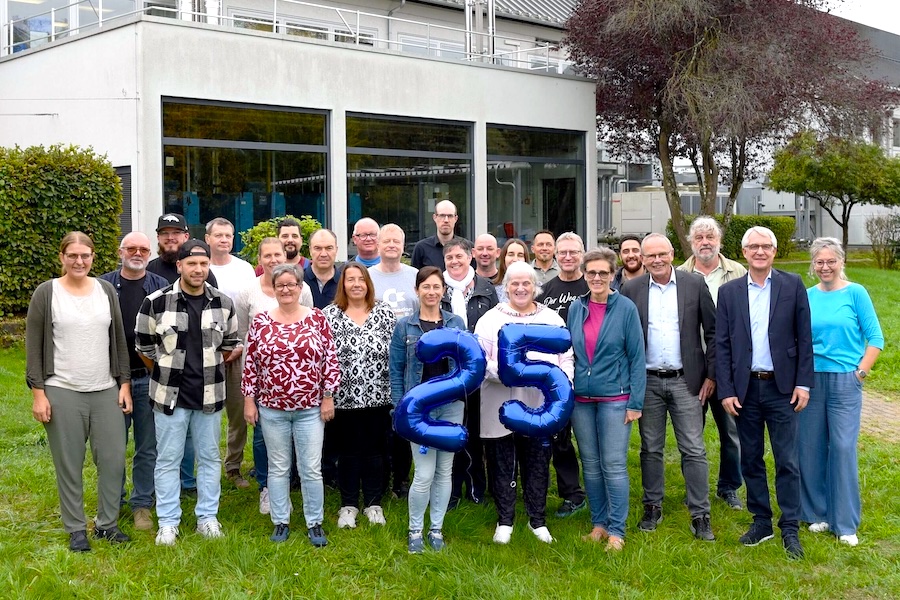
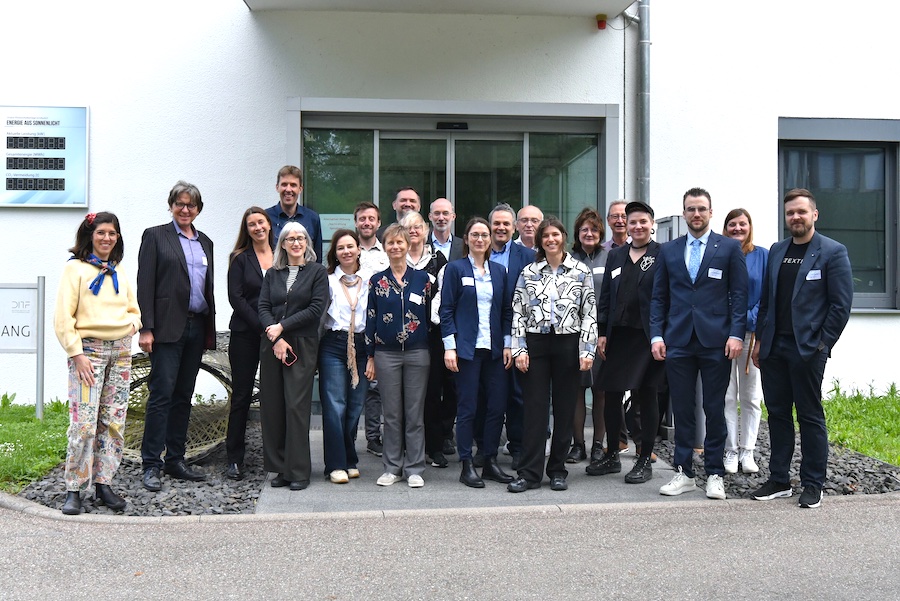
The ITVP team in front of the production facility in Körschtal near Stuttgart. © 2026 Photo: ITVP
ITV Denkendorf Produktservice GmbH (ITVP) is celebrating its 25th anniversary. On October 1, 2001, ITVP was founded as a subsidiary of the German Institutes of Textile and Fiber Research Denkendorf (DITF), Europe’s largest textile research center. This spin-off company made it possible to consolidate expertise in medical technology and significantly expand production, which had previously been initiated mostly in the DITF’s cleanrooms.

ITVP originated from the DITF’s Biomedical Engineering Department, where research was conducted on textile-based implants and their pre-products.

The team successfully completed numerous projects and brought them into production. The volume of orders soon exceeded the capacity of a research institute, leading to the decision in 2001 to establish a subsidiary, which was subsequently implemented. ITVP’s customers are primarily manufacturers of medical devices, under whose names the products are certified and brought to market.

Today, with 40 employees working in a cleanroom area of approximately 1,200 square meters, the company manufactures products for its customers and develops new, innovative products and processes that offer therapeutic benefits for patients. ITVP’s portfolio includes medical implants and their pre-products across the entire value chain. These range from absorbable polymers to mono- and multifilament yarns to textile structures such as hernia meshes, absorbable surgical meshes and tapes, as well as warp-knitted and woven vascular prostheses.
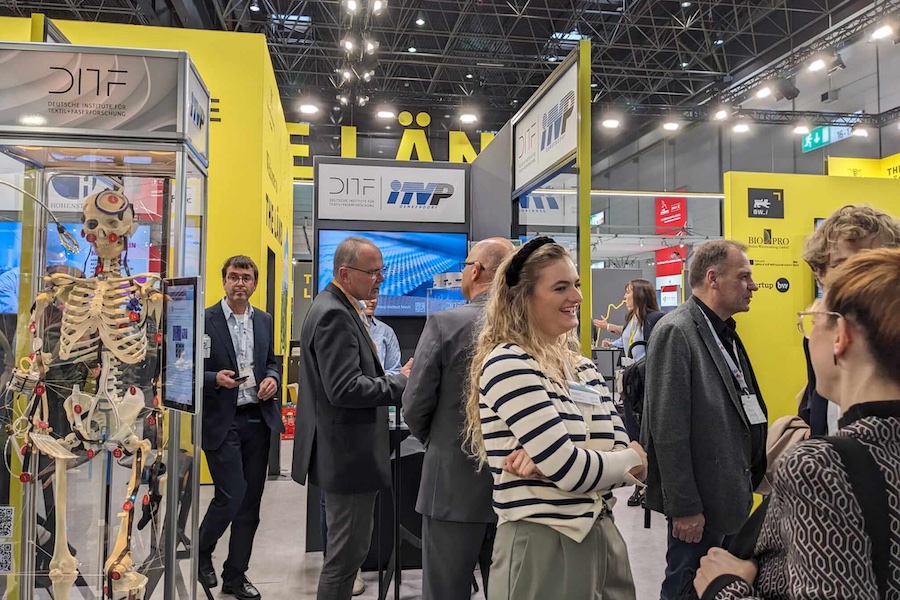
ITVP is represented at numerous international trade shows, such as WHX in Dubai or, as shown here, at Medica in Düsseldorf. © 2026 Photo: ITVP


Recent key milestones include the exclusive licensing agreement with EVONIK for absorbable polymers, as well as numerous development projects with international market leaders and emerging startups.

For 25 years, ITVP has combined the highest quality with state-of-the-art technology. A key foundation of its success is the outstanding expertise and many years of experience of its employees. Production and development activities range from the molecular level to the nearly finished medical device, which the customer need only package, sterilize, and—once certified—bring to market.
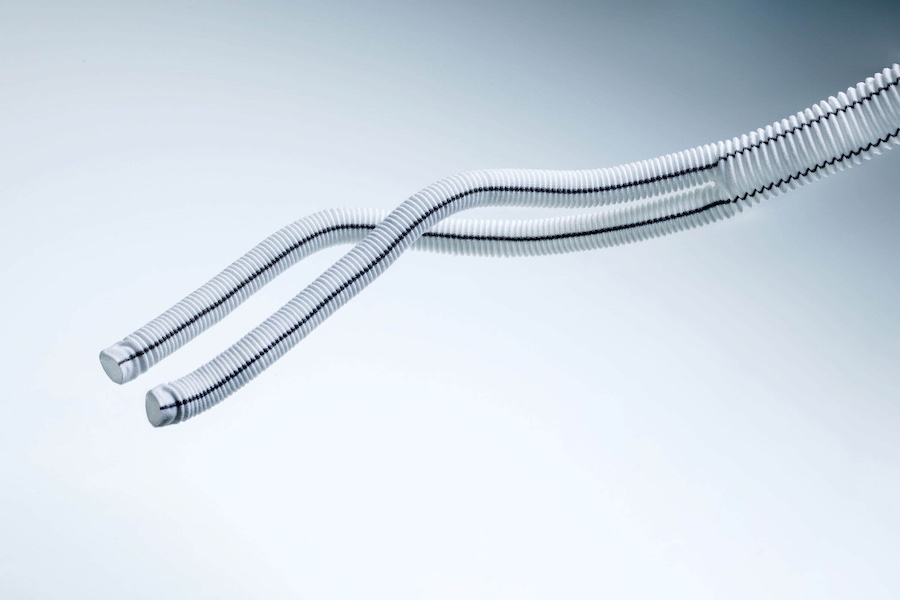
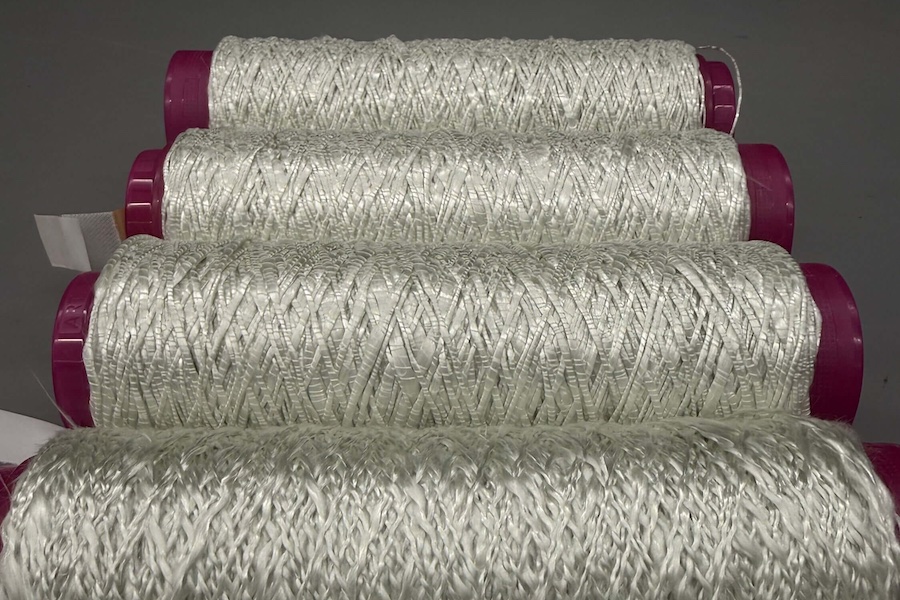
Knitted vascular prosthesis with a bifurcation for the treatment of pelvic artery aneurysms. © 2026 Photo: ITVP


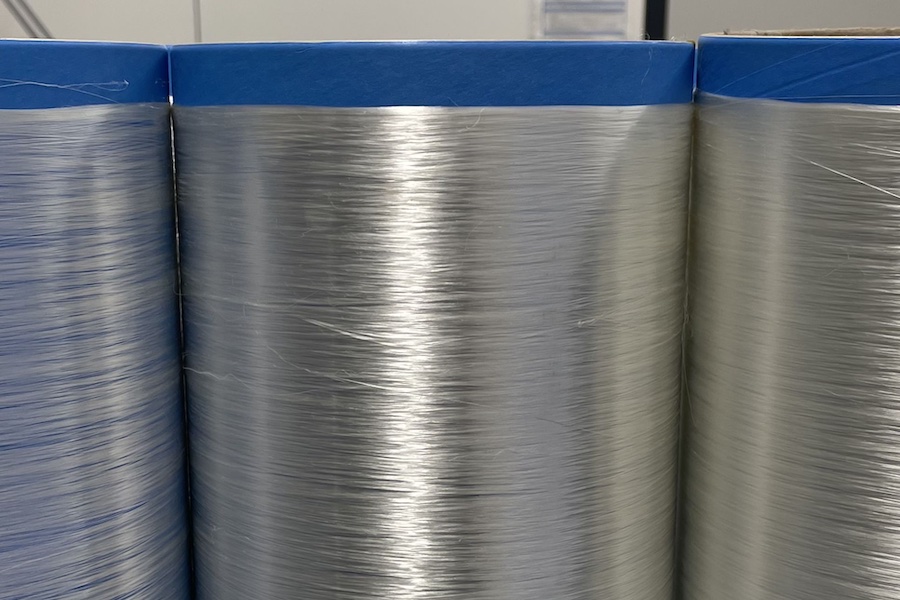
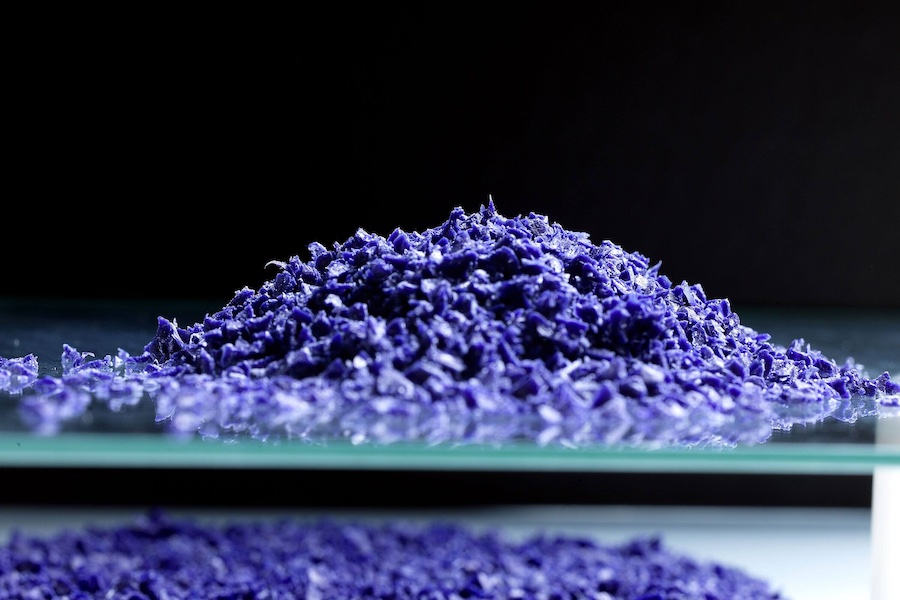
Production and development from polymer to finished medical device: One area of focus is the manufacture of biodegradable polymers. © 2026 Photo: ITVP


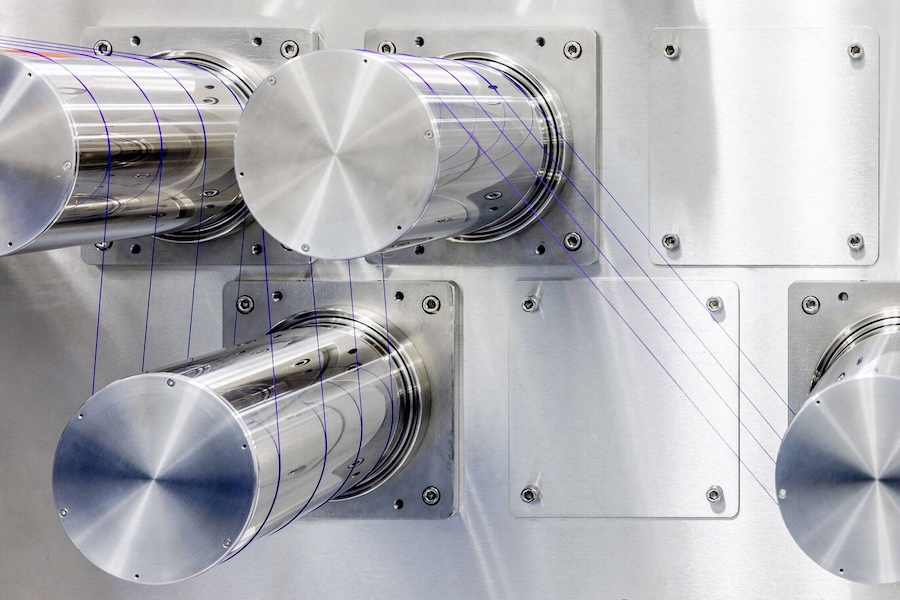
Extrusion and stretching of absorbable monofilaments. © 2026 Photo: ITVP


More News from Deutsche Institute für Textil- und Faserforschung Denkendorf

#Research & Development

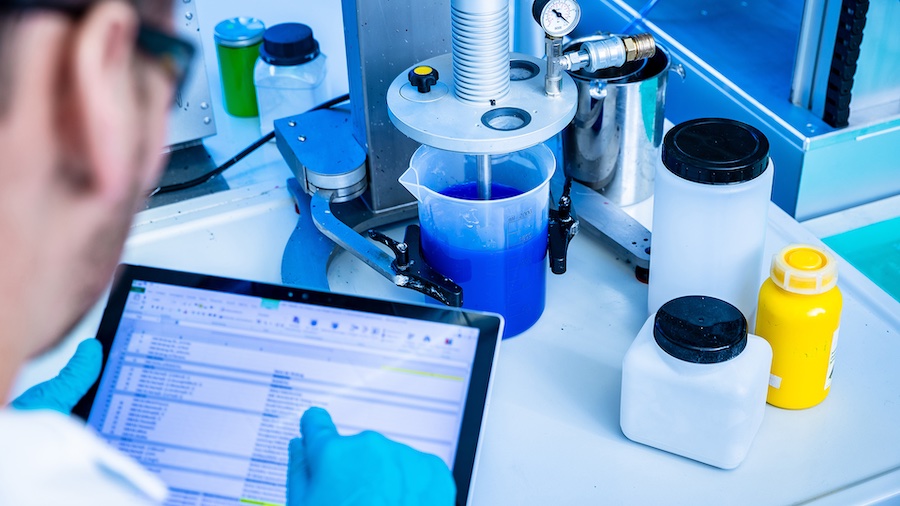
Reducing development times for technical textiles by accelerated thermo-oxidative aging in a high-pressure autoclave

Synthetic polymers used in technical textiles can be effectively protected against degradation caused by heat, oxygen, and water through the use of stabilizer systems. This enables service lives of several decades, extending to more than 50 years. As the use of durable technical textiles continues to grow, so does the demand for reliable methods to predict their service life within economically feasible testing periods. For the first time the German Institutes of Textile and Fiber Research Denkendorf (DITF) developed methods for robust service life prediction for textiles in an IGF research project.

#Research & Development

Europe is committed to recycling end-of-life wind turbine blades

Starting in 2026, Europe’s wind energy industry has committed itself to ensuring that wind turbine blades do not end up in landfills once they reach the end of their service life. The EU-funded research project REWIND is exploring ways to reuse this composite waste. The German Institutes of Textile and Fiber Research Denkendorf (DITF) are one of 13 project partners from seven countries.

#Research & Development

Smart textiles reversibly change shape in an energy-efficient manner in response to ambient temperature

Self-actuating textile structures are used in a wide range of applications, such as medical technology, automation, architecture, agriculture, and the apparel industry. An example is the use of shading nets in greenhouses, which can be deployed and retracted depending on the sunlight intensity. The German Institutes of Textile and Fiber Research Denkendorf (DITF) are developing textiles based on shape-memory polymers with reversibly controllable geometry.

#Research & Development

ALADIN paves the way for circular and demand-driven textile production in Europe

Textile production can be organized sustainably by utilizing short supply chains and preventing overproduction. This can already be achieved today by intelligently connecting and efficiently utilizing existing infrastructure. At the same time, production becomes circular when innovative technologies and materials are used that enable high-quality recycling. The ALADIN research project, launched in May 2026 and co-funded with five million euros under the EU Horizon Europe program, is creating the conditions for this.

More News on Research & Development

#Research & Development

An eco-friendly alternative to fluorocarbon treatments

Protective and outdoor clothing derives its durable water-, dirt- and oil- repellent properties from the application of fluorinated polymers or per- and polyfluorinated low-molecular- weight chemicals (PFCs). The beneficial properties thus achieved on textiles are offset by environmental and human health risks. For manufacturers of sports, medical, protective and automotive textiles, researchers at the Sächsisches Textilforschungsinstitut e.V. and the Leibniz Institute for Polymer Research have developed liquid-applied dispersions and solutions to functionalise textiles without the use of fluorine.

#Research & Development

180 years of TESTEX: From Zurich silk testing to global certification

For 180 years, TESTEX has developed alongside the textile industry while maintaining the same underlying purpose: creating trust through independent and reliable measurement. Founded in Zurich in 1846 as the Zurich Silk Conditioning Institute, TESTEX has grown from a local institution serving the silk trade into an international Swiss testing and certification institute for textiles and leather.

#Recycling / Circular Economy

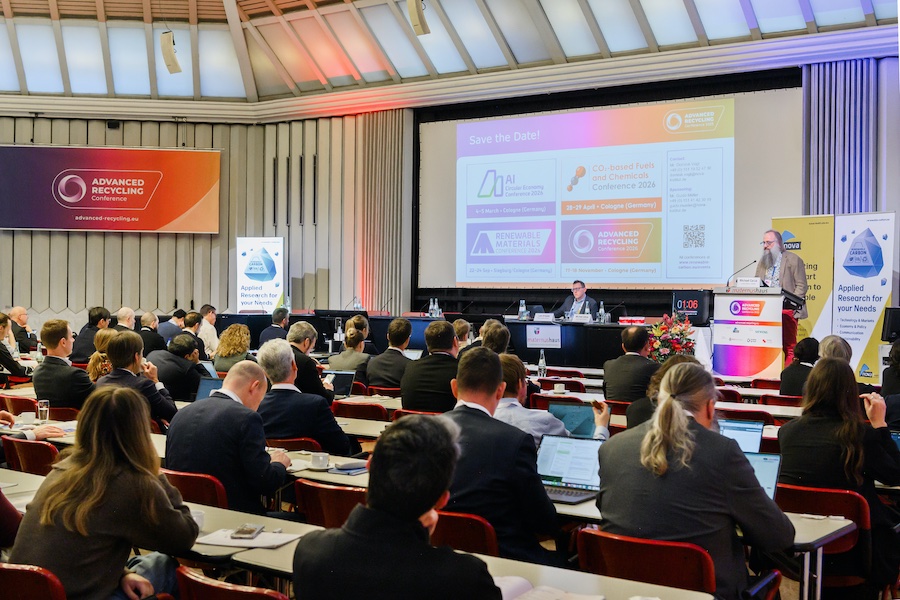
Moving Advanced Recycling from Innovation to Implementation

The Advanced Recycling Conference 2026 explores technologies, markets, financing and scale-up of innovative recycling solutions for waste streams including mixed plastic waste, textiles and PVC. Europe’s chemical and materials sector faces growing pressure to close carbon loops, strengthen raw-material safety and resilience and meet increasingly ambitious EU recycling targets. Against this backdrop, the Advanced Recycling Conference (ARC) will bring together industry leaders, technology providers, researchers, innovators and policy-makers on 17–18 November 2026 in Cologne, Germany.

Latest News

#Recycling / Circular Economy

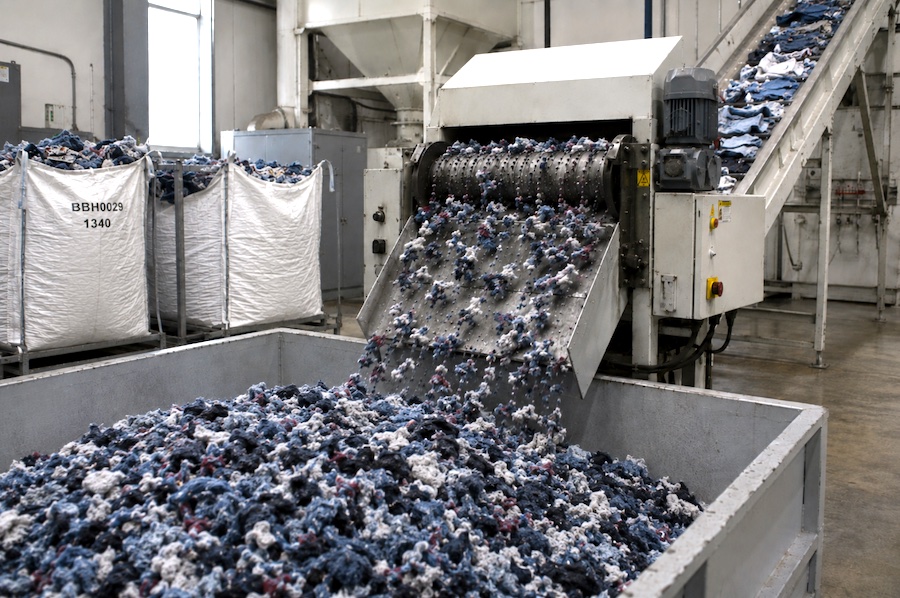
Fashion for Good launches Cotton Reloop Matrix Project to unlock commercial scale for recycled cotton

Fashion for Good today announces the launch of the Cotton Reloop Matrix Project, a cross-industry initiative that will map and physically validate the quality of commercially available recycled cotton yarns against brand specifications, giving the industry a data-backed overview of how quality, price, and recycled content intersect. The project is convened with Fashion for Good partners Arvind, BESTSELLER, C&A, Interloop, Reformation, and Shahi, together with ecosystem partner Uster.

#Digital Printing

Italian textile finishing specialist injects digital agility into luxury textile manufacturing with Kornit Digital

1st October 2026 – Kornit Digital, a global pioneer in sustainable, on-demand digital fashion and textile production technologies, shares the news that Tintoria Finissaggio 2000, one of Italy's leading textile dyeing and finishing specialists, has integrated the Kornit Presto MAX into its production environment to expand its premium textile offering to improve manufacturing efficiency and support growing demand for sustainable, agile fabric production.

#Recycling / Circular Economy

ReHubs names Béatrice Moureaux CEO to advance textile recycling in Europe

ReHubs has appointed Béatrice Moureaux as Chief Executive Officer, marking a new chapter for the European alliance as it continues to strengthen its work to scale textile-to-textile recycling across Europe. Béatrice has served as Board Advisor to ReHubs since December 2025, working closely with its Board, team and members on the organisation’s strategy and projects. She brings more than 25 years of experience across technical textiles, advanced fibres, nonwovens and circular innovation.

#Textiles & Apparel / Garment

YKK subsidiary Golden Hill Tower Limited marks 25 years of operations in Myanmar

Golden Hill Tower Limited, a subsidiary of YKK Corporation, celebrated its 25th anniversary with a ceremony in Myanmar on September 21, 2026. The event brought together approximately 230 guests, including senior executives from the YKK Group, to commemorate the company's development since the launch of its serviced apartment business in November 2000.

TOP