[pageLogInLogOut]

#Spinning

Oerlikon Barmag and Evonik – strategic partnership in the growing market for chemically recycled PET
Oerlikon Barmag and Evonik have announced their cooperation to promote chemical recycling of Polyethylene terephthalate (PET) waste. Both companies are committed to develop technologies for robust and efficient depolymerisation and purification processes, coupled with an integrated concept for repolymerisation and the associated EPC business models.
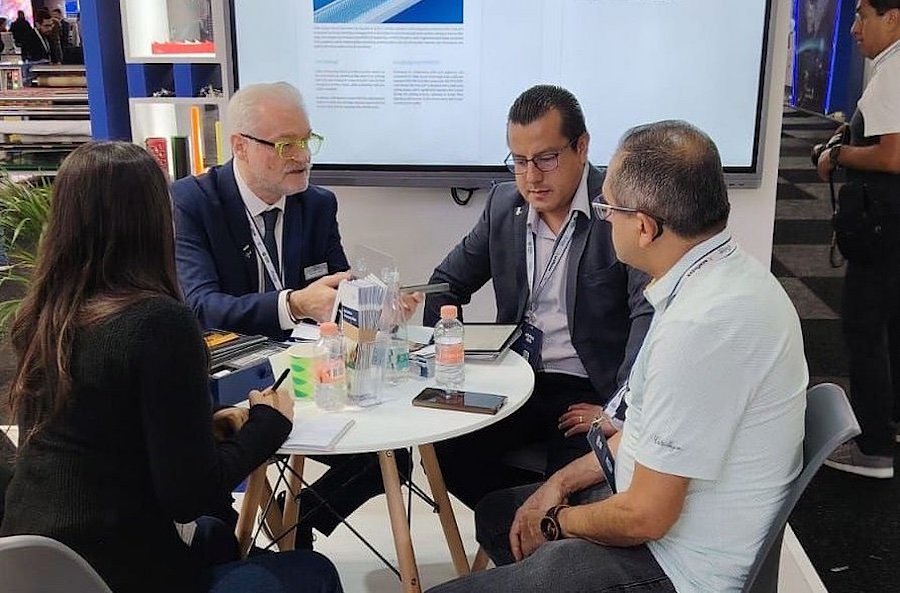
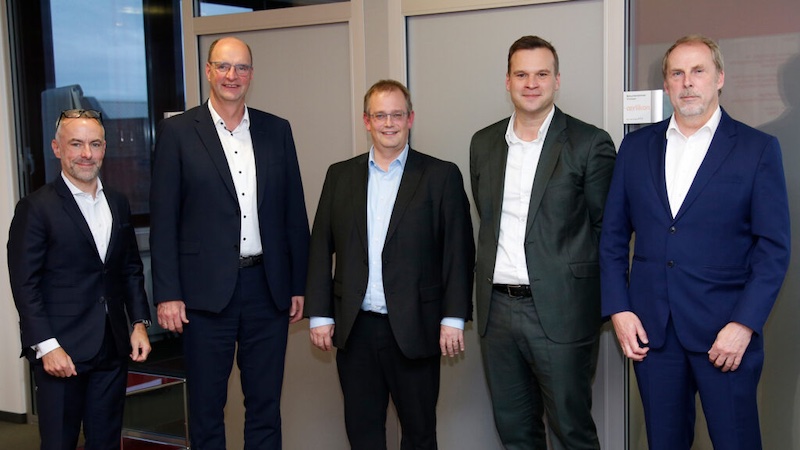
Jochen Adler, CTO, and Georg Stausberg, CEO, both Oerlikon Manmade Fibers Solutions, Dr. Max Preisenberger, Head of Catalysts at Evonik, Lukas Adamek, Head of Strategy & Business Development Oerlikon Manmade Fibers Solutions, and Dr. Gerd Löhden, SVP R&D Smart Materials Evonik at the official founding of the new partnership between Oerlikon Barmag and Evonik © 2025 Oerlikon


Together for a sustainable circular economy in the plastics industry

Oerlikon Barmag and Evonik are both leading suppliers in their respective key markets. The Remscheid-based machine and plant manufacturer Oerlikon Barmag contributes its expertise in polymer processing for the production of chemical fibers and packaging materials to the new partnership. In addition, as a core brand of Oerlikon Manmade Fibers Solutions of the Swiss Oerlikon Group, the company has excellent international market access in the polymer processing industry.

Evonik is one of the world's leading manufacturers of specialty chemicals, dedicated to driving sustainability initiatives and developing next-generation solutions. The partnership with Oerlikon Barmag aims to advance technology and process solutions for the chemical recycling of PET, leveraging innovative catalytic processes.

Investing in a sustainable future

The partners plan to fully launch and commercialize the jointly developed chemical recycling technology solution by the end of the current decade. The intensive involvement and active participation of other companies within the ecosystem (including feedstock, technology and production) and the establishment of a global development partner network are planned.

“We are firmly convinced that with Evonik we gained a strong and experienced partner in the field of specialty chemicals, and together we will establish a significant market position as a total solution provider in the growth market for chemical recycling of PET, but also drive the next generation of sustainability within the plastics industry,” says Georg Stausberg, CEO of Oerlikon Manmade Fibers Solutions.

“This partnership marks a great step forward in the chemical recycling of PET. Our new catalytic processes and chemical technologies will complement the current mechanical recycling approach enabling high recycled PET content from heavily contaminated and mixed PET waste that would otherwise be incinerated or landfilled. This way we are actively supporting a sustainable circular economy,” said Max Preisenberger, Head of Catalysts at Evonik.

Seamless integration into PET production processes

The PET recycling technology will bring numerous advantages. From a chemical perspective it is a highly efficient process, and it can be seamlessly integrated into existing PET production processes. Operational costs, investment cost and scalability are the key drivers in the development.

The combination of cooperational know-how in catalyst and process technologies will allow a chemical recycling of polyester materials from many closed- and open-loop sources, which need chemical technology to allow for high, fossil-like recyclate qualities.

“The strong and complementing technological knowhow and expertise of both companies in combination with Oerlikon Barmag’s market access and PET processing knowhow, establishes a competitive and unique partnership within the emerging chemical PET recycling industry. With the goal of creating a circular economy for all types of PET waste that is currently incinerated or landfilled, we want to scale our technology to a significant size and make it available to global PET producers and processors. In this way we will enable our customers to become more sustainable and contribute to a circular economy,” explains Lukas Adamek, Head of Strategy & Business Development of Oerlikon Manmade Fibers Solutions.
More News from Oerlikon Barmag, Zweigniederlassung der Oerlikon Textile GmbH & Co. KG

More News on Spinning

#Spinning

Rieter responds to higher raw material prices

Global political and economic developments have been leading to rising raw material and energy costs for some time. The textile machinery industry is also affected by this trend. Rieter machines and components consist to a large extent of steel, copper, aluminum and electronics. These materials in particular have seen higher demand and higher prices in recent months.

#ITM 2026

The hub of smart and sustainable transformation in yarn technologies: ITM 2026

With global fiber production projected to reach 169 million tons by 2030, yarn manufacturing is becoming one of the most strategic fields within the textile machinery industry. Located in Halls 6, 7, and 10, the Yarn Hall at ITM 2026 is set to bring together industry professionals with innovative solutions developed around automation, energy efficiency, digitalization, and circular production.

#Spinning

Perfect quality through collaboration: Machinery from Trützschler, Toyota and Murata at Zirve Tekstil

In today’s textile industry, excellence is not achieved by chance – it’s the result of deliberate decisions, technical expertise, and the courage to go beyond conventional paths. The Turkish company Zirve Tekstil has done just that: by combining the best technologies from Trützschler, Toyota and Murata, they’ve created a production setup that delivers outstanding yarn quality – recognized worldwide.

#Spinning

Rieter completes acquisition of Barmag

Rieter has successfully completed the acquisition of Barmag as of February 2, 2026. This strategically important acquisition makes Rieter the world’s leading system provider for natural and synthetic fibers.

Latest News

#Recycling / Circular Economy

Circulose restarts commercial-scale production at Ortviken plant in Sundsvall

Circulose today announced the restart of its commercial-scale production plant at Ortviken in Sundsvall, Sweden, marking a significant step in scaling next-generation materials for the global fashion industry. The company plans to resume production of CIRCULOSE®, a recycled pulp made entirely from discarded cotton textiles, in the fourth quarter of 2026.

#Textiles & Apparel / Garment

VIATT 2026 to debut German Pavilion, strengthening European participation alongside key Asian textile hubs

Vietnam’s textile and garment sector continues to be a major contributor to the country’s economic growth, with export revenues expected to reach USD 46 billion in 2025, a 5.6% increase from 2024 . From 26 – 28 February, the Vietnam International Trade Fair for Apparel, Textiles and Textile Technologies (VIATT) is set to contribute to economic growth opportunities by accelerating digital transformation and green transition across the entire textile value chain. The upcoming edition will respond to the rising demand for advanced technologies and sustainable materials with the introduction of the German Pavilion, alongside strong exhibitor participation from key Asian sectors, as well as several high-profile fringe events.

#Sustainability

Ying McGuire becomes new CEO of Cascale

Cascale today announced the appointment of Ying McGuire as Chief Executive Officer, effective June 1, 2026.

#Technical Textiles

Sustainable, lightweight, and sound absorbing: Polyester-based front trunk solution for BEVs

As car manufacturers look to further reduce their carbon footprint, Autoneum has developed an innovative front trunk solution for battery electric vehicles (BEVs), made entirely from polyester-based textile. The Ultra-Silent Frunk offers significant weight reduction, improved acoustic and thermal insulation, and uses up to 70 percent recycled material, supporting sustainable and efficient vehicle design. Autoneum, global technology leader in acoustic and thermal management for vehicles, has already received orders for the new frunk from three major OEMs in Asia and Europe to be built in three BEV models. Series production for two BEVs has been underway in China and Germany since last year.

TOP