[pageLogInLogOut]

#Spinning

Measure and control the fiber – optimize yarn quality

Uster shares insights to avoid claims, from the start of the process
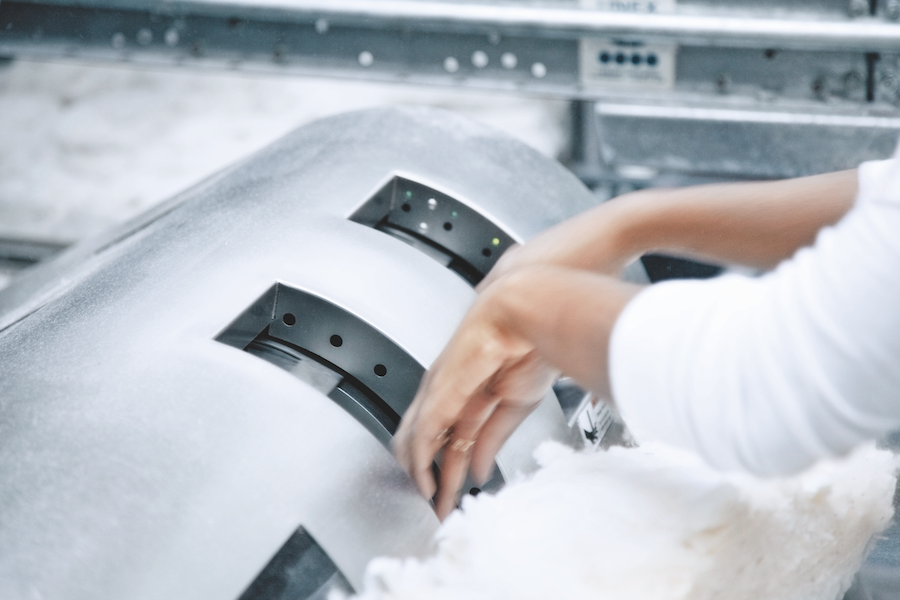
Measuring fiber quality parameters with Uster HVI © 2026 Uster Technologies
Producing consistent yarn quality is an everyday challenge – and a very difficult one. Detailed knowledge and understanding of the fiber raw material is absolutely critical to achieving the best possible quality in the yarn. To help spinners, Uster experts have put together guidelines for avoiding yarn irregularity claims, in a special edition of the Uster News Bulletin.


Uster can say with greater certainty that the reasons for claims received by spinners have remained quite similar, at least in the past 20 to 30 years. Although the severity and distribution of the reasons may vary depending on the final use of the yarn, the most common factors can be identified. Analyzing these factors and providing insights into the quest for operational excellence in spinning mills, the latest Uster News Bulletin No. 52 becomes a valuable tool to reduce yarn quality claims.

Laydown consistency – use data correctly 

One factor which greatly impacts on the spinnability of cotton fibers, as well as the yarn quality, is fiber fineness. Cotton has inherent natural variations, so fiber fineness (micronaire) is therefore the most important parameter to be controlled within required limits. 

Optimal bale mixing aims at a consistently narrow micronaire range. Minimizing variation in micronaire values, both across and within laydowns, is critical. Fluctuating micronaire values can lead to barré or inconsistencies in yarn strength, causing quality claims. To reduce the risk, spinners use data from Uster HVI for laydown management. Taking it further, many mills have integrated automated solutions such as Uster FiberQ, with algorithms that control not only micronaire but also multiple other fiber characteristics. This reduces manual work, but more importantly improves long-term quality from fiber to yarn by refining raw material selection. 

Fiber process control – look closely at the blowroom

Uster’s experience shows that the reduction of neps is another of the most frequent challenges for spinning mills. Here, it’s better to avoid creating neps at the beginning of the process, instead of trying to reduce them in spinning. Many spinners take steps in the blowroom and carding processes to tackle this issue.

In the blowroom it’s about managing trash reduction, and preventing the increase of short fiber content and neps. During cotton processing, the material is opened into tufts, with several stages of opening and cleaning aimed at removing impurities. But a side effect of these processes can be an increase in neps and short fiber content, due to the mechanical stresses. Some spinning mills adjust card settings or try to remove broken fibers during combing, but a more effective and economical solution is thorough testing and blowroom optimization. 
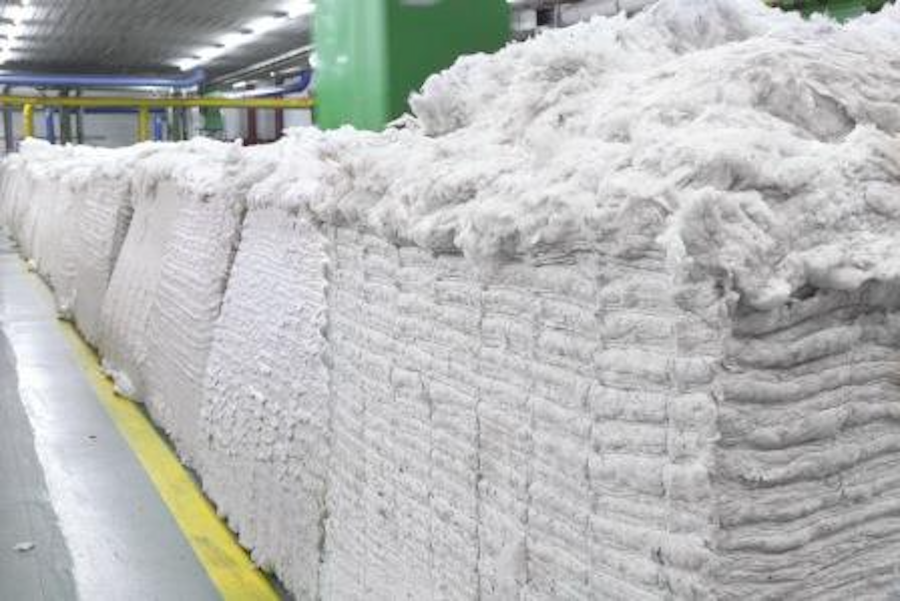
Bale mixing – laydown © 2026 Uster Technologies


To control blowroom and carding performance, measurements with Uster AFIS are part of the routine test plan, as well as also being applied after machine maintenance or changes in cotton laydown recipes. These tests ensure optimal opening and cleaning at an appropriate waste level. Close monitoring of potential fiber damage is essential. 

Processing statistics – track fiber characteristics

The processing charts in Uster Statistics track the fiber quality characteristics. Key parameters for neps, short fibers, and impurities are plotted through each processing stage. The accompanying graphic shows the typical increase in neps in the blowroom from bale to card mat, followed by a decrease after carding as neps are removed. Spinning mills can compare their own levels against the global standard. This allows a quick assessment of the situation, identifying areas of overperformance or potential improvements. 
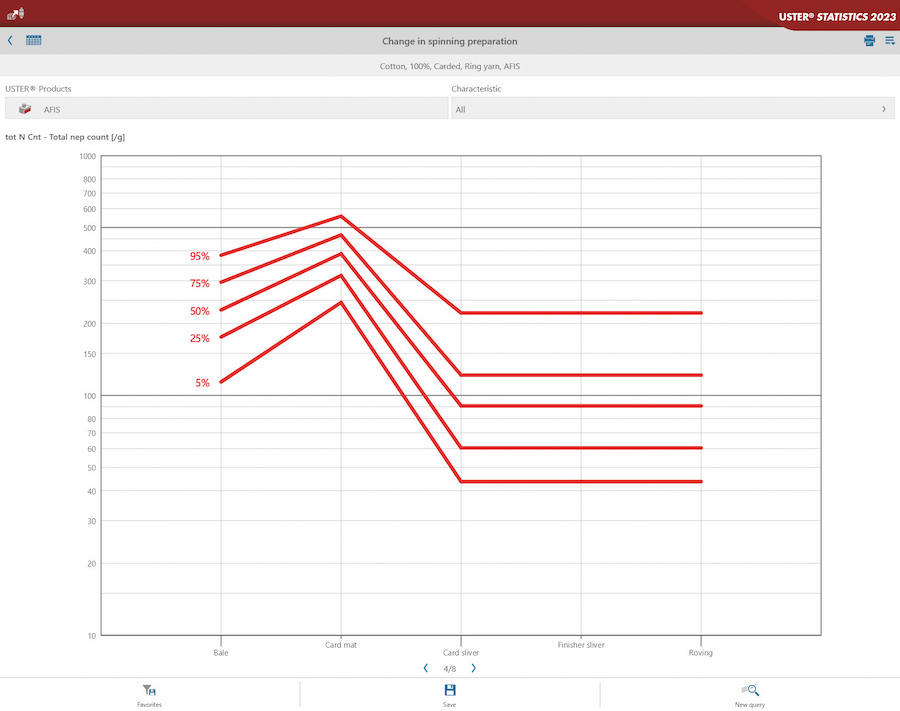
Fiber processing Uster Statistics – Total nep count (/g)  © 2026 Uster Technologies
Fiber processing Uster Statistics – Total nep count (/g) © 2026 Uster Technologies


Various raw materials – one common goal

Process control is also important, and even more so when processing mechanically recycled cotton. Depending on the source of the recycled material and its opening method, the short fiber content might already be at a naturally higher level when entering the blowroom. 

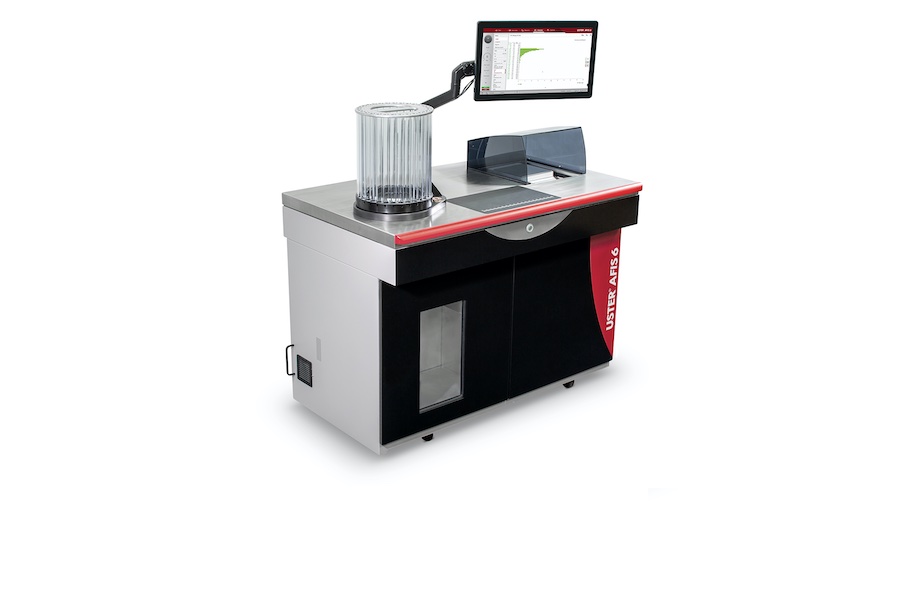
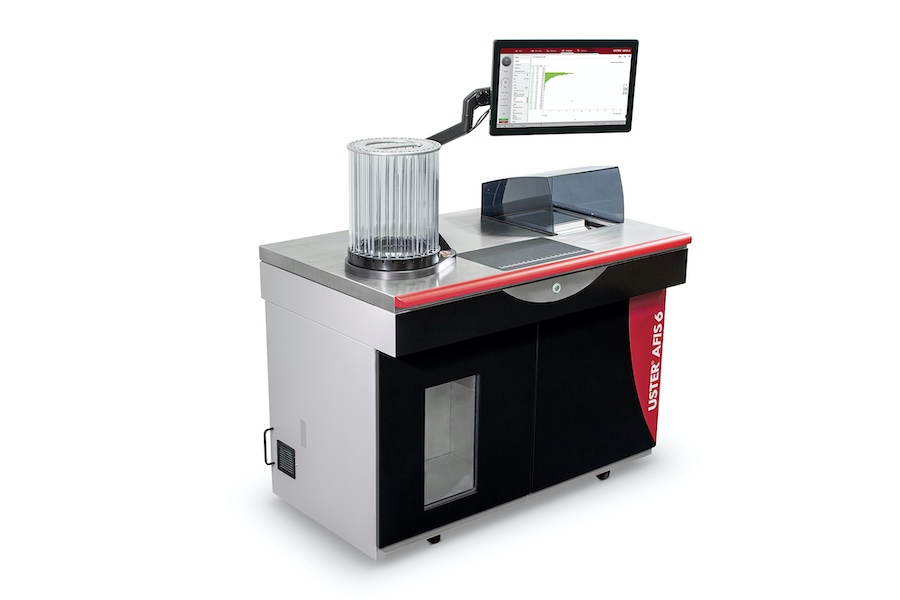
Similarly, fiber damage can apply to man-made fibers which initially have uniform cut lengths. Uster AFIS 6 is able to measure cotton as well as synthetic materials. With thorough quality management, spinners can identify fiber deterioration at source, before it results in yarn irregularity.

It’s clear that fiber characteristics significantly affect both spinnability and yarn quality consistency. Therefore, understanding fiber quality and how fibers are treated during the spinning process is essential right from the start. What is not measured, cannot be controlled! However, this is only one element to be managed to avoid quality claims. 

Uster has the technology, the experience and the knowledge to foster a new level of consistency in yarn production. The company’s know-how is freely shared in Uster News Bulletin No. 52, which includes more chapters offering ‘best practice’ advice – from spinners for spinners – on how to take control of quality claims. Also free of charge is a wide range of application literature on https://360q.uster.com as well as the new Uster Statistics.

More News from Uster Technologies AG

#ITMA Asia + CITME Singapore 2025

Uster presents novelties at ITMA Asia + CITME 2025

There’s news from Uster Technologies to be announced for the industry’s upcoming event in Singapore. The Uster 360Q universe is growing with new products, solutions and services. Innovation developments can also be recorded in the fields of man-made fiber testing and fabric inspection. Uster innovations address the industry’s trending topics as mill management and process control, optimization of delivered fabric quality and yield.

#Spinning

Uster Technologies marks 150 years of empowering quality excellence

Uster Technologies marks 150 years of excellence – a milestone that reflects continuous adaptation to customer needs and industry change. Over the decades, Uster has evolved from manufacturing quality testing instruments into a trusted partner shaping the future of textile production.

#Recycling / Circular Economy

Challenges of making yarn from recycled fibers

What does it take to spin quality yarn from recycled fibers? Uster Technologies brought textile industry leaders together to discuss the role of technology, data and automation – as well as the current challenges in using recycled raw material. Experts from Rieter, Säntis Textiles, Otto Yarns, and TVU commented on the current situation and looked into the future of spinning in a panel discussion organized at Uster headquarters.

#Spinning

Uster Technologies wins another infringement lawsuit

In a ‘victory for innovation in China’ Uster Technologies has secured a decisive judgment in a patent infringement lawsuit against a competitor. The final ruling by the Supreme People’s Court of PR China confirms that the competitor’s actions in copying the patented yarn feeder of the Uster Tester 6 constitute unlawful infringement.

More News on Spinning

#ITM 2026

Uster FiberQ excels for recycled raw materials too

Uster FiberQ is a complete solution for raw material utilization, supporting spinners to achieve consistent quality and profitability every day, building further growth for the future. The Turkish company ORTA relies on FiberQ with recycled yarn for its denim production. Data-driven knowledge puts the producer in control of raw material utilization – ready to make the correct decisions for process efficiency, quality and productivity.

#ITM 2026

EVENEXT & BURSTMATIC II to headline Mesdan S.p.A. presentation at ITM 2026

MESDAN S.p.A. will once again participate in ITM 2026, Turkey’s most important textile trade fair. The Italy-based leading manufacturer of yarn joining solutions and textile testing equipment,will be exhibiting at the booth of their local agent for the spinning, SARTEKS MAKINA at Hall 7, Stand 701A.

#ITM 2026

BB Engineering unveils new, patented “Val-uePack” spin pack at ITM

At the upcoming ITM in Istanbul, taking place June 9–13 at the Tüyap Fair Convention and Congress Center in Hall 7, Booth 702B, BB Engineering will once again be represented at a joint booth with its parent company, Barmag, and its representative, Tekstil Servis. The German machine manufacturer will show-case its expertise in man-made fiber and recycling technology, presenting its entire product portfolio, which includes compo-nents such as extruders and filters, as well as complete sys-tems for spinning synthetic fibers, air-texturing, and PET recy-cling.

#Spinning

Specialist in fine counts: New type 2777 ceramic oiler

With the new Type 2777 ceramic oiler, Barmag has added a solution for fine titers and microfilaments to its portfolio of original parts.

Latest News

#INDEX 2026

INDEX 2026: Reicofil introduces RF 5.10 upgrade boosting output by 10 percent

At INDEX 2026, Reifenhäuser Reicofil will present its latest developments for the nonwovens industry under the guiding themes “Grow Together”, “Expand Together” and “Transform Together”. On this occasion, the leading manufacturer of nonwoven machinery will be unveiling two brand-new technology advancements – RF 5.10 upgrade and RF Core – at the show.

#Recycled Fibers

Lindex and BASF partner to bring textile-­to­-textile recycled polyamide to lingerie sector

Lindex has partnered with BASF’s loopamid® to accelerate textile-­to-­textile recycling and advance the shift towards more circular material solutions in the fashion industry. Together they introduce loopamid to the lingerie sector.

#Dyeing, Drying, Finishing

Tradition and Innovation – Phoenox Textiles Ltd. relies on state-of-the-art carpet back-coating line from Brückner

For more than 70 years, Phoenox Textiles Ltd. has been synonymous with quality, reliability, and inno-vation in the textile industry. Founded in 1954 in Huddersfield (Yorkshire, UK), a region with a long tradition in textiles, this family-owned business has continued to evolve without losing sight of its roots. Today, in its fourth generation under the leadership of the Mosley family, Phoenox successfully combines decades of experience with a clear, forward-looking corporate strategy.

#Digital Printing

EFI brings high-performance display graphics, packaging, and textile printing innovations to FESPA 2026

Electronics For Imaging, Inc. (EFI™) is bringing a broad range of new hybrid, roll-to-roll, and textile inkjet innovations to FESPA Global Print Expo 2026, taking place 19-22 May at Fira Barcelona Gran Via. Visitors to the EFI stand (Hall 3, #C85) will see the new EFI VUTEk M3h X hybrid LED printer, new EFI VUTEk® FabriVU® 340 i8 eight-colour dye sublimation printer, the EFI VUTEk X5r roll-to-roll LED printer, and the EFI VUTEk Q3h XP seven-colour hybrid printer in action, each designed to help sign and display producers scale output, diversify applications, and drive more profitable growth.

TOP