#Spinning
"We will become a recycling powerhouse"
Interview
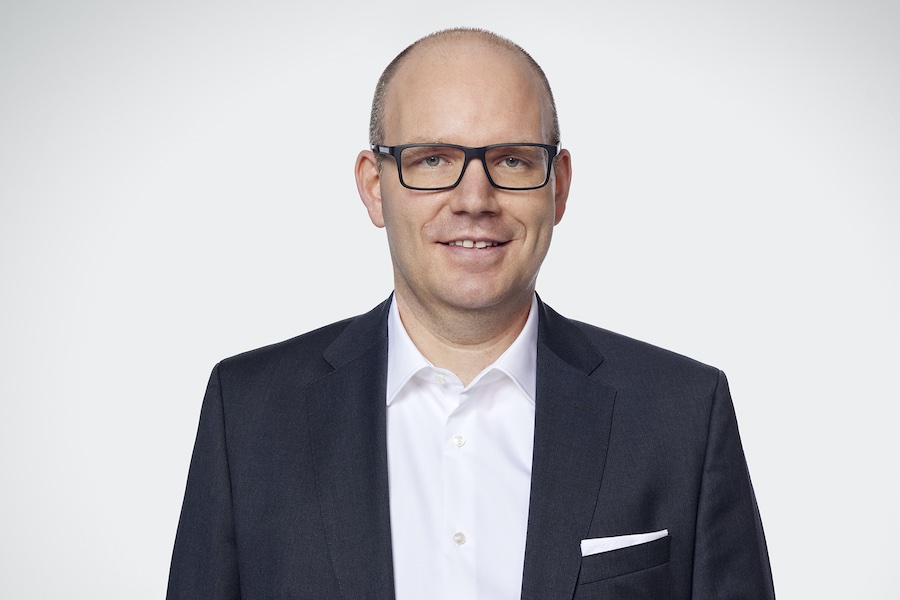
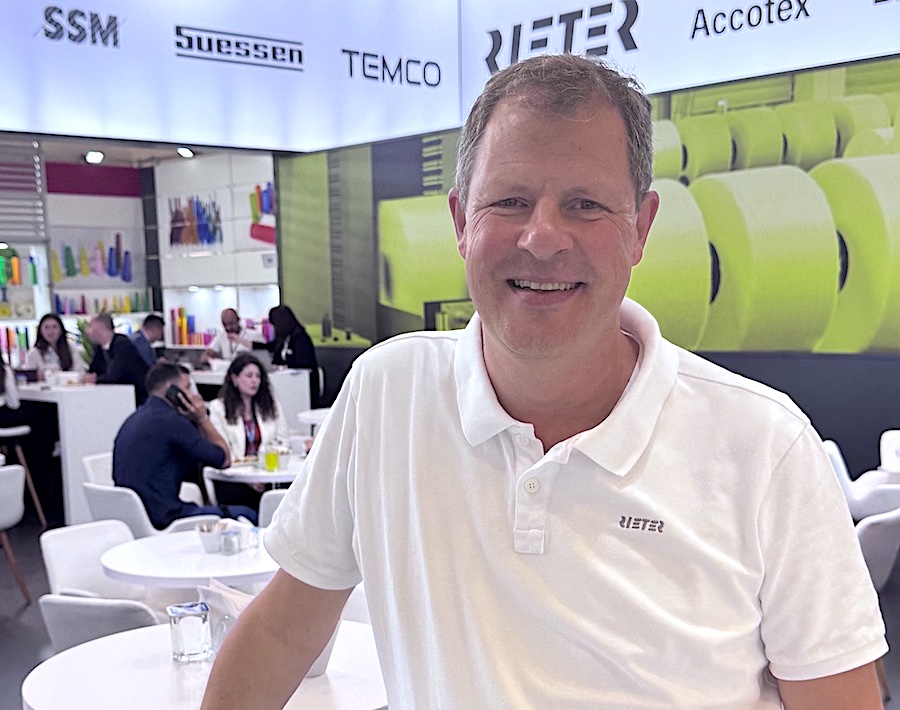
Thomas Oetterli, CEO Rieter-Group
by Oliver Schmidt, Editor in Chief, TexData International
Wenn Sie das Interview in Deutsch lesen möchten, klicken Sie bitte hier
1. Market environment and investment climate
Mr. Oetterli, the textile industry is currently facing pressure from many directions. How do you assess the current situation in the textile machinery market, and where do you see opportunities for renewed momentum?
The textile industry has always been a highly cyclical market. What makes the current situation different is that this downturn has lasted significantly longer than previous cycles.
Nevertheless, I can see light at the end of the tunnel. I was recently in India, our second-largest market, and there is a clear sense of optimism. Virtually every customer I met was talking about investing again.
We are also seeing encouraging signs in other regions. South America is showing promising developments, and even markets that have faced major challenges in recent years – including Bangladesh, Pakistan, Vietnam and Türkiye – are beginning to recover.
Of course, the past few years have been shaped by a series of disruptions. Geopolitical tensions, trade conflicts, supply chain uncertainties and broader economic challenges have all put considerable pressure on the industry. Time and again, recovery seemed within reach, only for new obstacles to emerge.
I am generally an optimistic person. However, that optimism is supported by the figures, data and signals we are seeing across many markets today. Global demand for textiles will continue to grow in the long term. That is why I am convinced that the industry will return to a phase of investment and growth.
2. Personal reflections as CEO
You have been leading Rieter for around three years. Looking back today, what have you achieved so far, and what will be your key priorities going forward?When I took over as CEO in early 2023, the industry was already going through a difficult market phase, although order books were still relatively full. At the time, many people believed the downturn would last about a year. Today, we are in the fourth year of the crisis. In some ways, I have felt more like a crisis manager than a CEO.
That naturally comes with challenges. Prolonged uncertainty puts pressure not only on companies and employees, but also on management. Everyone would prefer to operate in a healthy market environment. At the same time, crises also have a positive side. They increase the willingness to embrace change and to rethink conventional ways of doing things. For Rieter, that has been important and, in many respects, beneficial.
Personally, I have learned an incredible amount over the past three years. The textile industry operates at an exceptionally high technological level. Spinning machinery has to perform under extremely demanding conditions – heat, dust, humidity and continuous 24/7 operation over many years. The performance and reliability of these technologies continue to impress me.
I have also realized that our traditionally minded industry still has considerable potential and, in some areas, needs to accelerate its transformation. Topics such as digitization, automation, artificial intelligence and modern business processes will shape the future of our industry.
To be honest, when I first joined the industry, I sometimes wondered why people spent decades working in such a cyclical business that repeatedly goes through periods of crisis. Now, three years later, I understand it very well. I can see why so many people spend their entire careers in this industry. Over the past three years, I have come to share the enthusiasm for the textile industry that many of my colleagues always talked about. The textile industry is demanding, cyclical and sometimes challenging, but it is also incredibly fascinating. That is exactly why I enjoy this role more today than ever before.
3. Barmag, integration and the new Rieter Group
Many observers see the acquisition of Barmag primarily as a strategic expansion of the business. Looking beyond that, what was it about Barmag that particularly attracted Rieter, why do the two companies fit together so well, and how are you ensuring that the integration will be successful?
It is important to understand that Rieter has been trying to acquire Barmag for around 30 years. This has been a very long pursuit. We were turned down several times, but we never gave up and kept coming back.
Why were we so determined to acquire Barmag? First of all, Barmag is an outstanding company and a technology leader in our industry. It combines high quality standards, an excellent team and tremendous know-how. Together with Neumag, it is truly a gem within the industry.
Secondly, we see man-made fibers as an important future growth market. Global demand for fibers and apparel will continue to increase, and this additional demand cannot be met by natural fibers alone. Man-made fibers will therefore play an increasingly important role in the future.
Equally important for us was the cultural fit. From our very first discussions, it became clear that the two companies share many of the same values and ways of working. Today, several months after the acquisition, I can say that our enthusiasm for the partnership has only grown stronger. There is a great deal of mutual respect on both sides, as well as a shared commitment to performance, technology and innovation.
That is why we are pursuing what we call a soft integration approach. We look at areas where we can support each other and create additional value. This includes combining purchasing volumes, strengthening service networks and optimizing spare parts operations.
When it comes to the core business, however, we deliberately want to change as little as possible. Many customers have worked with the same contacts and teams for years, sometimes even decades. We want to preserve and strengthen that trust.
We also want to demonstrate that this is a partnership of equals at the leadership level. Georg Stausberg, Head of Barmag, has joined the Rieter Group Executive Committee and has become my deputy. Our objective is not to fundamentally change successful businesses. It is to bring together their strengths and create additional value for our customers.
4. Vision 2027: The fullyautomated spinning mill
With Vision 2027, Rieter is pursuing the goal of a fully automated spinning mill. Why is this vision so important for the industry, and what benefits will it bring in terms of productivity and competitiveness?
The first question is why the industry needs such a solution in the first place. Anyone who has visited a spinning mill knows that many of the jobs are demanding. As a result, many companies are finding it increasingly difficult to attract and retain qualified employees.
In some regions, spinning mills are already unable to utilize their full production capacity because they simply cannot find enough people to operate them. At the same time, labor costs are rising significantly around the world. For mill operators, labor is becoming both scarcer and more expensive. Automation is therefore not just a technological development – it is an economic necessity.
This is where Rieter’s position as a system provider becomes a major advantage. We can think about and implement automation across the entire spinning process.
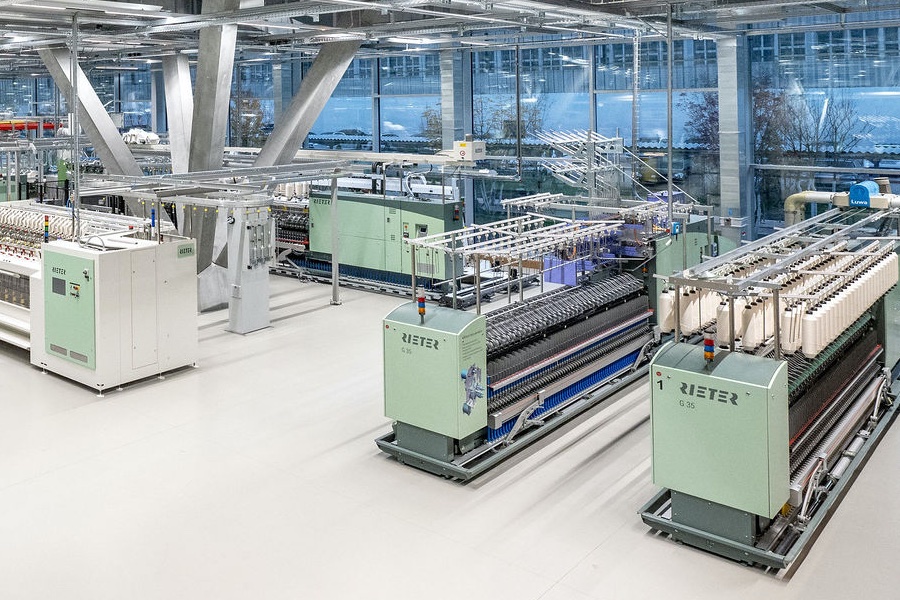
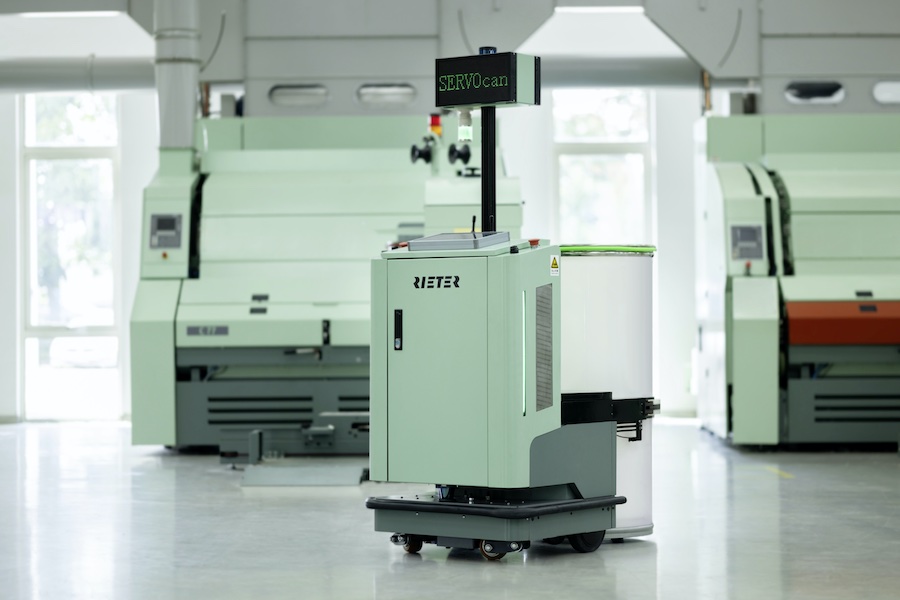
At ITMA 2027 in Hanover, we will present this fully automated spinning mill. That is the goal we are working towards. In such a mill, almost all of today’s manual activities will be automated. This will not only improve productivity, but also enhance process stability and overall profitability.
We started by asking ourselves what a spinning mill would look like if virtually no manual tasks were required. We then analyzed which activities are already automated, which could be automated using existing technologies, and where entirely new solutions still need to be developed. This approach allows us to turn the vision into reality step by step.
5. Recycling and the new textile value chain
Rieter has made significant progress in processing recycled fibers in recent years. Where does Rieter stand today, and why could this market become so strategically important for the new Rieter Group in the years ahead?
There is no way around recycling. Whether we like it or not, we need a functioning circular economy. Companies don’t only have an economic responsibility, but also a responsibility towards society and the environment.
At the same time, we have to acknowledge that textile circularity is still in its infancy. Although the topic has been discussed for years, less than one percent of clothing is currently recycled back into new clothing.
If you take a closer look at recycling, the challenge is not a single technology. What is emerging is an entirely new value chain. From my perspective, it consists of five key steps: sourcing, sorting, tearing, spinning and marketing.
First, the material must be sourced in sufficient quantities. Then it needs to be sorted by color, fiber type and material composition. After that comes tearing, where textiles are opened and processed back into fibers. This has to be done carefully, because fibers that become too short can no longer be used effectively. Only then comes the spinning of new yarns. And finally, the resulting products have to be successfully positioned in the market.
We are active in all five areas today and want to offer our customers a complete solution in the future. Technologically, we are already very advanced. With the integration of Barmag, we have the opportunity to become the only supplier capable of covering both mechanical and chemical recycling – for cotton, viscose and polyester. We will become a recycling powerhouse.
The major brands have all committed themselves to increasing the use of recycled materials and reducing textile waste. However, many of them still do not have a solution for how to bring the enormous volumes of post-consumer textiles back into the value chain.
In the end, however, economics will be decisive. Recycling only works on an industrial scale. Economies of scale are the key.
One thing is clear: customers will not pay more simply because a product is recycled. Quality, availability and cost must be competitive. That is what the industry is working towards today – and we intend to play a leading role in that development.
6. Artificial intelligence as the next productivity driver
Artificial intelligence is currently transforming almost every industry. What role does AI already play at Rieter, and where do you see the greatest potential in the years ahead?Today, virtually every larger company is dealing with artificial intelligence. Everyone is talking about ChatGPT, Copilot, Claude and other AI applications. In my view, however, the key is not simply to use AI, but to identify the right use cases.
The greatest potential lies wherever repetitive and transactional processes take place. In these areas, AI can already take over tasks or significantly accelerate them.
However, we should not expect AI to solve every problem automatically. It is important to understand where the technology creates real value and where it does not.
Artificial intelligence will also play an increasingly important role in our machines and systems. Many tasks that currently require experience and manual intervention will be handled automatically in the future.
For Rieter, artificial intelligence is therefore not an isolated technology topic. It is an important building block of our long-term strategy.
AI can help. But it is not the case that AI simply appears and suddenly everything gets better. You have to understand where it can be applied – and where it cannot.
Mr Oetterli, thank you very much for the interesting insights and the interview.