[pageLogInLogOut]

#Textile chemistry

EMPA introduces friendly fibers for textiles without PFAS
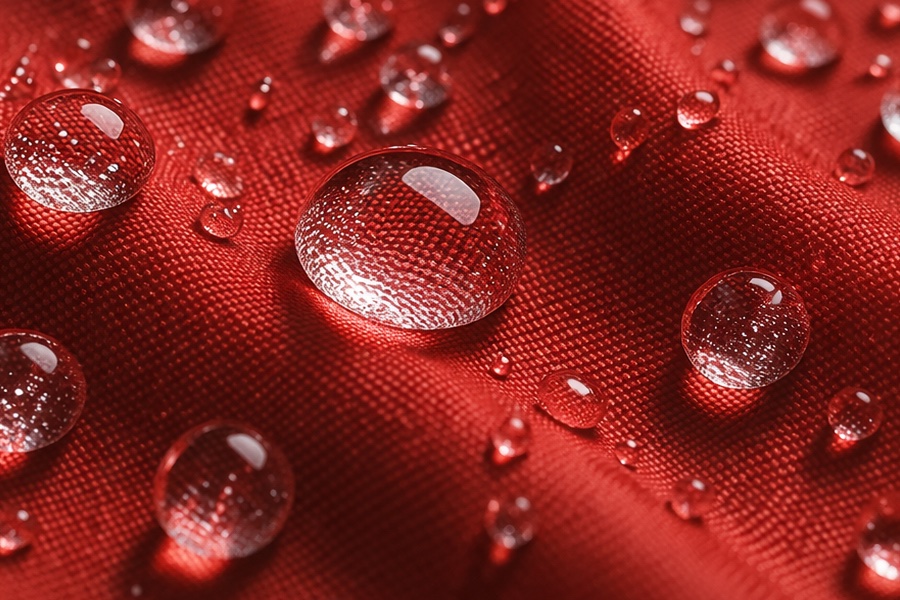
Rain jackets, swimming trunks or upholstery fabrics: Textiles with water-repellent properties require chemical impregnation. Although fluorine-containing PFAS chemicals are effective, they are also harmful to human health and accumulate in the environment. Empa researchers are now developing a process with alternative substances that can be used to produce environmentally friendly water-repellent textile fibers. Initial analyses show: The "good" fibers repel water more effectively and dry faster than those of conventional products.
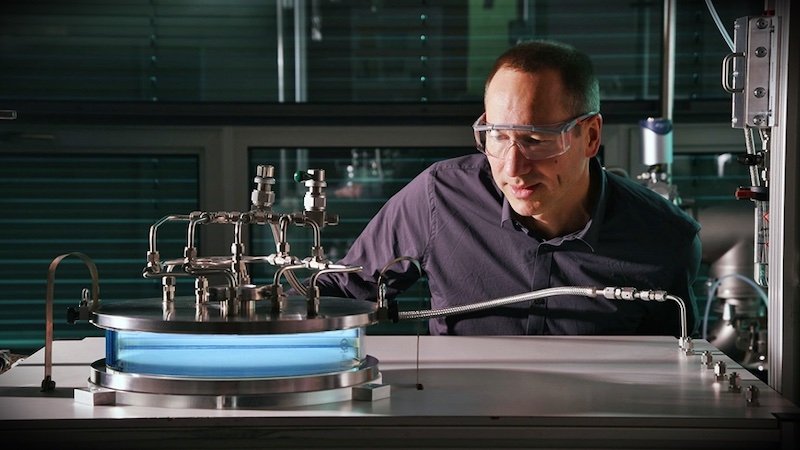
Empa researcher Dirk Hegemann develops plasma coating processes for environmentally friendly textiles © 2024  Empa
Empa researcher Dirk Hegemann develops plasma coating processes for environmentally friendly textiles © 2024 Empa


If swimming trunks are to retain their shape after swimming and to dry quickly, they must combine two properties: They must be elastic and must not soak up water. Such a water-repellent effect can be achieved by treating the textiles with chemicals that give the elastic garment so-called hydrophobic properties. In the 1970s, new synthetic fluorine compounds began to be used for this purpose – compounds that seemed to offer countless application possibilities, but later turned out to be highly problematic. This is because these fluorocarbon compounds, PFAS for short, accumulate in the environment and are harmful to our health (see box). Empa researchers are therefore working with Swiss textile companies to develop alternative environmentally friendly processes that can be used to give fibers a water-repellent finish. Dirk Hegemann from Empa's Advanced Fibers laboratory in St. Gallen explains the Innosuisse-funded project: "We use so-called highly cross-linked siloxanes, which create silicone-like layers and – unlike fluorine-containing PFAS – are harmless."

Shrouded in plasma clouds
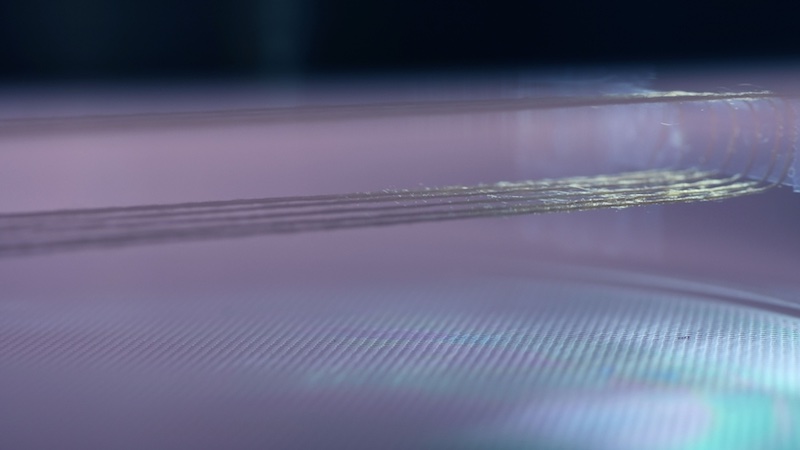
Plasma cloud: The plasma system atomizes environmentally friendly siloxanes into a cloud that can coat textile fibers with nanometer precision. Image: Empa


Empa's plasma coating facilities range from handy table-top models to room-filling devices. For the coating of textile fibers, the siloxanes are atomized and activated in a reactive gas. They thereby retain their functional properties and enclose the textile fibers in a water-repellent coating that is only 30 nanometers thin. Fibers coated this way can then be processed into water-repellent textiles of all kinds, for example garments or technical textiles such as upholstery fabrics.

The advantage over conventional wet-chemical processes: Even with complex structured textiles, the seamless distribution of the hydrophobic substances is guaranteed right into all turns of the intertwined fibers. This is crucial, because even a tiny wettable spot would be enough for water to penetrate into the depths of a pair of swimming trunks, preventing the garment from drying quickly. "We have even succeeded in permanently impregnating more demanding, elastic fibers with the new process, which was previously not possible," says Hegemann.


Great interest from industry

Where water cannot penetrate: Even stretched fibers allow the water droplet (blue) to roll off. (Microscopy, 30x magnification) Image: Cilander/Empa


In initial laboratory analyses, textiles made from the new fibers with an environmentally friendly coating are already performing slightly better than conventional PFAS-coated fabrics. They absorb less water and dry faster. However, the miraculous properties of the fluorine-free coating only really come into their own after the textiles have been washed several times: While the performance of conventional PFAS coatings in stretchy textiles declines considerably after repeated wash cycles, the fluorine-free fibers retain their water-repellent properties.

Hegemann and his team are now working on scaling up the fluorine-free laboratory process into efficient and economically viable industrial processes. "The industry is very interested in finding sustainable alternatives to PFAS," says Hegemann. The Swiss textile companies Lothos KLG, beag Bäumlin & Ernst AG and AG Cilander are already on board when it comes to developing environmentally friendly fluorine-free textiles. "This is a successful collaboration that combines materials, fiber technology and plasma coating and leads to an innovative, sustainable and effective solution," says Dominik Pregger from Lothos. And Bernd Schäfer, CEO of beag, adds: "The technology is environmentally friendly and also has interesting economic potential."
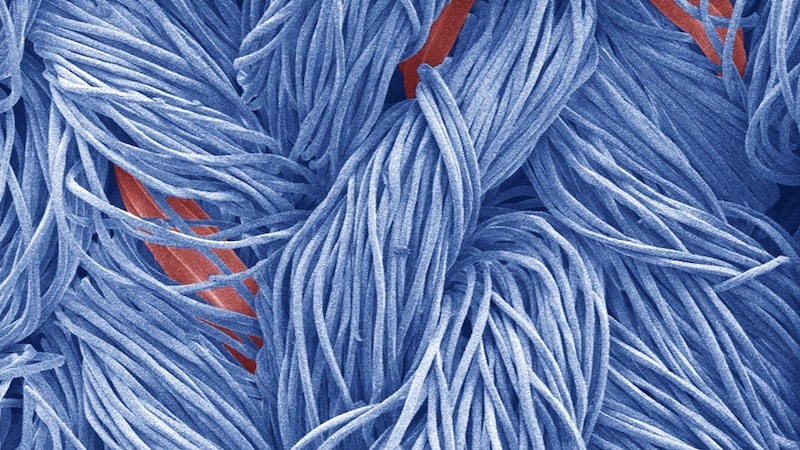
Textile fibers (blue) can be given a uniform water-repellent finish using plasma coating. Even more demanding elastic fibers (red) remain permanently impregnated thanks to the new process. (Scanning electron microscopy, colored) Image: Empa


More News from TEXDATA International

#People

Happy Holidays!

Dear reader, the year 2025 is drawing to a close. We are entering what we hope will be a peaceful holiday season, spending time with our families and taking a moment to pause and reflect. We hope we have been able to support you once again this year with relevant news and articles, and we look forward to surprising you with many innovations in the coming year. Enjoy the festive season, stay healthy, and we wish you a happy and joyful holiday season.

#Recycling / Circular Economy

textile.4U publishes special edition “Top 100 Textile Recycling Companies 2025”

With a comprehensive 176-page special edition, textile.4U is dedicating its latest issue entirely to one of the most dynamic and influential topics in today’s textile industry: textile recycling. The new issue, published exclusively in high-quality print, presents the Top 100 textile recycling companies researched and selected by TexData – organizations that already play a key role in the transition to circular textiles or are expected to have a significant impact in the near future.

#Recycling / Circular Economy

Responsible Textile Recovery Act of 2024 signed by Governor

Senator Josh Newman (D-Fullerton) is proud to announce that Senate Bill 707 (SB 707), the Responsible Textile Recovery Act of 2024, has been signed into law by the Governor of California, Gavin Newsom. This groundbreaking legislation establishes the country’s first Extended Producer Responsibility (EPR) textile recycling program, marking a significant step forward in the state’s efforts to combat waste and promote sustainability.

#Textiles & Apparel / Garment

Modtissimo promotes sustainability with 28 coordinates in the Green Circle

Modtissimo is proving more and more to be a textile and clothing show that delivers the latest innovations in the area of sustainability, with the iTechStyle Green Circle being the main showcase for companies' creations. In this 60+4 edition, taking place on 12 and 13 September, 28 coordinates will be exhibited in a section organised by CITEVE and curated by Paulo Gomes.

More News on Textile chemistry

#Textile chemistry

PIGMENTURA by CHT wins the German Sustainability Award in the Products category

On Thursday, December 4, 2025, the German Sustainability Award was granted in Düsseldorf for the CHT Group's state-of-the-art pigment dyeing process PIGMENTURA.

#Textile chemistry

Archroma and Lilienweiss join forces to deliver faster and localized color management services in Europe

Archroma, a global leader in specialty chemicals focused on sustainable solutions, today announced its partnership with Lilienweiss, who will begin offering Archroma Color Management solutions across Europe starting January 2026.

#Man-Made Fibers

Ascend Performance Materials secures court approval for restructuring and appoints new CEO

Ascend Performance Materials has reached a major milestone in its Chapter 11 process: the U.S. Bankruptcy Court for the Southern District of Texas has confirmed the company’s Plan of Reorganization. Ascend expects to emerge from Chapter 11 by year’s end with a significantly improved capital structure. In parallel with the restructuring progress, Ascend announced a leadership change.

#Textile chemistry

Indorama Ventures ranks first globally in ChemScore 2025 for excellence in chemicals management and environmental performance

Indorama Ventures Public Company Limited (IVL), a global sustainable chemicals company, has been ranked first globally with a green card in ChemScore 2025, the internationally recognized benchmark developed by ChemSec, assessing the environmental performance and chemical management of the world’s 40 largest chemical companies. The company has consistently found itself in the top three ChemScore companies and scored twice as high on average as the Asia-based companies taken together.

Latest News

#Weaving

Lindauer Dornier announces leadership transition in weaving machine business

After more than ten successful years at Lindauer DORNIER GmbH, Mr Wolfgang Schöffl will leave the family-owned company at the end of the year to enter well-deserved retirement.

#Heimtextil 2026

Texpertise Focus AI: Messe Frankfurt puts Artificial Intelligence centre stage at its international textile and apparel trade fairs

Under the banner 'Texpertise Focus AI, Messe Frankfurt will place a strong emphasis on Artificial Intelligence (AI) across its international textile and apparel trade fairs from 2026 onwards, setting a future-shaping signal for the industry. The initiative highlights the responsible use of AI along the entire textile value chain, from fibre production to the point of sale. The programme will launch at Heimtextil in Frankfurt in January 2026.

#Technical Textiles

Autoneum and Polestar set new benchmarks for passenger experience and sustainability

As the global market leader in sustainable acoustic and thermal management, Autoneum is a key supplier of interior and exterior components for the highly anticipated Polestar 5 model. The successful collaboration between Autoneum and Polestar marks a significant milestone in sustainable automotive engineering: the electric grand tourer sports car features several innovations in lightweight, fully recyclable polyester-based components that ensure a superior driving experience. Polestar 5 was revealed at the IAA Mobility 2025 in Munich and is available in 24 markets.

#Natural Fibers

Cashmere producers stress the importance of The Good Cashmere Standard®

At the invitation of the Aid by Trade Foundation (AbTF), over 70 experts from the cashmere production and supply chain, as well as other specialists, met at the GCS Unit Meeting in Shanghai, China to discuss the progress and new objectives of The Good Cashmere Standard (GCS). The meeting focused on implementation and verification of the standard, important aspects of animal welfare and the importance of the standard in the global textile market.

TOP