[pageLogInLogOut]

#Textile processing

On track to save energy
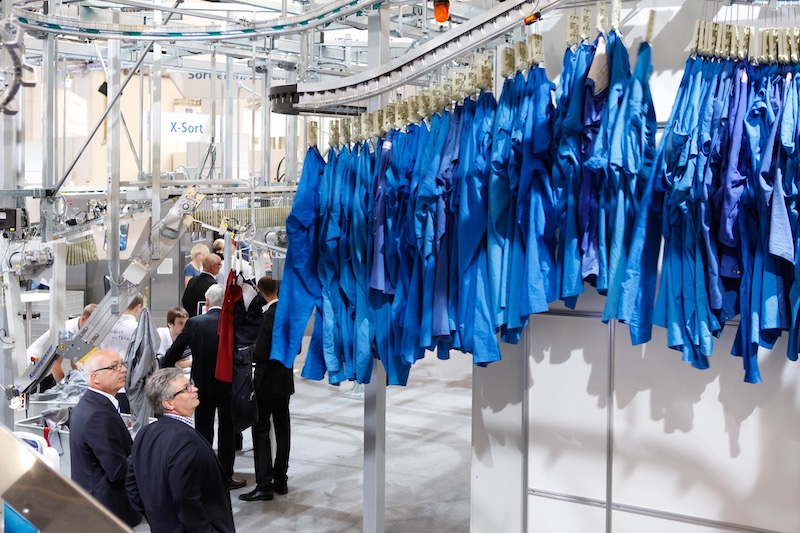
Soaring energy costs are a driving factor for innovations in the commercial textile-care sector. They generate new solutions that lower consumption, reduce emissions and in many cases extend textile durability. At Texcare International in Frankfurt am Main from 6 to 9 November, a large number of manufacturers will be presenting a broad spectrum of solutions that help dry cleaners and laundries to increase their resource efficiency.
At Texcare, manufacturers showcase a wide range of solutions that help dry cleaners and laundries become more resource efficient © 2024 Messe Frankfurt


Commercial laundries represent an energy-intensive business sector. Currently, energy accounts for around 15 percent of total costs, with process heat making up the lion's share. Against a backdrop of continuing high energy costs and the challenge of global warming, energy-saving measures and the move away from fossil fuels are of increasing importance for laundries. Hence, all machine and equipment manufacturers are working on the development of concepts that optimise the use of resources and reduce carbon dioxide emissions through modern washing methods, the recycling of water and energy and the use of renewable sources for heat generation.

Water is the key to cutting costs

Recycling process water is nothing new in the laundry business. However, concepts for recycling pressing water, filtered rinsing and process water and the use of cooling water from the dry-cleaning machine for transferring articles to the wet cleaning machine are constantly being improved, which further reduces the amount of fresh water used. In addition, the modern technologies installed in laundry machines, such as weighing cells or low-level sensors, adjust the resources used to the actual load weight and thus contribute to a reduction in costs.

Concepts for reducing machine energy consumption

Energy is a very valuable resource for textile care businesses, and this is why manufacturers of laundry and dry-cleaning machines, as well as finishing appliances, focus on technology with an optimum efficiency classification: such machines ensure the best possible water extraction and low residual moisture in the laundry so it can be dried quickly and efficiently. Plant manufacturers use new materials, e.g. ceramics and carbon steel, to reduce ironer gas consumption. They also utilise heat-pump technology and generate hot water by means of solar energy. Modern machines are also equipped with special coatings that stop dry, energy-absorbing fluff from adhering to the various surfaces. New technologies improve evaporation performance thanks to direct heat transfer in a heated trough or improve solvent distillation by preventing boil-over, measuring turbidity or filtration.

Increasingly, the energy contained in vapour is also being harnessed: technologies such as low-pressure vapour recovery systems ‘recycle’ energy from steam to generate process heat. Special collectors store excess heat and make it available again when needed. Moreover, the energy trapped in exhaust air or wastewater is recovered using special heat exchangers before being fed back into the production process, either as preheated fresh water or fresh air.

The system as a whole

Reducing the resources consumed by a textile care business cannot be achieved by implementing isolated measures, but only as part of the overall system in which all processes are intertwined: waiting times at machines, idle times and poor occupancy rates result in unnecessary energy losses. In an energy-optimised laundry, however, every item is in the right place at the right time. Additionally, management information systems make it possible to precisely analyse energy consumption in all parts of the laundry and provide a solid basis for modifying processes or making investment decisions.

Detergents and processes are part of the solution

The detergent industry also uses processes and products to promote the optimal utilisation of resources in laundries. Low-temperature disinfection processes, which achieve a listing with the Robert Koch Institute (RKI) and the Association for Applied Hygiene (VAH) at 40°C, can significantly reduce the cost of process heat. In the meantime, however, a new benchmark has been established at 50°C for disinfection washing. Although energy consumption increases with this process, the quantities of detergents and washing auxiliaries used are reduced and the lifespan of the items increases.

Customised, highly concentrated detergents or washing substances, which are tailored to the material, stains and the hygiene requirements of the customer in a modular system, lead to optimum stain removal, reduce the post-wash proportion and lower the energy input per item of laundry.

What is the future of the energy market. Opinions from the sector

Events of recent years have underscored the dependence of energy prices on geopolitical factors and political decisions. Thus, supply-side developments in Germany and across Europe are therefore difficult to predict, which is why the choice of the best source of energy will be much more dependent on local and structural conditions in the future. “In some regions, hydrogen will be available, while in other regions wood pellets may play a more important role than in the past. Companies will then use these methods to heat steam boilers or generate electricity, for example, to heat thermal oil as a source of energy,” says Andreas Langer from Kannegiesser. In Germany, the focus is likely to shift more towards renewable energy sources, such as solar or wind energy. “Long-term investments in sustainable energy generation can lead to a gradual relaxation in the market, as gas is increasingly replaced by electricity. However, prices are likely to remain high for the time being following the energy transition and the imposition of an energy levy," Seitz CEO Alexander Seitz

Multimatic CEO Dirk Freitag sees the switch to alternative energies as an opportunity for the industry: “They are already by far the cheapest form of energy generation. We firmly believe that, within 10 to 15 years, Germany will be able to generate, store and transport sufficient electricity autonomously for stationary energy consumers, i.e., households and industry, over long distances. Accordingly, we are already prepared for the switch from gas to electricity for all our products.”

Despite all the speculation about future market developments, Thomas Zeck, Sales Manager at Chemische Fabrik Kreussler, summarises the discussion as follows: “Energy costs will remain high, so the energy consumption of laundry and cleaning processes must continue to fall.”

The machine and equipment manufacturing industry is working hard on this and is preparing to show at Texcare 2024 how technological developments will ensure that the textile-care industry remains competitive in the future. Further information about the leading international trade fair for textile care can be found at www.texcare.com.
More News from Messe Frankfurt GmbH

#CINTE Techtextil China 2026

Cinte Techtextil China 2026 wraps up successfully, setting stage for next-gen advancement across key applications

Asia’s premier trade fair for technical textiles and nonwovens delivered a vibrant and productive edition this year, bringing together key players from around the world. Featuring over 300 exhibitors from 15 countries and regions across 32,000 sqm, the platform drew nearly 19,000 visits from an increasingly diverse international audience spanning 86 represented markets.

#Heimtextil 2027

Therapeutic patterns and mythology as design inspiration: New Talent Area curated by Trendease at Heimtextil grows

Even more young design talent and creative ideas: at the upcoming Heimtextil, the New Talent Area returns for its second edition with stronger presence. From 12 to 15 January 2027, the curated area welcomes more than 30 participants, many of whom are presenting on the international stage for the first time. In Frankfurt, they showcase exciting textile designs, surprising materials and market-ready products.

#Textiles & Apparel / Garment

Texworld Apparel Sourcing Paris reflects shift towards more diversified sourcing

The latest edition of Texworld Apparel Sourcing Paris confirms the global reshaping of sourcing strategies. The offer is evolving to satisfy more selective buyers, looking for responsiveness, innovation and diversification in their sourcing options.

#Heimtextil 2027

Heimtextil Trends 27/28: ‘Home-Maxxing’ between performance and respite

Sleep better, recover faster, live more efficiently: the desire for optimisation has long since reached our homes. Under the title ‘Home-Maxxing – The Performance of Everyday Living’, Heimtextil Trends 27/28 show how our relationship with efficiency-driven thinking and technology is influencing the design of spaces and textiles. The more sleep, wellness, routines, materials and spaces are optimised, the stronger the desire for a home that does not demand even more of us.

More News on Textile processing

#Yarns

Durak Maxibalance thread supports users’ movement and balance comfort

Durak Tekstil, a leading brand in its industry, has developed Durak Maxibalance, a new product engineered with bio-ceramic and FAR IR technology. Ushering in a new era for sportswear, activewear, and medical textiles, this technology offers features designed to support balance and movement comfort by reflecting the energy absorbed from the body back into it.

#Sustainability

Jeanologia Sustainability Report highlights environmental impact of textile technologies

Jeanologia has published its Sustainability Report 2025, reporting a 13.64% reduction in its own carbon footprint and quantifying the environmental impact associated with the use of its technologies across the global textile industry. According to the company’s calculations, their use avoided the pollution of 21.52 million m³ of water and emissions of approximately 103,530 tonnes of CO₂ compared with conventional textile finishing processes.

#Associations

Automation, digitalization and new business models are shaping the future of footwear and leather technology

The European footwear and leather machinery industry is facing profound transformations. Global competitive dynamics, technological innovation, automation and digitalization are fundamentally reshaping markets, production processes and business models. This is one of the key findings of the new study “Threads of the Future – Footwear and Leather Technology Edition”, which was presented today by VDMA Textile Care, Fabric and Leather Technologies (VDMA TFL) during a press conference at SIMAC Tanning Tech in Milan.

#Textile processing

Lectra strengthens its partnership with Caron Technology

Lectra announces the strengthening of its industrial alliance with Caron Technology, an Italian company founded in 1993 and specializing in preparation systems operating before the cutting process. This new milestone reflects the strength of a trusted relationship that has grown between the two companies over nearly two decades.

Latest News

#Knitting & Hosiery

KARL MAYER invites the Global Textile Industry to celebrate its 90th anniversary at its German Headquarters in 2027

KARL MAYER is turning its anniversary year 2027 into a milestone for the textile sector. To mark its 90th anniversary, the industry leader is inviting customers, partners, and experts from around the world to a unique event series in September aimed at pushing boundaries, unlocking new opportunities, and jointly setting the course for a new era in textiles – just as KARL MAYER has done throughout its history. The company’s headquarters in Obertshausen, near Frankfurt, is the place to be.

#Associations

ITMF names three winners of the Sustainability & Innovation Award 2026

Three projects from the UK, Korea and China have been selected as winners of the ITMF Sustainability & Innovation Award 2026. The projects address textile-to-textile recycling, chemical recycling for automotive textiles and a regenerative approach combining silk production with ecological restoration.

#Recycling / Circular Economy

nova-Institute launches groundbreaking Advanced Recycling Database for strategic market insight

The new Advanced Recycling Database reduces complexity by providing industry stakeholders with up-to-date expert-reviewed intelligence on companies, technologies, plants, capacities, locations, products and partnerships across the global advanced recycling landscape.

#Europe

Textile ETP launches bioeconomy strategy for Europe’s textile industry

On 22 September 2026, Textile ETP's Circular & Biobased Textiles Innovation Hub published its strategy for the biobased and circular transformation of Europe's textile and apparel industry.

TOP