[pageLogInLogOut]

#Textile processing

trinamiX mobile NIR spectroscopy: New applications for the footwear and textile industry
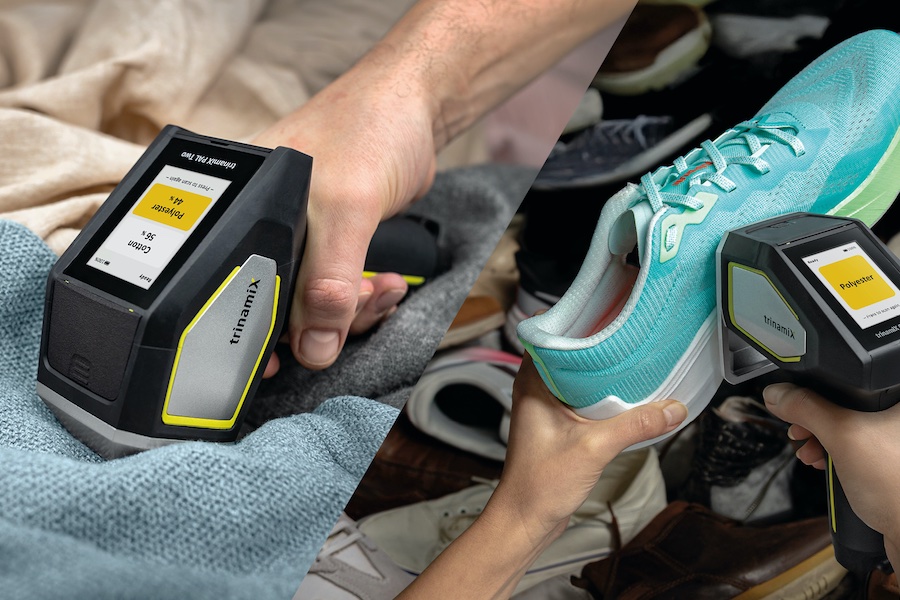
trinamiX GmbH expands its solution portfolio for the circular economy, now enabling the identification of materials used in the footwear and textile industries. With its mobile near-infrared (NIR) spectroscopy solutions, trinamiX supports manufacturers, sorters, recyclers, and brand owners in reliably identifying materials and improving transparency across increasingly complex value chains.

Modern footwear and textiles consist of complex material combinations and blended structures. As a result, visual inspection alone is no longer sufficient to determine their material composition. At the same time, regulatory requirements and sustainability targets are driving the demand for reliable and traceable material data.

“Material innovation is driving the future of footwear and textiles, but it also increases complexity across the value chain,” said Adrian Vogel, Segment Lead Circular Economy at trinamiX. “trinamiX Mobile NIR Spectroscopy Solution provides a practical tool that helps customers gain transparency, minimize risks, and enable informed decisions in recycling and circular economy processes.”

Reliable identification of shoe components

Footwear products today consist of multiple components made from different polymers, foams, textiles and composite materials. The mobile NIR spectroscopy solution from trinamiX enables the reliable identification of commonly used shoe materials such as EVA, polyester and PU within seconds and directly on site. Measurements can be performed during incoming goods inspection, in production as well as in sorting or recycling processes. This improves material separation, quality control, and recycling readiness, while reducing contamination risks and manual sorting efforts.

Transparency in textile value chains

Similar challenges arise in the textile industry, where blended fabrics pose major challenges for recycling and reuse. The trinamiX solution supports the identification of relevant textile materials and their blends such as cotton/polyester or viscose/polyester. For binary blends, fiber ratios are determined as percentages. Complex material compositions can be reliably analyzed and assessed.

The textile application will be available from May 2026. It is designed to support textile producers, brands, sorters, recyclers and carpet manufacturers in validating material declarations, improving sorting accuracy, and facilitating closed-loop recycling processes.

Integrated handheld solution for decentralized use

trinamiX enables material identification at the push of a button. The solution combines a robust handheld spectrometer with an intuitive mobile app and a cloud-based data platform. The handheld spectrometer trinamiX PAL Two enables fast, non-destructive measurements even in demanding environments. The mobile app guides users through the measurement process and delivers instant, easy-to-interpret results, while the customer portal enables secure documentation, visualization, and traceability of measurement data. Users benefit from reproducible results, minimal training requirements, and standardized material identification across different sites and regions.

The trinamiX ecosystem can also be seamlessly integrated into existing software solutions and platforms via interfaces (API), supporting further data processing in the context of regulatory requirements such as Digital Product Passports (:) and sustainability performance metrics.

Supporting circular economy strategies

By enabling reliable material identification along the entire value chain, the trinamiX solution supports companies in implementing circular economy strategies. Improved material transparency helps increase recycling efficiency, reduce downcycling, and enhance the availability of high-quality secondary raw materials.

More information: https://trinamixsensing.com/application/textile-identification


More News from BASF Aktiengesellschaft
Performance Chemicals for Textiles Europe

#Nonwovens

BASF opens global diaper and superabsorbents performance lab in Mumbai

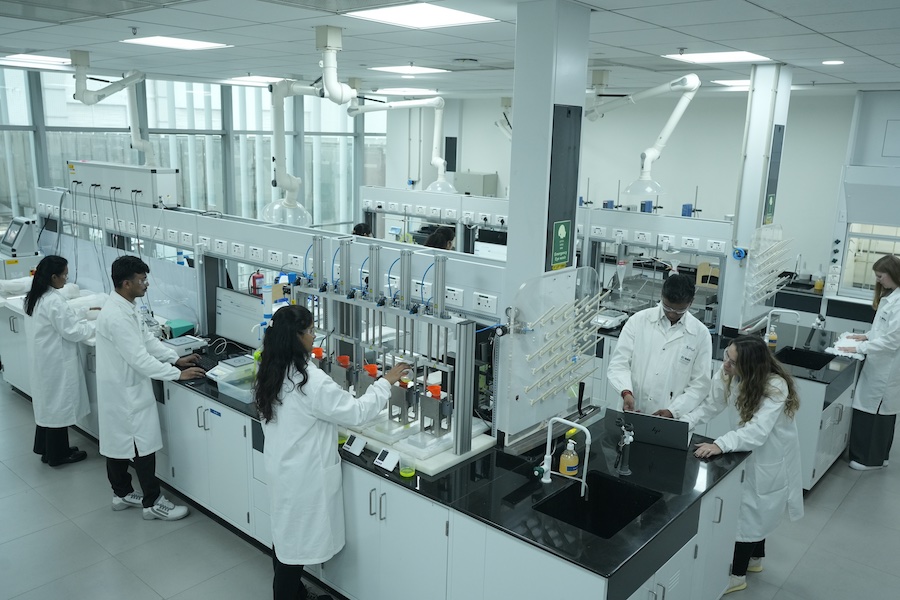
BASF has officially inaugurated its new Performance Lab for diapers and superabsorbents (SAP) in Mumbai on August 18, 2026, which will provide technical and application services to superabsorbent customers globally. The new lab of BASF’s Hygiene Solutions business has been established in less than a year and is part of BASF’s Innovation Campus Asia Pacific in Mumbai, BASF’s second largest R&D site in Asia Pacific established in 2017 under BASF Chemicals India Private Limited.

#Recycling / Circular Economy

Pirelli, Pyrum, Synthos and BASF partner to transform end‑of‑life and scrap tyres into recycled materials for new products

Pirelli, Pyrum, Synthos and BASF are jointly advancing a tyre-to-tyre circular economy initiative in Europe, driving the development of an industrial ecosystem designed to increase the use of recycled materials derived from end-of-life and scrap tyres.

#Recycled Fibers

Lindex and BASF partner to bring textile-­to­-textile recycled polyamide to lingerie sector

Lindex has partnered with BASF’s loopamid® to accelerate textile-­to-­textile recycling and advance the shift towards more circular material solutions in the fashion industry. Together they introduce loopamid to the lingerie sector.

#Techtextil 2026

BASF at Techtextil 2026: Helping to shape the future of the textile industry with tangible solutions

At the leading international trade fair for technical textiles and nonwovens from April 21 to 24, 2026 at the Messe Frankfurt, BASF will present numerous solutions and new projects in the textile sector to customers and partners at booth B 68 in hall 11.0. The focus is on product innovations and future-oriented technologies.

More News on Textile processing

#Yarns

Durak Maxibalance thread supports users’ movement and balance comfort

Durak Tekstil, a leading brand in its industry, has developed Durak Maxibalance, a new product engineered with bio-ceramic and FAR IR technology. Ushering in a new era for sportswear, activewear, and medical textiles, this technology offers features designed to support balance and movement comfort by reflecting the energy absorbed from the body back into it.

#Sustainability

Jeanologia Sustainability Report highlights environmental impact of textile technologies

Jeanologia has published its Sustainability Report 2025, reporting a 13.64% reduction in its own carbon footprint and quantifying the environmental impact associated with the use of its technologies across the global textile industry. According to the company’s calculations, their use avoided the pollution of 21.52 million m³ of water and emissions of approximately 103,530 tonnes of CO₂ compared with conventional textile finishing processes.

#Associations

Automation, digitalization and new business models are shaping the future of footwear and leather technology

The European footwear and leather machinery industry is facing profound transformations. Global competitive dynamics, technological innovation, automation and digitalization are fundamentally reshaping markets, production processes and business models. This is one of the key findings of the new study “Threads of the Future – Footwear and Leather Technology Edition”, which was presented today by VDMA Textile Care, Fabric and Leather Technologies (VDMA TFL) during a press conference at SIMAC Tanning Tech in Milan.

#Textile processing

Lectra strengthens its partnership with Caron Technology

Lectra announces the strengthening of its industrial alliance with Caron Technology, an Italian company founded in 1993 and specializing in preparation systems operating before the cutting process. This new milestone reflects the strength of a trusted relationship that has grown between the two companies over nearly two decades.

Latest News

#Knitting & Hosiery

KARL MAYER invites the Global Textile Industry to celebrate its 90th anniversary at its German Headquarters in 2027

KARL MAYER is turning its anniversary year 2027 into a milestone for the textile sector. To mark its 90th anniversary, the industry leader is inviting customers, partners, and experts from around the world to a unique event series in September aimed at pushing boundaries, unlocking new opportunities, and jointly setting the course for a new era in textiles – just as KARL MAYER has done throughout its history. The company’s headquarters in Obertshausen, near Frankfurt, is the place to be.

#Associations

ITMF names three winners of the Sustainability & Innovation Award 2026

Three projects from the UK, Korea and China have been selected as winners of the ITMF Sustainability & Innovation Award 2026. The projects address textile-to-textile recycling, chemical recycling for automotive textiles and a regenerative approach combining silk production with ecological restoration.

#Recycling / Circular Economy

nova-Institute launches groundbreaking Advanced Recycling Database for strategic market insight

The new Advanced Recycling Database reduces complexity by providing industry stakeholders with up-to-date expert-reviewed intelligence on companies, technologies, plants, capacities, locations, products and partnerships across the global advanced recycling landscape.

#Europe

Textile ETP launches bioeconomy strategy for Europe’s textile industry

On 22 September 2026, Textile ETP's Circular & Biobased Textiles Innovation Hub published its strategy for the biobased and circular transformation of Europe's textile and apparel industry.

TOP