[pageLogInLogOut]

#Textiles & Apparel / Garment

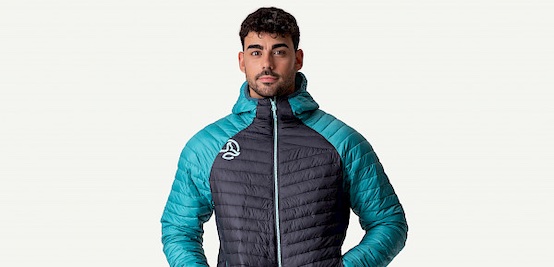
TERNUA advances with circularity in its SS 2025 collection

The Spanish whale tail brand, a reference in the outdoor textile sector for its sustainable innovative products, is at the forefront of the manufacture of circular garments, which responds to the sustainability strategy established for all Ternua Group brands.

The challenge is clear: to design more durable technical and functional products that take into account the garment´s end of use. "Doing more with less," says the director of innovation and sustainability, Edu Uribesalgo. For this, the key is to improve the processes to reduce the impact of its activity. How? Using recycled, recyclable or biodegradable materials and designing monomaterial products that last over time, that are resistant and that when their life cycle is over, can be given a new use, maintaining the raw material within the circuit for as long as possible. Already back in 2016 Ternua designed the Terranova Jkt, introducing many recycled materials to start the path towards circularity. Then in 2017 it presented the Craddle Jkt, its first circular garment. Both garments were recognized with two ISPO AWARDS.

TERNUA SUMMER 2025 Altas © 2024 TERNUA


In this SS 25 collection, Ternua has taken a great step forward in terms of circularity. 100% of its Adrenalite range and 95% of New Earth Spirit is circular, that is, its garments are monomaterial and are made with recycled, recyclable or biodegradable materials. Also, 100% of the cotton used is organic or recycled or Good Earth Cotton, and 86% of the polyester and polyamide is already recycled or synthetic. In terms of aesthetics, they are colorful and functional garments, very attractive, and match well between ranges, which have pleased the international sales force that has recently attended the sales meeting at the Ternua Group headquarters in Arrasate.

Complete renewal of Adrenalite

Sustainability, performance, comfort, compactness and aesthetics characterize the proposal of this range for the next hot season. This line is focused on high-intensity aerobic sports such as trail running, fast hiking or e-biking. It stands out because of its garments´ high degree of technicality and where factors such as lightness, breathability and a high level of compactness are key. 100% of its range is made up of circular products, that is, all garments are monomaterial and are made with recycled, recyclable or biodegradable materials. In general, new garments, new colors and very functional strategic details have been introduced, which complete a range that is always very well received both in the national and international market.

Evolved Trekking Line

Ternua has introduced 31 new garments in its SS 25 Trekking collection. All of them meet current sustainability, comfort and aesthetics criteria, which are in line with what the brand has always been offering in this range, but more evolved. Versatile garments, designed with the latest technology to accompany and protect the athlete in the mountains according to the activity they are going to do (from a fast trekker to mountaineering with a higher degree of performance). 38% of the garments are circular, 72% are made with recycled materials and 100% carry the Bluesign certification, the most demanding standard in the sector regarding the regulation of harmful chemicals, which covers from the beginning of the supply chain to the finished product.

New Earth Spirit, innovative garments for daily use

New Earth Spirit is Ternua's line in which the garments breathe the essence of the brand in terms of history, philosophy and values. In this range 95% of the garments are circular, 100% of the cotton is organic or regenerative Good Earth Cotton and 96% of the polyester is recycled. The brand has already turned this line around in the AW 24 collection, introducing very innovative and trendy concept garments in terms of materials and treatments. For the next spring-summer it brings new proposals that respond to the great work by the R&D department. For example, it has begun to work with an elastic construction fabric that will replace elastane, allowing for the garment to be recycled later, something that could not be done with elastane until now. It has also begun to apply the HeiQ Mint antibacterial treatment on the garments in this range, a pioneering technique to eliminate odors using organic components instead of heavy metals, in this case, derived from the essential oil of peppermint and whose effectiveness is long-lasting since it is regenerated in each wash, providing a unique freshness to the garment.

To all this it has to be add that Ternua has been using PFC-free water repellent treatments since 2018, as well as very innovative and environmentally friendly antibacterial treatments, while also being very effective, guaranteeing unique but sustainable user protection. In short, this collection responds to the commitment that the brand and its group (Ternua Group) have marked when designing their roadmap for the coming years, responding to the challenges facing the textile industry in terms of legislation, and championing circularity as one of the ideal ways to face these challenges.

+ 100% of its Adrenalite range and 95% of New Earth Spirit is circular, that is, its garments are monomaterial and are made with recycled, recyclable or biodegradable materials.

+ 100% of the cotton used is organic or recycled or Good Earth Cotton.

+ 86% of the polyester and polyamide is already recycled or synthetic.

+ Colorful, functional and resistant garments, eco-designed with their end of use in mind.


More News from Ternua Group

#Textiles & Apparel / Garment

Ternua continues their commitment to circularity with a SS 2026 collection where 70% of the garments are mono-material

Ternua, a B Corp brand since August 2024, has just presented the collection they’ve designed for the spring-summer of next year to their international sales network. In large swaths, it’s a continuation of the previous collection that has a selection of technical garments with minimal environmental impact, and it has a range of renewed colors that respond to market demands. It should be noted that 70% of the pieces in this new collection are mono-material.

#Recycling / Circular Economy

Ternua makes progress in circularity with a 50% mono-material fw 2025-2026 collection

Ternua, the Spanish outdoor brand with environmentally friendly production since 1994, presented the collection they designed for the upcoming cold season at their 2025-2026 fall-winter convention. In pursuit of their goal to make progress in circularity to take on the greatest challenge for the textile industry, which is nothing other than decreasing the creation of textile waste and reusing it, half of the collection that will be in shops this coming September will be mono-material and circular, in other words, the garments will use recycled, recyclable or biodegradable, PFC free textiles with Bluesign or Oeko-Tex certification.

#Retail & Brands

Ternua designes a renewed SS 2025 Adrenalite line, performance and 100% circular

All the garments in it are mono-material and they are made with recycled, recyclable or biodegradable materials. Technical details, comfort, compactibility, aesthetics and colorfulness characterize this line for the upcoming warm season.

#Textiles & Apparel / Garment

Ternua introduces new items and enhanced high-tech, sustainable fabrics into its FW 2024 trekking collection

Sustainable outdoor apparel brand, Ternua, whose logo is a whale’s tail, will present its FW 2024 Trekking line at ISPO. The line includes new items and enhanced fabrics with the best technology and, as always, a focus on sustainable innovation. 90% of its garments are made of Bluesign-certified fabrics, guaranteeing that they meet the highest sustainability and functionality standards and are committed to future generations, health, and safety. 100% of its apparel has PFC-free treatments, meaning it is free of substances harmful to the environment.

More News on Textiles & Apparel / Garment

#Textiles & Apparel / Garment

VIATT 2026 to debut German Pavilion, strengthening European participation alongside key Asian textile hubs

Vietnam’s textile and garment sector continues to be a major contributor to the country’s economic growth, with export revenues expected to reach USD 46 billion in 2025, a 5.6% increase from 2024 . From 26 – 28 February, the Vietnam International Trade Fair for Apparel, Textiles and Textile Technologies (VIATT) is set to contribute to economic growth opportunities by accelerating digital transformation and green transition across the entire textile value chain. The upcoming edition will respond to the rising demand for advanced technologies and sustainable materials with the introduction of the German Pavilion, alongside strong exhibitor participation from key Asian sectors, as well as several high-profile fringe events.

#Sustainability

Ying McGuire becomes new CEO of Cascale

Cascale today announced the appointment of Ying McGuire as Chief Executive Officer, effective June 1, 2026.

#Europe

Antwerp Declaration community urges EU leaders to deliver emergency measures as Europe’s competitiveness crisis deepens

EURATEX, representing the European textile and fashion industry, joins the Antwerp Declaration Community’s call on EU Heads of State and Government to adopt emergency measures that restore industrial competitiveness and deliver tangible results for Europe’s manufacturing base in 2026.

#Textiles & Apparel / Garment

Pets in fashion: functional and sustainable textiles find new market at Intertextile Apparel

China’s pet economy is booming, especially amongst younger generations, and pet apparel – from designer outfits to functional garments – was a RMB 3.5 billion (over USD 500 million) market in 2024, growing more than 20% annually¹. To help exhibitors harness this trend, Intertextile Shanghai Apparel Fabrics – Spring Edition 2026 will launch the Pet Boutique, presenting a range of innovative, sustainable materials that prioritise both functionality and comfort for pets.

Latest News

#Recycling / Circular Economy

Circulose restarts commercial-scale production at Ortviken plant in Sundsvall

Circulose today announced the restart of its commercial-scale production plant at Ortviken in Sundsvall, Sweden, marking a significant step in scaling next-generation materials for the global fashion industry. The company plans to resume production of CIRCULOSE®, a recycled pulp made entirely from discarded cotton textiles, in the fourth quarter of 2026.

#Technical Textiles

Sustainable, lightweight, and sound absorbing: Polyester-based front trunk solution for BEVs

As car manufacturers look to further reduce their carbon footprint, Autoneum has developed an innovative front trunk solution for battery electric vehicles (BEVs), made entirely from polyester-based textile. The Ultra-Silent Frunk offers significant weight reduction, improved acoustic and thermal insulation, and uses up to 70 percent recycled material, supporting sustainable and efficient vehicle design. Autoneum, global technology leader in acoustic and thermal management for vehicles, has already received orders for the new frunk from three major OEMs in Asia and Europe to be built in three BEV models. Series production for two BEVs has been underway in China and Germany since last year.

#Raw Materials

Modern testing methods for raw cotton

The 38th International Cotton Conference Bremen will take place from 25 to 27 March 2026 at the Bremen Parliament. This conference has traditionally stood for in-depth expertise and international exchange. The program will focus on technical innovations, market trends, and regulatory frameworks across the entire value chain – from agriculture to the circular economy. With high-profile speakers, the conference is regarded as the key meeting point for the global cotton industry. Today’s focus: Cotton quality and testing methods.

#Spinning

Rieter responds to higher raw material prices

Global political and economic developments have been leading to rising raw material and energy costs for some time. The textile machinery industry is also affected by this trend. Rieter machines and components consist to a large extent of steel, copper, aluminum and electronics. These materials in particular have seen higher demand and higher prices in recent months.

TOP