[pageLogInLogOut]

#Associations

EURATEX urges Member States to prioritise competitiveness in the next EU budget
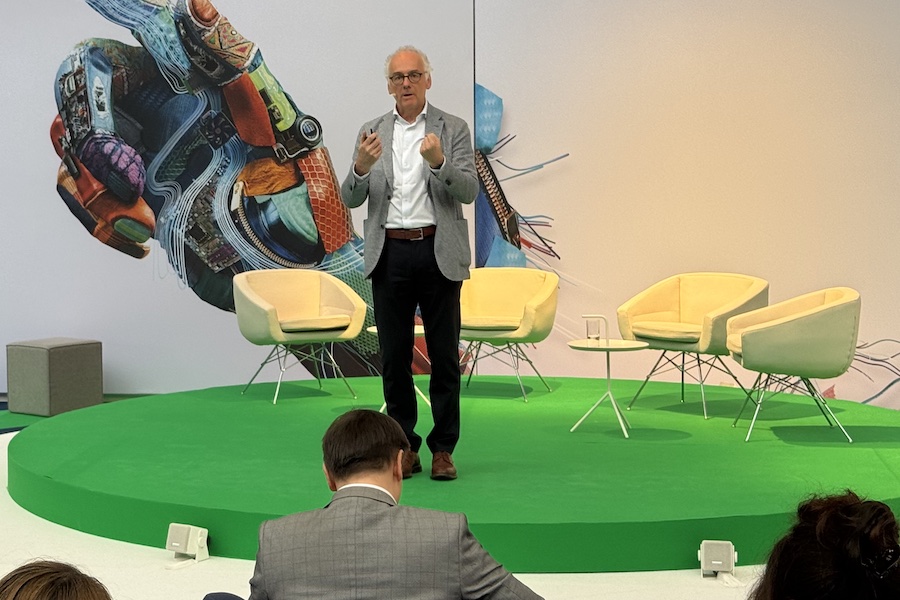
Dirk Vantyghem, Director General of EURATEX, speaking at Texprocess Forum in Frankfurt © 2026 TexData International
Ahead of crucial discussions among EU Member States on the next Multiannual Financial Framework (MFF) for 2028–2034, EURATEX, the European Apparel and Textile Confederation, calls on European leaders to safeguard ambitious funding for industrial competitiveness and ensure that these resources translate into concrete investment support in European companies.

With Europe facing increasing global competition, high energy costs and a weakening industrial base, EURATEX warns that reducing the resources available for competitiveness would undermine the EU's ambition to implement the recommendations of the Draghi Report and strengthen European industry.

The European textile and clothing industry, representing nearly 200,000 companies, 1.2 million workers and €166 billion in annual turnover, illustrates the urgency of this challenge : companies are expected to invest simultaneously in decarbonisation, circularity, digitalisation and innovation, while facing growing competition from lower-cost imports. The new MFF should help them to make these investments.

Dirk Vantyghem, Director General of EURATEX, commented: “Europe has recognised the urgent need to restore its industrial competitiveness. The next EU budget must now turn that ambition into action. We need a strong European Competitiveness Fund that supports companies in investing, innovating and maintaining manufacturing capacity in Europe. But money alone is not enough: competitiveness starts with a regulatory framework that rewards entrepreneurship, reduces unnecessary burdens and guarantees fair competition. Europe needs both ambitious investment and the right conditions for businesses to succeed.”

EURATEX identifies five priorities for the future EU budget:

  • Prioritise funding for industrial competitiveness: Ensure that the European Competitiveness Fund, Horizon Europe and regional instruments provide sufficient resources to support manufacturig investment, innovation and industrial scale-up, with funding accessible to SMEs.
  • Turn the green and digital transition into an industrial opportunity: Support cleaner production, energy efficiency, circular infrastructure, recycling, digitalisation and the practical implementation of EU sustainability requirements.
  • Ensure fair competition in the Single Market: Invest in customs controls, market surveillance and enforcement of EU rules, including on imported products sold through e-commerce.
  • Invest in innovation and skills: Continue the Textiles of the Future European Partnership under Horizon Europe beyond 2027 and support the development of new industrial competences.
  • Make EU funding work for companies: Simplify application procedures, improve coordination between European and national programmes and ensure that financial instruments respond to the needs of SMEs and regional manufacturing ecosystems, both in the EU and the broader European neighbourhood.

EURATEX stresses that the European Competitiveness Fund must not become an instrument focused exclusively on emerging technologies or a limited number of strategic sectors. Established manufacturing industries, including textiles and clothing, must also be able to benefit from European investment programmes, particularly when developing advanced materials, clean technologies, digital processes and circular production models.

At the same time, a strong funding framework must be accompanied by policies that improve the business environment. High energy costs, excessive administrative burdens and unfair competition continue to discourage industrial investment in Europe. Addressing these structural challenges is essential to ensuring that European funding delivers tangible results.

As Member States negotiate the EU's future financial priorities, EURATEX calls on European leaders to match their competitiveness ambitions with the necessary financial resources. Delivering on the Draghi Report requires not only regulatory reform, but also sustained and accessible investment in Europe's industrial base.


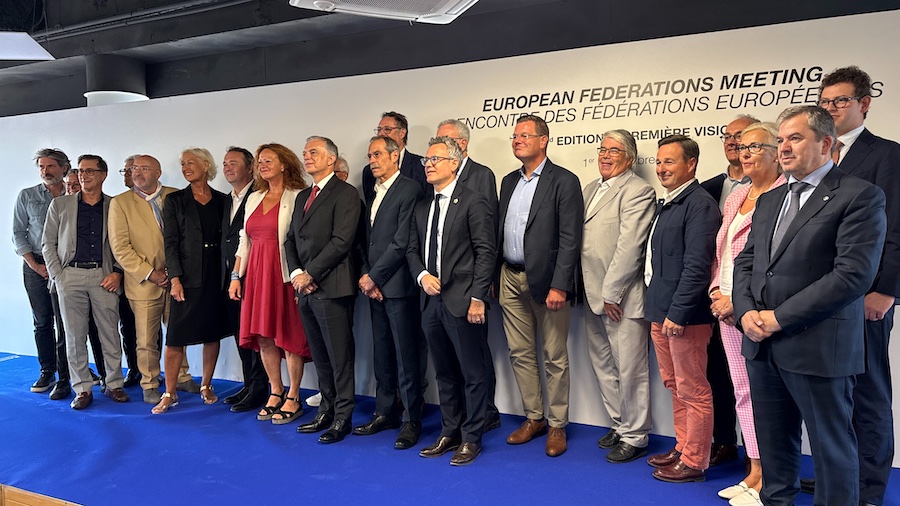
More News from European Apparel and Textile Confederation (EURATEX)

#Associations

European and Canadian textile associations call for stronger transatlantic cooperation

Ahead of the EU–Canada Summit in Montréal on 29–30 October 2026, EURATEX, the Canadian Textile Industry Association (CTIA) and the Canadian Apparel Federation (CAF) have issued a joint statement calling for closer industrial cooperation, improved implementation of the CETA trade agreement and stronger partnerships in innovation, sustainability and advanced textile technologies.

#Associations

EU and Mercosur textile industries launch new Textile and Apparel Dialogue

EURATEX, ABIT and FITA have launched the EU–Mercosur Textile and Apparel Dialogue (TAD), a new industry platform aimed at strengthening cooperation between the European and Mercosur textile and apparel sectors.

#Associations

EURATEX calls for urgent action on industrial competitiveness

EURATEX, the European Apparel and Textile Confederation, welcomes today’s State of the Union Address by European Commission President, Ursula von der Leyen, and in particular her recognition of Europe’s need to rebalance unfair trade, cut red tape, and strengthen its industrial and strategic autonomy.

#Europe

European textile industry calls for €10 handling fee on ultra-fast-fashion imports

The introduction of the €3 customs duty on low-value imports marks an important milestone in Europe’s efforts to address the challenges created by the rapid growth of ultra-fast-fashion imports. Together with the abolition of the €150 customs duty exemption, it demonstrates that policymakers are willing to act when market distortions become impossible to ignore. However, the European textile and clothing industry considers this a first step rather than the final destination.

More News on Associations

#India ITME 2026

New momentum for British textile machinery in India

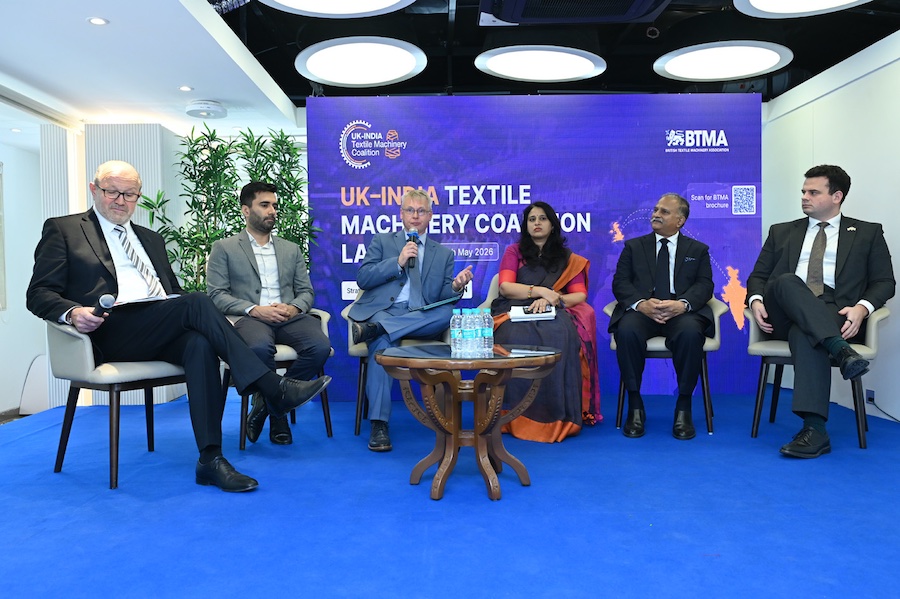
The British Textile Machinery Association (BTMA) is looking to India ITME 2026 as a major opportunity to strengthen industrial partnerships and mutually expand exports, following the introduction of the UK-India Free Trade Agreement and the formation of the UK-India Textile Machinery Coalition (UKITMC).

#Associations

China and India: Different market dynamics create opportunities for Swiss textile machinery

Ahead of ITMA Asia + CITME in Shanghai and India ITME in Greater Noida, Swiss Textile Machinery highlights the contrasting industrial structures, investment priorities and technological requirements of two of the world's most important textile manufacturing markets.

#Associations

Italian textile machinery orders rise 7% in Q3 2026 as export demand strengthens

Order intake for Italian textile machinery manufacturers increased by 7% in the third quarter of 2026 compared with the same period of 2025. Growth was driven by international markets, where orders rose by 8%, while domestic demand remained weak, declining by 4%.

#Associations

Data and skills, not algorithms, hold back AI adoption in textiles, finds ITMF and ITA white paper

The International Textile Manufacturers Federation (ITMF) and the Institut für Textiltechnik of RWTH Aachen University (ITA) have published a new white paper entitled AI in the Textile Value Chain: A Strategic Guide to Artificial Intelligence for the Global Textile Industry. The study concludes that the main barriers to artificial intelligence adoption in the textile and apparel industry are not technological limitations, but poor data integration, skills shortages and gaps in governance. According to the authors, further progress will depend on coordinated efforts to develop capabilities across the industry.

Latest News

#India ITME 2026

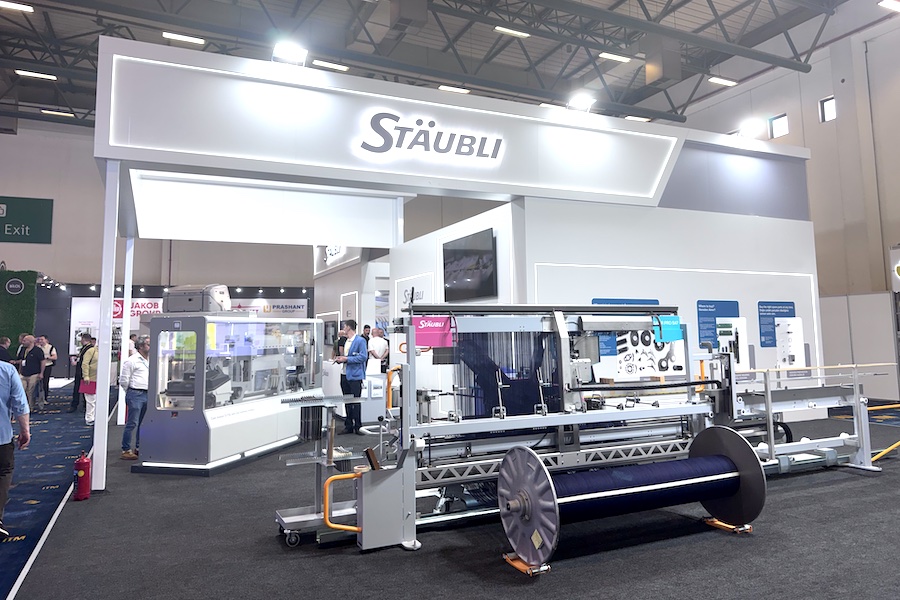
Stäubli to introduce new S3292 dobby for high-speed weaving at ITME India 2026

Stäubli will introduce its new S3292 dobby at ITME India 2026, taking place from December 4 to 9 at the India Expo Centre & Mart in Greater Noida, Uttar Pradesh. Designed for high-speed air-jet weaving, the new machine will be among the highlights of the company's presentation, which also includes warp preparation systems, cam motions, Jacquard technologies and digital services.

#Research & Development

DITF develops bio-based binding fibers for wood-fiber insulation materials

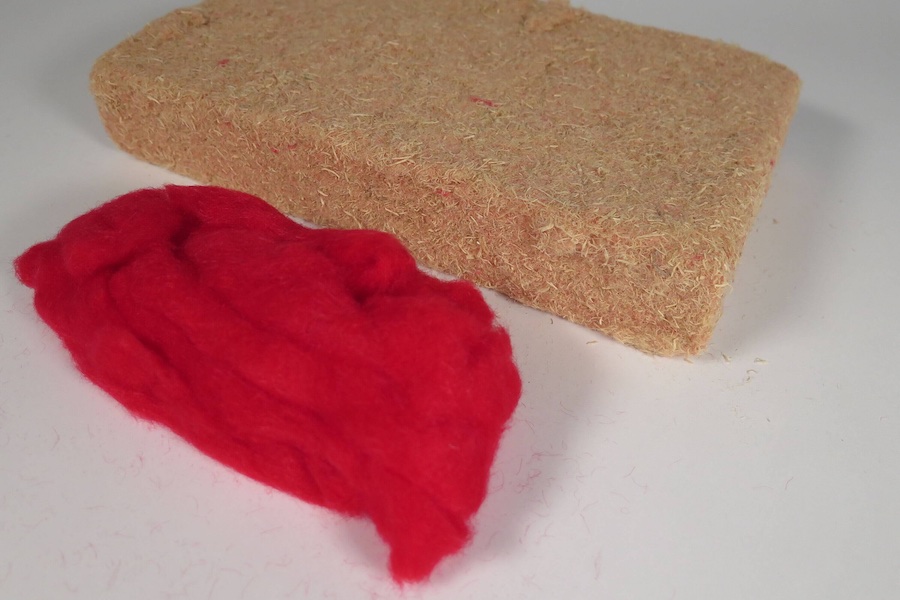
As part of the CelluWoodFlex project, the German Institutes of Textile- and Fiber-Research in Denkendorf (DITF) are developing bio-based cellulose ester fibers as alternative binding fibers for flexible wood fiber insulation materials. In addition to the spinning process and the production of suitable staple fibers, the institute is also investigating how wood and cellulose fibers can be separated and recycled at the end of their useful life.

#Recycled Fibers

Reju expands textile-to-textile recycling network with six international fabric manufacturers

Reju, a textile-to-textile regeneration company, is expanding its industrial network through collaborations with six fabric manufacturers in Europe and the Americas. The initiative aims to accelerate the integration of regenerated polyester into textile manufacturing and support the development of finished fabrics for commercial applications.

#Nonwovens

Magnera highlights HighPleat™ filtration media technology at FiltXPO 2026

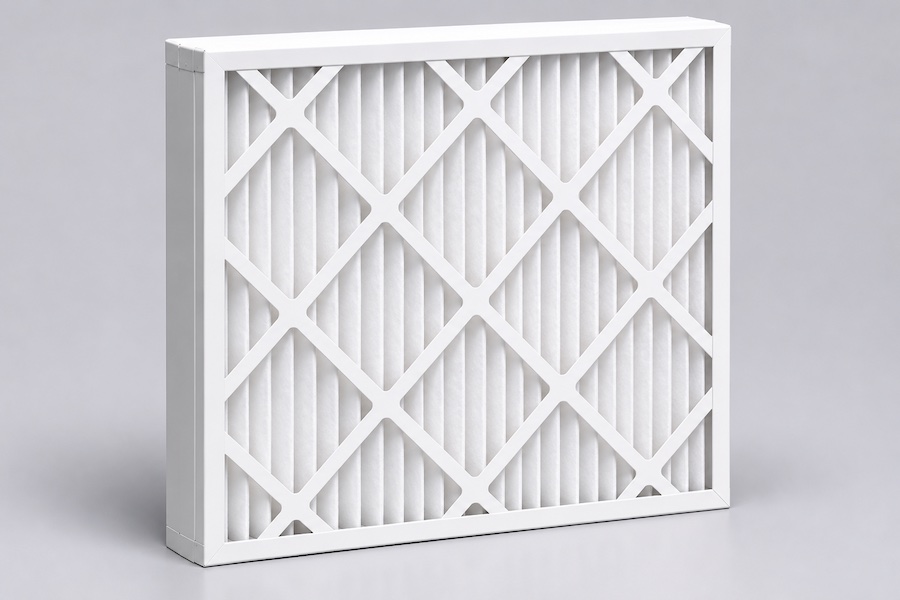
At FiltXPO 2026, held on October 28–29 at the Minneapolis Convention Center in Minneapolis, Minnesota, Magnera highlighted advances in air filtration media architecture, with a particular focus on its HighPleat™ platform for MERV 8–10 applications. The technology combines a lofted fiber structure with optimized pore architecture to address the challenge of balancing filtration efficiency, airflow resistance and contaminant-holding capacity.

TOP