[pageLogInLogOut]

#Research & Development

DITF develops bio-based binding fibers for wood-fiber insulation materials
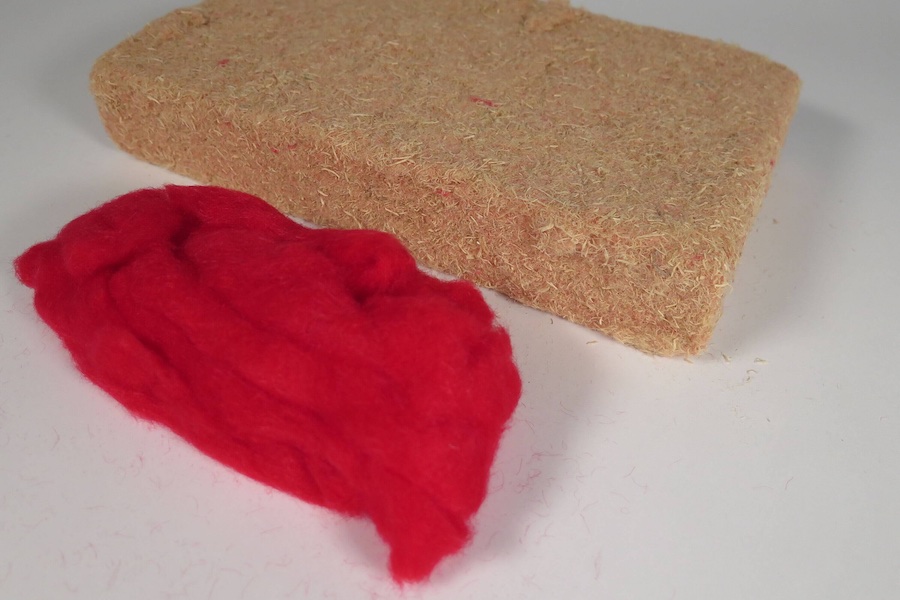
Red-dyed cellulose acetate propionate (CAP) staple fibers alongside a wood-fiber insulation board, illustrating the use of bio-based binding fibers in sustainable insulation materials. (Photo: DITF) © 2026
As part of the CelluWoodFlex project, the German Institutes of Textile- and Fiber-Research in Denkendorf (DITF) are developing bio-based cellulose ester fibers as alternative binding fibers for flexible wood fiber insulation materials. In addition to the spinning process and the production of suitable staple fibers, the institute is also investigating how wood and cellulose fibers can be separated and recycled at the end of their useful life.

How can flexible wood fiber insulation materials be produced sustainably and recycled at the end of their useful life? The “CelluWoodFlex” research project is addressing this question. In this collaborative project, DITF are taking on key roles related to the production and processing of cellulose ester fibers. Initial work has already been successfully completed.

The project focuses on thermoplastic binding fibers based on cellulose esters. In the future, these are intended to replace fossil-based plastic fibers, which are currently often used to bind wood fibers in flexible insulation mats. This bio-based approach opens up new possibilities for reducing the use of fossil raw materials and improving the material recycling of these products after their use.

From the Spinning Process to the Finished Staple Fiber

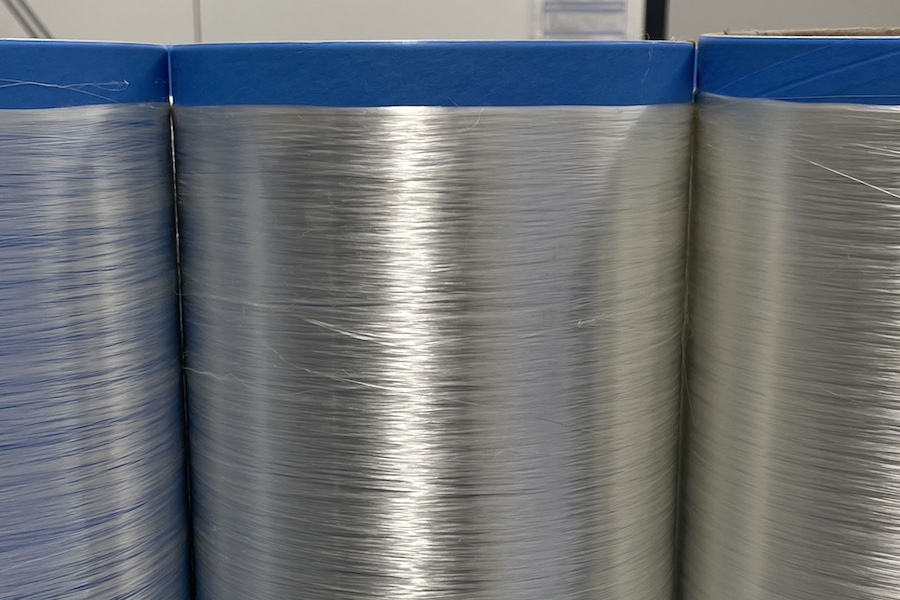
DITF are working to establish the spinning process for thermoplastic cellulose ester fibers. In this process, the raw materials are processed into fine fibers intended for use as binding fibers. Another step in the process is cutting the fibers to specific lengths. This produces staple fibers, which are then blended with wood fibers at the project partner IHD (Institut für Holzfasern Dresden gGmbH). The goal is to achieve the most uniform distribution possible of the binding fibers so that they can reliably fulfill their function in the resulting insulation material.

The first project steps at DITF have already been completed. The research team at the Competence Center for Biopolymer Materials has developed and successfully implemented the spinning process for fibers made from the cellulose ester “cellulose acetate propionate” (CAP). The fibers were processed into staple fibers and dyed. The work carried out so far thus lays an important foundation for the further development and processing of these bio-based binding fibers.

Making Recycling a Priority from the Start

In addition to fiber production, the focus is also on the end of the product life cycle. The DITF research team is investigating ways to separate wood and cellulose fibers from one another after they have been used together. The goal is to enable the separated components to be recycled as raw materials. This means that, even during the development of the binding fibers, consideration is given to how the materials can later be recovered and reused.

As the project progresses, the findings will be incorporated into the processing of the fibers and the assessment of their recyclability. Together with the other project partners, the goal is to lay the foundation for flexible wood fiber insulation materials that use bio-based binding fibers and open up new prospects for improved circularity.

The IGF research project “CelluWoodFlex” is funded by the Federal Ministry for Economic Affairs and Energy pursuant to a resolution of the “German Bundestag”. Funding ID: 01IF25128N

More News from Deutsche Institute für Textil- und Faserforschung Denkendorf

#Research & Development

25 years of medical devices: ITVP combines experience with innovation

ITV Denkendorf Produktservice GmbH (ITVP) is celebrating its 25th anniversary. On October 1, 2001, ITVP was founded as a subsidiary of the German Institutes of Textile and Fiber Research Denkendorf (DITF), Europe’s largest textile research center. This spin-off company made it possible to consolidate expertise in medical technology and significantly expand production, which had previously been initiated mostly in the DITF’s cleanrooms.

#Research & Development

Reducing development times for technical textiles by accelerated thermo-oxidative aging in a high-pressure autoclave

Synthetic polymers used in technical textiles can be effectively protected against degradation caused by heat, oxygen, and water through the use of stabilizer systems. This enables service lives of several decades, extending to more than 50 years. As the use of durable technical textiles continues to grow, so does the demand for reliable methods to predict their service life within economically feasible testing periods. For the first time the German Institutes of Textile and Fiber Research Denkendorf (DITF) developed methods for robust service life prediction for textiles in an IGF research project.

#Research & Development

Europe is committed to recycling end-of-life wind turbine blades

Starting in 2026, Europe’s wind energy industry has committed itself to ensuring that wind turbine blades do not end up in landfills once they reach the end of their service life. The EU-funded research project REWIND is exploring ways to reuse this composite waste. The German Institutes of Textile and Fiber Research Denkendorf (DITF) are one of 13 project partners from seven countries.

#Research & Development

Smart textiles reversibly change shape in an energy-efficient manner in response to ambient temperature

Self-actuating textile structures are used in a wide range of applications, such as medical technology, automation, architecture, agriculture, and the apparel industry. An example is the use of shading nets in greenhouses, which can be deployed and retracted depending on the sunlight intensity. The German Institutes of Textile and Fiber Research Denkendorf (DITF) are developing textiles based on shape-memory polymers with reversibly controllable geometry.

More News on Research & Development

#Research & Development

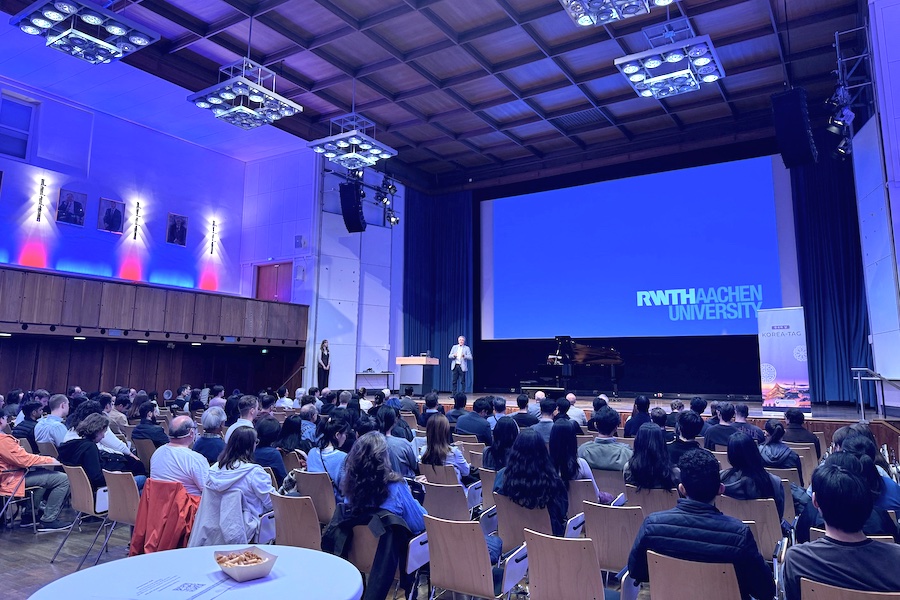
First "Korea Day" at RWTH Aachen attracts more than 300 participants

The inaugural Korea Day in Aachen brought together representatives from science, business and Korean institutions to strengthen German-Korean cooperation in research, technology and education. The Institut für Textiltechnik (ITA) of RWTH Aachen University was among the participating organisations.

#Research & Development

POLYMERS-5B develops high-performance bio-based polyesters from agricultural waste

The European research project POLYMERS-5B is developing an integrated enzymatic biorefinery to convert agricultural by-products from Mediterranean food production into valuable raw materials for the food, cosmetics and bio-based plastics industries. Using tomato and olive pomace as feedstock, the process aims to recover several product groups from the same biomass stream. The consortium will present its latest technical developments and market findings at Ecomondo 2026 in Rimini on 3 November.

#Research & Development

STFI showcases new Textile LAB Professional with focus on climate protection and sustainable technologies

The Sächsisches Textilforschungsinstitut e. V. (STFI) in Chemnitz is organising a themed day on 3 December 2026, focusing on climate protection and the environment. As well as showcasing current applications for green cities and natural fibres for lightweight construction, the event will feature machine demonstrations in the new Textile LAB Professional. Under the motto ‘Design meets Technology’, this networking event will also provide an insight into artistic student projects, thereby facilitating a professional exchange on creative perspectives and modern technologies for climate protection and the environment.

#Research & Development

Aachen Summer School: Textiles become smart through 3D printing and origami

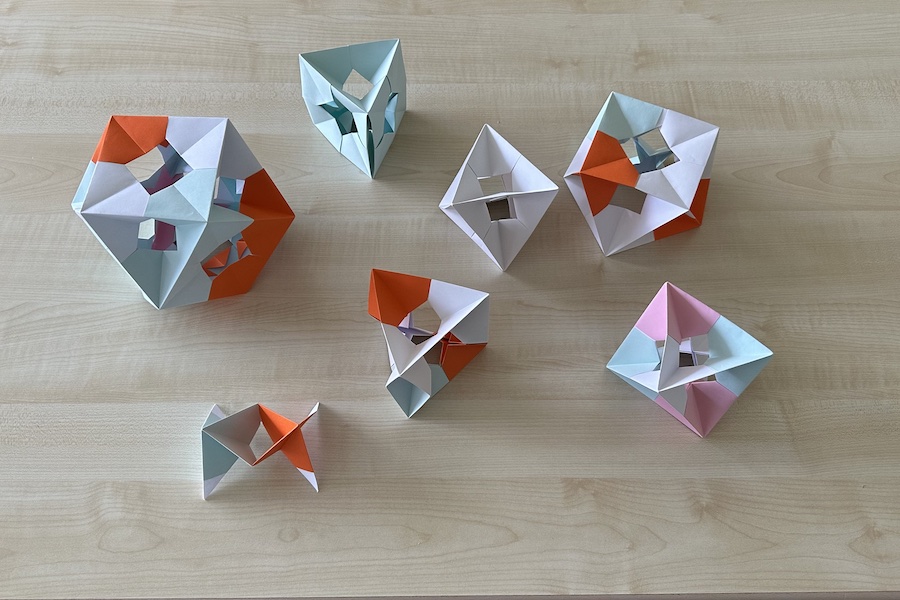
From 21 to 29 September 2026, the Aachen Summer School will transform Institut für Textiltechnik (ITA) of RWTH Aachen University into a laboratory of the future: over the course of a week, students will use origami folding techniques and 3D printing to develop active textile structures capable of performing programmable movements. This interdisciplinary event combines theoretical foundations with practical prototyping – from digital modelling right through to functional textile prototypes.

Latest News

#India ITME 2026

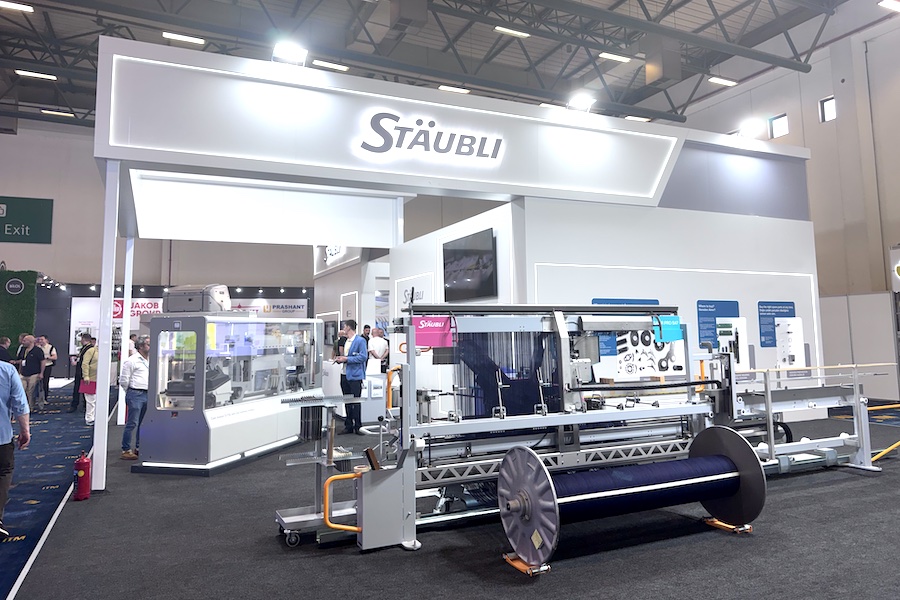
Stäubli to introduce new S3292 dobby for high-speed weaving at ITME India 2026

Stäubli will introduce its new S3292 dobby at ITME India 2026, taking place from December 4 to 9 at the India Expo Centre & Mart in Greater Noida, Uttar Pradesh. Designed for high-speed air-jet weaving, the new machine will be among the highlights of the company's presentation, which also includes warp preparation systems, cam motions, Jacquard technologies and digital services.

#Recycled Fibers

Reju expands textile-to-textile recycling network with six international fabric manufacturers

Reju, a textile-to-textile regeneration company, is expanding its industrial network through collaborations with six fabric manufacturers in Europe and the Americas. The initiative aims to accelerate the integration of regenerated polyester into textile manufacturing and support the development of finished fabrics for commercial applications.

#Nonwovens

Magnera highlights HighPleat™ filtration media technology at FiltXPO 2026

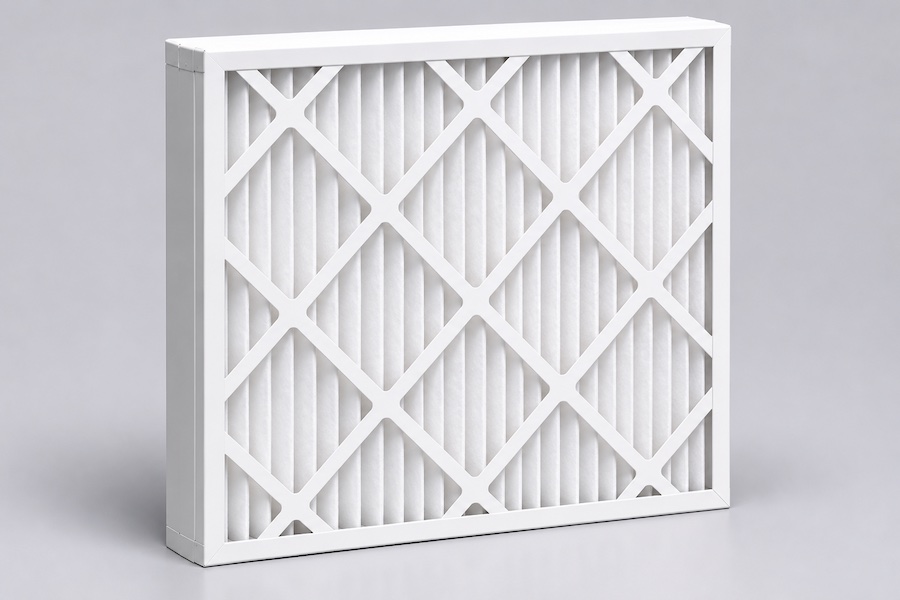
At FiltXPO 2026, held on October 28–29 at the Minneapolis Convention Center in Minneapolis, Minnesota, Magnera highlighted advances in air filtration media architecture, with a particular focus on its HighPleat™ platform for MERV 8–10 applications. The technology combines a lofted fiber structure with optimized pore architecture to address the challenge of balancing filtration efficiency, airflow resistance and contaminant-holding capacity.

#Nonwovens

Ahlstrom expands depth filtration media production capacity at US facility

Ahlstrom has completed a major investment in its Kingston manufacturing facility in New York, USA, expanding production capacity for high-performance depth filtration media. The modernization of Line 3 is designed to improve manufacturing efficiency, enhance quality control and increase flexibility in producing different product widths.

TOP