#Man-Made Fibers
Lenzing improves profitability as strategic transformation gains momentum
Adjusted EBITDA margin rises to 18.3 percent in the first nine months of 2026, while the Group advances its restructuring, production network optimisation and expansion into nonwovens

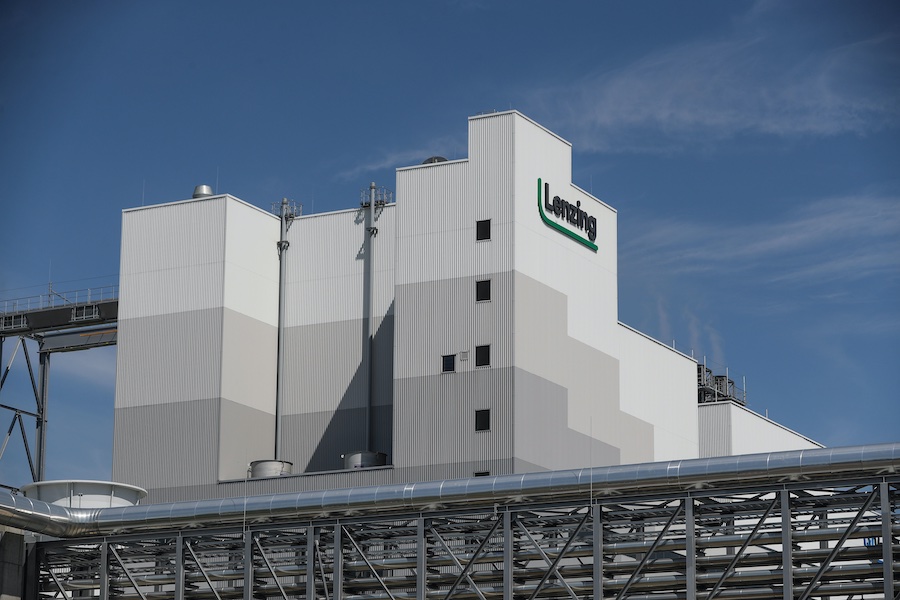
The Austrian fibre manufacturer continues to reshape its product portfolio and global production network, focusing on profitable growth in nonwovens, differentiated textile fibres and its pulp and biorefinery business. At the same time, Lenzing is withdrawing from low-margin standard fibre segments and high-cost production sites.
Improved operating margins despite restructuring costs
Revenue in the first three quarters of 2026 declined to EUR 1.93 billion from EUR 1.97 billion in the previous year, primarily due to lower sales volumes resulting from the targeted reduction of standard fibre production and lower pulp prices.
Adjusted EBITDA remained virtually unchanged at EUR 353 million, compared with EUR 352.7 million in the prior-year period. The adjusted EBITDA margin improved to 18.3 percent from 17.9 percent.
Progress was particularly evident in the third quarter, when the adjusted EBITDA margin increased by 4.0 percentage points year-on-year, from 13.3 percent to 17.3 percent.
“The third quarter of 2026 marks an important milestone in the repositioning of the Lenzing Group. Our focus is now on the consistent execution of our new strategy. The stable earnings development and improved margin demonstrate that our measures are delivering results. Under the strategic priorities ‘Grow Nonwovens. Reset Textiles.’, we are driving our transformation forward and will take further significant steps by year-end to optimize our product portfolio and production network,” says Georg Kasperkovitz, CEO of the Lenzing Group.
Reported EBITDA decreased by 7 percent to EUR 316.4 million, reflecting restructuring-related charges of EUR 36.6 million, compared with EUR 12.3 million in the previous year.
The operating result (EBIT) declined to EUR -55.1 million from EUR 20.6 million. This was significantly affected by non-cash impairment charges of EUR 136.1 million relating to long-term assets at the Heiligenkreuz and Grimsby production sites.
Earnings after tax amounted to EUR -130.3 million, compared with EUR -105.0 million in the prior-year period. Adjusted for impairment charges and restructuring effects, earnings after tax reached EUR 42.4 million, compared with EUR -10.8 million a year earlier.
Capital expenditure amounted to EUR 97 million, including investments in a new wood processing facility and improvements to water supply at the Lenzing site.
Production closures and workforce reductions
The strategic transformation involves significant changes to Lenzing's international production network.
The company is continuing the sales process for its Indonesian fibre production site. In Europe, production at Heiligenkreuz in Austria is scheduled to cease by the end of the first quarter of 2027, while the Grimsby facility in the United Kingdom is expected to close by the end of 2027.
Lenzing is evaluating options for the sale of these assets and has formally notified the Austrian Public Employment Service of the planned workforce reduction at Heiligenkreuz.
The restructuring is accompanied by a comprehensive cost reduction programme. Following savings of more than EUR 200 million achieved in 2025, Lenzing is targeting additional savings of EUR 120 million compared with the 2025 baseline, with the full earnings impact expected by the end of 2027.
This includes annual personnel cost savings of EUR 45 million through the reduction of approximately 600 positions, primarily in administrative functions. By the end of September 2026, employment relationships representing more than 260 full-time equivalents had already been legally terminated, generating annualised savings of EUR 27 million.
Further savings of EUR 35 million are planned through energy and operating expense optimisation, alongside additional measures relating to production and administration.
Nonwovens at the centre of future growth
Under the “Grow Nonwovens. Reset Textiles.” strategy adopted in July 2026, Lenzing is placing greater emphasis on expanding its nonwovens business while repositioning its textile fibre operations towards higher-value applications.
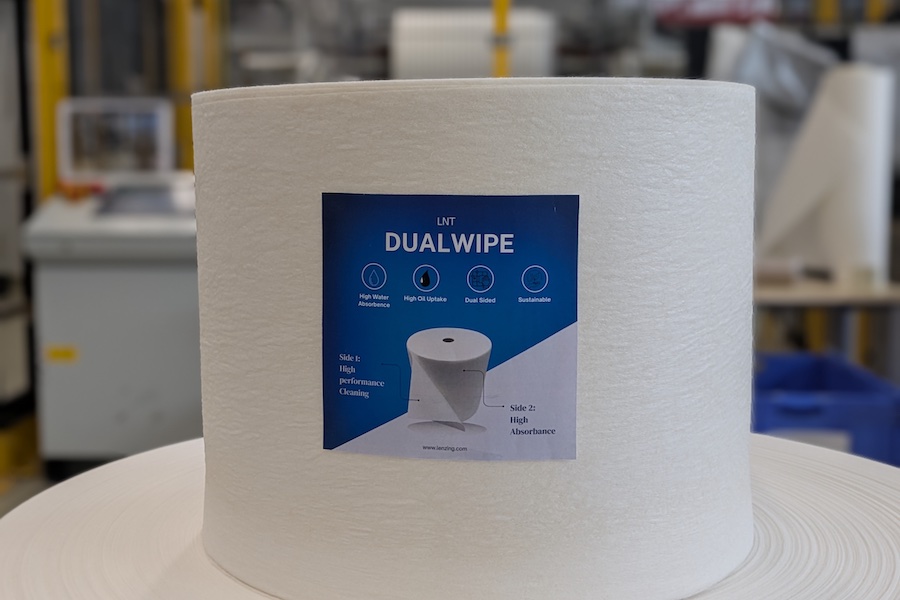
The company plans to convert selected production capacities from textile fibres to nonwoven fibres and expand its product portfolio, particularly for hygiene and filtration applications.
In the textiles business, Lenzing intends to concentrate on differentiated premium fibres, specialty applications and strategic customer partnerships while gradually reducing its exposure to standard fibre products with lower margins.
Innovative fibre technologies, including TreeToTextile technology and LENZING™ Nonwoven Technology, are expected to support the development and commercialisation of new products.
The company also plans to strengthen its pulp and biorefinery operations as part of its integrated business model.
Financial restructuring strengthens the balance sheet
Alongside its operational transformation, Lenzing has taken steps to strengthen its financial position.
In October 2026, the company successfully completed a capital increase of approximately EUR 300 million. Additional financing agreements totalling EUR 300 million are being arranged, around half of which had already been contractually secured at the time of the announcement.
The company expects the financing measures to be fully implemented by the end of 2026, providing additional flexibility to support the restructuring and future investments.
Full-year outlook confirmed
For the full 2026 financial year, Lenzing expects adjusted EBITDA to exceed the previous year's EUR 425.6 million, reaching between EUR 430 million and EUR 460 million.
Over the medium term, the Group remains committed to returning to revenue growth, increasing EBITDA by EUR 150 million, achieving an EBITDA margin of 20 to 25 percent and reducing leverage to below 2.5 times.
The company emphasises that its outlook remains subject to geopolitical developments, economic uncertainties and the cyclical nature of the textile and fibre markets.