[pageLogInLogOut]

#Natural Fibers

Fashion For Good launches “Beyond50 Denim” to address hemp integration barriers in global denim production
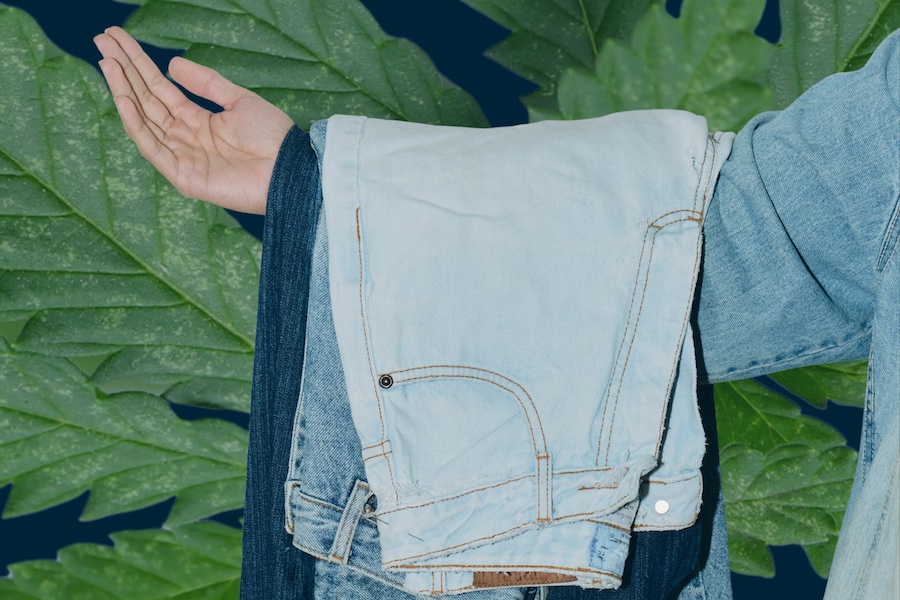
Fashion for Good, together with leading global brands BESTSELLER, C&A, PDS Limited, Reformation, and Target, launched Beyond50 Denim: Combining Cottonised Hemp and Green Chemistry, a project accelerating the use of hemp as an alternative to conventional cotton in denim. By combining two pioneering innovations (SEFF’s Nano-Pulse™ cottonised hemp fibres and FIBRE52™’s proprietary chemistry formulations with soft handfeel), the project seeks to demonstrate that hemp-based denim can match or even surpass cotton in both performance and appeal.
© 2025 Fashion for Good


The global denim market is projected to surpass USD 115 billion by 2029¹, yet its growth is tied to conventionally cultivated cotton – a fibre which carries a considerable environmental burden. While cotton is valued for its inherent softness and cost-effectiveness, the conventional methods of its cultivation are notably resource-intensive. These often involve substantial water and pesticide inputs, contributing to a heavy global environmental footprint and social impact across the entire production chain. Such impacts raise pressing concerns about the fibre’s long-term sustainability.

Although hemp may offer a more climate-resilient alternative, requiring fewer resources and improving soil health, its integration into denim has been limited. Typically, total hemp content in denim does not exceed 20%, due to challenges in achieving the desired handfeel and aesthetic criteria demanded by consumers. This limitation can necessitate a challenging trade-off across performance, price, and environmental impact parameters. These factors have collectively contributed to the limited adoption of hemp as a mainstream fibre in denim.

To address these challenges, Fashion for Good has launched the “Beyond50 Denim: Combining Cottonised Hemp and Green Chemistry” project, bringing together brands BESTSELLER, C&A, Reformation, PDS Limited, and Target, innovators SEFF and FIBRE52™, and manufacturers Bossa (Turkey) and Nice Denim (Bangladesh).

“Our goal at Reformation is to help drive the kind of innovative solutions that have the potential to transform fashion. Beyond50 Denim is a chance to really put promising solutions like hemp and green chemistry to the test: to learn, validate, and hopefully help open the door for a more sustainable future for denim.” Carrie Freiman Parry, Senior Director of Sustainability at Reformation.

The project will validate the synergistic integration of two innovations: SEFF’s Nano-Pulse™ technology transforms raw hemp into refined, cotton-like fibres that are easier to spin and integrate into fabrics, while FIBRE52™’s unique chemistry solution can impart a softer handfeel to cellulosic fibre-based fabrics.

“Hemp’s limited adoption in denim production reveals how entrenched industry practices can systematically prevent transformative innovations from reaching their potential”, says Katrin Ley, Managing Director at Fashion for Good. “With Beyond50 Denim, we aim to demonstrate that overcoming these barriers requires more than isolated technological advances. By strategically combining breakthrough fibre technology with green chemistry, the project shows how different innovations can work together to tackle long-standing challenges in the denim industry.”

By combining these two innovative technologies, the project aims to validate how hemp content can exceed 20% and reach 50% and beyond in denim applications while maintaining performance parity with conventional cotton. Through this approach, the project seeks to demonstrate that hemp can meet or surpass the functional and aesthetic benchmarks established by cotton, while simultaneously offering a more sustainable alternative for the denim industry.

Learn more about the project at this link:

https://www.fashionforgood.com/case-study/beyond-50-cottonised-hemp/


¹ Research and Markets. (2024). Denim Jeans Market Outlook, 2029.


More News from Fashion for Good

#Recycled_Fibers

Advancing the future of stretch: Fashion for Good launches new project to validate bio-based and recycled elastane

Launched today, Stretching Circularity is a collaborative project initiated by Fashion for Good dedicated to accelerating the adoption of lower-impact elastane alternatives that are compatible with circular textile systems. By validating bio-based and recycled elastane solutions through pilot-scale testing and demonstrator garments, the initiative aims to remove one of the most significant technical barriers to a circular textile economy.

#Recycling / Circular Economy

Fashion for Good releases open-source blueprint for near-net-zero textile manufacturing

Fashion for Good launches the first open-source blueprint for near-net-zero textile manufacturing, tackling one of fashion’s biggest emissions hotspots. Developed under the Future Forward Factory project, the blueprint offers Tier 2 manufacturers in India five practical, financially viable pathways to reduce carbon emissions by up to 93%.

#New Materials

From premiums to parity: How Fashion for Good is rewriting the economics of new materials

Fashion for Good launches Price Parity Toolkit: developed with support from Laudes Foundation, Canopy and Finance Earth, the framework introduces an innovative financing approach (premium decoupling) to remove price premiums from the supply chain and unlock faster adoption of lower-impact materials across the industry.

#Sustainability

Fashion For Good unveils “The Next Stride”, a new footwear project to replace fossil fuel mate-rial with bio-based sole innovation

Fashion for Good today announced the launch of The Next Stride: Bio-Based Materials for Footwear Soles, a 12-month project to transform the $400 billion footwear industry¹ by reimagining one of its most impactful components: the sole. In partnership with adidas, Target, and Zalando, alongside leading material innovators Algenesis Labs, Balena, Evoco, KUORI, and Yulex, the initiative will test and validate bio-based polymers as high-performance alternatives to the fossil fuel–derived materials that dominate footwear production. By focusing on the sole (the foundation of every shoe), The Next Stride aims to accelerate the industry’s shift toward scalable, circular solutions.

More News on Natural Fibers

#Raw Materials

Modern testing methods for raw cotton

The 38th International Cotton Conference Bremen will take place from 25 to 27 March 2026 at the Bremen Parliament. This conference has traditionally stood for in-depth expertise and international exchange. The program will focus on technical innovations, market trends, and regulatory frameworks across the entire value chain – from agriculture to the circular economy. With high-profile speakers, the conference is regarded as the key meeting point for the global cotton industry. Today’s focus: Cotton quality and testing methods.

#Spinning

Perfect quality through collaboration: Machinery from Trützschler, Toyota and Murata at Zirve Tekstil

In today’s textile industry, excellence is not achieved by chance – it’s the result of deliberate decisions, technical expertise, and the courage to go beyond conventional paths. The Turkish company Zirve Tekstil has done just that: by combining the best technologies from Trützschler, Toyota and Murata, they’ve created a production setup that delivers outstanding yarn quality – recognized worldwide.

#Man-Made Fibers

Lenzing AG to become majority owner of TreeToTextile AB and accelerates industrialization of new fibers

The Lenzing Group is taking another strategic milestone by acquiring a controlling majority in the Swedish innovation company TreeToTextile AB. This step strengthens Lenzing’s position as a leading provider of sustainable, wood‑based specialty fibers and expands its innovation pipeline with a highly scalable, patent‑protected technology platform. The transaction is executed through the issuance of new shares.

#Raw Materials

Better Cotton Initiative marks certification anniversary with progress update and accreditation

One year since becoming a certification scheme, the Better Cotton Initiative (BCI) has announced that more than 3,000 supply chain actors have been certified. At farm level, more than 30% of farms and producer units supplying BCI Cotton have received a positive audit outcome.

Latest News

#Recycling / Circular Economy

Circulose restarts commercial-scale production at Ortviken plant in Sundsvall

Circulose today announced the restart of its commercial-scale production plant at Ortviken in Sundsvall, Sweden, marking a significant step in scaling next-generation materials for the global fashion industry. The company plans to resume production of CIRCULOSE®, a recycled pulp made entirely from discarded cotton textiles, in the fourth quarter of 2026.

#Textiles & Apparel / Garment

VIATT 2026 to debut German Pavilion, strengthening European participation alongside key Asian textile hubs

Vietnam’s textile and garment sector continues to be a major contributor to the country’s economic growth, with export revenues expected to reach USD 46 billion in 2025, a 5.6% increase from 2024 . From 26 – 28 February, the Vietnam International Trade Fair for Apparel, Textiles and Textile Technologies (VIATT) is set to contribute to economic growth opportunities by accelerating digital transformation and green transition across the entire textile value chain. The upcoming edition will respond to the rising demand for advanced technologies and sustainable materials with the introduction of the German Pavilion, alongside strong exhibitor participation from key Asian sectors, as well as several high-profile fringe events.

#Sustainability

Ying McGuire becomes new CEO of Cascale

Cascale today announced the appointment of Ying McGuire as Chief Executive Officer, effective June 1, 2026.

#Technical Textiles

Sustainable, lightweight, and sound absorbing: Polyester-based front trunk solution for BEVs

As car manufacturers look to further reduce their carbon footprint, Autoneum has developed an innovative front trunk solution for battery electric vehicles (BEVs), made entirely from polyester-based textile. The Ultra-Silent Frunk offers significant weight reduction, improved acoustic and thermal insulation, and uses up to 70 percent recycled material, supporting sustainable and efficient vehicle design. Autoneum, global technology leader in acoustic and thermal management for vehicles, has already received orders for the new frunk from three major OEMs in Asia and Europe to be built in three BEV models. Series production for two BEVs has been underway in China and Germany since last year.

TOP