[pageLogInLogOut]

#Spinning

Perfect quality through collaboration: Machinery from Trützschler, Toyota and Murata at Zirve Tekstil
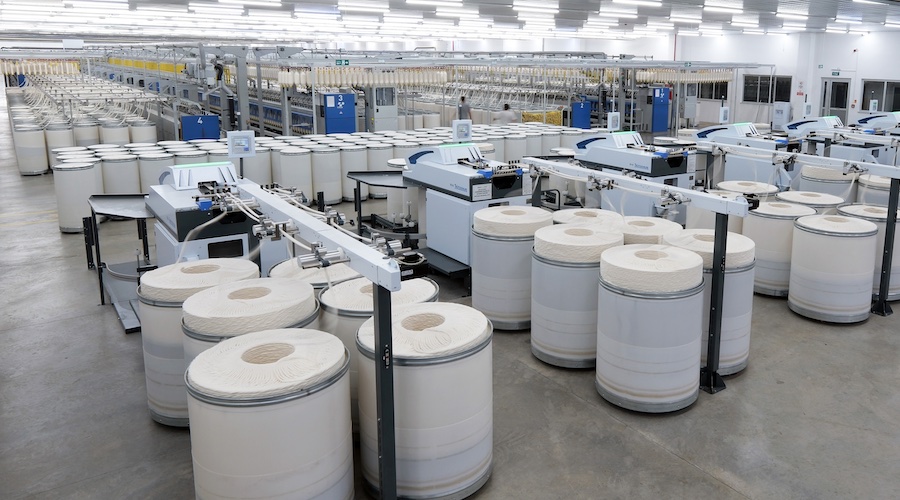
Collaboration at its finest: three leading technologies working hand in hand for one shared goal – perfect yarn quality.© 2026 Trützschler
In today’s textile industry, excellence is not achieved by chance – it’s the result of deliberate decisions, technical expertise, and the courage to go beyond conventional paths. The Turkish company Zirve Tekstil has done just that: by combining the best technologies from Trützschler, Toyota and Murata, they’ve created a production setup that delivers outstanding yarn quality – recognized worldwide.

A strategic choice for excellence

“We knew a one-brand setup might be easier,” says Erhan Tenekeci, the company’s General Manager. “But our goal was to stay competitive, which meant choosing the best in every category, Trützschler for fiber and spinning preparation, Toyota for roving and ring spinning frames and Murata for winding.”

Perfect quality from the start

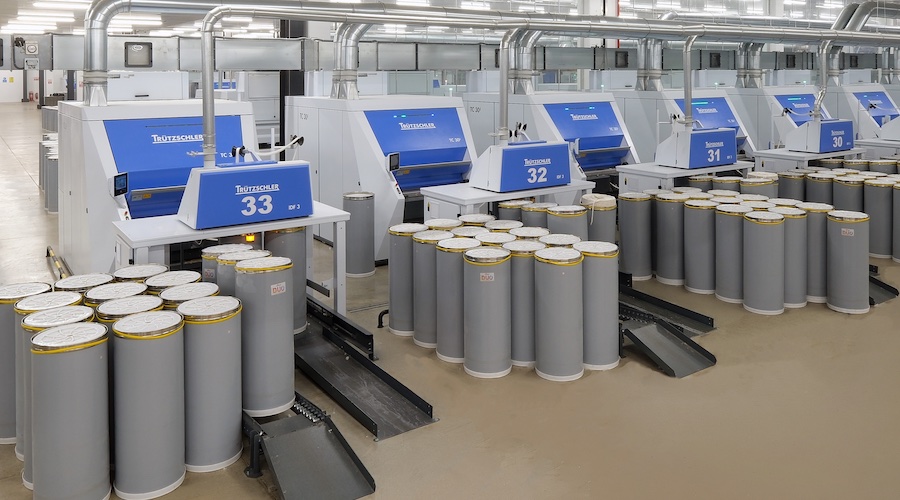
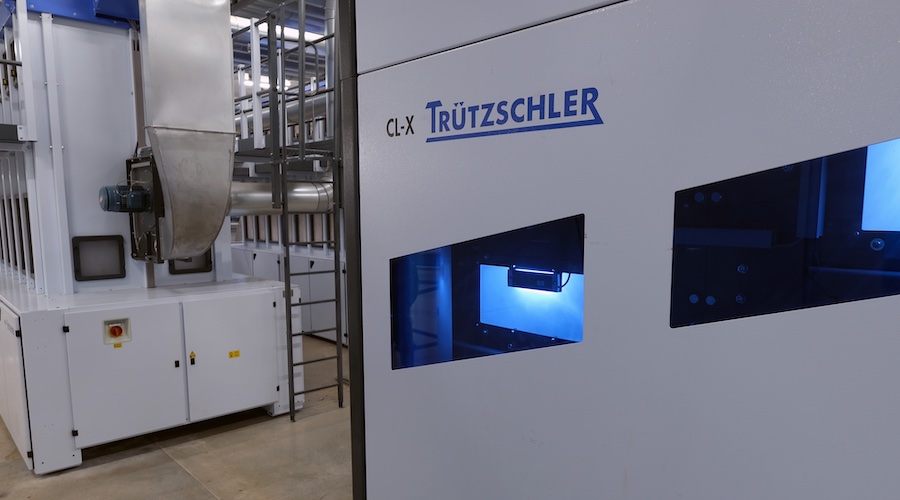
Excellent quality in yarn manufacturing starts with spinning preparation. The Trützschler bale opener BO-P, for example, gently opens the fibers and ensures best possible blending from the start. The Pre-Cleaner CL-X outperforms the competition with its outstanding cleaning efficiency while significantly reducing the loss of good fibers. All in all, Trützschler’s blow room solutions lay the foundation for consistent quality and economy in yarn manufacture.
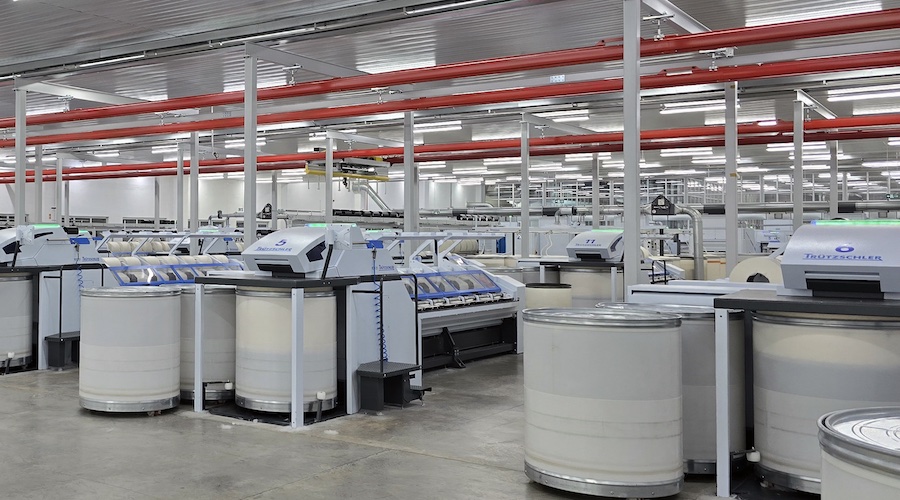
Trützschler’s spinning preparation machinery transform raw cotton into a perfectly prepared sliver. © 2026 Trützschler


The intelligent card TC 19i, equipped with SUPERTIP wires from Trützschler Card Clothing, contributes further to unmatched sliver quality through the automatic gap optimizer T-GO, which is only available from Trützschler. The card also features WASTECONTROL, which prevents any unnecessary fiber loss. In the combing stage, the TCO 21 Comber stands out with its dual-drive technology and automatic piecing optimization, delivering uniform quality across all eight heads – even at high speeds. It also enables top quality at low noil levels. Together with the high performance draw frames TD 9T and TD 10, these Trützschler spinning preparation machines form a tightly integrated system that transforms raw cotton into a perfectly prepared sliver, thus creating the basis for further processing.
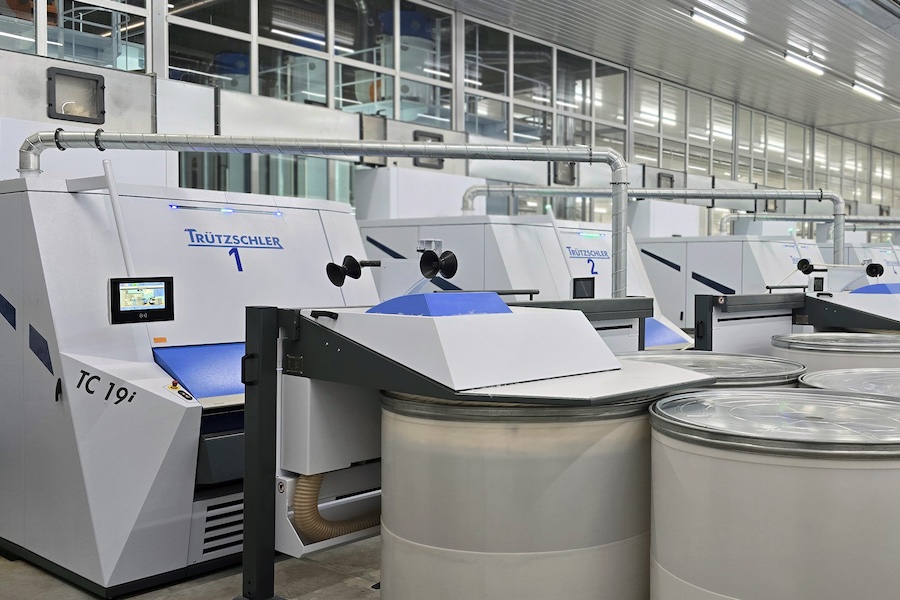
The intelligent Trützschler card TC 19i, equipped with SUPERTIP wires from Trützschler Card Clothing, ensures that every fiber is perfectly aligned, maximizing both quality and efficiency. © 2026 Trützschler


In the roving stage, four Toyota FL200 Roving Frames ensure high-quality rovings even at low twist levels – a key factor for downstream performance. Twelve Toyota RX300 Ring Spinning Frames provide exceptional stability and precise spinning geometry. As Erhan Tenekeci, General Manager of Zirve Tekstil, explains: “Despite being limited to 1824 spindles, Toyota’s compact ring machines produce more and higher-quality yarn than even the longest machines of competitors. Their performance, combined with low maintenance and high adaptability, gives us a clear edge.”
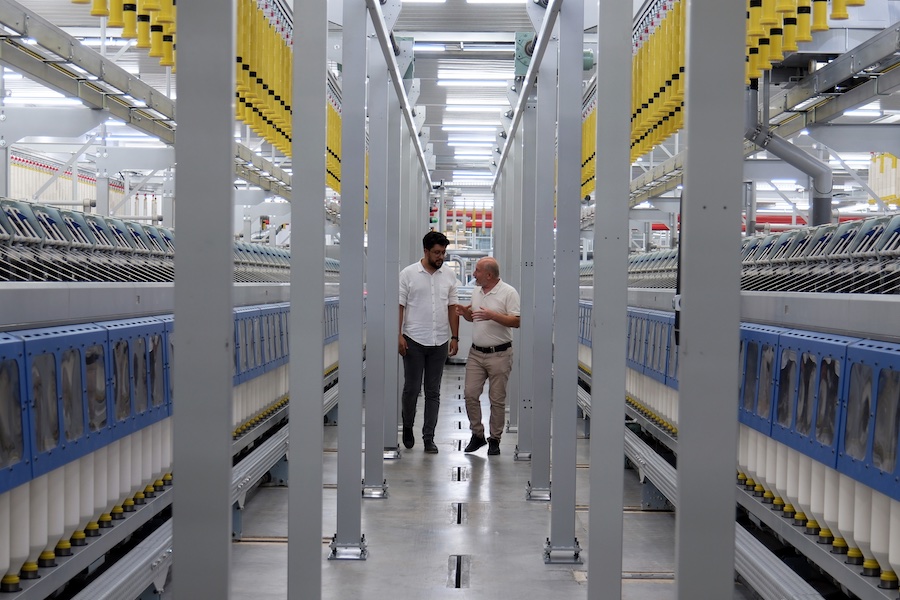
Toyota and Zirve experts exchanging insights on roving technology for superior quality at low twist levels. © 2026 Trützschler


The final step is handled by the Muratec FPRO EX Automatic Winder, seamlessly connected via Coner Link. This setup ensures smooth yarn transfer, minimal contamination, and consistently high winding quality – completing a process chain where every detail is aligned for excellence.

Quality that speaks for itself

The mill produces 18.5 tons of premium combed ring yarn daily in counts of Ne 20, 24, and 30, primarily for knitting applications. Although the focus lies on utilizing locally grown cotton – which typically comes with greater variability in fiber properties – the mill successfully produces yarns that are in high demand both in local markets with stringent quality requirements and on international export markets.

This commitment to excellence has not gone unnoticed: Pinter, the provider of the OptiFil system, has recognized the mill for achieving the highest efficiency among its Turkish benchmarking network with lowest yarn breakages – a clear indicator of the outstanding fiber preparation. This achievement is a testament to the effectiveness of combining top-tier machinery from Trützschler, Toyota, and Murata.
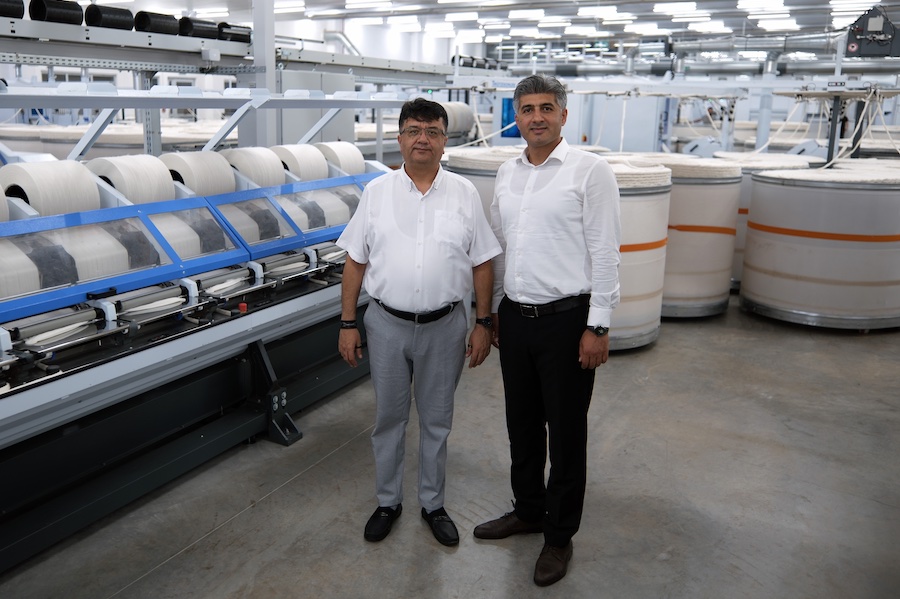
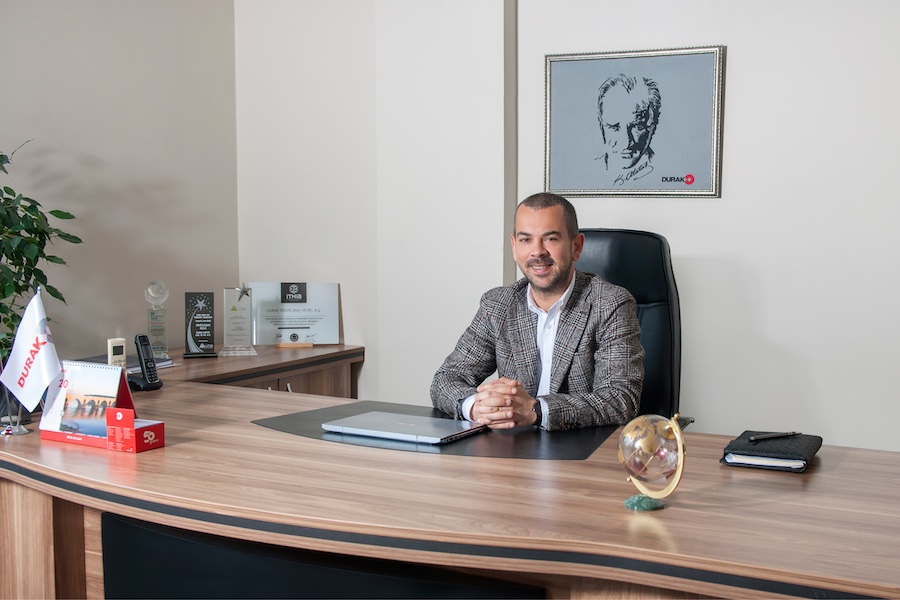
From left to right: Erhan Tenekeci (General Manager Zirve Tekstil) and Ahmet Öztürkmen (Trützschler Türkiye Sales Engineer). © 2026 Trützschler


Collaboration without compromise – The best of all worlds

This project proves that integrating machines from different manufacturers can be done – and done well. The planning phase was smooth and collaborative, with all partners working hand in hand. The result: a production line that is more than the sum of its parts, with each machine contributing to one shared goal: perfect yarn quality.

It’s a powerful example of what’s possible when openness, technical excellence, and strategic thinking come together. By selecting the best solution for each step – regardless of brand – the mill has set a benchmark for modern spinning. “The best from every machine, for the best from every fiber.”
More News from Truetzschler GmbH & Co. KG

#Spinning

Details matter: How Trützschler cylinder wires boost efficiency in Pakistan’s spinning sector

Pakistan’s textile industry, especially its spinning sector, is the backbone of the national economy and a vibrant hub of innovation. Today’s spinning mills face growing demands for efficiency, quality, and sustainability. From the serene northern valleys to the vibrant port city of Karachi in the south, mills like Suraj Cotton Mills, Liberty, and Nishat Chunian are turning to advanced solutions.

#ITMA Asia + CITME Singapore 2025

T-CAN – Revolutionizing can transport

In virtually all spinning mills, transporting sliver cans is still done manually. Rising labor costs, lack of operators and increasing quality requirements make this a growing challenge. With T-CAN, Trützschler introduces a practical solution: a fully automated can transport system that will be presented live at ITMA ASIA 2025 in Singapore.

#Spinning

Pre-Cleaner CL-X: The future of cotton cleaning

What if the future of cotton cleaning was already here – setting a new standard for cleaning efficiency, productivity and energy savings? That future has a name: CL-X. Since its market launch in 2022, the Pre-Cleaner CL-X has become a true bestseller, proving its value in several hundred customer applications worldwide. Now, new results from Türkiye demonstrate again how the Pre-Cleaner CL-X outperforms the competition.

#ITMA Asia + CITME Singapore 2025

Trützschler invites to discover the future of fiber processing at ITMA Asia Singapore 2025

From October 28 to 31, the Trützschler Group will showcase its latest technologies at ITMA Asia in Singapore. Visit them at Booth D302 in Hall 4 at the Singapore Expo to explore cutting-edge solutions in Spinning, Card Clothing, and Nonwovens. A special highlight: the newest smart automation solution T-CAN, developed in response to growing labor costs and labor shortages in the textile industry. This innovation will be revealed exclusively at the show – don’t miss the opportunity to experience it first-hand.

More News on Spinning

#Spinning

Rieter responds to higher raw material prices

Global political and economic developments have been leading to rising raw material and energy costs for some time. The textile machinery industry is also affected by this trend. Rieter machines and components consist to a large extent of steel, copper, aluminum and electronics. These materials in particular have seen higher demand and higher prices in recent months.

#ITM 2026

The hub of smart and sustainable transformation in yarn technologies: ITM 2026

With global fiber production projected to reach 169 million tons by 2030, yarn manufacturing is becoming one of the most strategic fields within the textile machinery industry. Located in Halls 6, 7, and 10, the Yarn Hall at ITM 2026 is set to bring together industry professionals with innovative solutions developed around automation, energy efficiency, digitalization, and circular production.

#Spinning

Barmag: DTY efficiency for the future of fancy yarns

Fancy yarns continue to gain importance in the textile market: Whether in fashion, home textiles or the automotive industry - the trend towards individuality is fueling the demand for textured, haptically differentiated and at the same time comfortable yarns.”

#Spinning

Monitor, adjust, perfect

FiberGuard BCF is the name of the new system for real-time monitoring of yarn tension in all Neumag BCF production processes. Barmag, the innovation and technology leader for filament spinning systems, presented this innovation of its Neumag product line at ITMA Asia + CITME in Singapore last November. The new BCF yarn tension sensor is compatible with all current Neumag BCF machines and can be easily retrofitted to existing Neumag BCF S8 machines.

Latest News

#Recycling / Circular Economy

Circulose restarts commercial-scale production at Ortviken plant in Sundsvall

Circulose today announced the restart of its commercial-scale production plant at Ortviken in Sundsvall, Sweden, marking a significant step in scaling next-generation materials for the global fashion industry. The company plans to resume production of CIRCULOSE®, a recycled pulp made entirely from discarded cotton textiles, in the fourth quarter of 2026.

#Textiles & Apparel / Garment

VIATT 2026 to debut German Pavilion, strengthening European participation alongside key Asian textile hubs

Vietnam’s textile and garment sector continues to be a major contributor to the country’s economic growth, with export revenues expected to reach USD 46 billion in 2025, a 5.6% increase from 2024 . From 26 – 28 February, the Vietnam International Trade Fair for Apparel, Textiles and Textile Technologies (VIATT) is set to contribute to economic growth opportunities by accelerating digital transformation and green transition across the entire textile value chain. The upcoming edition will respond to the rising demand for advanced technologies and sustainable materials with the introduction of the German Pavilion, alongside strong exhibitor participation from key Asian sectors, as well as several high-profile fringe events.

#Sustainability

Ying McGuire becomes new CEO of Cascale

Cascale today announced the appointment of Ying McGuire as Chief Executive Officer, effective June 1, 2026.

#Technical Textiles

Sustainable, lightweight, and sound absorbing: Polyester-based front trunk solution for BEVs

As car manufacturers look to further reduce their carbon footprint, Autoneum has developed an innovative front trunk solution for battery electric vehicles (BEVs), made entirely from polyester-based textile. The Ultra-Silent Frunk offers significant weight reduction, improved acoustic and thermal insulation, and uses up to 70 percent recycled material, supporting sustainable and efficient vehicle design. Autoneum, global technology leader in acoustic and thermal management for vehicles, has already received orders for the new frunk from three major OEMs in Asia and Europe to be built in three BEV models. Series production for two BEVs has been underway in China and Germany since last year.

TOP