[pageLogInLogOut]

#Natural Fibers

Better Cotton Initiative surpasses 50% traceable BCI Cotton milestone
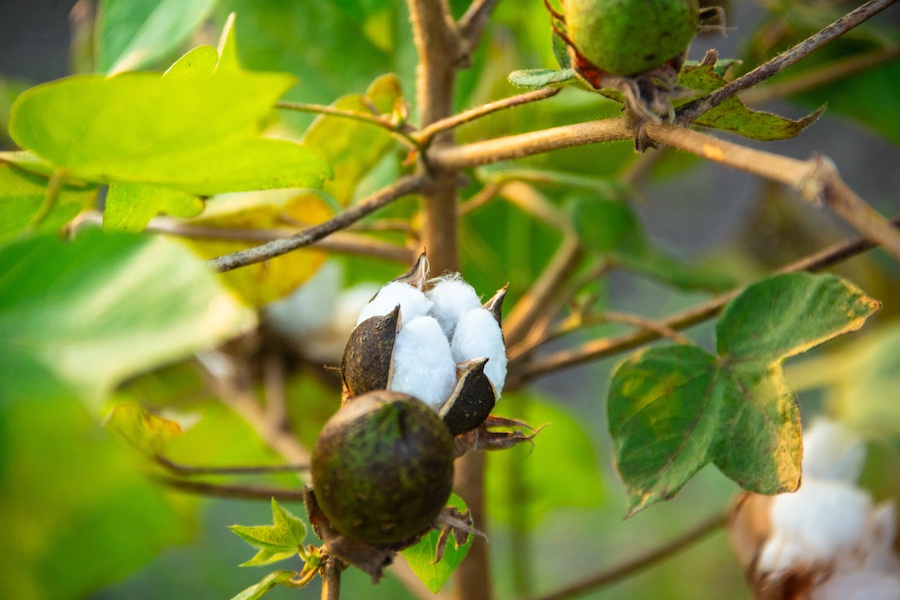
© 2025 Better Cotton Initiative/Joe Woodruff. Location: Gujarat, India, 2023.
Two years since the launch of its traceability solution, the Better Cotton Initiative (BCI) has announced that over 50% of BCI Cotton volumes entering global fashion and textile supply chains are now traceable, deriving from 15 countries.

Since BCI Traceability was implemented in November 2023, the number of retailer and brand members sourcing traceable BCI Cotton, officially known as Physical BCI Cotton, has grown at pace. More than 60 companies have signed up to source via BCI Traceability, while 17 have received products containing Physical BCI Cotton. 

Jacky Broomhead, Director of Traceability at the Better Cotton Initiative, says that traceable cotton has become a clear necessity for the fashion and textile industries. She said: “The complexity of textile supply chains, combined with increased legislation, makes the offer of traceability non-negotiable. To continue delivering on our mission to support cotton farmers around the world and ensure BCI farmers can access key markets, we needed to make BCI Cotton traceable.”

In just two years, more than 23,000 metric tonnes (MT) of Physical BCI Cotton have been traced from cotton gins to BCI Retailer and Brand Members, a huge increase from the 90 MT achieved by November 2024. With the average 100% cotton t-shirt containing around 180g grams, it means that enough Physical BCI Cotton has reached retailers and brands to make more than 127 million t-shirts. 

BCI has now rolled the solution out across all countries where it has field-level programmes and continues to help supplier and manufacturer members align with its Chain of Custody (CoC) Standard, which sets the requirements for handling Physical BCI Cotton and ensures the integrity of the system.

Achieving scale

In the past 12 months, BCI Traceability has been launched in Australia and Brazil, while the number of BCI Supplier and Manufacturer Members aligned with the CoC Standard has risen from 700 in 2024 to over 2,000. 

Broomhead added: “Making traceability both accessible to the market and inclusive of all BCI farmers has been a key goal of ours. Achieving this has been a truly collaborative effort made possible through the invaluable contributions of our retailer and supplier community who helped develop the solution, and the many companies now sourcing Physical BCI Cotton.” 

The continued success of BCI Traceability will also be vital cog in the rollout of the organisation’s new product label, which launched last month. The new label is available to BCI Retailer and Brand Members, enabling them to claim with confidence that their products contain Physical BCI Cotton, certified by a third-party body and traced from its country of origin.  

Third-party certification of the supply chain, in addition to traceability, makes the label a source of reassurance for consumers, while enhancing the credibility of retailers and brands.

More News from Better Cotton

#Raw Materials

Better Cotton Initiative marks certification anniversary with progress update and accreditation

One year since becoming a certification scheme, the Better Cotton Initiative (BCI) has announced that more than 3,000 supply chain actors have been certified. At farm level, more than 30% of farms and producer units supplying BCI Cotton have received a positive audit outcome.

#Raw Materials

Better Cotton Initiative opens enrollment in the US with promising opportunities for producers

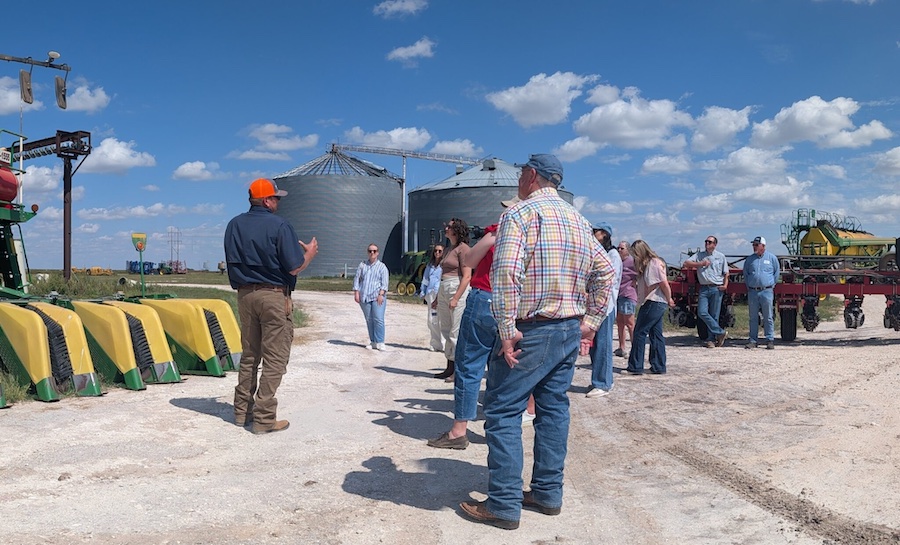
Producer enrollment for the US Program of the Better Cotton Initiative (BCI) is open until May 15 for the 2026-2027 season. With over 2,600 members spanning the cotton supply chain and more than 11,000 users of its Better Cotton Platform (BCP) as of 2025, BCI’s standard is implemented in 15 countries and covers one fifth of global cotton production.

#Natural Fibers

Better Cotton Initiative partners with Uzbek government agency to offset certification costs

The Better Cotton Initiative (BCI) has today announced a strategic agreement with Uzbekistan’s Light Industry Agency to increase financial support for cotton farming clusters adopting sustainable agricultural practices.

#Natural Fibers

BCI warns against ‘dangerous dilution’ of EU corporate directives

The approval of the European Commission’s Omnibus I proposal by the European Parliament’s Committee on Legal Affairs, accepting controversial changes to key sustainability directives is of great concern. These changes, namely to the Corporate Sustainability Reporting Directive (CSRD) and the Corporate Sustainability Due Diligence Directive (CSDDD), threaten to significantly dilute business reporting and due diligence obligations.

More News on Natural Fibers

#Raw Materials

Modern testing methods for raw cotton

The 38th International Cotton Conference Bremen will take place from 25 to 27 March 2026 at the Bremen Parliament. This conference has traditionally stood for in-depth expertise and international exchange. The program will focus on technical innovations, market trends, and regulatory frameworks across the entire value chain – from agriculture to the circular economy. With high-profile speakers, the conference is regarded as the key meeting point for the global cotton industry. Today’s focus: Cotton quality and testing methods.

#Recycled_Fibers

Advancing the future of stretch: Fashion for Good launches new project to validate bio-based and recycled elastane

Launched today, Stretching Circularity is a collaborative project initiated by Fashion for Good dedicated to accelerating the adoption of lower-impact elastane alternatives that are compatible with circular textile systems. By validating bio-based and recycled elastane solutions through pilot-scale testing and demonstrator garments, the initiative aims to remove one of the most significant technical barriers to a circular textile economy.

#Spinning

Perfect quality through collaboration: Machinery from Trützschler, Toyota and Murata at Zirve Tekstil

In today’s textile industry, excellence is not achieved by chance – it’s the result of deliberate decisions, technical expertise, and the courage to go beyond conventional paths. The Turkish company Zirve Tekstil has done just that: by combining the best technologies from Trützschler, Toyota and Murata, they’ve created a production setup that delivers outstanding yarn quality – recognized worldwide.

#Man-Made Fibers

Lenzing AG to become majority owner of TreeToTextile AB and accelerates industrialization of new fibers

The Lenzing Group is taking another strategic milestone by acquiring a controlling majority in the Swedish innovation company TreeToTextile AB. This step strengthens Lenzing’s position as a leading provider of sustainable, wood‑based specialty fibers and expands its innovation pipeline with a highly scalable, patent‑protected technology platform. The transaction is executed through the issuance of new shares.

Latest News

#Recycling / Circular Economy

Circulose restarts commercial-scale production at Ortviken plant in Sundsvall

Circulose today announced the restart of its commercial-scale production plant at Ortviken in Sundsvall, Sweden, marking a significant step in scaling next-generation materials for the global fashion industry. The company plans to resume production of CIRCULOSE®, a recycled pulp made entirely from discarded cotton textiles, in the fourth quarter of 2026.

#Textiles & Apparel / Garment

VIATT 2026 to debut German Pavilion, strengthening European participation alongside key Asian textile hubs

Vietnam’s textile and garment sector continues to be a major contributor to the country’s economic growth, with export revenues expected to reach USD 46 billion in 2025, a 5.6% increase from 2024 . From 26 – 28 February, the Vietnam International Trade Fair for Apparel, Textiles and Textile Technologies (VIATT) is set to contribute to economic growth opportunities by accelerating digital transformation and green transition across the entire textile value chain. The upcoming edition will respond to the rising demand for advanced technologies and sustainable materials with the introduction of the German Pavilion, alongside strong exhibitor participation from key Asian sectors, as well as several high-profile fringe events.

#Sustainability

Ying McGuire becomes new CEO of Cascale

Cascale today announced the appointment of Ying McGuire as Chief Executive Officer, effective June 1, 2026.

#Technical Textiles

Sustainable, lightweight, and sound absorbing: Polyester-based front trunk solution for BEVs

As car manufacturers look to further reduce their carbon footprint, Autoneum has developed an innovative front trunk solution for battery electric vehicles (BEVs), made entirely from polyester-based textile. The Ultra-Silent Frunk offers significant weight reduction, improved acoustic and thermal insulation, and uses up to 70 percent recycled material, supporting sustainable and efficient vehicle design. Autoneum, global technology leader in acoustic and thermal management for vehicles, has already received orders for the new frunk from three major OEMs in Asia and Europe to be built in three BEV models. Series production for two BEVs has been underway in China and Germany since last year.

TOP