[pageLogInLogOut]

#Natural Fibers

European Flax-Linen & Hemp step into advanced manufacturing: Enabling filament winding, 3D printing and high-performance composite processes
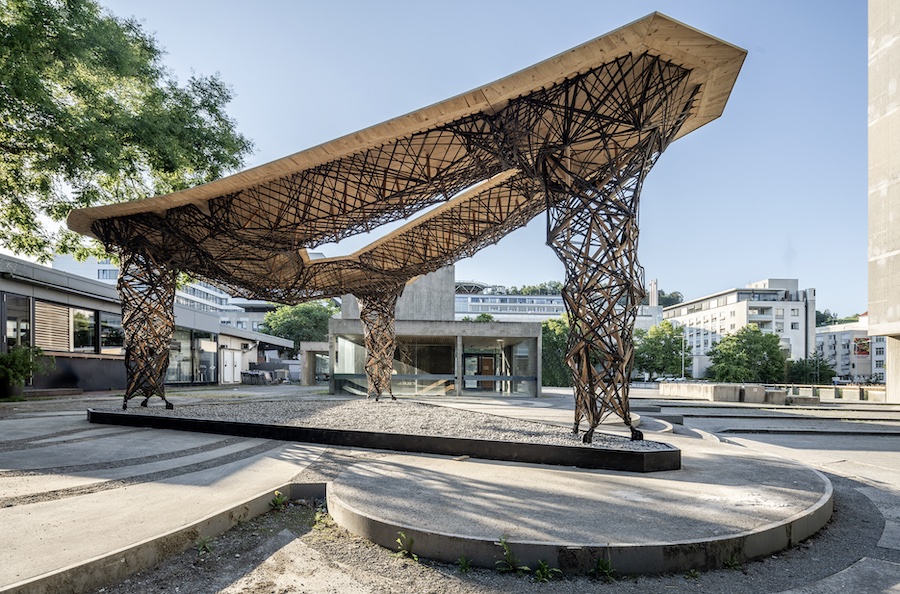
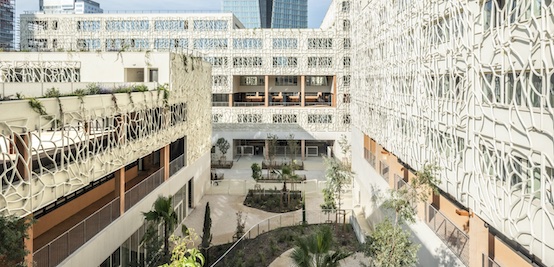
Self-supporting architectural form © 2026 Alliance for European Flax-Linen & Hemp Paris
The Alliance for European Flax-Linen & Hemp announces a new wave of technological advancements demonstrating how flax-linen and hemp fibres are now being successfully integrated into advanced composite manufacturing processes. These developments mark a transition beyond traditional hand lay-up techniques, positioning natural fibres as credible, scalable solutions for high-performance industrial applications.

European flax-linen and hemp biocomposites are rapidly evolving, with cutting-edge manufacturing technologies unlocking new levels of performance, precision and repeatability. As a result, flax-linen and hemp are emerging as serious contenders across demanding sectors including automotive, construction, design and advanced engineering.

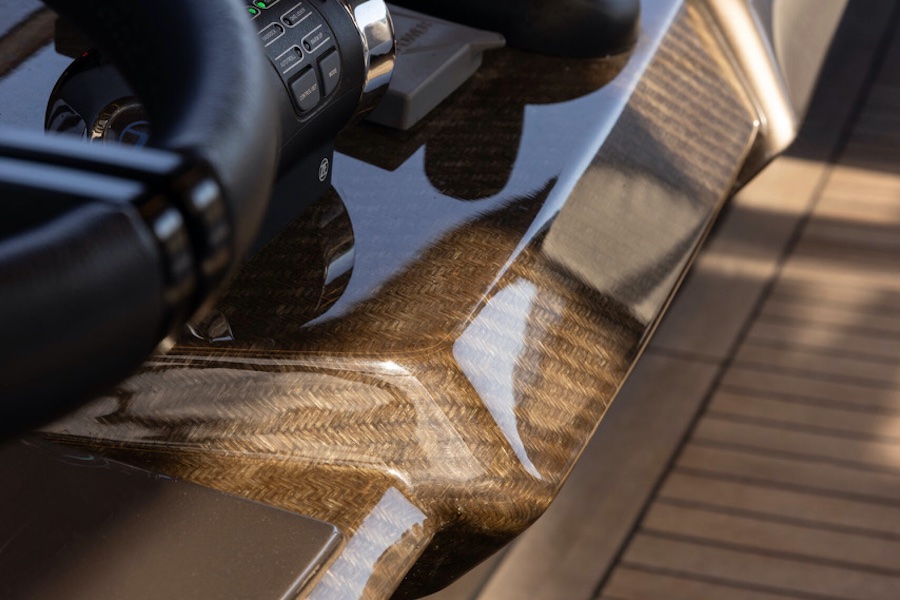
Recent progress in thin-ply prepreg technology has enabled flax rovings, such as those developed by Depestele, to be transformed into ultra-lightweight, high-performance composite structures. Leveraging the ‘thin ply effect,’ these materials demonstrate enhanced damage tolerance, while automated prepreg systems and back-injection moulding are facilitating efficient, high-volume production, particularly within the automotive sector.

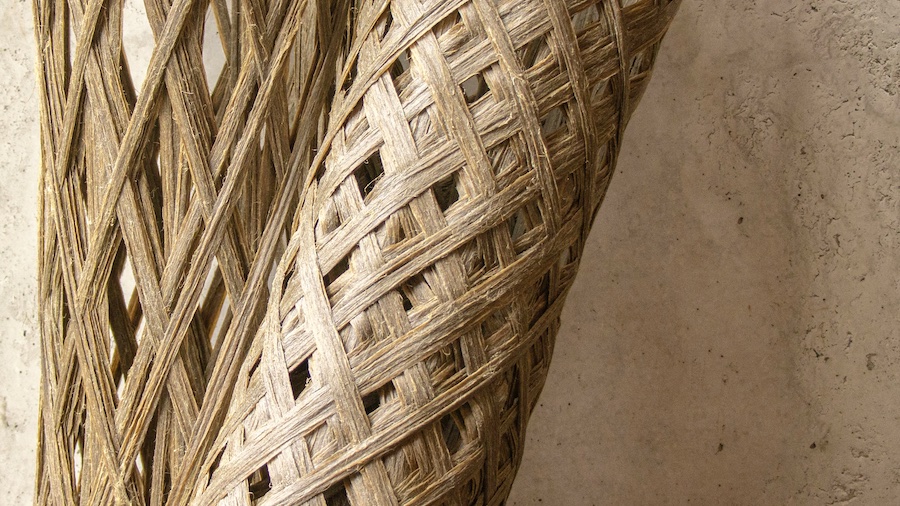
At the forefront of innovation, coreless filament winding is redefining the possibilities of natural fibre composites. This advanced robotic process enables resin-impregnated flax fibres to be precisely wound into complex three-dimensional geometries without the need for traditional moulds, significantly reducing material waste while enabling structurally optimised designs. The FIBRAS project at Eindhoven University of Technology is exploiting these techniques and developing specialised handling methodologies for flax rovings that address the inherent variability of natural fibres in highly controlled manufacturing environments, to create lightweight, resource-efficient and more sustainable architectural structures for the construction industry.

The DynaMill project, led by ContiTech AVS France (a subsidiary of OESL-Automotive), Nautix and ComposiTIC (a technical centre attached to the University of Southern Brittany), co-funded by the Brittany region and supported by ID4Mobility and EMC2 clusters, has successfully developed and mechanically validated a lightweight automotive engine support connecting rod manufactured using injection moulding and automated fibre placement with flax fibre reinforcements and bio-based PA11 matrix. Filament winding has been also investigated with promising results. Building on earlier lightweighting work under the Dynafib programme, the project highlights the growing potential for high-performance, bio-based composite structures that combine renewable materials, reduced weight and scalable manufacturing technologies for future automotive applications.

In parallel, the University of Stuttgart’s ICD/ITKE continues to pioneer novel applications for natural fibres. Supported by Safilin, researchers have developed the “Con[knit]uous Rubble” process, which uses continuous circular knitting to encase unprocessed demolition waste in seamless flax fibre structures. This innovative method allows for the construction of self-supporting architectural forms such as arches and columns without binders or mortars, while enabling full disassembly and material reuse. Future developments aim to integrate bio-based resins to further enhance durability and performance.

Additive manufacturing is also rapidly expanding the potential of flax-based composites. Continuous flax fibre-reinforced 3D printing now delivers mechanical properties comparable to traditional composite processes through the co-extrusion of flax yarns with thermoplastics such as PLA. This opens new opportunities for rapid prototyping and customised structural components. Meanwhile, compounded flax fibre filaments are gaining traction in more conventional 3D printing applications.

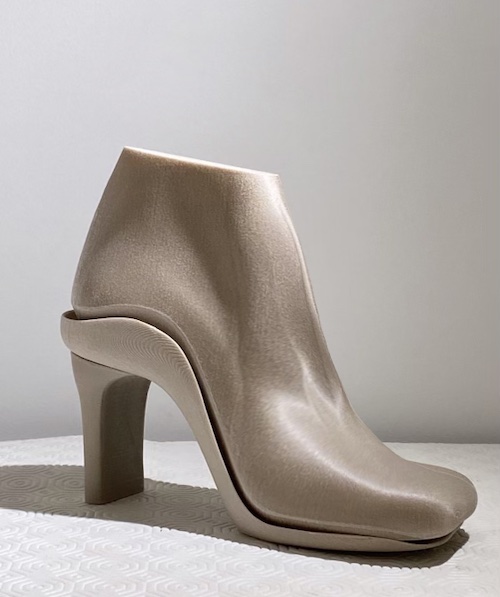
This momentum is reflected in the design sector, where French designer Alyssa Cartaut was recently awarded the City of Hyères Prize for Fashion Accessories at the 40th International Festival of Fashion, Photography and Accessories. Her collection, The Cushion Issue, features footwear components 3D-printed using PLA filament reinforced with European flax-linen fibres, offering a bio-based alternative to conventional materials. The Alliance supported this project by facilitating access to certified fibres and connecting the designer with material specialists.

Looking ahead, 4D printing introduces an additional dimension to natural fibre composites. By incorporating materials that respond to stimuli such as heat or moisture, researchers are developing structures capable of adapting their shape and function over time. Professor Antoine le Duigou, based at the Institut de Recherche Dupuy de Lôme, is leading research in this field in collaboration with Coriolis Composites, focusing on bio-inspired materials for decarbonisation applications.
© 2026 Alliance for European Flax-Linen & Hemp Paris


Advances are also being made in hemp processing. New capabilities in long-fibre hemp pultrusion have enabled the development of high-strength structural elements, exemplified by the Hemp Halo Canopy - a 3.3metre architectural prototype presented at JEC World. Developed as part of the EU-funded RAW project (in relation with Terre de Lin, Safilin and Linificio Canapificio Nazionale), the structure combines pultruded hemp profiles with CNC-knitted hemp surfaces to create a fully bio-based, lightweight and structurally efficient system, demonstrating the potential for waste-free construction.

In the field of functional materials, Composites Edge GmbH has introduced a next-generation adaptive acoustic panel made from natural fibres and thermoplastic resins. At less than one millimetre thick, the panel can be manufactured using automated fibre placement (AFP), is fully recyclable and waterproof, and is capable of absorbing up to 95% of low-frequency noise. The innovation was recognised as a finalist in the CAMX Awards for most creative application.

“European Flax-linen and hemp are redefining what’s possible in biocomposite manufacturing, moving far beyond traditional lay-up into highly automated processes like filament winding, prepreg systems and additive manufacturing,” comments Bruno Pech of the Alliance for European Flax-Linen & Hemp. “These innovations are unlocking new levels of precision, design freedom and performance, proving natural fibres are ready for the most advanced industrial applications.”
© 2026 Alliance for European Flax-Linen & Hemp Paris


More News from Alliance of European Flax-Linen & Hemp

#Composites

Alliance for European Flax-Linen & Hemp expands bio-materials presence at JEC World 2026

The Alliance for European Flax-Linen & Hemp is pleased to announce its participation at JEC World 2026, featuring a significantly expanded presence and an enhanced offering for the global composites industry.

#Natural Fibers

Alliance for European Flax-Linen & Hemp expands technical capabilities with addition of CIRCULAR STRUCTURES

The Alliance for European Flax-Linen & Hemp is pleased to welcome CIRCULAR STRUCTURES, a Bremen-based platform for sustainable material development and product incubation, to its Technical Section. This addition further enhances the Alliance’s mission to accelerate the industrial adoption of European-grown flax and hemp fibres in high-performance composite applications.

#Sustainability

Groundbreaking architectural projects using natural fibres

Paris, May 19 2025 : The Alliance for European Flax-Linen & Hemp is proud to spotlight a growing wave of innovative architectural and civil engineering applications featuring flax and hemp fibres. As the global construction industry turns toward sustainable solutions, flax and hemp are emerging as high-performance, low-impact alternatives for a new generation of bio-based architecture.

#Composites

Alliance for European Flax-Linen & Hemp host Natural Fibre Composites Village at JEC World 2025

The Alliance for European Flax-Linen & Hemp will host a Natural Fibre Village at JEC World 2025 that will showcase the activities of the Alliance and nine of its members in a 250m2 area dedicated to natural fibre composites. Partnering with the JEC Group, the Alliance will lead the European flax and hemp industry exhibit where Bcomp, Demgy, Depestele, Eco-Technilin, Flipts en Dobbels, Libeco, Norafin, Safilin and Terre de Lin and, for the first time, Linificio e Canapificio Nazionale SRL, will all exhibit a wide range of flax and hemp raw materials and composite products.

More News on Natural Fibers

#Raw Materials

CSITC adds ABRAPA as a round trial sample provider

Beginning with the Q2 2026 Round Trials, the ICAC's Committee on the Commercial Standardization of Instrument Testing of Cotton has expanded its sample provision framework by adding the Brazilian Cotton Growers Association (ABRAPA) as an official sample provider.

#Raw Materials

Dr N Vigneshwaran is named 2026 ICAC Researcher of the Year

The International Cotton Advisory Committee (ICAC) is pleased to announce the selection of Dr N Vigneshwaran, Principal Scientist and Head of the Chemical and Biochemical Processing Division at the ICAR–Central Institute for Research on Cotton Technology (ICAR-CIRCOT), Mumbai, India, as the ICAC Researcher of the Year 2026.

#Raw Materials

Global Cotton area and production are projected to decline in the 2026/27 Season

The June 2026 issue of Cotton This Month projects a modest contraction in global cotton area, production, and trade during the 2026/27 season, reflecting weaker demand sentiment, rising production costs, and shifting environmental factors across major producing nations.

#Natural Fibers

The Good Cashmere Standard expands Animal Welfare Assessment on audited farms

With the Animal-related Animal Welfare Assessment (ARAWA), the Aid by Trade Foundation (AbTF) conducts a pioneering project for the second consecutive year in 2025, parallel to the independent verifications of The Good Cashmere Standard® (GCS). ARAWA assessments provide a comprehensive overview of the health status of a herd on an audited farm, going beyond standard verification procedures. They are inherently complex, which still makes them a rarity in the standard sector, but offer support in identifying non-conformities and provide a holistic overview of the herd's well-being. Therefore, the Aid by Trade Foundation will continue this crucial project and even further expand it by 2027.

Latest News

#ITM 2026

The future of textiles, the power of trade, and the summit of technology come together at ITM 2026

ITM 2026 International Textile Machinery Exhibition, one of the most prestigious organizations in the textile technologies sector, opens its doors to visitors between June 9-13. Expected to break records in terms of both exhibitor and visitor numbers, as well as the technological vision it presents, ITM 2026 will transform into a global trade hub with machine sales, and new business collaborations.

#Nonwoven machines

ATCO Hygienics, Uzbekistan, orders baby diaper production line from ANDRITZ

International technology group ANDRITZ has received an order from ATCO Hygienics to supply a new baby diaper production line for its plant in Tashkent, Uzbekistan. The order is included in ANDRITZ’s order intake for the first quarter of 2026. Commissioning of the production line is scheduled for the end of 2026.

#Weaving

Itema manufactures the first Projectile Weaving Machines “Made in Italy” at its Colzate Headquarters.

Itema proudly announces an important industrial milestone: in early May, the first Itema projectile weaving machines manufactured in Italy were successfully produced at the Group’s headquarters in Colzate.

#Spinning

Nico Pedretti appointed as Managing Director Graf Group

As of June 1, 2026, Nico Pedretti has assumed the role of Managing Director Graf Group. With more than 20 years of international industrial experience and extensive expertise in Operations, Supply Chain Management, Finance and Controlling, he brings a broad range of leadership and business experience to support Graf’s continued success.

TOP