[pageLogInLogOut]

#Raw Materials

EUR 2.8 million project for climate-resilient agriculture in Africa

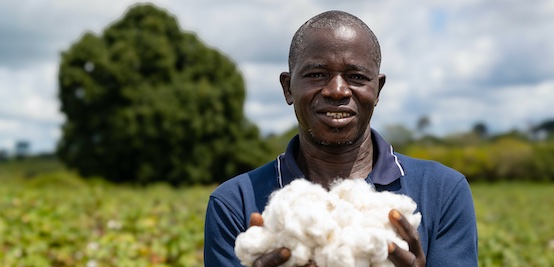
Healthy soils, responsible water use, and biodiversity conservation are central to the efforts of the Aid by Trade Foundation (AbTF) to make African cotton production more resilient to climate change. AbTF has opened new doors for small-scale farming families in Africa through a EUR 2.8 million project for climate-resilient cotton cultivation. Over the last three years, more than 100,000 farmers in Africa were involved in testing various soil improvement measures, with encouraging results: yields on demonstration sites increased significantly, despite the effects of climate change.

The CAR-iSMa project (in full: “Climate Adaptation and Resilience – A Pan-African Learning & Knowledge Exchange Project on Improved Soil Management”) ends with impressive outcomes. In Côte d’Ivoire, the project’s demonstration fields achieved crop yields of up to 37 percent higher than fields without soil optimisation measures. In addition, following a poor 2022/2023 harvest due to pest damage, the participating Ivorian farmers recorded an average increase in yield from 272 to 1,007 kilograms per hectare in the 2023/2024 season, which resulted in an average increase in income of EUR 509.

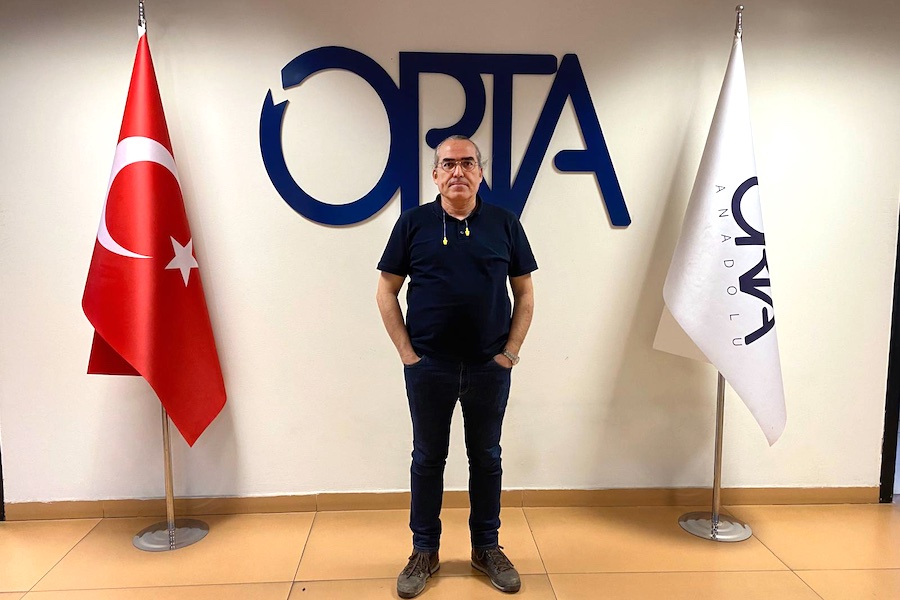
(c) 2025 CmiA - Tina Stridde, managing director Aid by Trade FOundation


“It speaks for itself that far more than our target number of 100,000 small-scale farmers chose to be trained in the theory and practice of regenerative and climate-resilient agriculture,” says Tina Stridde, the managing director of the Aid by Trade Foundation, adding, “In this project, we worked together with scientists, agricultural experts, and small-scale farmers to bring compost and biochar to the fields and to assess the feasibility of applying carbon credits to small-scale cotton production. We investigated new ways to secure good prospects of a stable income for small-scale farmers and their families, even in times of climate change.”

Climate-Resilient Agriculture: Creating Opportunities Through Compost, Biochar, and Carbon Credits

In the course of the project, AbTF focussed on practical measures for improving soil quality, responsible water use, and biodiversity conservation as a basis for greater resilience in small-scale agriculture. “For us, this project reinforced a more resilient way of working with farmers. We are now integrating many of these techniques into our core operations and exploring the potential for carbon farming initiatives, using the tested regenerative soil practices as a strong foundation,” explains Ivans Trigo Popinsky, Director of Production at SAN-JFS, a cotton company from Mozambique involved in the CAR-iSMa project. In addition to trainings and workshops, feasibility studies on carbon sequestration were conducted to assess the potential of different soil improvement methods. In the long term, these findings could open up new sources of income through carbon credits in small-scale cotton cultivation.

Getting Results: Regenerating Soil, Preserving Biodiversity, Empowering Women

Over the span of three years, international and interorganisational meetings were held with local farmers and partners to test and share knowledge on the production and effects of compost, biochar, and bokashi as well as erosion control techniques and soil cultivation methods. Project activities also addressed strategic crop rotation, crop diversification, cover crops, tree planting, and integrated production and pest management (IPPM). In parallel, innovative training materials were developed to ensure that awareness-raising efforts can continue long after the project’s end. Finally, it is especially gratifying to see women in all project regions now serving as role models, spreading the project’s innovative ideas, and becoming involved in compost production, which provides a new source of income in many cases.

Having been launched as an initiative of the Aid by Trade Foundation, CAR-iSMa was funded by BMZ (the German Federal Ministry for Economic Cooperation and Development) in collaboration with GIZ (Deutsche Gesellschaft für Internationale Zusammenarbeit) as part of its Sub-Saharan Cotton Initiative. The project was implemented together with the agricultural group LDC Suisse and over the complete project duration with locally operating cotton companies in Côte d’Ivoire, Zambia and Mozambique
More News from Cotton made in Africa (CmiA)

#Natural Fibers

Human Rights Day: Cotton made in Africa reinforces its commitment to ensuring respect for human rights in cotton production

The sustainable cotton standard Cotton made in Africa (CmiA) has always focussed on respect for human rights, including by prohibiting child labour and discrimination. With the new version of the CmiA standard coming into force, AbTF raises requirements for due diligence in the areas of human rights and risk management.

#Natural Fibers

Cotton made in Africa launches public consultation for standard revision

The Aid by Trade Foundation (AbTF) is opening public consultation on its Cotton made in Africa standard today. Interested parties will have 60 days to provide feedback, helping shape the future of one of the world’s largest standards for sustainable cotton. The latest update to the standard, Version 5.0, focusses on increasing Cotton made in Africa’s effectiveness and adapting its criteria and indicators to external factors, which currently include biodiversity loss and a growing set of reporting requirements for companies.

#Raw Materials

Cotton farmers in Benin benefit from organic cotton cultivation

Launched three years ago with EUR 1 million in total volume, a project called “Growing Benin’s Organic Cotton Sector” aimed to support small-scale farmers in transitioning to organic cotton cultivation in accordance with the Cotton made in Africa Organic standard, to avoid the use of synthetic pesticides, and to further develop the organic cotton sector, thereby securing the future of farming communities. The project has proved a success as participating cotton farmers are benefiting from higher incomes.

#Raw Materials

Cotton made in Africa supports the development of West African textile production in Benin

The West African country of Benin is well on its way to establishing itself as a new procurement and production hub for textiles and clothing; these efforts include having locally produced cotton made into textiles for the global market. The Aid by Trade Foundation (AbTF) is supporting this development through Cotton made in Africa (CmiA), one of its sustainability standards, which not only provides a sustainable and local basis for textile production but also facilitates access to international markets. Recently, a delegation of AbTF visited the CmiA project country of Benin for a first-hand look at the progress being made.

More News on Raw Materials

#Natural Fibers

38th International Cotton Conference Bremen: Let´s Talk about Cotton!

The 38th International Cotton Conference Bremen, to be held on 25-27 March 2026 in Bremen’s parliament building on market square, once again sends a powerful signal for professional excellence and international dialogue. The focus is on the latest market trends and technical innovations throughout the entire value chain – from agriculture and quality assurance to processing and the circular economy. With its high-calibre speakers, the conference remains an indispensable forum for anyone involved in shaping the cotton industry scientifically, technically, or economically.

#Research & Development

How innovations drive BASF’s success

“Innovation has always been part of BASF’s DNA. Especially in these volatile times, it is crucial to leverage our innovative strength to develop competitive solutions that differentiate us as a company in our markets and give us a competitive edge,” said Dr. Stephan Kothrade, Member of the Board of Executive Directors of BASF and Chief Technology Officer, at the company’s Research Press Briefing held today. To achieve this, BASF implemented its “Winning Ways” strategy about a year ago with the clear goal of becoming the preferred chemical company to enable its customers’ green transformation.

#Natural Fibers

38th International Cotton Conference Bremen launches registration and unveils key topics

Participants can now register online for the 38th International Cotton Conference Bremen, which will be held on 25-27 March 2026 at the Haus der Bürgerschaft parliament building on market square. All visitors can look forward to a high-calibre conference programme, numerous additional meetings and a valuable exchange of knowledge and information. The comprehensive range of topics covering the entire value chain will provide practical expertise, address current developments, answer key industry questions, and provide new impetus for the future.

#Natural Fibers

ICAC to collaborate with Uzbekistan and Bizpando on regenerative agriculture

The Government of Uzbekistan has allocated 55,000 hectares of land to implement a regenerative agriculture program for cotton as part of a collaborative project with the International Cotton Advisory Committee (ICAC) and Bizpando, a company with a a blockchain-based internet platform designed to ensure supply chain compliance.

Latest News

#People

Happy Holidays!

Dear reader, the year 2025 is drawing to a close. We are entering what we hope will be a peaceful holiday season, spending time with our families and taking a moment to pause and reflect. We hope we have been able to support you once again this year with relevant news and articles, and we look forward to surprising you with many innovations in the coming year. Enjoy the festive season, stay healthy, and we wish you a happy and joyful holiday season.

#Weaving

Lindauer Dornier announces leadership transition in weaving machine business

After more than ten successful years at Lindauer DORNIER GmbH, Mr Wolfgang Schöffl will leave the family-owned company at the end of the year to enter well-deserved retirement.

#Heimtextil 2026

Texpertise Focus AI: Messe Frankfurt puts Artificial Intelligence centre stage at its international textile and apparel trade fairs

Under the banner 'Texpertise Focus AI, Messe Frankfurt will place a strong emphasis on Artificial Intelligence (AI) across its international textile and apparel trade fairs from 2026 onwards, setting a future-shaping signal for the industry. The initiative highlights the responsible use of AI along the entire textile value chain, from fibre production to the point of sale. The programme will launch at Heimtextil in Frankfurt in January 2026.

#Technical Textiles

Autoneum and Polestar set new benchmarks for passenger experience and sustainability

As the global market leader in sustainable acoustic and thermal management, Autoneum is a key supplier of interior and exterior components for the highly anticipated Polestar 5 model. The successful collaboration between Autoneum and Polestar marks a significant milestone in sustainable automotive engineering: the electric grand tourer sports car features several innovations in lightweight, fully recyclable polyester-based components that ensure a superior driving experience. Polestar 5 was revealed at the IAA Mobility 2025 in Munich and is available in 24 markets.

TOP