[pageLogInLogOut]

#Natural Fibers

Human Rights Day: Cotton made in Africa reinforces its commitment to ensuring respect for human rights in cotton production
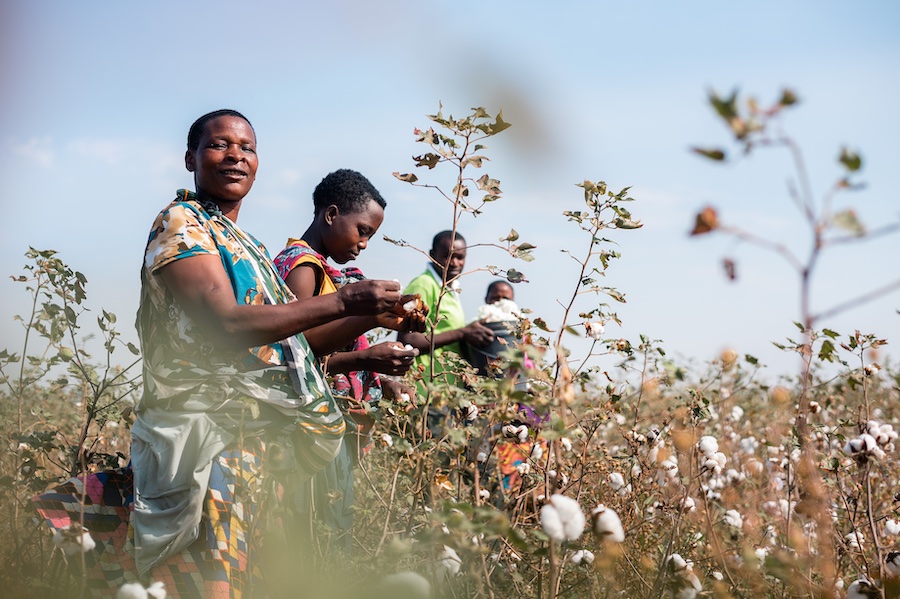
Cotton harvest in Tanzania © 2025 / Credit_Malicky Stanley Boaz
The sustainable cotton standard Cotton made in Africa (CmiA) has always focussed on respect for human rights, including by prohibiting child labour and discrimination. With the new version of the CmiA standard coming into force, AbTF raises requirements for due diligence in the areas of human rights and risk management.

Going forward, CmiA-verified cotton companies will be expected to comply with extensive obligations to monitor, report, and undertake corrective action with regard to both human rights and environmental protection. For fashion brands and textile companies that use CmiA cotton, this offers greater assurance in terms of due diligence and sustainability reporting.

For all partners in the production regions, human-rights compliance is evaluated as part of the independent verifications conducted for Cotton made in Africa at both the field and ginnery levels. With the new version of the CmiA Standard coming into force in 2026, the obligation to respect human rights is becoming an integral part of the standard’s requirements.

CmiA’s partner companies must ensure that training and other farm and ginnery level activities are inclusive and accessible to all. In future, training programmes will be designed and implemented in a way that promotes the participation of women, young people, and vulnerable groups and takes their needs into consideration.

Cotton companies will also be required to introduce a monitoring and reporting system to assess risks related to human rights, to production-related environmental damage, and to non-compliance with CmiA’s core indicators. As part of these efforts, cotton companies will engage with all relevant interest groups, such as farmers, workers, NGOs, and village communities.

Truly sustainable cotton production can only be achieved through consistent commitment to human rights and to the right to a healthy environment. In this way Cotton made in Africa is now reinforcing its more than two decades of commitment to promoting sustainable cotton production. “Especially today, on Human Rights Day, we are thrilled to note that Cotton made in Africa, through its intensive focus on human rights and environmental protection, will contribute even more to improving living conditions in the production regions in future,” says Alexandra Perschau, the head of standards and outreach at the Aid by Trade Foundation, adding, “We are pleased to be launching this upgrade after intensive and productive consultations, especially with our partners in the growing areas, and are convinced that the revised Cotton made in Africa Standard will provide valuable support for fashion brands and textile companies in meeting their reporting obligations.”
More News from Cotton made in Africa (CmiA)

#Natural Fibers

Cotton made in Africa launches public consultation for standard revision

The Aid by Trade Foundation (AbTF) is opening public consultation on its Cotton made in Africa standard today. Interested parties will have 60 days to provide feedback, helping shape the future of one of the world’s largest standards for sustainable cotton. The latest update to the standard, Version 5.0, focusses on increasing Cotton made in Africa’s effectiveness and adapting its criteria and indicators to external factors, which currently include biodiversity loss and a growing set of reporting requirements for companies.

#Raw Materials

EUR 2.8 million project for climate-resilient agriculture in Africa

Healthy soils, responsible water use, and biodiversity conservation are central to the efforts of the Aid by Trade Foundation (AbTF) to make African cotton production more resilient to climate change. AbTF has opened new doors for small-scale farming families in Africa through a EUR 2.8 million project for climate-resilient cotton cultivation. Over the last three years, more than 100,000 farmers in Africa were involved in testing various soil improvement measures, with encouraging results: yields on demonstration sites increased significantly, despite the effects of climate change.

#Raw Materials

Cotton farmers in Benin benefit from organic cotton cultivation

Launched three years ago with EUR 1 million in total volume, a project called “Growing Benin’s Organic Cotton Sector” aimed to support small-scale farmers in transitioning to organic cotton cultivation in accordance with the Cotton made in Africa Organic standard, to avoid the use of synthetic pesticides, and to further develop the organic cotton sector, thereby securing the future of farming communities. The project has proved a success as participating cotton farmers are benefiting from higher incomes.

#Raw Materials

Cotton made in Africa supports the development of West African textile production in Benin

The West African country of Benin is well on its way to establishing itself as a new procurement and production hub for textiles and clothing; these efforts include having locally produced cotton made into textiles for the global market. The Aid by Trade Foundation (AbTF) is supporting this development through Cotton made in Africa (CmiA), one of its sustainability standards, which not only provides a sustainable and local basis for textile production but also facilitates access to international markets. Recently, a delegation of AbTF visited the CmiA project country of Benin for a first-hand look at the progress being made.

More News on Natural Fibers

#Natural Fibers

Cashmere producers stress the importance of The Good Cashmere Standard®

At the invitation of the Aid by Trade Foundation (AbTF), over 70 experts from the cashmere production and supply chain, as well as other specialists, met at the GCS Unit Meeting in Shanghai, China to discuss the progress and new objectives of The Good Cashmere Standard (GCS). The meeting focused on implementation and verification of the standard, important aspects of animal welfare and the importance of the standard in the global textile market.

#Natural Fibers

38th International Cotton Conference Bremen: Let´s Talk about Cotton!

The 38th International Cotton Conference Bremen, to be held on 25-27 March 2026 in Bremen’s parliament building on market square, once again sends a powerful signal for professional excellence and international dialogue. The focus is on the latest market trends and technical innovations throughout the entire value chain – from agriculture and quality assurance to processing and the circular economy. With its high-calibre speakers, the conference remains an indispensable forum for anyone involved in shaping the cotton industry scientifically, technically, or economically.

#Research & Development

How innovations drive BASF’s success

“Innovation has always been part of BASF’s DNA. Especially in these volatile times, it is crucial to leverage our innovative strength to develop competitive solutions that differentiate us as a company in our markets and give us a competitive edge,” said Dr. Stephan Kothrade, Member of the Board of Executive Directors of BASF and Chief Technology Officer, at the company’s Research Press Briefing held today. To achieve this, BASF implemented its “Winning Ways” strategy about a year ago with the clear goal of becoming the preferred chemical company to enable its customers’ green transformation.

Latest News

#People

Happy Holidays!

Dear reader, the year 2025 is drawing to a close. We are entering what we hope will be a peaceful holiday season, spending time with our families and taking a moment to pause and reflect. We hope we have been able to support you once again this year with relevant news and articles, and we look forward to surprising you with many innovations in the coming year. Enjoy the festive season, stay healthy, and we wish you a happy and joyful holiday season.

#Weaving

Lindauer Dornier announces leadership transition in weaving machine business

After more than ten successful years at Lindauer DORNIER GmbH, Mr Wolfgang Schöffl will leave the family-owned company at the end of the year to enter well-deserved retirement.

#Heimtextil 2026

Texpertise Focus AI: Messe Frankfurt puts Artificial Intelligence centre stage at its international textile and apparel trade fairs

Under the banner 'Texpertise Focus AI, Messe Frankfurt will place a strong emphasis on Artificial Intelligence (AI) across its international textile and apparel trade fairs from 2026 onwards, setting a future-shaping signal for the industry. The initiative highlights the responsible use of AI along the entire textile value chain, from fibre production to the point of sale. The programme will launch at Heimtextil in Frankfurt in January 2026.

#Technical Textiles

Autoneum and Polestar set new benchmarks for passenger experience and sustainability

As the global market leader in sustainable acoustic and thermal management, Autoneum is a key supplier of interior and exterior components for the highly anticipated Polestar 5 model. The successful collaboration between Autoneum and Polestar marks a significant milestone in sustainable automotive engineering: the electric grand tourer sports car features several innovations in lightweight, fully recyclable polyester-based components that ensure a superior driving experience. Polestar 5 was revealed at the IAA Mobility 2025 in Munich and is available in 24 markets.

TOP