[pageLogInLogOut]

#Raw Materials

Aid by Trade Foundation reaches new milestones in supply chain transparency
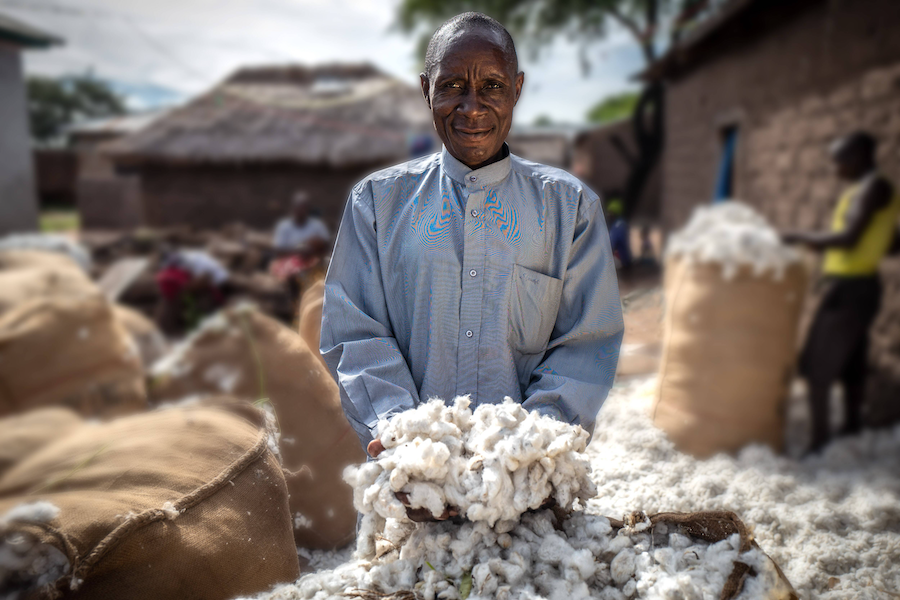
With around 700 suppliers and producers in a total of 25 countries, the Aid by Trade Foundation has reached a new record number of partners who can trace Cotton made in Africa® (CmiA) cotton from the product back to its origin. This is more than double the previous year’s figure. CmiA cotton; Credit_Martin J. Kielmann for CmiA
The Aid by Trade Foundation (AbTF) is reaching new milestones as it leads the way towards greater physical traceability for Cotton made in Africa® (CmiA) cotton. With around 700 suppliers and producers in a total of 25 countries, the Aid by Trade Foundation has reached a new record number of partners who can trace CmiA cotton from the product back to its origin. This is more than double the previous year’s figure.


“As a standards organisation, our mission is to ensure transparency throughout global supply chains,” says Tina Stridde, the managing director of the Aid by Trade Foundation, explaining, “The physical traceability of Cotton made in Africa cotton, one of the world’s leadings standards for verified cotton that respects human rights and biodiversity, is very important for textile companies and fashion brands. It ensures that social and environmental criteria are adhered to during cotton production and that their customers can make informed purchasing decisions. It also prevents greenwashing because audits create full transparency that the verified cotton is used.”

Partners—such as Bestseller, the Otto Group, OVS, Primark, and the Rewe Group—are already using the system today.

By working with the Aid by Trade Foundation, textile companies of all sizes—from fashion brands to retailers—can bring products to market with the assurance that only cotton verified under Cotton made in Africa or Cotton made in Africa Organic was used from field to shelf; the cotton can be traced from bale to yarn to fabric to textile product. This is also a way for them to meet increasing regulatory and due diligence requirements without taking legal risks.

A long-term partner, the REWE Group, sets a milestone in this respect. “We have reached our goal and were able to fully trace the Cotton made in Africa cotton used in our private label products back to its origin by the end of 2025," says Torsten Stau, Executive Buying Director Non Food / Indirect Spend REWE Group. "The transparency system of the Aid by Trade Foundation enables us to clearly prove the origin and ensure that the cotton comes from African small-scale farmers who produce under recognized social and environmental standards. In this way, we are further increasing transparency along the entire supply chain, strengthen customer trust, and at the same time make a direct contribution to supporting the people in cultivation.”

Working closely with supply chain partners is key to credibility.

To ensure physical traceability, the Aid by Trade Foundation works closely with suppliers and producers worldwide. This collaboration is built on a solid foundation: the Hard Identity Preserved (HIP) chain of custody model, which has proved its worth since its introduction in 2008. The HIP system allows cotton to be consistently and reliably traced back from the finished textile to its origin. Because it applies in all cotton-producing countries in which AbTF is active, rather than just in a limited selection of regions, the system achieves attractive figures. To date, around 33,000 tonnes of physically traceable CmiA cotton have been processed worldwide into some 190 million textile items. Around 700 spinning mills as well as fabric and textile producers from a total of 25 countries are currently operating in accordance with its requirements—and these numbers continue to grow. These companies can reliably ensure traceability for Cotton made in Africa and Cotton made in Africa Organic verified cotton.

As of March 2026, the Transparency Standard is mandatory.

For all partners who want to prove that their products contain CmiA cotton, the Transparency Standard will be mandatory starting in March 2026. Introduced in the spring of last year, it offers an extended security portfolio that encompasses digital transaction documents (DTDs) as well as risk-based desktop audits, which are carried out by independent and ISO-accredited audit companies. Thanks to the Transparency Standard’s successful introduction, the Aid by Trade Foundation plans to make it available for cashmere fibres verified under The Good Cashmere Standard® starting in 2027.


More News from Aid by Trade Foundation (AbTF)

#Natural Fibers

Cashmere producers stress the importance of The Good Cashmere Standard®

At the invitation of the Aid by Trade Foundation (AbTF), over 70 experts from the cashmere production and supply chain, as well as other specialists, met at the GCS Unit Meeting in Shanghai, China to discuss the progress and new objectives of The Good Cashmere Standard (GCS). The meeting focused on implementation and verification of the standard, important aspects of animal welfare and the importance of the standard in the global textile market.

#Natural Fibers

Aid by Trade Foundation publishes 2024 annual report: Growing impact for environment and people

The Aid by Trade Foundation (AbTF) is on a growth track. Despite a challenging global economy, AbTF increased its income by six percent from 2023 to 2024, reaching a total of EUR 8.6 million. This revenue has been invested in comprehensive measures for the sustainable production of cotton and cashmere as well as for expanded measures to ensure transparency in global value chains. In addition to gaining new partners in 2024—including big names like Mango, Nordstrom, and CWS Workwear—AbTF was able to expand its global stakeholder network active in the production of raw materials or textiles.

#Raw Materials

Aid by Trade Foundation receives Honorary Award of the German Africa Foundation 2025

On the evening of 25 June, the Hamburg-based Aid by Trade Foundation (AbTF) received the Honorary Award of the German Africa Foundation 2025. Prof. Dr Michael Otto, the foundation’s founder and a prominent entrepreneur, accepted the award at a ceremony held at the German Bundestag. The Parliamentary State Secretary to the Federal Minister for Economic Cooperation and Development (BMZ), Dr Bärbel Kofler, presented the award in the presence of guests from politics, business and civil society as well as representatives of African embassies.

#Sustainability

Aid by Trade Foundation turns 20, invests half a million Euros in new biodiversity fund

To effectively promote nature conservation and biodiversity, the Aid by Trade Foundation (AbTF) announced at the second Hamburg Sustainability Conference (HSC) that it would be investing 500,000 euros in the ‘AbTF Biodiversity Fund’ to mark the foundation's 20th anniversary. Since it was established in 2005 by the entrepreneur Prof. Dr Michael Otto, AbTF has been committed to transforming the textile and fashion industries.

More News on Raw Materials

#Raw Materials

New study shows low environmental impact by Cotton made in Africa Organic Cotton from Tanzania

Today, the Aid by Trade Foundation (AbTF) is announcing the results of a comprehensive life-cycle analysis (LCA) for cotton produced in Tanzania under the Cotton made in Africa Organic (CmiA Organic) standard. The study emphasises the small ecological footprint of CmiA Organic verified cotton. This can largely be traced back to the absence of synthetic pesticides, artificial fertilisers, and artificial irrigation. Consequently, CmiA Organic cotton can help the textile industry meet regulatory requirements as well as science-based targets. The results also show that the consequences of climate change threaten the livelihoods of these cotton farmers, even though the type of agriculture they practise barely contributes to climate change.

#Raw Materials

Better Cotton Initiative strengthens regenerative focus in standard update

The Better Cotton Initiative (BCI) has strengthened the regenerative focus of its field-level standard with the launch of a new version of its Principles & Criteria (P&C), which marks the next step in the organisation’s journey to becoming a regenerative standards system.

#Raw Materials

Global production expected to decline in 2026/27 as policy shifts and weak demand reshape trade

Early projections for the 2026/27 season indicate that global cotton lint production will decline by 4% to 24.9 million tonnes, while world consumption is expected to remain stable at approximately 25 million tonnes, according to the April 2026 issue of Cotton This Month.

#Raw Materials

Textile Exchange publishes cotton Life Cycle Assessment study to strengthen impact data

Textile Exchange has published the first in a series of seven Life Cycle Assessment (LCA) studies designed to improve the quality and robustness of environmental impact data for raw material production across the fashion, textile, and apparel industry. The first LCA study focuses on cotton and addresses critical data gaps and methodology variability through new high-quality data across key producing countries. The study includes organic, regenerative, recycled, and country averages for conventional cotton production systems, providing a clearer picture of the associated environmental impact.

Latest News

#Man-Made Fibers

Selenis and Kintra Fibers partner to scale 100% bio-based synthetic fiber technology

Selenis, a leading global specialty polyester manufacturer, today announced a strategic manufacturing partnership with materials science company Kintra Fibers to scale Kintra’s patented fiber-grade PBS resin - a 100% bio-based and biodegradable material designed for textile applications.

#Functional Fabrics

PERFORMANCE DAYS proves its relevance as the industry’s key meeting point

Held on March 18–19, 2026, PERFORMANCE DAYS once again confirmed its position as a leading international platform for functional textiles. A total of 3.366 trade visitors and around 560 exhibitors gathered in Munich, with the event already kicking off successfully on DAY 0, which received highly positive feedback for its interactive format. Despite challenging conditions caused by the public transport strike in Munich, the event saw strong attendance and a consistently high level of activity across both exhibition days.

#Recycling / Circular Economy

Reju secures €135 Million in Dutch NIKI Funding for industrial-scale textile-to-textile regeneration hub at Chemelot Industrial Park, the Netherlands

Reju™, the progressive textile-to-textile regeneration company, has been awarded €135 million in funding under the Netherlands’ Nationale Investeringsregeling Klimaatprojecten Industrie (NIKI) program. The funding will support Reju’s planned industrial-scale Regeneration Hub at Chemelot Industrial Park in Sittard-Geleen, covering both the investment phase and ongoing operations, and represents a critical milestone on the path toward final investment decision.

#Techtextil 2026

TTL showcases nonwoven and needlefelt solutions at Techtextil 2026

Technische Textilien Lörrach GmbH & Co. KG (TTL), part of the Yanpai Group, will present its latest nonwoven and needlefelt solutions for industrial applications at Techtextil 2026 in Frankfurt.

TOP