[pageLogInLogOut]

#Raw Materials

Aid by Trade Foundation presents annual report for 2025: Market position and impact of sustainably verified natural fibres strengthened
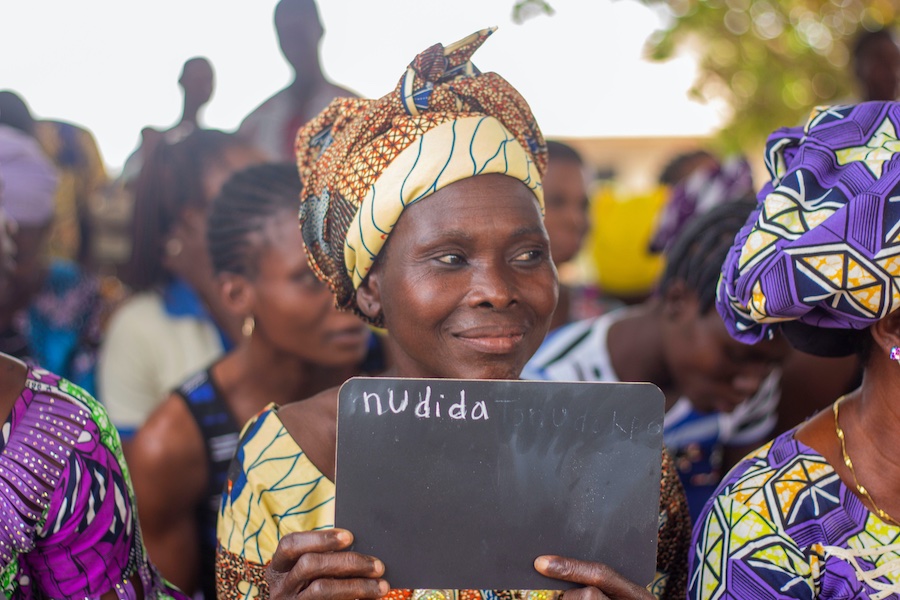
Literacy courses for women in Benin © 2026 AbTF
Despite global supply chain challenges, the Aid by Trade Foundation (AbTF) was able to further expand its international role in promoting sustainably verified natural fibres in 2025. In doing so, the foundation remains true to its fundamental approach of leveraging market forces. Last year, it generated total revenues of EUR 7.8 million; this included EUR 6.7 million collected through the successful marketing of four standards: Cotton made in Africa (CmiA), CmiA Organic, The Good Cashmere Standard (GCS), and the Regenerative Cotton Standard (RCS). AbTF invested the resulting income in projects aiming to protect biodiversity, support women, increase transparency in the textile supply chain, and implement its verification system.

Maintaining credibility and creating fairness in global trade

“Maintaining credibility, standing by our values, and acting out of conviction are touchstones for the work of the Aid by Trade Foundation,” says Prof. Dr Michael Otto, the entrepreneur who founded AbTF, adding, “One such conviction is that our most pressing global challenges can only be overcome if we protect ecosystems and create greater fairness in world trade. It remains true today, despite all claims to the contrary, and we will hold fast to it, even as the world faces major upheaval. It is no longer a question of whether we need to act but of whether we will do so in time.”

Prof. Dr Michael Otto © 2026 AbTF


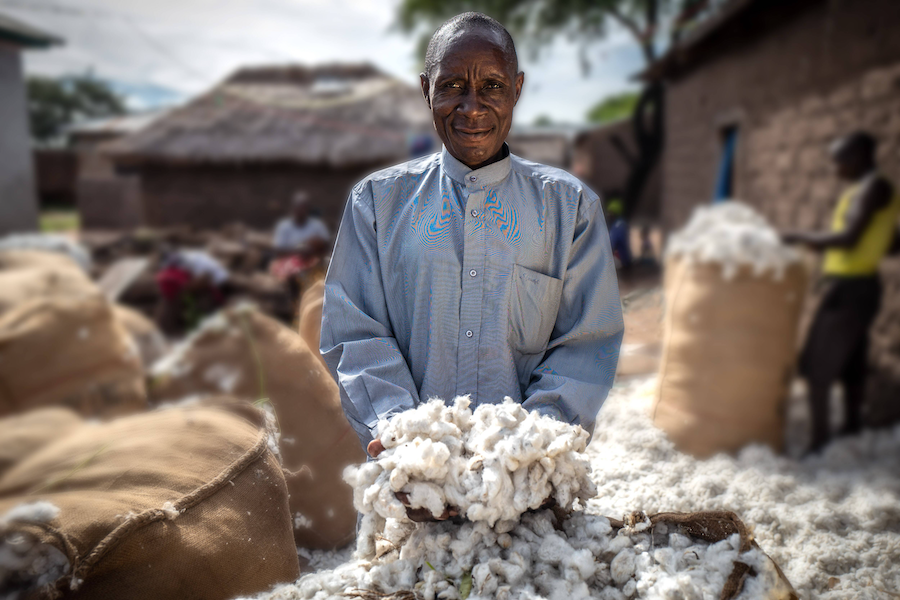
Since 2005, Cotton made in Africa has become a leading standard for sustainable cotton. In 2025, around 715,000 small-scale farmers in ten African countries cultivated cotton in accordance with Cotton made in Africa or Cotton made in Africa Organic. As a result, 36.4 percent of all cotton produced in Africa is now verified under CmiA or CmiA Organic. CmiA Organic combines the ecological advantages of organic cotton cultivation with targeted social and economic support. Some 43,000 smallholders in four African countries now benefit from Cotton made in Africa Organic—32 percent more than in the previous year. The Regenerative Cotton Standard, which was introduced in 2023 to promote soil health and biodiversity, has been successfully expanded in India and Tanzania. In Tanzania, the number of participating farmers applying the RCS criteria rose by a remarkable 87.8 percent in 2025, reaching a total of around 36,600. Additionally, following an increase of 3.7 percent, more than 2,800 partners in 50 textile production markets now process cotton verified according to the various AbTF standards.

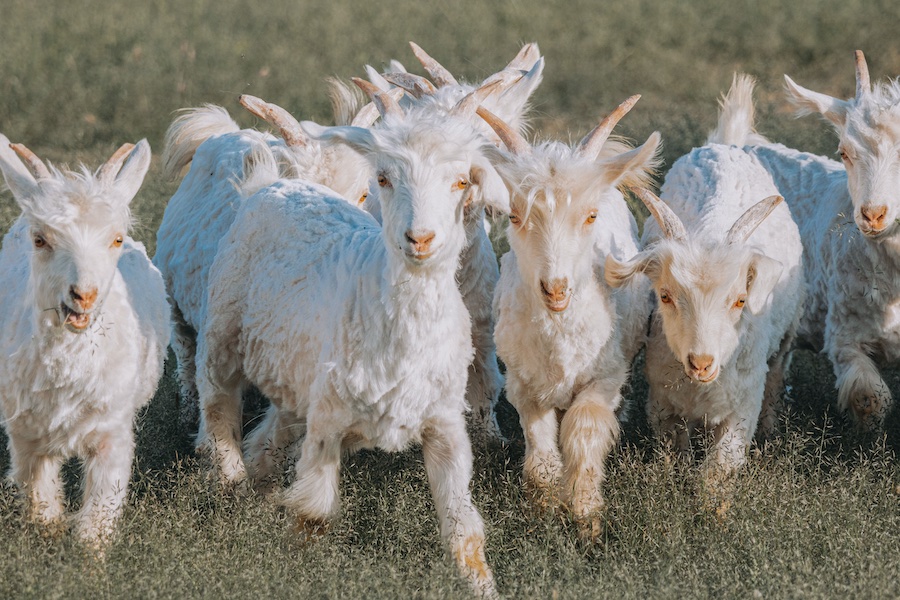
The Good Cashmere Standard (GCS) is the world’s first standard for sustainably produced cashmere from Inner Mongolia, which focusses on animal welfare. GCS saw record demand in 2025, with more than 1.2 million garments being awarded the GCS label. In addition, the number of fashion brands and retailers rose to 71 partners in 13 countries, achieving a year-on-year increase of over 20 percent .

Setting new standards for traceability: The AbTF Transparency Standard

To further strengthen the integrity of traceable cotton products, AbTF developed its new Transparency Standard in 2025. It introduces an additional layer of independent third-party verification and supply chain assurance, building on the foundation’s established chain-of-custody model and easy-to-use tracking system. In this way, AbTF effectively supports fashion brands and retailers in meeting their growing environmental, social, and governance (ESG) requirements.

Prioritising people: The CmiA Community Cooperation Programme (CCCP)

Improving the living conditions of local producers is a central concern for AbTF. By the end of 2025, a total of 93 projects had been successfully implemented via the CmiA Community Cooperation Programme (CCCP). Project results include drilling 218 wells, building 144 classrooms, and funding 109 women’s clubs. Hundreds of thousands of people were provided with access to clean drinking water, sanitation facilities, schooling, or basic medical care.
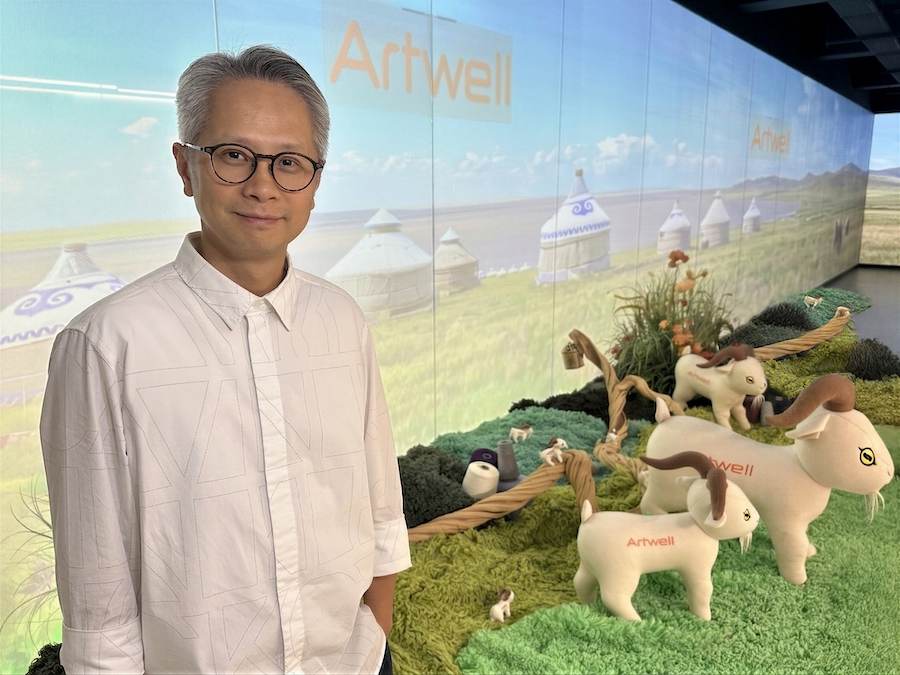
Annual report for 2025


More News from Aid by Trade Foundation (AbTF)

#Natural Fibers

Cashmere specialist joins AbTF Board of Trustees

The Aid by Trade Foundation (AbTF) is pleased to welcome Brian Yu, the chief executive officer of the Artwell Group, to its board of trustees. As CEO, Brian Yu developed Artwell into the world’s largest supplier of responsibly produced cashmere knitwear.

#Natural Fibers

The Good Cashmere Standard expands Animal Welfare Assessment on audited farms

With the Animal-related Animal Welfare Assessment (ARAWA), the Aid by Trade Foundation (AbTF) conducts a pioneering project for the second consecutive year in 2025, parallel to the independent verifications of The Good Cashmere Standard® (GCS). ARAWA assessments provide a comprehensive overview of the health status of a herd on an audited farm, going beyond standard verification procedures. They are inherently complex, which still makes them a rarity in the standard sector, but offer support in identifying non-conformities and provide a holistic overview of the herd's well-being. Therefore, the Aid by Trade Foundation will continue this crucial project and even further expand it by 2027.

#Raw Materials

Aid by Trade Foundation reaches new milestones in supply chain transparency

The Aid by Trade Foundation (AbTF) is reaching new milestones as it leads the way towards greater physical traceability for Cotton made in Africa® (CmiA) cotton. With around 700 suppliers and producers in a total of 25 countries, the Aid by Trade Foundation has reached a new record number of partners who can trace CmiA cotton from the product back to its origin. This is more than double the previous year’s figure.

#Natural Fibers

Cashmere producers stress the importance of The Good Cashmere Standard®

At the invitation of the Aid by Trade Foundation (AbTF), over 70 experts from the cashmere production and supply chain, as well as other specialists, met at the GCS Unit Meeting in Shanghai, China to discuss the progress and new objectives of The Good Cashmere Standard (GCS). The meeting focused on implementation and verification of the standard, important aspects of animal welfare and the importance of the standard in the global textile market.

More News on Raw Materials

#Raw Materials

ALLIED expands down traceability with lot-level carbon footprint data

ALLIED Feather + Down has expanded its TrackMyDown traceability platform to include validated cradle-to-gate carbon footprint data linked to individual down lots. The initiative is designed to provide brands and consumers with more detailed environmental information on the materials used in finished products and could also support future data requirements associated with Digital Product Passports.

#Raw Materials

Cotton made in Africa puts farmer dialogue at the heart of agricultural training

A new manual created by the Aid by Trade Foundation and African People & Wildlife shows how Cotton made in Africa aims to transform cotton cultivation through dialogue rather than directives.

#Raw Materials

Redesigned World Cotton Day website offers tools, ideas and inspiration

With World Cotton Day just one month away, the International Cotton Advisory Committee (ICAC) has launched a completely redesigned www.WorldCottonDay.com, creating a new global home for everyone who wants to learn about, celebrate, and support cotton.

#Raw Materials

ICAC’s 84th Plenary Meeting to be held March 24-26, 2027, in Alexandria, Egypt

Registration will soon be open for the International Cotton Advisory Committee’s 84th Plenary Meeting, to be held March 24-26, 2027, in Alexandria, Egypt. The local Organizing Committee in Egypt has chosen “Building a Resilient and Competitive Future for Cotton and Textiles” as the theme for the event, which will be held at the Rixos Montaza Alexandria Resort.

Latest News

#Knitting & Hosiery

KARL MAYER invites the Global Textile Industry to celebrate its 90th anniversary at its German Headquarters in 2027

KARL MAYER is turning its anniversary year 2027 into a milestone for the textile sector. To mark its 90th anniversary, the industry leader is inviting customers, partners, and experts from around the world to a unique event series in September aimed at pushing boundaries, unlocking new opportunities, and jointly setting the course for a new era in textiles – just as KARL MAYER has done throughout its history. The company’s headquarters in Obertshausen, near Frankfurt, is the place to be.

#Associations

ITMF names three winners of the Sustainability & Innovation Award 2026

Three projects from the UK, Korea and China have been selected as winners of the ITMF Sustainability & Innovation Award 2026. The projects address textile-to-textile recycling, chemical recycling for automotive textiles and a regenerative approach combining silk production with ecological restoration.

#Recycling / Circular Economy

nova-Institute launches groundbreaking Advanced Recycling Database for strategic market insight

The new Advanced Recycling Database reduces complexity by providing industry stakeholders with up-to-date expert-reviewed intelligence on companies, technologies, plants, capacities, locations, products and partnerships across the global advanced recycling landscape.

#Yarns

Durak Maxibalance thread supports users’ movement and balance comfort

Durak Tekstil, a leading brand in its industry, has developed Durak Maxibalance, a new product engineered with bio-ceramic and FAR IR technology. Ushering in a new era for sportswear, activewear, and medical textiles, this technology offers features designed to support balance and movement comfort by reflecting the energy absorbed from the body back into it.

TOP