[pageLogInLogOut]

#Recycling / Circular Economy

Practical, market-driven End-of-Waste criteria are key to textile circularity
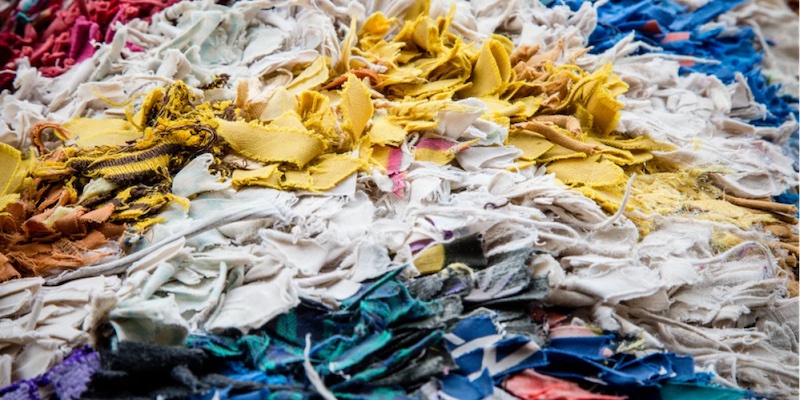
As the European Commission’s Joint Research Centre (JRC) works on the development of harmonised End-of-Waste (EoW) criteria for textiles, EuRIC, the voice of Europe’s recycling industries, calls for an approach that is practical, market-driven, and innovation-friendly.
© 2025 EuRIC
© 2025 EuRIC


EoW criteria must reflect the realities of textile collection, sorting, and recycling to enable a truly circular textiles value chain. Valuable textiles – including workwear, technical items, or garments with minor defects (i.e. missing buttons, or small stains) – must not be excluded from reuse or recycling due to overly rigid definitions or current technological limitations. Trusted and trained sorting operators are best placed to determine reusability based on real market demand.

Sorters and recyclers must not be administratively burdened with disproportionate requirements. The sector needs quality assurance frameworks that are realistic and easy to implement, particularly for small and medium-sized enterprises.

Support for the JRC proposed approach that grants the EoW for recycling status afterthe recycling process, in line with the Waste Framework Directive, which defines recycling as “any recovery operation by which waste materials are reprocessed into products, materials or substances." While sorting for recycling is an essential step, output materials of this operation are intermediate fractions that still need to undergo recycling and should not be eligible for EoW status. As recommended by the JRC for the mechanical recycling, EoW status shall be granted at the point at which the output material is either ready to be used directly as a textile product or is ready to be used for the production of new textile products.

Recyclers cannot be held responsible for unknown chemical content in post-consumer textiles, and red tape must be avoided. An approach should be found that ensures compliance with the chemicals legislation without harming the textiles circular economy, and by considering the challenges of tracking thousands of substances in post-consumer textiles.

The EoW framework must actively support innovation. This includes enabling R&D through targeted exemptions for small volumes of textile waste, allowing the testing of new materials and recycling processes under safe conditions, without being blocked by rigid standards.

A successful EoW framework must reduce barriers - not create new ones. The future of textile recycling in Europe depends on smart rules that empower sorters & recyclers, drive investment, and unlock the full potential of circularity.

More News from Recycling Europe (ex EuRIC AISBL)

More News on Recycling / Circular Economy

Latest News

#Textiles & Apparel / Garment

VIATT 2026 to debut German Pavilion, strengthening European participation alongside key Asian textile hubs

Vietnam’s textile and garment sector continues to be a major contributor to the country’s economic growth, with export revenues expected to reach USD 46 billion in 2025, a 5.6% increase from 2024 . From 26 – 28 February, the Vietnam International Trade Fair for Apparel, Textiles and Textile Technologies (VIATT) is set to contribute to economic growth opportunities by accelerating digital transformation and green transition across the entire textile value chain. The upcoming edition will respond to the rising demand for advanced technologies and sustainable materials with the introduction of the German Pavilion, alongside strong exhibitor participation from key Asian sectors, as well as several high-profile fringe events.

#Sustainability

Ying McGuire becomes new CEO of Cascale

Cascale today announced the appointment of Ying McGuire as Chief Executive Officer, effective June 1, 2026.

#Technical Textiles

Sustainable, lightweight, and sound absorbing: Polyester-based front trunk solution for BEVs

As car manufacturers look to further reduce their carbon footprint, Autoneum has developed an innovative front trunk solution for battery electric vehicles (BEVs), made entirely from polyester-based textile. The Ultra-Silent Frunk offers significant weight reduction, improved acoustic and thermal insulation, and uses up to 70 percent recycled material, supporting sustainable and efficient vehicle design. Autoneum, global technology leader in acoustic and thermal management for vehicles, has already received orders for the new frunk from three major OEMs in Asia and Europe to be built in three BEV models. Series production for two BEVs has been underway in China and Germany since last year.

#Raw Materials

Modern testing methods for raw cotton

The 38th International Cotton Conference Bremen will take place from 25 to 27 March 2026 at the Bremen Parliament. This conference has traditionally stood for in-depth expertise and international exchange. The program will focus on technical innovations, market trends, and regulatory frameworks across the entire value chain – from agriculture to the circular economy. With high-profile speakers, the conference is regarded as the key meeting point for the global cotton industry. Today’s focus: Cotton quality and testing methods.

TOP