[pageLogInLogOut]

#Recycling / Circular Economy

HKRITA and Epson develop silk-like regenerated fiber from cotton

The Hong Kong Research Institute of Textiles and Apparel ("HKRITA") and Seiko Epson Corporation ("Epson"; TSE: 6724) have succeeded in developing new regenerated cellulose fiber with a silk-like sheen from waste cotton fabric through a new production process.

A movement toward using fibers recycled from discarded clothing has been gaining momentum, driven by a growing recognition of waste clothing as a global environmental issue. In Europe in particular, a move is under way to use more regenerated fiber and reduce textile waste.

To address societal issues surrounding textile waste, HKRITA and Epson have been conducting research and development on regenerated fibers since signing a joint development agreement in January 2024. As a result of this collaboration, the partners have successfully developed regenerated cellulose fiber using a new production process that transforms discarded cotton fabric into regenerated fiber.

This new process was made possible by integrating Epson's proprietary Dry Fiber Technology for defibrating textiles with HKRITA's fiber-dissolving technology. The process involves (1) defibrating discarded cotton fabric into a powder-like state, (2) dissolving the cotton in a solvent, and (3) extruding it through a nozzle into a coagulation bath, where it solidifies and is spun into fiber.

The regenerated cellulose fiber produced through this process is expected to have both a smooth, silky sheen and the strength of cotton. This fiber is expected to be used in high-end materials such as scarves, neckties, and suit linings. Moreover, since the short fibers that occur during the regenerated fiber production process can also be used rather than discarded, as was usually the case, this regeneration process can help to increase the total clothing recycling rate.
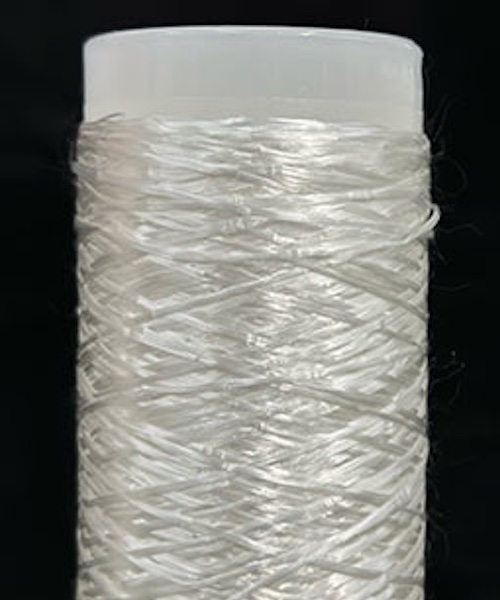
Yarn from the regenerated cellulose fiber © 2025 Epson


Newly developed regenerated cellulose fiber yarn

"As an applied research center, HKRITA is dedicated to solving real-world problems and enhancing current practices and products," said HKRITA CEO Jake Koh. "We are thrilled to collaborate with Epson to recycle fibers and repurpose them into high-quality yarns. This cross-industrial collaboration is not only reimagining materials but also redefining the future of sustainable production."

Epson Executive Officer Satoshi Hosono, who serves as the deputy general administrative manager of the Global Environmental Strategy Promotion Office and as the deputy general administrative manager of the Technology Development Division, said, "We are extremely pleased with the results that this joint development project has yielded. The selective application of this new wet process and our previously developed dry process should enable fiber to be regenerated from all waste cotton fabrics while reducing environmental impact."

Information about the work under this joint development project was exhibited at HKRITA's Booth 2415 at Textiles Recycling Expo 2025, held in Brussels, Belgium, from June 4, 2025.

Looking ahead, HKRITA and Epson will continue to combine their advanced technologies to accelerate the adoption of regenerated fibers, contributing to global efforts to solve the challenge of clothing recycling.


More News from Epson Europe

#Digital Printing

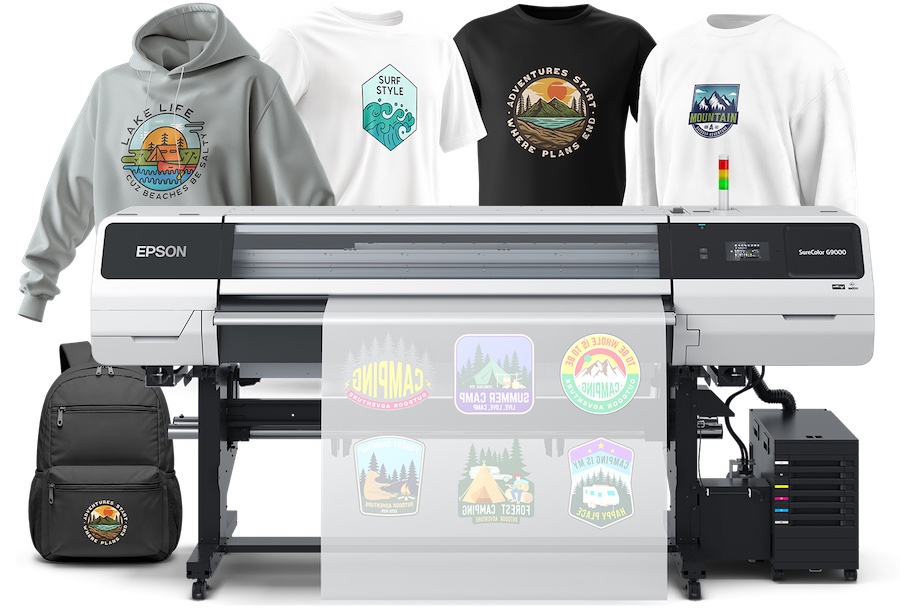
Epson launches SureColor G9000: high-production Direct-To-Film printer delivering greater productivity and reliability

Epson today announces the launch of the SureColor G9000, a new high-production Direct-To-Film (DTFilm) printer designed to meet growing global demand for flexible and efficient textile transfer printing. Expanding Epson’s DTFilm line-up alongside the SC-G6000, the SC-G9000 introduces enhanced speed, reliability and ease of maintenance for commercial garment decorators and textile producers.

#Digital Printing

Epson future proofs textile printing with Epson Textile Academy 2.0

Technology leader Epson today hosted its second Textile Academy Event at the company’s Textile Innovation Centre in Lutterworth, Leicestershire. Building on the success of its inaugural Textile Academy earlier this year, the event welcomed Textile Design BA students from Nottingham Trent University (NTU) and Loughborough University. The event features workshops designed to enhance student’s practical textile printing skills; corporate and entrepreneurial business acumen; marketing and self-branding; and environmental awareness around the textile industry.

#Digital Printing

Epson unveils Monna Lisa ML-16000JQ for more efficient and sustainable Jacquard fabric printing

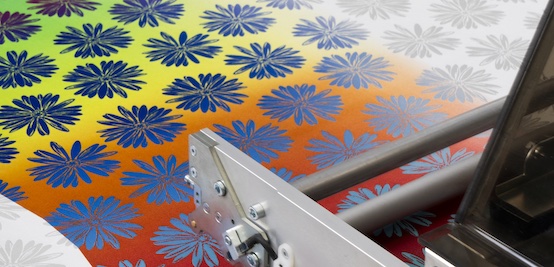
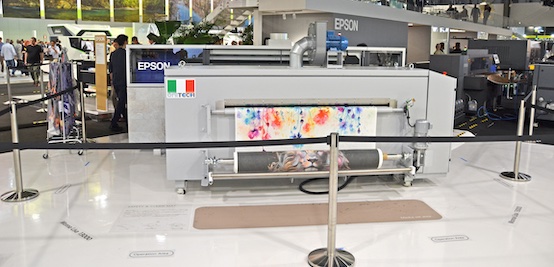
Global technology firm Epson announces a new direct-to-fabric digital textile printer designed for jacquard fabrics. The Monna Lisa ML-16000JQ delivers direct-to-fabric double-sided printing on jacquard fabrics, meeting the needs of fashion designers looking to enhance their creativity by seamlessly integrating vibrant colours with intricate woven patterns.

#Digital Printing

Acquisition of Fiery, LLC, a company leading the digitalization of the printing process

Seiko Epson Corporation ("Epson") is pleased to announce that Epson has entered into an agreement with affiliates of Siris Capital Group, LLC ("Siris"), including Electronics for Imaging, Inc., on September 19, 2024 to acquire all interests in Fiery, LLC ("Fiery"), a U.S.-based company which is the leading provider of digital front end* ("DFE") servers and workflow solutions for the print industry. The transaction is subject to customary closing conditions including required regulatory approvals.

More News on Recycling / Circular Economy

#Recycling / Circular Economy

Reju secures €135 Million in Dutch NIKI Funding for industrial-scale textile-to-textile regeneration hub at Chemelot Industrial Park, the Netherlands

Reju™, the progressive textile-to-textile regeneration company, has been awarded €135 million in funding under the Netherlands’ Nationale Investeringsregeling Klimaatprojecten Industrie (NIKI) program. The funding will support Reju’s planned industrial-scale Regeneration Hub at Chemelot Industrial Park in Sittard-Geleen, covering both the investment phase and ongoing operations, and represents a critical milestone on the path toward final investment decision.

#Recycling / Circular Economy

eeden is now a Canopy partner

eeden is committed to enable circular textiles by developing recycling technologies that turn textile waste into valuable raw materials. But the commitment goes further – eeden advocates for supply chain solutions that uphold responsible environmental and ethical standards, protecting global ecosystems including Ancient and Endangered Forests.

#Recycling / Circular Economy

Infinited Fiber Company’s environmental permit for Kemi advances to statutory appeal phase

Infinited Fiber has reached an important regulatory milestone in Finland, as the environmental permit process for a potential facility in Kemi has progressed to the statutory appeal phase.

#Recycling / Circular Economy

Carbios confirms Longlaville plant in France following financing progress

Carbios has reaffirmed its plans to build its Longlaville plant in France within a project financing framework, targeting the start of production in the first half of 2028. The company also reports a solid cash position of around €60 million at the end of 2025 and has appointed Benoît Grenot as Deputy Chief Executive Officer to support the execution of its strategic projects.

Latest News

#Raw Materials

New study shows low environmental impact by Cotton made in Africa Organic Cotton from Tanzania

Today, the Aid by Trade Foundation (AbTF) is announcing the results of a comprehensive life-cycle analysis (LCA) for cotton produced in Tanzania under the Cotton made in Africa Organic (CmiA Organic) standard. The study emphasises the small ecological footprint of CmiA Organic verified cotton. This can largely be traced back to the absence of synthetic pesticides, artificial fertilisers, and artificial irrigation. Consequently, CmiA Organic cotton can help the textile industry meet regulatory requirements as well as science-based targets. The results also show that the consequences of climate change threaten the livelihoods of these cotton farmers, even though the type of agriculture they practise barely contributes to climate change.

#Raw Materials

Better Cotton Initiative strengthens regenerative focus in standard update

The Better Cotton Initiative (BCI) has strengthened the regenerative focus of its field-level standard with the launch of a new version of its Principles & Criteria (P&C), which marks the next step in the organisation’s journey to becoming a regenerative standards system.

#Man-Made Fibers

Selenis and Kintra Fibers partner to scale 100% bio-based synthetic fiber technology

Selenis, a leading global specialty polyester manufacturer, today announced a strategic manufacturing partnership with materials science company Kintra Fibers to scale Kintra’s patented fiber-grade PBS resin - a 100% bio-based and biodegradable material designed for textile applications.

#Functional Fabrics

PERFORMANCE DAYS proves its relevance as the industry’s key meeting point

Held on March 18–19, 2026, PERFORMANCE DAYS once again confirmed its position as a leading international platform for functional textiles. A total of 3.366 trade visitors and around 560 exhibitors gathered in Munich, with the event already kicking off successfully on DAY 0, which received highly positive feedback for its interactive format. Despite challenging conditions caused by the public transport strike in Munich, the event saw strong attendance and a consistently high level of activity across both exhibition days.

TOP