[pageLogInLogOut]

#Recycling / Circular Economy

EU to make textile producers pay for collection and recycling

On Tuesday, Parliament gave its final green light to new measures to prevent and reduce waste from food and textiles across the EU.

Cutting down food waste

The updated legislation will introduce binding food waste reduction targets, to be met at national level by 31 December 2030: 10% from food processing and manufacturing and 30% per capita from retail, restaurants, food services and households. These targets will be calculated in comparison to the amount generated as an annual average between 2021 and 2023. Following Parliament’s request, EU countries will have to take measures to ensure that economic operators having a significant role in the prevention and generation of food waste (to be identified in each country) facilitate the donation of unsold food that is safe for human consumption.

Producers to cover costs of collecting, sorting and recycling waste textiles

Producers that make textiles available in the EU will have to cover the costs of their collection, sorting and recycling, through new producer responsibility (EPR) schemes to be set up by each member state, within 30 months of the directive’s entry into force. These provisions will apply to all producers, including those using e-commerce tools and irrespective of whether they are established in an EU country or outside the Union. Micro-enterprises will have an extra year to comply with the EPR requirements.

The new rules will cover products such as clothing and accessories, hats, footwear, blankets, bed and kitchen linen, and curtains. On Parliament’s initiative, EU countries may also set up EPR schemes for mattress producers.

Member states should also address ultra-fast fashion and fast fashion practices when deciding on financial contributions to the EPR schemes.

According to the second reading rules, the President announced in plenary that the proposed act was deemed adopted (the position was already agreed by Council earlier this summer).

Next steps

The law will now be signed by both co-legislators, ahead of its publication in the EU Official Journal. EU countries will have 20 months following its entry into force to transpose the rules into national legislation.

Background

In July 2023, the Commission proposed a revision of the EU rules on waste, targeted at food and textile waste. Every year, almost 60 million tonnes of food waste (132 kg per person) and 12.6 million tonnes of textile waste are generated in the EU. Clothing and footwear alone account for 5.2 million tonnes of waste, equivalent to 12 kg of waste per person every year. It is estimated that less than 1% of all textiles worldwide are recycled into new products.



More News from European Commission

#Europe

New EU rules to stop the destruction of unsold clothes and shoes

The European Commission today (Feb 9) adopted new measures under the Ecodesign for Sustainable Products Regulation (ESPR) to prevent the destruction of unsold apparel, clothing, accessories and footwear.

#Europe

Commission adopts a first-ever EU Visa Strategy

Today, the European Commission is adopting its first-ever EU Visa Strategy. It sets out a framework for a visa policy that is more strategic and that advances the EU's long-term interests, allowing it to be better equipped for growing mobility as well as the consequences of regional instability and geopolitical competition.

#Europe

EU and India conclude landmark Free Trade Agreement

The EU and India concluded negotiations today for a historic, ambitious and commercially significant free trade agreement (FTA), the largest such deal ever concluded by either side. It will strengthen economic and political ties between the world's second and fourth largest economies, at a time of rising geopolitical tensions and global economic challenges, highlighting their joint commitment to economic openness and rules-based trade.

#Europe

EU and Mercosur sign historic and ambitious partnership

Today, the European Union and Mercosur signed a Partnership Agreement (EMPA) and an Interim Trade Agreement (iTA), representing a historic milestone between the two regions, and an ambitious platform for strengthening their economic, diplomatic and geopolitical relations.

More News on Recycling / Circular Economy

#Recycling / Circular Economy

Circulose restarts commercial-scale production at Ortviken plant in Sundsvall

Circulose today announced the restart of its commercial-scale production plant at Ortviken in Sundsvall, Sweden, marking a significant step in scaling next-generation materials for the global fashion industry. The company plans to resume production of CIRCULOSE®, a recycled pulp made entirely from discarded cotton textiles, in the fourth quarter of 2026.

#Recycling / Circular Economy

Sahil Kaushik appointed CEO of Infinited Fiber as the company advances a phased path to commercial scale

Infinited Fiber has appointed Sahil Kaushik as Chief Executive Officer. Kaushik has served as Acting CEO alongside his role as Chief Operating Officer and will continue to oversee operations until a new COO is appointed.

#Recycling / Circular Economy

trinamiX with new management

BASF is examining strategic options for its subsidiary trinamiX GmbH. trinamiX specializes in biometric imaging and mobile material analysis. These activities are not part of BASF’s core business, on which the company is focusing as part of the implementation of its new strategy.

#Recycling / Circular Economy

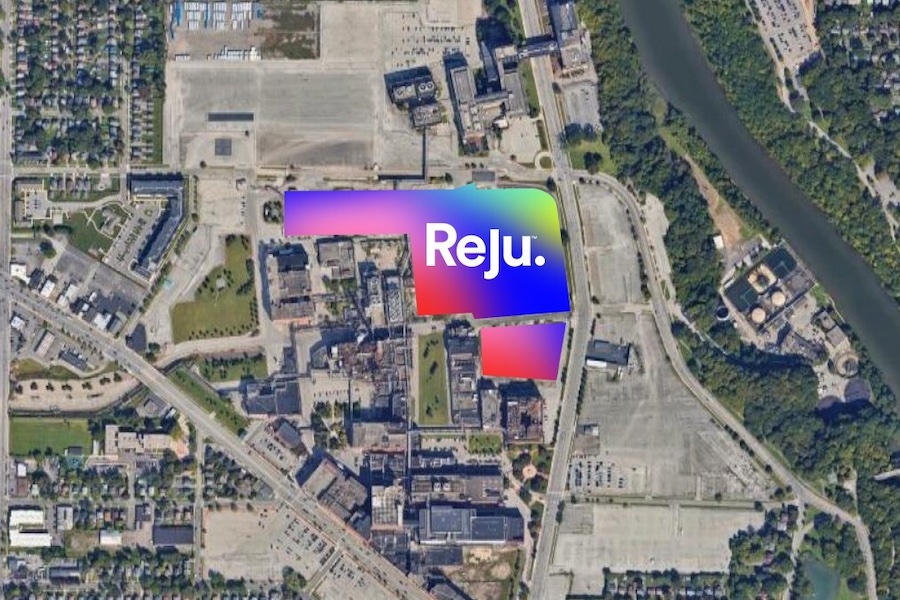
Reju announces site selection for first U.S. industrial sized facility regeneration hub in Rochester, New York

Reju, the textile-to-textile regeneration company, today announced it has selected the site for its first U.S.-based industrial facility marking a significant milestone in its efforts to scale globally. This future Regeneration Hub will be in Rochester, New York, reinforcing Reju’s commitment to the adoption of circular textile system across key regions worldwide.

Latest News

#Textiles & Apparel / Garment

VIATT 2026 to debut German Pavilion, strengthening European participation alongside key Asian textile hubs

Vietnam’s textile and garment sector continues to be a major contributor to the country’s economic growth, with export revenues expected to reach USD 46 billion in 2025, a 5.6% increase from 2024 . From 26 – 28 February, the Vietnam International Trade Fair for Apparel, Textiles and Textile Technologies (VIATT) is set to contribute to economic growth opportunities by accelerating digital transformation and green transition across the entire textile value chain. The upcoming edition will respond to the rising demand for advanced technologies and sustainable materials with the introduction of the German Pavilion, alongside strong exhibitor participation from key Asian sectors, as well as several high-profile fringe events.

#Sustainability

Ying McGuire becomes new CEO of Cascale

Cascale today announced the appointment of Ying McGuire as Chief Executive Officer, effective June 1, 2026.

#Technical Textiles

Sustainable, lightweight, and sound absorbing: Polyester-based front trunk solution for BEVs

As car manufacturers look to further reduce their carbon footprint, Autoneum has developed an innovative front trunk solution for battery electric vehicles (BEVs), made entirely from polyester-based textile. The Ultra-Silent Frunk offers significant weight reduction, improved acoustic and thermal insulation, and uses up to 70 percent recycled material, supporting sustainable and efficient vehicle design. Autoneum, global technology leader in acoustic and thermal management for vehicles, has already received orders for the new frunk from three major OEMs in Asia and Europe to be built in three BEV models. Series production for two BEVs has been underway in China and Germany since last year.

#Raw Materials

Modern testing methods for raw cotton

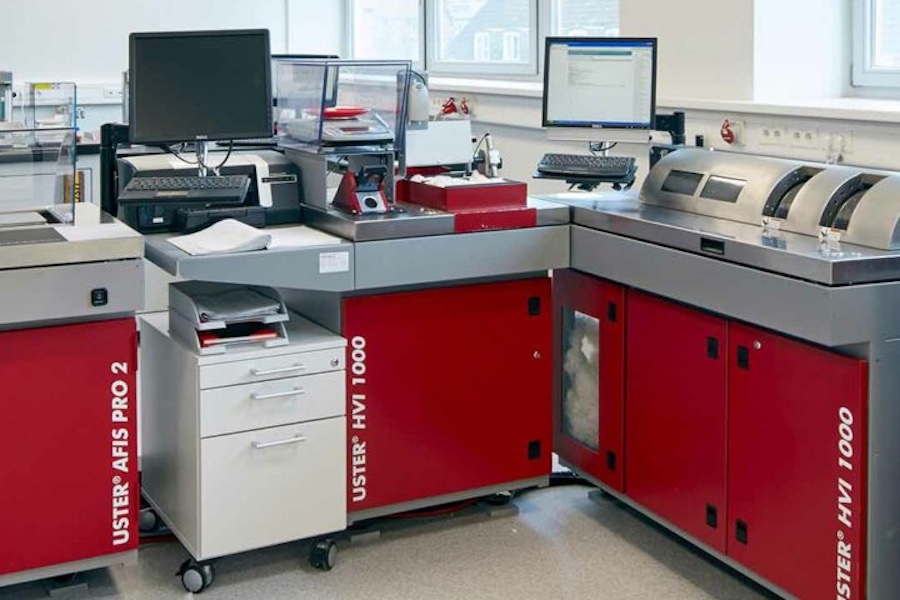
The 38th International Cotton Conference Bremen will take place from 25 to 27 March 2026 at the Bremen Parliament. This conference has traditionally stood for in-depth expertise and international exchange. The program will focus on technical innovations, market trends, and regulatory frameworks across the entire value chain – from agriculture to the circular economy. With high-profile speakers, the conference is regarded as the key meeting point for the global cotton industry. Today’s focus: Cotton quality and testing methods.

TOP