[pageLogInLogOut]

#Recycling / Circular Economy

Nanollose creates the world’s first wearable fashion garment made from liquid waste

Nanollose garment created from the company’s Tree-Free Rayon fibre © 2025 Nanollose
Australian-based biomaterial technology company Nanollose Ltd (ASX: NC6) has created the world’s first wearable garment using the company’s eco-friendly Tree-Free Rayon fibre (NullarborTM), sourced from sustainable coconut waste.

The sweater is the first of its kind and marks a breakthrough for an industry that is urgently seeking sustainable alternatives to clothing made from traditional rayon and cotton, both of which cause significant environmental issues.

Nanollose Executive Chairman Wayne Best said; “We have successfully taken waste and created clothing, and we have done it following industrial protocol. Our fibre was spun into yarn and made into fabric, then manufactured into this garment using existing industrial equipment. It validates our entire process.”

150 million trees are cut down each year, then chipped and treated with hazardous chemicals to extract the raw material used to make Viscose Rayon fibres for clothing. By contrast, Nanollose’s Nullarbor fibre is made without harming a single tree.

“We didn’t have to cut down any trees to create this sweater, and we have now demonstrated that our Tree-Free Rayon fibre can be used in the same way as other commonly-used fibres to make clothing and textiles, without the hefty environmental footprint.” Mr Best said

Nanollose’s innovative biomaterial technology process begins in a facility where microbes naturally ferment liquid waste products from food industries into cellulose, a cotton-like a raw material that then is transformed into their Nullarbor fibre.

Their process to produce cellulose requires very little land, water or energy and a production cycle is just 18 days, compared to the eight months seen in the cotton industry.

“We believe that we are the only company producing Tree-Free Rayon fibres from waste, and we have now reached a point where our technology is moving out of the laboratory and into the factory. Once we achieve this increased scale, manufactures will have an alternative eco-friendly option available to them.” said Mr Best.
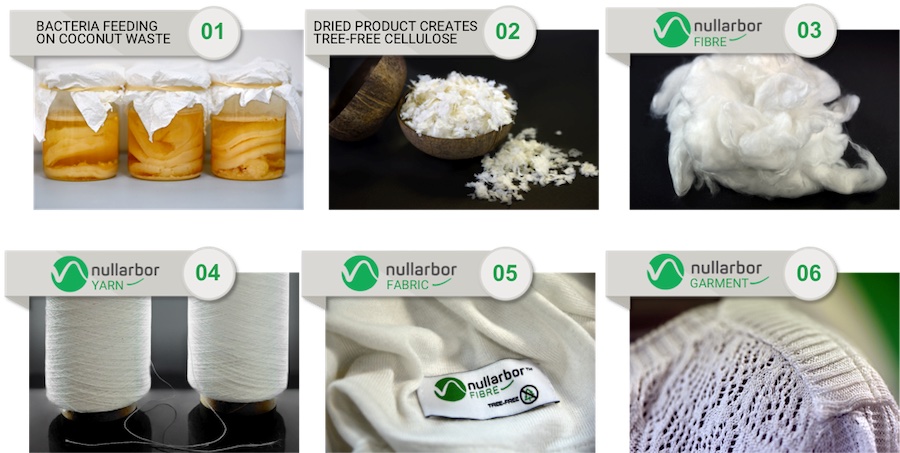
The six steps from taking waste and creating an item of clothing © 2025 Nanollose

As more and more headlines revealing the environmental impact of the textile industry emerge, there is an increasing urgency among consumers, brands, retailers and manufacturers to seek and cultivate alternative fibre resources.

“Progressive brands and companies are starting to facilitate this new shift by involving themselves deeper in the supply chain and searching for feasible, sustainable long-term alternatives. This is evident in the increasing number of enquires we have received over the past six months.” Mr Best said.

This urgency for cleaner alternatives saw retail juggernaut H&M release a sustainability report in April 2017, highlighting their commitment to use 100% sustainably sourced materials by 2030. Similarly, Zara joined the movement with the launch of their new sustainable line ‘Join Life’ modelled by Sasha Pivovrova.

To ensure Nanollose can supply future partners with commercial qualities of fibre, the company is developing a supply chain within an ecosystem around waste from the Indonesian coconut industry (along with waste streams from other industries), and aims to significantly increase fibre production over the next 3-6 months.

“We are a technology company, that has also become a steward in facilitating a new raw material supply chain. The goal is to work with key partners who will simply take waste (instead of trees), produce our Nularbor fibre, and seamlessly integrate them into their clothing supply chain with no retrofitting to existing machinery or processes required”

More News from Nanollose Ltd.

More News on Recycling / Circular Economy

#Recycled Fibers

Lindex and BASF partner to bring textile-­to­-textile recycled polyamide to lingerie sector

Lindex has partnered with BASF’s loopamid® to accelerate textile-­to-­textile recycling and advance the shift towards more circular material solutions in the fashion industry. Together they introduce loopamid to the lingerie sector.

#ITM 2026

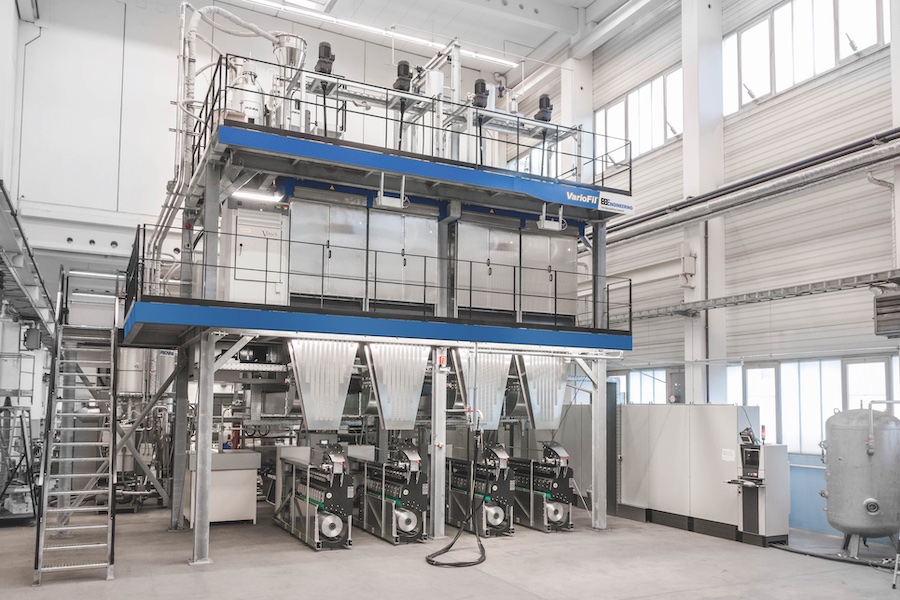
BB Engineering unveils new, patented “Val-uePack” spin pack at ITM

At the upcoming ITM in Istanbul, taking place June 9–13 at the Tüyap Fair Convention and Congress Center in Hall 7, Booth 702B, BB Engineering will once again be represented at a joint booth with its parent company, Barmag, and its representative, Tekstil Servis. The German machine manufacturer will show-case its expertise in man-made fiber and recycling technology, presenting its entire product portfolio, which includes compo-nents such as extruders and filters, as well as complete sys-tems for spinning synthetic fibers, air-texturing, and PET recy-cling.

#Recycled Fibers

Syre expands partnership with Target to advance next-generation recycled materials at scale

Advancing next-generation materials to support scalable circular solutions across global retail Stockholm, May 2026 — Syre, the textile impact company hyperscaling textile-to-textile recycling today announced an expanded collaboration with Target to accelerate the adoption of next-generation recycled materials across retail at scale.

#Recycling / Circular Economy

Project REWEAR investigates diverse economies of rewear as a global practice of circularity

Every year, European households discard millions of tonnes of clothing. Around a quarter of what gets separately collected is exported, much of it classified as rewearable. A significant share ends up in markets like Kantamanto in Accra, Ghana, where an estimated 15 million garments arrive every week. New research published today reveals what happens when that clothing arrives.

Latest News

#INDEX 2026

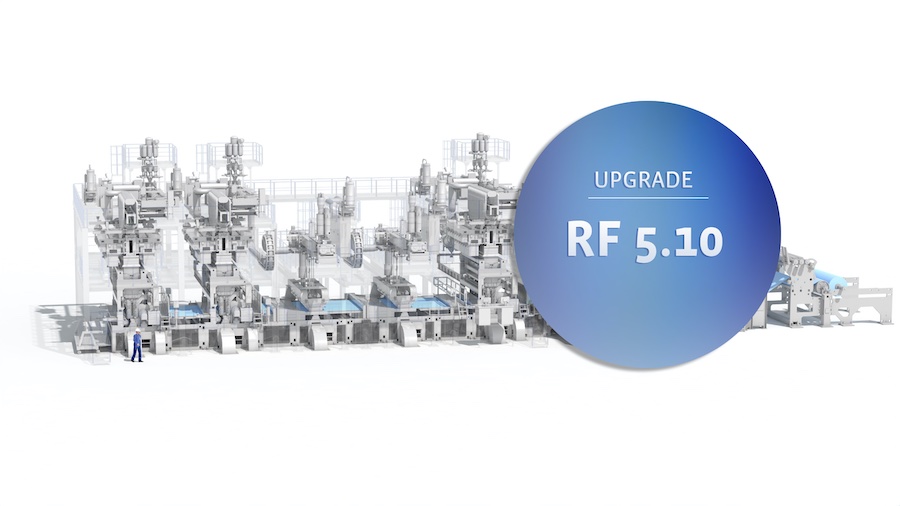
INDEX 2026: Reicofil introduces RF 5.10 upgrade boosting output by 10 percent

At INDEX 2026, Reifenhäuser Reicofil will present its latest developments for the nonwovens industry under the guiding themes “Grow Together”, “Expand Together” and “Transform Together”. On this occasion, the leading manufacturer of nonwoven machinery will be unveiling two brand-new technology advancements – RF 5.10 upgrade and RF Core – at the show.

#Dyeing, Drying, Finishing

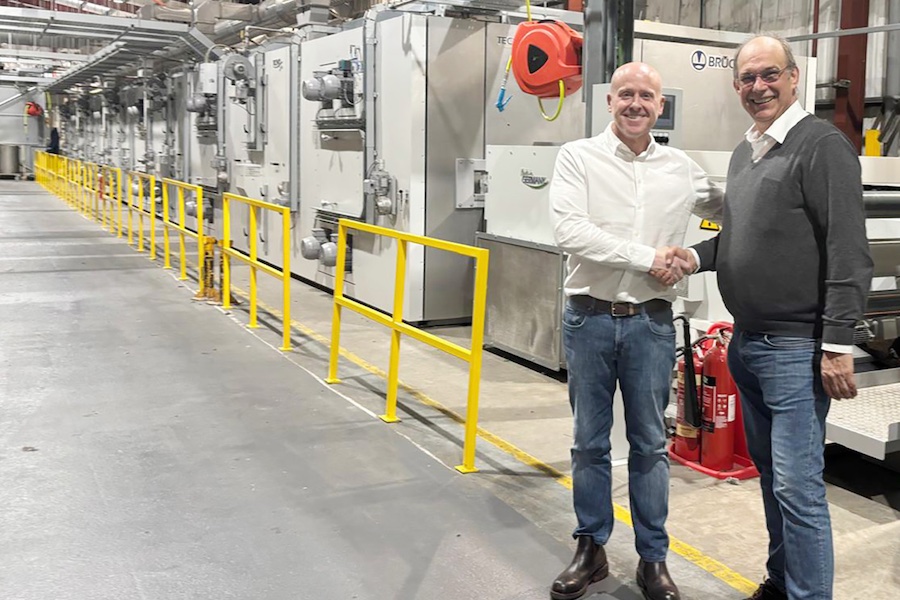
Tradition and Innovation – Phoenox Textiles Ltd. relies on state-of-the-art carpet back-coating line from Brückner

For more than 70 years, Phoenox Textiles Ltd. has been synonymous with quality, reliability, and inno-vation in the textile industry. Founded in 1954 in Huddersfield (Yorkshire, UK), a region with a long tradition in textiles, this family-owned business has continued to evolve without losing sight of its roots. Today, in its fourth generation under the leadership of the Mosley family, Phoenox successfully combines decades of experience with a clear, forward-looking corporate strategy.

#ITM 2026

Uster FiberQ excels for recycled raw materials too

Uster FiberQ is a complete solution for raw material utilization, supporting spinners to achieve consistent quality and profitability every day, building further growth for the future. The Turkish company ORTA relies on FiberQ with recycled yarn for its denim production. Data-driven knowledge puts the producer in control of raw material utilization – ready to make the correct decisions for process efficiency, quality and productivity.

#Digital Printing

EFI brings high-performance display graphics, packaging, and textile printing innovations to FESPA 2026

Electronics For Imaging, Inc. (EFI™) is bringing a broad range of new hybrid, roll-to-roll, and textile inkjet innovations to FESPA Global Print Expo 2026, taking place 19-22 May at Fira Barcelona Gran Via. Visitors to the EFI stand (Hall 3, #C85) will see the new EFI VUTEk M3h X hybrid LED printer, new EFI VUTEk® FabriVU® 340 i8 eight-colour dye sublimation printer, the EFI VUTEk X5r roll-to-roll LED printer, and the EFI VUTEk Q3h XP seven-colour hybrid printer in action, each designed to help sign and display producers scale output, diversify applications, and drive more profitable growth.

TOP