[pageLogInLogOut]

#Recycling / Circular Economy

From local actions to industrial innovations: SOLSTICE shares mid-project results

Since its launch in May 2024, the SOLSTICE project is accelerating the transition from linear models to circular regional ecosystems in the textile industry, focusing on four key territories: Grenoble-Alpes Métropole (France), Berlin (Germany), Prato (Italy), and Catalonia (Spain). By mid-project, SOLSTICE has already revealed both regional disparities and promising solutions to strengthen textile repair, reuse, and recycling infrastructure.


Mapping the circular textile landscape in Europe

SOLSTICE began with an in-depth territorial analysis led by Circle Economy, examining how local textile systems operate across the four regions. The findings revealed significant geographic imbalances: circular services such as repair, reuse, and recycling remain largely concentrated in urban centres, leaving suburban and rural areas underserved.

The analysis also confirmed that a uniform approach to circularity is ineffective. Each territory operates within a distinct economic and infrastructural context. While Berlin and Grenoble are primarily consumption hubs focused on creative repair , Prato is defined by its industrial recycling capacity. Meanwhile, Catalonia collects high volumes of textile waste but still relies heavily on landfills due to a lack of reuse infrastructure.

These insights underscore the need for region-specific strategies to effectively scale circular textile solutions across Europe.

Engaging citizens in circular textile practices

Building on the territorial analysis, particularly regarding infrastructure access and public habits, SOLSTICE launched targeted pilots designed to actively involve citizens in the circular economy.

In Berlin, the project via Circular Berlin introduced the REPAIR DEAL, a pilot that encourages citizens to repair denim rather than discard it by combining a digital bonus system with local repair services. Meanwhile, in Prato, the Municipality of Prato addressed engagement through a gamified app called greenApes. Co-designed with citizens, the app maps local reuse services and rewards sustainable behaviours, allowing users to convert points into discounts or donations to social projects.

These pilots demonstrate how behavioural change, supported by digital tools and local services, can significantly increase participation in circular textile practices.

Advancing industrial recovery pathways

Alongside these citizen-focused initiatives, SOLSTICE partners achieved significant technical advancements addressing the most complex challenges of sorting and recycling identified during the ecosystem mapping phase.

Automated sorting: Pellenc ST successfully tested automated sorting lines on post-consumer textiles, producing high-quality feedstock for chemical recyclers with PET purity reaching greater than 96%.

Elastane removal: Addressing complex blends, Next Technology Tecnotessile developed a thermo-chemical process that selectively removes elastane from mixed fabrics, enabling the recovery of polyester and polyamide for reuse.

Decision support: To optimise these processes, Techtera launched Valoramix, a tool that uses economic simulation to help professionals visualise flows and identify the most viable valorisation pathways.

By starting with a clear look at how different regions operate, SOLSTICE connects local citizen action with large-scale industrial solutions. The project proves that moving to a circular textile industry isn't just about one fix, it requires better data, consumer support, and advanced sorting and recycling technology working together.

As part of a consortium of 24 partners working on the project, Textile ETP is leading the activities related to ECOSYSTEX (an initiative fostering collaboration among EU projects focused on textile circularity) and is developing it into a lasting European Community of Practice for innovation in textile circularity and sustainability. Textile ETP is also coordinating the dissemination and communication activities for SOLSTICE, overseeing the project’s visual identity, website, newsletter, and social media.

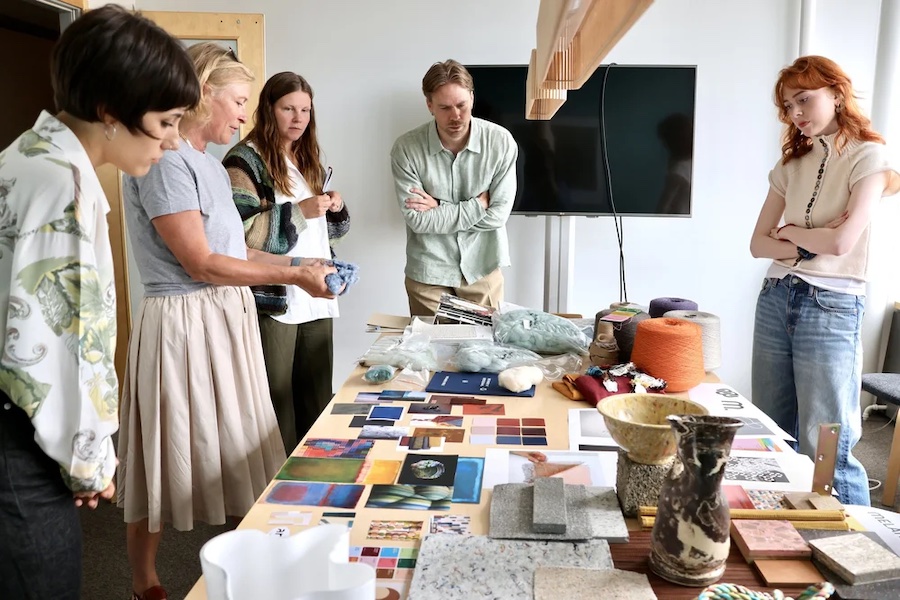
Additional details and visual documentation of the project’s activities and pilot actions are available in the accompanying PDF, which includes photographs from across the four pilot territories.

https://static1.squarespace.com/static/6638a1d236561d69cfe6f6a3/t/6960dfc9e2e9b41119e47c39/1767956425642/DCC2+General.pdf

More News from Textile ETP

#Recycling / Circular Economy

Textile ETP wraps up T-REX's Policy Roundtable

The T-REX project’s policy roundtable in Brussels on November 12 was a pivotal gathering of experts and leaders committed to advancing Europe’s sustainability efforts. Concluding the event, Secretary General Lutz Walter reflected on the discussions and emphasized the core themes that resonated throughout the day.

#EU Textile Strategy

Textile ETP at the European Commission's event on the Textiles Ecosystem Transition Pathway

On 4 June 2024, the Textile ETP Secretary General Lutz Walter participated in the European Commission’s Directorate-General for Internal Market, Industry, Entrepreneurship & SMEs (DG GROW) stakeholder event for the Textiles Ecosystem Transition Pathway.

#Textiles & Apparel / Garment

Shaping new horizons for the textile sector: 18th Textile ETP Conference 2024

The 18th Textile ETP Annual Conference in Mechelen brought together industry leaders, experts, and innovators for two dynamic days of discussions and insights, focusing on sustainability, innovation, funding, and the future of the textile sector.

#Recycling / Circular Economy

Textile ETP and partners launch new textile recycling and upcycling innovation project PESCO-UP

Launched today, the PESCO-UP project focuses on transforming mixed polyester/cotton waste into high-quality and clean materials for the next use cycle, aligning with the EU's 2025 textile waste mandatory collection.

More News on Recycling / Circular Economy

Latest News

#Textiles & Apparel / Garment

VIATT 2026 to debut German Pavilion, strengthening European participation alongside key Asian textile hubs

Vietnam’s textile and garment sector continues to be a major contributor to the country’s economic growth, with export revenues expected to reach USD 46 billion in 2025, a 5.6% increase from 2024 . From 26 – 28 February, the Vietnam International Trade Fair for Apparel, Textiles and Textile Technologies (VIATT) is set to contribute to economic growth opportunities by accelerating digital transformation and green transition across the entire textile value chain. The upcoming edition will respond to the rising demand for advanced technologies and sustainable materials with the introduction of the German Pavilion, alongside strong exhibitor participation from key Asian sectors, as well as several high-profile fringe events.

#Sustainability

Ying McGuire becomes new CEO of Cascale

Cascale today announced the appointment of Ying McGuire as Chief Executive Officer, effective June 1, 2026.

#Technical Textiles

Sustainable, lightweight, and sound absorbing: Polyester-based front trunk solution for BEVs

As car manufacturers look to further reduce their carbon footprint, Autoneum has developed an innovative front trunk solution for battery electric vehicles (BEVs), made entirely from polyester-based textile. The Ultra-Silent Frunk offers significant weight reduction, improved acoustic and thermal insulation, and uses up to 70 percent recycled material, supporting sustainable and efficient vehicle design. Autoneum, global technology leader in acoustic and thermal management for vehicles, has already received orders for the new frunk from three major OEMs in Asia and Europe to be built in three BEV models. Series production for two BEVs has been underway in China and Germany since last year.

#Raw Materials

Modern testing methods for raw cotton

The 38th International Cotton Conference Bremen will take place from 25 to 27 March 2026 at the Bremen Parliament. This conference has traditionally stood for in-depth expertise and international exchange. The program will focus on technical innovations, market trends, and regulatory frameworks across the entire value chain – from agriculture to the circular economy. With high-profile speakers, the conference is regarded as the key meeting point for the global cotton industry. Today’s focus: Cotton quality and testing methods.

TOP