[pageLogInLogOut]

#Recycling / Circular Economy

German 'ZOLL' turns end-of-life uniforms into valuable raw materials
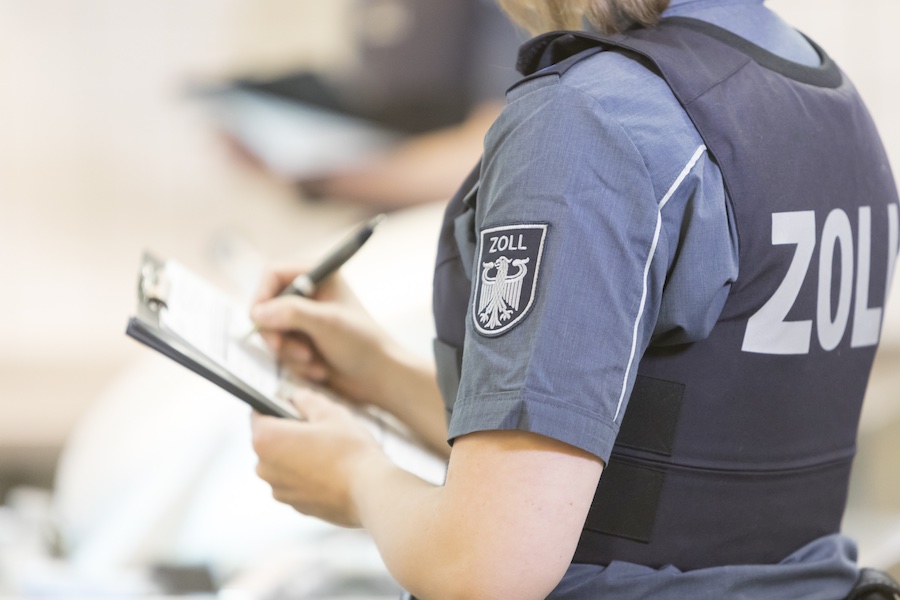
Photo caption: Since 2022, CWS Workwear and the German Customs Administration have collected around 40,000 kilograms of end-of-life service uniforms through the return2you programme, returning them to further use or material recovery. (© German Customs Administration)
Together with CWS Workwear, the German Customs Administration is extending the life cycle of service uniforms through reuse, recycling and material recovery, demonstrating how circular economy principles can be successfully implemented in the public sector while delivering significant savings.

Around 25,000 employees of the German Customs Administration wear official service uniforms. When these garments reach the end of their service life, they do not automatically become waste. Since 2022, approximately 40,000 kilograms of end-of-life uniforms have been collected and returned to the textile value chain through CWS Workwear's return2you programme. The initiative demonstrates how resource conservation and economic efficiency can go hand in hand.

By reusing, recycling and repurposing worn-out uniforms, the German Customs Administration can achieve considerable annual cost savings while extending the use of valuable raw materials and reducing textile waste.

Together with its textile service provider CWS Workwear, Customs has therefore adopted a circularity concept that extends the life cycle of service garments well beyond their initial use. The objective is to keep materials in circulation for as long as possible while creating new recovery pathways for end-of-life textiles.

Circularity instead of disposal

Through the return2you programme, which has returned around 40,000 kilograms of workwear to the textile value chain since 2022, the German Customs Administration is embracing reuse, recycling and material recovery for end-of-life uniforms.

The garments are designed with sustainability in mind from the outset. After use, they are returned via internal collection points, creating transparent pathways for reuse and recycling while contributing to resource conservation.

Depending on their condition, the garments follow different recovery routes:

Refurbishment and repair: Suitable garments are cleaned, repaired and returned to service.

Fibre-to-fibre recycling: Recyclable materials are processed into fibres and used to manufacture new textile products.

Alternative material recovery: Textiles that cannot be reused or recycled into high-value textile applications are directed to other material recovery processes, for example for the production of insulation materials.

A model for a more sustainable textile economy

Particularly in the field of workwear, where garments are used in large volumes, circular economy concepts offer considerable potential for reducing resource consumption and preventing waste.

The German Customs Administration's initiative serves as an example of responsible textile management in the public sector. Through return2you, the authority demonstrates how end-of-life service uniforms can become valuable raw materials for new applications instead of being discarded as waste.

Photo caption: Together with its textile service provider CWS Workwear, the German Customs Administration has implemented a circularity concept that extends the life cycle of service uniforms beyond their initial use. The goal is to keep materials in circulation for as long as possible while creating new recovery pathways for end-of-life textiles. (© German Customs Administration)
More News from D & S International, Inc.

More News on Recycling / Circular Economy

#Recycling / Circular Economy

nova-Institute launches groundbreaking Advanced Recycling Database for strategic market insight

The new Advanced Recycling Database reduces complexity by providing industry stakeholders with up-to-date expert-reviewed intelligence on companies, technologies, plants, capacities, locations, products and partnerships across the global advanced recycling landscape.

#Europe

Textile ETP launches bioeconomy strategy for Europe’s textile industry

On 22 September 2026, Textile ETP's Circular & Biobased Textiles Innovation Hub published its strategy for the biobased and circular transformation of Europe's textile and apparel industry.

#ITMA 2027

20 Start-Ups selected for CEMATEX Start-Up Grant at ITMA 2027

CEMATEX has selected 20 emerging start-ups from nine countries to receive the CEMATEX Start-Up Grant and showcase their innovations at Start-Up Valley during ITMA 2027 in Hanover. Their participation will be fully funded by CEMATEX, giving promising early-stage companies access to the world’s leading textile and garment technology platform.

#Recycling / Circular Economy

Moving Advanced Recycling from Innovation to Implementation

The Advanced Recycling Conference 2026 explores technologies, markets, financing and scale-up of innovative recycling solutions for waste streams including mixed plastic waste, textiles and PVC. Europe’s chemical and materials sector faces growing pressure to close carbon loops, strengthen raw-material safety and resilience and meet increasingly ambitious EU recycling targets. Against this backdrop, the Advanced Recycling Conference (ARC) will bring together industry leaders, technology providers, researchers, innovators and policy-makers on 17–18 November 2026 in Cologne, Germany.

Latest News

#Knitting & Hosiery

KARL MAYER invites the Global Textile Industry to celebrate its 90th anniversary at its German Headquarters in 2027

KARL MAYER is turning its anniversary year 2027 into a milestone for the textile sector. To mark its 90th anniversary, the industry leader is inviting customers, partners, and experts from around the world to a unique event series in September aimed at pushing boundaries, unlocking new opportunities, and jointly setting the course for a new era in textiles – just as KARL MAYER has done throughout its history. The company’s headquarters in Obertshausen, near Frankfurt, is the place to be.

#Associations

ITMF names three winners of the Sustainability & Innovation Award 2026

Three projects from the UK, Korea and China have been selected as winners of the ITMF Sustainability & Innovation Award 2026. The projects address textile-to-textile recycling, chemical recycling for automotive textiles and a regenerative approach combining silk production with ecological restoration.

#Yarns

Durak Maxibalance thread supports users’ movement and balance comfort

Durak Tekstil, a leading brand in its industry, has developed Durak Maxibalance, a new product engineered with bio-ceramic and FAR IR technology. Ushering in a new era for sportswear, activewear, and medical textiles, this technology offers features designed to support balance and movement comfort by reflecting the energy absorbed from the body back into it.

#Yarns

Yarn Expo Autumn 2026 draws to a close, weaving sustainable innovation into global sourcing

Yarn Expo Autumn 2026 concluded with approximately 600 exhibitors from 14 countries and regions, connecting with nearly 22,000 visitors from 110 represented markets, bringing the textile industry’s evolving material agenda into sharper focus. Held alongside Intertextile Shanghai Apparel Fabrics – Autumn Edition, CHIC and PH Value, the fair connected upstream fibre and yarn innovation with fabric development, garment production and fashion-market demand.

TOP