[pageLogInLogOut]

#Research & Development

Medical textiles with infection protection

In collaboration with Heraeus, the German Institutes of Textile and Fiber Research (DITF) are developing fibers and textiles with a novel infection protection system. The basis is an antimicrobial mechanism of action licensed from Heraeus and marketed under the name AGXX. The goal of the collaboration is to optimally integrate the AGXX technology into textile finishes and coatings and to incorporate it into fiber-spinnable polymers. This will provide medical textiles with highly effective and long-lasting protection against microbial infections.

AGXX technology is based on an entirely new mechanism of action. It uses a catalytic redox reaction initiated by metallic AGXX particles consisting of silver and ruthenium. In interaction with humidity, reactive oxygen species such as peroxides are formed. These are oxygen-containing molecules with very high reactivity. They effectively kill microorganisms such as bacteria, fungi and algae and are equally effective against viruses.

The special feature of this mechanism of action is that the AGXX particles are not reduced and do not release any active ingredients. In established antimicrobial systems based on the release of silver ions, the release of active ingredients has become a problem: the release of the silver ion concentration is difficult to control and many of the established systems do not meet the requirements of the European Chemicals Agency (ECHA). Such systems will disappear from the market in the medium term and must be replaced by alternatives.
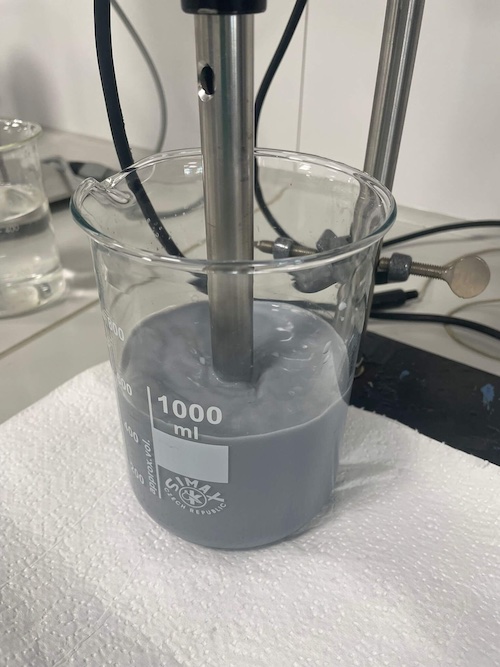
Dispersion of AGXX particles in the equipment fleet. Photo: DITF


In addition to permanent efficacy, the AGXX technology offers a particularly broad spectrum of protection against pathogens and prevents the formation of resistance.

Heraeus AGXX technology has reached a high level of development and is used in various industries. In general, AGXX particles can be easily incorporated into various materials. However, textiles used in the medical sector are subject to more stringent requirements. The resistance of the antimicrobial protection mechanism must be high, as contaminated textiles can be a source of transmission of pathogens over a long period of time. Modification of the textile material, either by surface treatment (finishing or coating) or by incorporation of AGXX into filament yarns, should not adversely affect the physiology of the garment. This is because a reduction in textile properties is unlikely to be accepted by the wearers of the textiles

The integration of AGXX particles into textile finishes and fiber spinnable polymers is the focus of the joint research approach of the DITF and Heraeus. The goal is not only to determine the optimal concentration of AGXX particles to provide the best possible protection against infection without compromising the mechanical properties of the textiles. The technical prerequisites for the development of suitable textile finishes and the compounding of polymer melts are also being created.

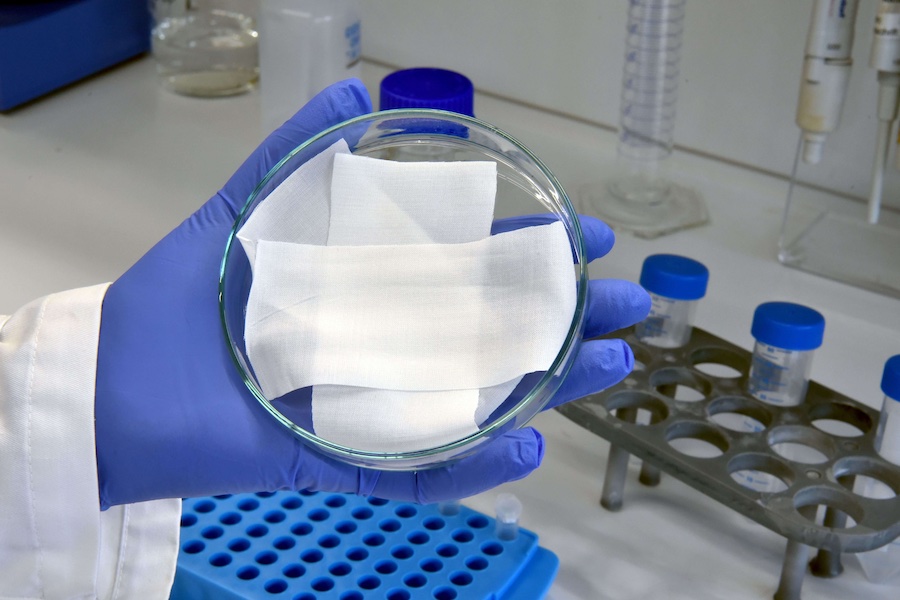
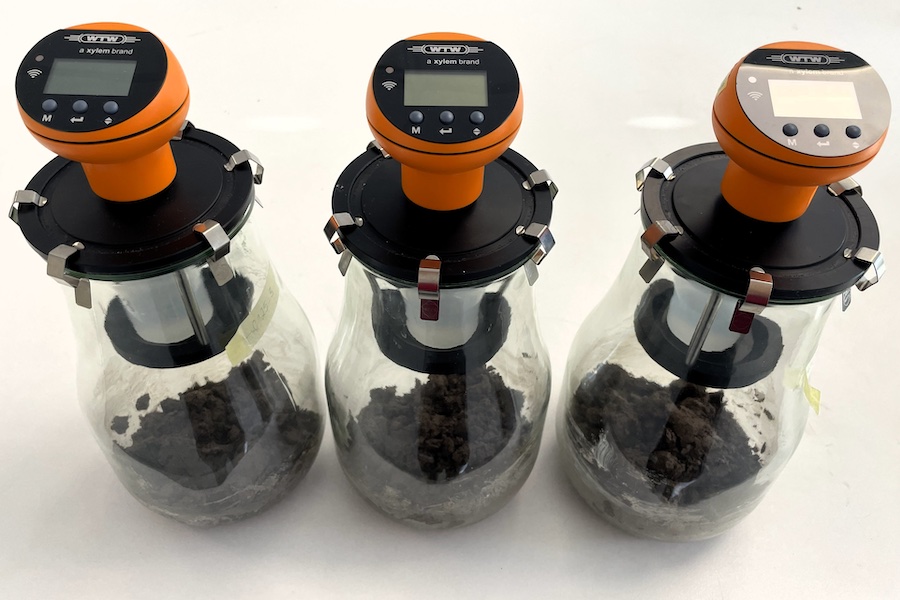
The resulting textile samples are tested for antimicrobial and antiviral activity in the DITF's own laboratories. Here, finishes and coatings for polyester and polyamide fabrics showed convincing results. The compounding of AGXX in the PA6 polymer melt enabled the production of filament fibers with consistently good fiber strength values.
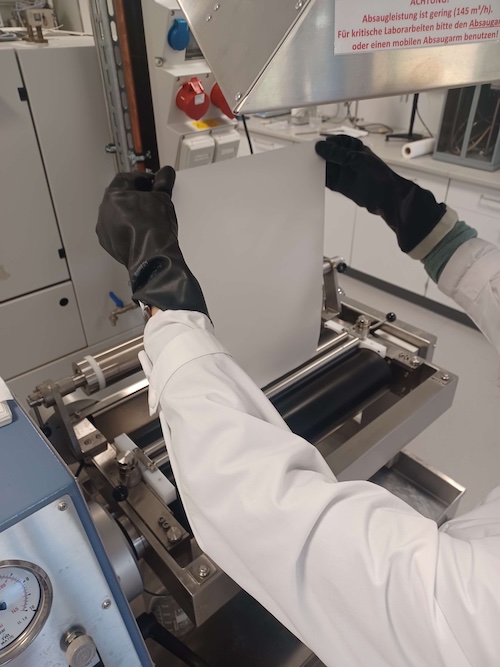
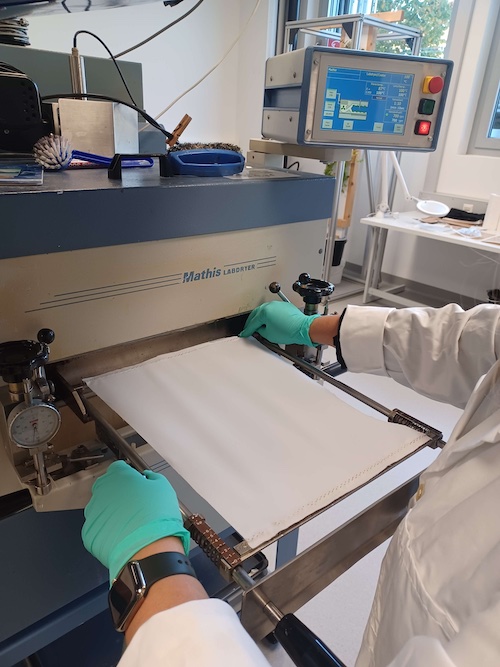
Functionalization of the polyester/lyocell fabric with the AGXX-containing finishing liquor on the 2-roll padder. Photo: DITFFunktionalisierung des Polyester-/Lyocellgewebes mit der AGXX-haltigen Ausrüstungsflotte auf dem 2-Walzen-Foulard. Foto: DITF


The determination of textile mechanical parameters such as abrasion resistance, air permeability and dimensional change as a function of number of wash cycles is still in progress. However, it is becoming apparent that textiles modified with AGXX are consistently effective without having an excessive impact on the nature of the textile.

The results of the research are an important contribution to reducing the risk of infection from medical workwear. They form the basis for future industrial production of textiles for durable and reliable protection against infection.
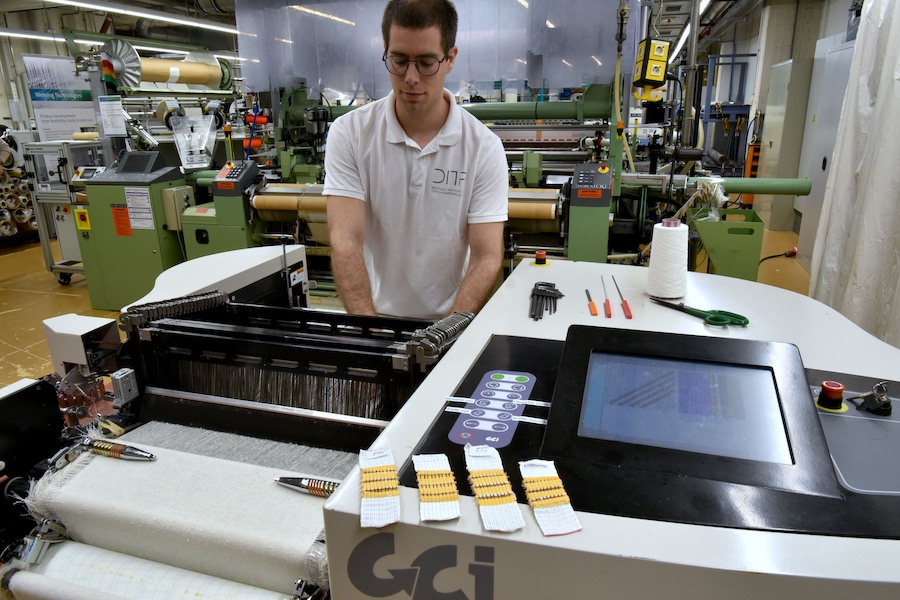
Drying/fixing of the polyester/lyocell fabric finished with AGXX in the laboratory tenter frame. Photo: DITFor-Spannrahmen. Foto: DITF


More News from Deutsche Institute für Textil- und Faserforschung Denkendorf

#Research & Development

More safety and comfort for protective clothing thanks to auxetic fabrics

When everyday materials are pulled, they stretch or elongate in the direction of the pull and become narrower in cross-section. We can also observe this property in two-dimensional textiles. Auxetic structures behave differently here. They have the striking property of not changing under tensile stress or even increasing their width or thickness. These properties are advantageous, for example, in protective textiles or textile filter media. The DITF are researching auxetic fabrics for various applications.

#Research & Development

Panty liners prevent bacterial vaginosis

Worldwide, almost one third of women of childbearing age suffer from bacterial vaginosis. This is when the sensitive microbiome of the vagina becomes unbalanced. Such a disorder of the vaginal flora can cause urogenital infections, abscesses on the ovaries or fallopian tubes or premature births. This significantly increases the risk of infertility in women and of contracting a sexually transmitted disease or HIV.

#Research & Development

DITF send a signal for climate protection

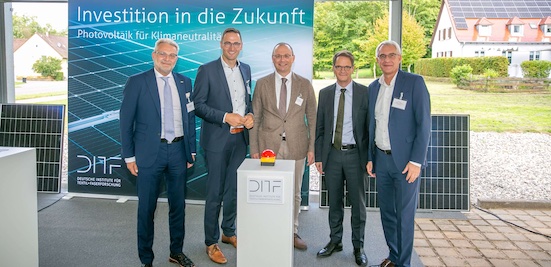
The German Institutes of Textile and Fiber Research Denkendorf (DITF) have successfully implemented extensive investments in photovoltaic systems at their site in Denkendorf. The systems installed on the roofs of the buildings and covered parking lots have a total installed capacity of 840 kilowatt peak (kWp). The DITF invested 1.6 million euros in this with the support of the state of Baden-Württemberg. The system was ceremonially put into operation on September 17, 2025.

#Research & Development

4.2 million Euros for research into textile recycling

Around the world, used textiles are still rarely recycled and pile up into huge mountains of waste. A recent study by the Boston Consulting Group (BCG) drew attention to this problem. However, the low recycling rate is also due to the fact that only a small percentage of used textiles are actually suitable for recycling into high-quality materials and for demanding applications. The German Institutes of Textile and Fiber Research Denkendorf (DITF) are addressing this problem with their research.

More News on Research & Development

#Research & Development

Fraunhofer CCPE presents the “Monomaterial Design Set” – Innovative solutions for circular product design

Composite materials made from different types of plastic often extend the lifetime of products but make recycling more difficult in the circular economy. That is why Fraunhofer CCPE has developed the “Monomaterial Design Set”. This new approach helps to reduce the variety of plastics used in durable products and offers circular solutions for designers and product developers.

#Research & Development

How innovations drive BASF’s success

“Innovation has always been part of BASF’s DNA. Especially in these volatile times, it is crucial to leverage our innovative strength to develop competitive solutions that differentiate us as a company in our markets and give us a competitive edge,” said Dr. Stephan Kothrade, Member of the Board of Executive Directors of BASF and Chief Technology Officer, at the company’s Research Press Briefing held today. To achieve this, BASF implemented its “Winning Ways” strategy about a year ago with the clear goal of becoming the preferred chemical company to enable its customers’ green transformation.

#Research & Development

Small tolerances, big impact and a recyclable alternative to elastane

ITA Master's student Janne Warnecke investigated tension differences over the fabric width in the weaving process and thereby contributed to quality assurance; ITA Bachelor's student Jasmin Roos found a basis for the development of recyclable yarns and textiles. For these developments, they were awarded the Walter Reiners Foundation's Promotion and Sustainability Prizes on 27 November. Peter D. Dornier, Chairman of the Walter Reiners Foundation, presented the awards at the Aachen-Dresden-Denkendorf International Textile Conference (ADD-ITC) in Aachen, Germany.

#Associations

Young researchers recognised for cutting-edge work in recycling, fibre technology and textile mechanics

At the Aachen-Dresden-Denkendorf International Textile Conference held in Aachen at the end of November, Peter D. Dornier, Chairman of the Walter Reiners Foundation of the VDMA, honoured five successful young engineers. Promotion and sustainability prizes were awarded in the categories bachelor/project theses and diploma/master theses. Academic theses that develop solutions for resource-saving products and technologies, for example, are eligible for the sustainability awards.

Latest News

#People

Happy Holidays!

Dear reader, the year 2025 is drawing to a close. We are entering what we hope will be a peaceful holiday season, spending time with our families and taking a moment to pause and reflect. We hope we have been able to support you once again this year with relevant news and articles, and we look forward to surprising you with many innovations in the coming year. Enjoy the festive season, stay healthy, and we wish you a happy and joyful holiday season.

#Weaving

Lindauer Dornier announces leadership transition in weaving machine business

After more than ten successful years at Lindauer DORNIER GmbH, Mr Wolfgang Schöffl will leave the family-owned company at the end of the year to enter well-deserved retirement.

#Heimtextil 2026

Texpertise Focus AI: Messe Frankfurt puts Artificial Intelligence centre stage at its international textile and apparel trade fairs

Under the banner 'Texpertise Focus AI, Messe Frankfurt will place a strong emphasis on Artificial Intelligence (AI) across its international textile and apparel trade fairs from 2026 onwards, setting a future-shaping signal for the industry. The initiative highlights the responsible use of AI along the entire textile value chain, from fibre production to the point of sale. The programme will launch at Heimtextil in Frankfurt in January 2026.

#Technical Textiles

Autoneum and Polestar set new benchmarks for passenger experience and sustainability

As the global market leader in sustainable acoustic and thermal management, Autoneum is a key supplier of interior and exterior components for the highly anticipated Polestar 5 model. The successful collaboration between Autoneum and Polestar marks a significant milestone in sustainable automotive engineering: the electric grand tourer sports car features several innovations in lightweight, fully recyclable polyester-based components that ensure a superior driving experience. Polestar 5 was revealed at the IAA Mobility 2025 in Munich and is available in 24 markets.

TOP