[pageLogInLogOut]

#Research & Development

Global textile research themes to converge at TWIC 2025
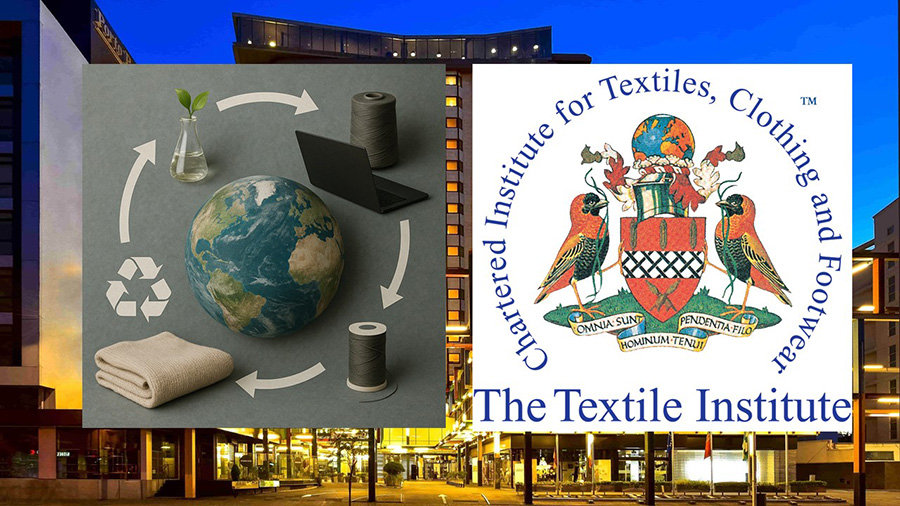
The full programme for the 93rd Textile Institute World Conference (TIWC 2025) has now been announced, with over 100 presentations to be delivered in parellel sessions at the event, which takes place from October 7-10 at the Porto Palácio Hotel and Spa in Porto, Portugal.
(c) 2025 The Textile Institute


In a comprehensive and truly international programme, the close collaboration between researchers on separate continents will be highlighted, with a major focus on the further development of technologies and practices assisting in the need for advanced fibre-to-fibre recycling as a means of accelerating a circular textiles economy.

Research teams working continents apart are arriving at strikingly similar solutions – circularity, digital integration, cleaner chemistry and human-centred reform are all criticlal. These interlocking themes will define this year’s conference.

Circularity will be one of the most prominent concepts underpinning the programme and researchers from Manchester in the UK, for example, will share their evaluation of end-of-life garments and show how almost half of those currently sent to waste could be channelled into advanced recycling.

From Chemnitz in Germany, new knitting technology will be presented that allows higher proportions of recycled content in cotton fabrics while retaining softness and durability.

Case studies from Bangladesh and Pakistan will meanwhile explore how local enterprises are already adopting closed-loop systems and circular business innovations, with recycled yarns reaching the supply chains of major global brands.

Taken together, the many presentations addressing circularity will demonstrate how waste is beginning to shift from a burden to a new raw material, while also pointing to the infrastructure and policies that will be needed to make such systems commercially viable.

Alongside this, the conference will also highlight the revolution now taking place in digitalisation.

Far from being a niche domain of design software, digital tools are becoming the backbone of sustainability itself. Work will be presented on blockchain, digital product passports and RFID systems that trace garments throughout their lifecycle, strengthening consumer trust and helping businesses meet new regulatory requirements.

New methods of digital textile printing and open-source knitting software will also be discussed, offering designers the ability to localise production and work with greater creative agency.

The message of these projects is clear – digitalisation is not an add-on to sustainability but one of its primary enablers.

Perhaps most significant at TWIC 2025 will be the attention given to the human dimension of sustainability.

In Sri Lanka, small and medium-sized apparel manufacturers will be shown to face critical health and safety risks as climate change brings rising temperatures, air pollution and extreme weather. A new assessment tool will be introduced which is helping firms build resilience and protect workers.

The Sustainable Fibre Alliance will also demonstrate how cashmere herders, traders and processors in Mongolia are being engaged in a collective effort to reduce rangeland degradation and safeguard livelihoods.

UK fashion educators will further share approaches to preparing the next generation to embrace circular models and ethical consumerism, equipping future designers to balance profit with responsibility. At the consumer end, new research will reveal misalignments between brand recommendations for garment care and the behaviour actually adopted by wearers, showing that communication must evolve.

“These examples will remind delegates that technology and recycling alone cannot deliver sustainability without parallel shifts in culture, education and policy,” says Textile Institute CEO Stephanie Dick. “The global nature of the challenges facing textiles is already widely acknowledged and climate change, waste, toxic chemicals, unsafe labour practices and consumer overconsumption have combined to make fashion and textiles one of the world’s most scrutinised industries. What will emerge from this conference, however, is an unmistakable sense of convergence and solid progress.”

Further information on the event ar available at the website of The Textile Insitute 

More News from The Textile Institute

More News on Research & Development

#Research & Development

More safety and comfort for protective clothing thanks to auxetic fabrics

When everyday materials are pulled, they stretch or elongate in the direction of the pull and become narrower in cross-section. We can also observe this property in two-dimensional textiles. Auxetic structures behave differently here. They have the striking property of not changing under tensile stress or even increasing their width or thickness. These properties are advantageous, for example, in protective textiles or textile filter media. The DITF are researching auxetic fabrics for various applications.

#Research & Development

Fraunhofer CCPE presents the “Monomaterial Design Set” – Innovative solutions for circular product design

Composite materials made from different types of plastic often extend the lifetime of products but make recycling more difficult in the circular economy. That is why Fraunhofer CCPE has developed the “Monomaterial Design Set”. This new approach helps to reduce the variety of plastics used in durable products and offers circular solutions for designers and product developers.

#Research & Development

How innovations drive BASF’s success

“Innovation has always been part of BASF’s DNA. Especially in these volatile times, it is crucial to leverage our innovative strength to develop competitive solutions that differentiate us as a company in our markets and give us a competitive edge,” said Dr. Stephan Kothrade, Member of the Board of Executive Directors of BASF and Chief Technology Officer, at the company’s Research Press Briefing held today. To achieve this, BASF implemented its “Winning Ways” strategy about a year ago with the clear goal of becoming the preferred chemical company to enable its customers’ green transformation.

#Research & Development

Small tolerances, big impact and a recyclable alternative to elastane

ITA Master's student Janne Warnecke investigated tension differences over the fabric width in the weaving process and thereby contributed to quality assurance; ITA Bachelor's student Jasmin Roos found a basis for the development of recyclable yarns and textiles. For these developments, they were awarded the Walter Reiners Foundation's Promotion and Sustainability Prizes on 27 November. Peter D. Dornier, Chairman of the Walter Reiners Foundation, presented the awards at the Aachen-Dresden-Denkendorf International Textile Conference (ADD-ITC) in Aachen, Germany.

Latest News

#People

Happy Holidays!

Dear reader, the year 2025 is drawing to a close. We are entering what we hope will be a peaceful holiday season, spending time with our families and taking a moment to pause and reflect. We hope we have been able to support you once again this year with relevant news and articles, and we look forward to surprising you with many innovations in the coming year. Enjoy the festive season, stay healthy, and we wish you a happy and joyful holiday season.

#Weaving

Lindauer Dornier announces leadership transition in weaving machine business

After more than ten successful years at Lindauer DORNIER GmbH, Mr Wolfgang Schöffl will leave the family-owned company at the end of the year to enter well-deserved retirement.

#Heimtextil 2026

Texpertise Focus AI: Messe Frankfurt puts Artificial Intelligence centre stage at its international textile and apparel trade fairs

Under the banner 'Texpertise Focus AI, Messe Frankfurt will place a strong emphasis on Artificial Intelligence (AI) across its international textile and apparel trade fairs from 2026 onwards, setting a future-shaping signal for the industry. The initiative highlights the responsible use of AI along the entire textile value chain, from fibre production to the point of sale. The programme will launch at Heimtextil in Frankfurt in January 2026.

#Technical Textiles

Autoneum and Polestar set new benchmarks for passenger experience and sustainability

As the global market leader in sustainable acoustic and thermal management, Autoneum is a key supplier of interior and exterior components for the highly anticipated Polestar 5 model. The successful collaboration between Autoneum and Polestar marks a significant milestone in sustainable automotive engineering: the electric grand tourer sports car features several innovations in lightweight, fully recyclable polyester-based components that ensure a superior driving experience. Polestar 5 was revealed at the IAA Mobility 2025 in Munich and is available in 24 markets.

TOP