[pageLogInLogOut]

#Research & Development

Innovation center for textile circular economy inaugurated
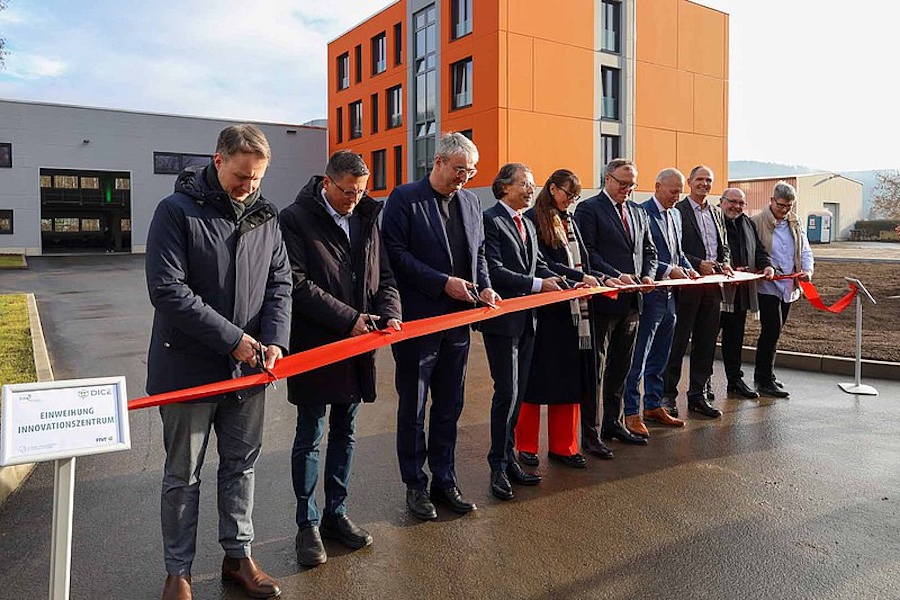
Official ribbon cutting for the new innovation center with (from left to right): State Parliament member Andreas Bühl, State Parliament member Maik Kowalleck, District Administrator Marko Wolfram, State Secretary for Economic Affairs Mario Suckert, Member of the Bundestag Diana Herbstreuth, Minister President Mario Voigt, TITK Director Benjamin Redlingshöfer, Zuse President Martin Bastian, Mayor Jörg Reichl, and TITK Department Head Ute Schubert. (Image rights: TITK / Steffen Beikirch)
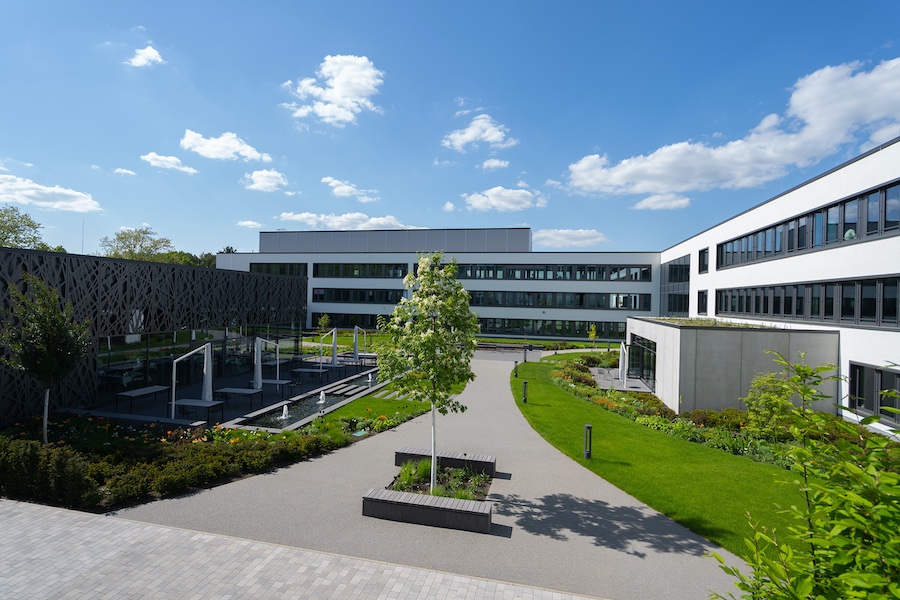
Just over eight months after the foundation stone was laid, the new Innovation Center for Textile Circular Economy was officially inaugurated today at TITK Rudolstadt. Thuringia's Minister President Mario Voigt, TITK Director Benjamin Redlingshöfer, and other guests of honor cut the ribbon to the modern building complex and viewed the premises, which are now ready for occupancy. The “DICE – Demonstration and Innovation Center for Textile Circular Economy” is TITK's largest single investment to date. The Free State of Thuringia supported the total cost of €11.5 million with €8 million in GRW and FTI funding.

The rapid progress of construction on the institute's grounds has been a source of amazement for the employees of the TITK Group since spring. “We were always on schedule and within budget,” says TITK Director Benjamin Redlingshöfer. His announcement shortly after the laying of the foundation stone on March 31 that invitations to the inauguration would be sent out before the end of the year initially elicited skeptical smiles from some. But the promise was kept: “That was real ‘Thuringia speed,’” says Redlingshöfer proudly. The construction project was carried out by companies from the Free State.

Minister President Mario Voigt says: "The DICE is a strong signal for Thuringia's innovative strength: research is put into practice here, ideas become industrial solutions. In just eight months, visions have been turned into a center for visions. The rapid implementation shows that we in Thuringia not only have commitment and expertise, but also set a clear direction for the future with speed and efficiency. Innovative, sustainable, and competitive. The Free State of Thuringia has deliberately provided significant support for this forward-looking project because we want to further strengthen Thuringia as a location for research and development. I would like to express my sincere thanks to all those involved—the construction workers, the planners, those responsible at TITK, and all funding and project partners—who made this success possible. They have all set out to further advance the Green Heart of Germany and make it future-proof for the citizens of our state." 

The result is a four-story laboratory and office building and a test hall, each with a floor space of around 1,000 square meters. The barrier-free new building will house a biology laboratory and a pulp laboratory, among other things. The hall will focus on two main areas: polyester recycling and cotton recycling. In addition, research and testing of alternative pulp suppliers will also be a focus. Thanks to DICE, the TITK Group will have its own pulp cooking system in the future. This plant is currently still under construction in Saxony and is scheduled to go into operation in 2026.

The TITK director is convinced: “DICE will be the leading national and international innovation and demonstration center for research and development of environmentally friendly processes for the production of chemical pulp, the production of sustainable cellulose fibers, and the development of the necessary solution spinning technologies.” Redlingshöfer sees this as further proof that Thuringia is increasingly setting the pace for the German innovation landscape. “We have nothing to hide here.” 
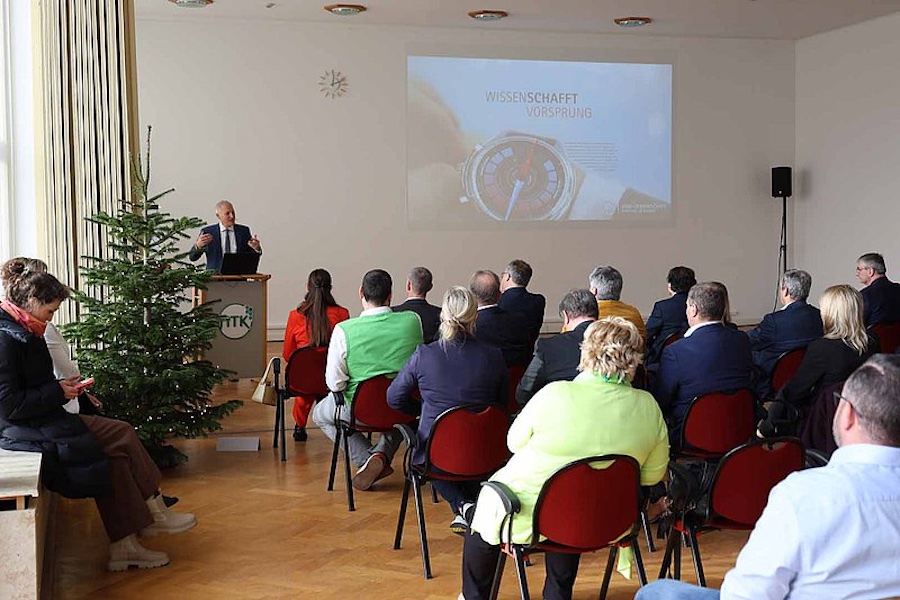
TITK Director Benjamin Redlingshöfer welcomed around 60 guests from politics, business, and research to the inauguration ceremony. (Image rights: TITK / Steffen Beikirch)


Important contribution to the transformation of the textile value chain

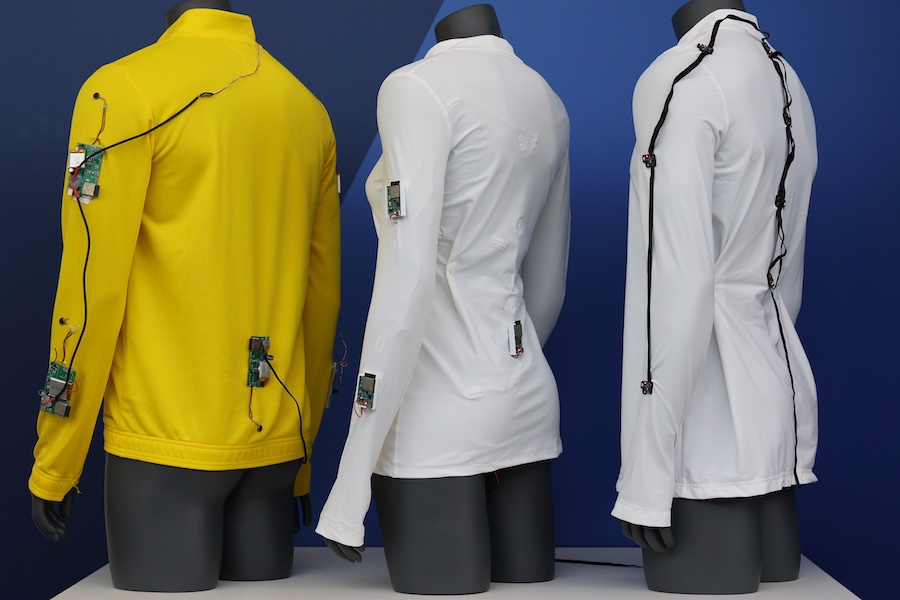
For more than 30 years, TITK has been dedicated to sustainable cellulose-based textile fibers. These Lyocell fibers have already undergone significant further development: they no longer use only wood pulp, but also, for example, fast-growing hemp, which consumes few resources. This year, the institute has taken a major step forward in developing innovative solutions for practical and holistic textile recycling: at the World Expo in Osaka (Japan), Redlingshöfer personally presented the world's first polo shirt made from triple-recycled hemp Lyocell fiber (Lyohemp®). 

The Rudolstadt-based institute aims to make an important contribution to the transformation of the textile value chain. The recycling of mixed textiles in particular is a key challenge that the new DICE innovation center will address. “Closed regional material cycles are our goal,” says Redlingshöfer. “But they must be ecologically and economically viable in order to guarantee market success.” The focus of the innovation center does not end with sustainable fibers for clothing textiles, but also explicitly includes technical textiles for high-performance applications in the automotive, aerospace, and defense sectors, for example. “Here, regionality also represents a resilience factor,” says the institute director. 

To date, 63 partners have agreed to cooperate with DICE, including well-known companies such as Adidas, Vaude, Continental, and Head, as well as other research institutions, associations, and networks.
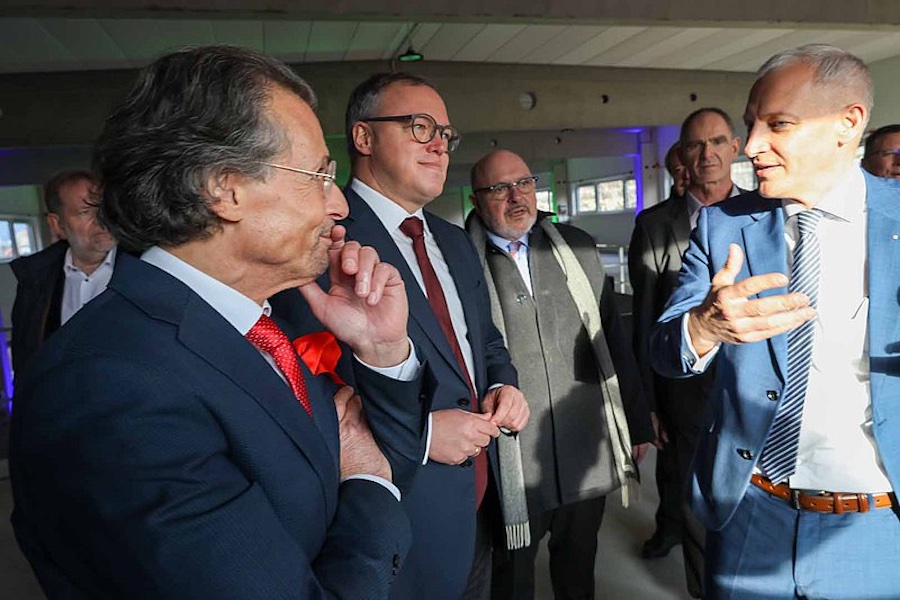
During a tour of the new test hall: TITK Director Benjamin Redlingshöfer (right) explains further plans to guests. From left: State Secretary for Economic Affairs Mario Suckert, Minister President Mario Voigt, Mayor Jörg Reichl, and Martin Bastian, President of the Zuse Association. (Image rights: TITK / Steffen Beikirch)


More News from TITK Rudolstadt ( Thüringisches Institut für Textil- und Kunststoff-Forschung Rudolstadt e.V. )

More News on Research & Development

#Research & Development

New DIN SPEC assesses environmental impact of textile fragments in soil

Textile products made from synthetic fibres, finished fabrics or dyed materials release fibre fragments into the environment at every stage of their life cycle. With the new DIN SPEC 19296, Hohenstein has developed a standardised testing method to analyse how these fragments behave in soil under natural conditions. Until now, little was known about their environmental behaviour or potential ecological effects once released.

#Research & Development

Solid Air Dynamics wins second place at RWTH Innovation Award

On 30 January, RWTH spin-off Solid Air Dynamics was awarded second place in the RWTH Innovation Awards for its research in the field of aerogel fibres. Manufactured from renewable raw materials, aerogel fibres offer outstanding thermal insulation, are extremely lightweight and completely biodegradable, and can consist of over 90 per cent air.

#Research & Development

Testing and research laboratory ensures safe and more sustainable products worldwide

For 80 years, Hohenstein has stood for independent testing, scientific expertise and practical solutions. Today, the testing and research service provider supports manufacturers and brands worldwide in making textiles, hardlines and medical devices safe, more sustainable and market-ready – thereby building trust among consumers. With an international presence and interdisciplinary expertise, Hohenstein supports its customers from production through to market launch, helping them navigate an environment of growing regulatory and societal demands.

#Research & Development

Award-winning research for sustainable carbon fibre cycles

Sustainable recycling of carbon fibres is possible through targeted electrochemical surface modification, which makes the sizing of carbon fibres resistant to solvolysis. ITA PhD student Sabina Dann was awarded the MSW Award from RWTH Aachen University for her master's thesis on this development. The award ceremony took place on 12 November 2025 in Aachen.

Latest News

#Recycling / Circular Economy

Circulose restarts commercial-scale production at Ortviken plant in Sundsvall

Circulose today announced the restart of its commercial-scale production plant at Ortviken in Sundsvall, Sweden, marking a significant step in scaling next-generation materials for the global fashion industry. The company plans to resume production of CIRCULOSE®, a recycled pulp made entirely from discarded cotton textiles, in the fourth quarter of 2026.

#Textiles & Apparel / Garment

VIATT 2026 to debut German Pavilion, strengthening European participation alongside key Asian textile hubs

Vietnam’s textile and garment sector continues to be a major contributor to the country’s economic growth, with export revenues expected to reach USD 46 billion in 2025, a 5.6% increase from 2024 . From 26 – 28 February, the Vietnam International Trade Fair for Apparel, Textiles and Textile Technologies (VIATT) is set to contribute to economic growth opportunities by accelerating digital transformation and green transition across the entire textile value chain. The upcoming edition will respond to the rising demand for advanced technologies and sustainable materials with the introduction of the German Pavilion, alongside strong exhibitor participation from key Asian sectors, as well as several high-profile fringe events.

#Sustainability

Ying McGuire becomes new CEO of Cascale

Cascale today announced the appointment of Ying McGuire as Chief Executive Officer, effective June 1, 2026.

#Technical Textiles

Sustainable, lightweight, and sound absorbing: Polyester-based front trunk solution for BEVs

As car manufacturers look to further reduce their carbon footprint, Autoneum has developed an innovative front trunk solution for battery electric vehicles (BEVs), made entirely from polyester-based textile. The Ultra-Silent Frunk offers significant weight reduction, improved acoustic and thermal insulation, and uses up to 70 percent recycled material, supporting sustainable and efficient vehicle design. Autoneum, global technology leader in acoustic and thermal management for vehicles, has already received orders for the new frunk from three major OEMs in Asia and Europe to be built in three BEV models. Series production for two BEVs has been underway in China and Germany since last year.

TOP