[pageLogInLogOut]

#Spinning

A dynasty of innovators across 190 years
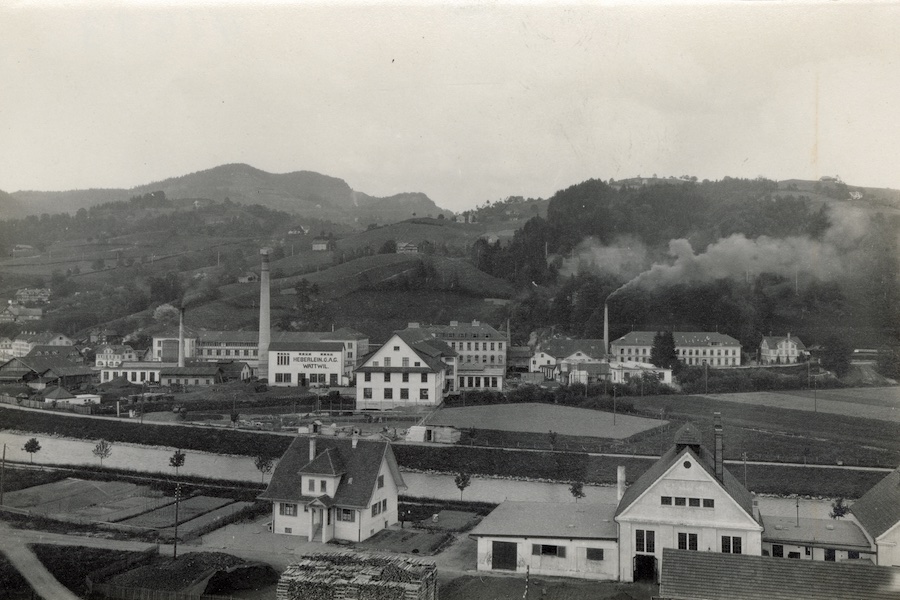
The art of reorientation runs through Heberlein's 190-year company history. Georg Philipp Heberlein and his descendants ran an exemplary family business with roots in yarn dyeing. It developed into a corporate group and ultimately became a highly specialised company that is regarded as the world’s leading provider of air interlacing and air texturing jets for synthetic continuous filament yarns.
Heberlein company premises in Wattwil (Switzerland) photographed between 1910 and 1920


Georg Philipp Heberlein’s family company is a world leader today

Today Heberlein's core competence is the development and production of highly-specialised key components for treatment and finishing of synthetic yarns – especially filaments. The company story over the years is a showcase of unique innovations.

Fantastic elastic

The initial concept involved twisting and heating man-made fibre threads at high speeds of 500,000 twists per minutes in a process known as false-twisting. This caused the fibres to be deformed and set, before being untwisted in the opposite direction. The resulting end-products retained their shape, were easy to care for, and – most importantly – had superb elastic characteristics.

This process of crimping the yarn – known as texturisation – was patented in 1931. The new yarn type was first made from viscose filaments. The brand name Helanca was chosen by combining ‘He’ from Heberlein and ‘Lana’ for wool.

Helanca's major commercial breakthrough came in the early 1950s, when Heberlein was able to develop and patent special spindles to process polyamide (nylon) filaments. Improving the twisting head made it possible to increase the number of twists so that large-scale industrial production started to gain momentum.

By the early 1960s, Heberlein was producing around the clock. Every day, thread output length was equivalent to twice the distance from earth to the moon! Annual production reached 2.5 million kilos of Helanca yarn. As demand soared, Heberlein responded by authorising more than 100 licensees worldwide, in what was now a highly lucrative business.
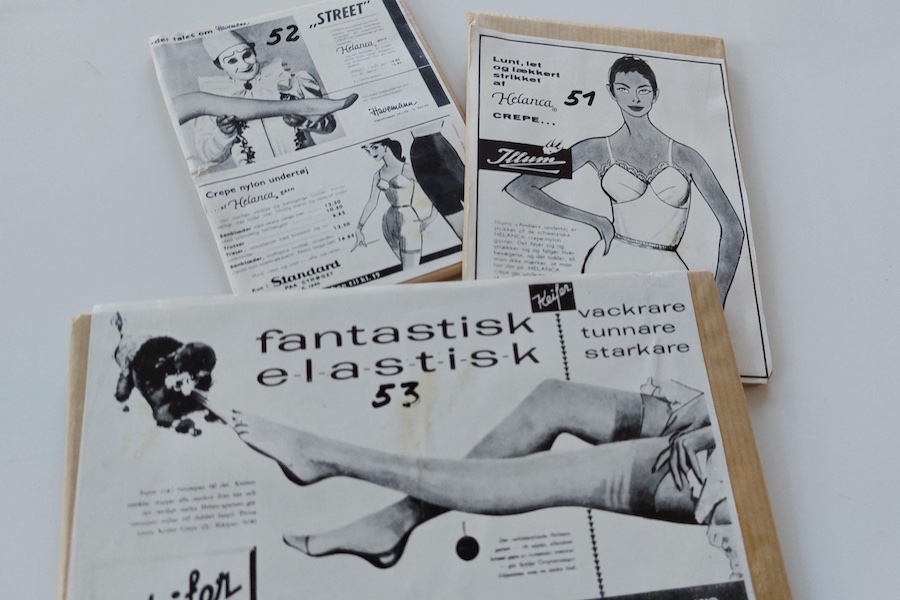
Adverts for Helanca © 2025 Heberlein


Mechanical initiative

Helanca's success was based on sophisticated mechanical processing. However, the earliest machines had to be developed from scratch. The first system, with horizontally mounted false-twist spindles, was built in the company's own workshop and put into operation in 1953.

These development activities saw the creation of a new branch of the company, devoted to mechanical engineering. Around 1960, the former repair and maintenance department became Heberlein Maschinenfabrik. Soon it had a comprehensive production programme, known worldwide, and became the fastest-growing Heberlein division.
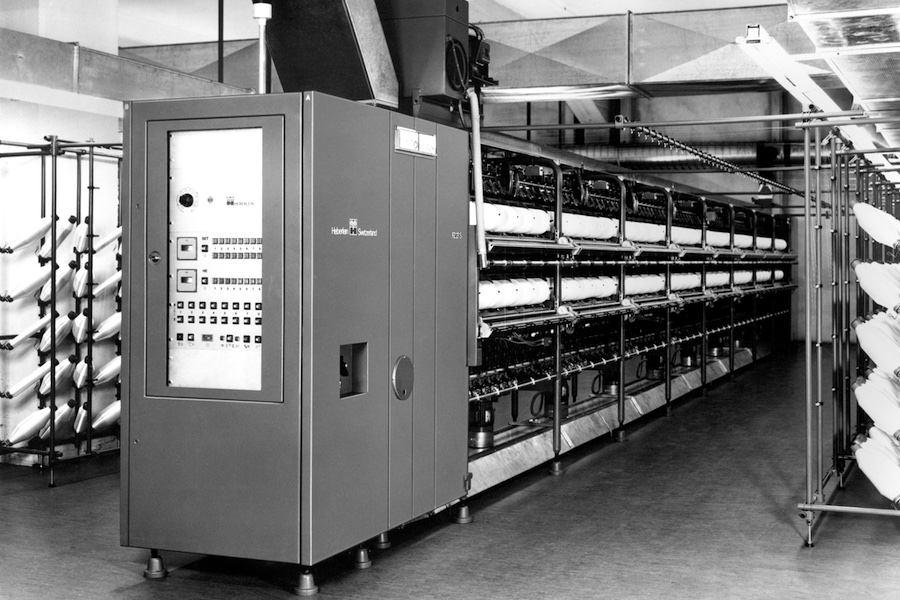
Heberlein false-twisting machine manufactured around 1950 © 2025 Heberlein


Air currents

From its position of strong growth, Heberlein Maschinenfabrik was later severely affected by restructuring in the ever-weakening European textile industry. After 1978, Heberlein no longer built complete machines, but instead focused on subcomponents.

This decision, concentrating on innovating technology components, brought Heberlein new success. The product strategy targeted the air-jet texturing process, which was again trending at that time. With air-jet texturing, spindles, machine spare parts, and air interlacing jets, the company remained in business.

More diversification

During the economic boom, Heberlein became active in various new areas, driven by expansion and diversification. In 1997, Heberlein Fasertechnologie AG was founded and once again concentrated on a core area. Eight years later, Heberlein Ceramics was founded, where valuable knowledge for today's Heberlein jets was accumulated.

With takeovers and changes of ownership, the Heberlein story stays significant in the 21st century. An investment foundation took over the company in 2023, ensuring its long-term success. Since then, the company has been known as Heberlein Technology AG.

Colourful and organised

The beginnings of Heberlein Technology AG go back 190 years to 1835. Georg Philipp Heberlein opened a yarn dyeing business in Wattwil (Toggenburg, Switzerland). Five further generations carried on the family tradition, adding textile finishing and printing as new activities.

In these factories, everyone, including the owners, lent a hand. And gradually they evolved into industrial operations. Employment increased, alongside the switch to machine production. In 1904 the company owner was found he had to take on more organisational tasks – so an office was set up for the first time!

Innovative and agile

Heberlein's ability to adapt to external conditions helped the company through the various crises and wars of the 20th century. The group was flourishing, with yarn mercerisation, fabric finishing, textile printing, synthetic fibres, mechanical engineering and licensing businesses. Even still as a family operation, Heberlein has ranked among the 20 largest Swiss industrial companies at times.

Innovative strength means the company can keep on bringing new products on to the market, to meet the needs of a broadening customer base. The range includes: Transparent (sheer fabrics for blouses and summer dresses), Hecolan (wool-like properties for cotton), Hetex (lace and embroidery fabrics for evening dresses and curtains), and Helanca, among others.

Heberlein continues to innovate and inspire, with unique yarn properties that not only look and feel great – but also deliver improved process efficiency and profitability.
More News from Heberlein AG

#ITMA Asia + CITME Singapore 2025

Jets developed for filament perfection

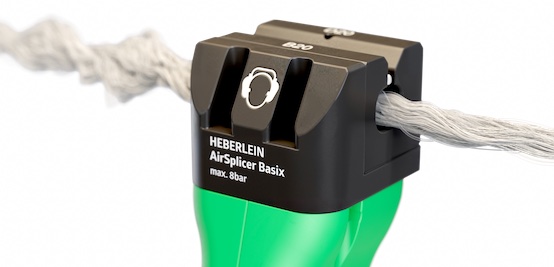
Heberlein Technology AG, Wattwil, Switzerland, October 2, 2025 – Heberlein, the leading supplier of air interlacing and air texturing jets, aims to impress visitors at ITMA Asia + CITME 2025. Novel solutions will be presented, which will allow filament yarn producers to achieve special quality specifications and process optimization. As expected from Heberlein, these latest developments combine the most sophisticated technology with user convenience and savings potential.

#Spinning

It’s the know-how that counts

The Textile Technology Centre is the pride of Heberlein. State-of-the-art equipment and a team of top experts guarantee the highest standards of support for customers. Heberlein is the leading provider of air interlacing and air texturing jets for synthetic continuous filament yarns and its clients enjoy added value in the form of practical help and guidance on textile processes and economic issues, with a special focus on filament yarn applications. This article provides insights into these comprehensive services.

#Spinning

DTY Jet insert APe043 redefines low denier yarn processing

Heberlein Technology, a leader in air interlacing and texturing jets, is set to showcase its latest products at GTTES in Mumbai, India. Key highlights include the new housing generation HemaJet-LB06 and the DTY jet insert APe043, featuring a record-small 0.65 mm orifice for superior performance in extremely low denier yarns.

#ITMA Asia + CITME 2024

ATY one-stop solution provider ready for China

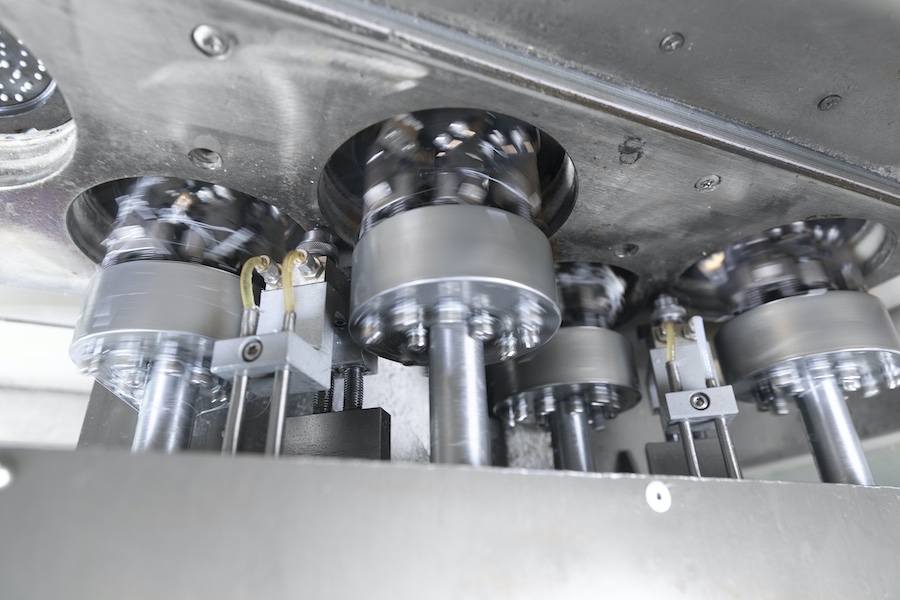
Heberlein, the leading supplier of air interlacing and air texturing jets, aims to impress visitors at ITMA Asia + CITME 2024 with an amazing technical achievement in DTY and the latest components, including the brand new HemaJet-LB06. The jet housing shows great compatibility and makes the Swiss company a one-stop supplier for air-texturing processing.

More News on Spinning

#Spinning

First PA66 spinning plant with EvoQuench successfully commissioned

With the successful commissioning of a multi-digit PA66 spinning line for microfiber yarns, Chinese textile company Shandong Nanshan Fashion Technology Co., Ltd. has added yarn production to its textile value chain.

#Spinning

Saurer Technologies Twisting Solutions at ICFE 2026

Saurer Technologies Twisting Solutions, a global leader in textile machinery innovation, will be present at the International Carpet and Flooring Expo ICFE 2026. Join us January 6–9 at the Istanbul Expo Center, Türkiye, as industry leaders, manufacturers, and innovators gather to explore the latest breakthroughs in carpet and flooring technology. Let’s meet at the new established global Center of the Carpet Sector in hall 3, booth 300!

#Spinning

Details matter: How Trützschler cylinder wires boost efficiency in Pakistan’s spinning sector

Pakistan’s textile industry, especially its spinning sector, is the backbone of the national economy and a vibrant hub of innovation. Today’s spinning mills face growing demands for efficiency, quality, and sustainability. From the serene northern valleys to the vibrant port city of Karachi in the south, mills like Suraj Cotton Mills, Liberty, and Nishat Chunian are turning to advanced solutions.

#Exhibitions & Events

Groz-Beckert showcases textile innovation at ShanghaiTex 2025

From December 16 to 19, 2025, the global textile industry will gather at ShanghaiTex at the Shanghai New International Expo Center (SNIEC), where Groz-Beckert will present its latest highlights and innovations across its five product areas – Knitting, Weaving, Nonwovens, Sewing, and Spinning – at Hall N3, Booth A05.

Latest News

#People

Happy Holidays!

Dear reader, the year 2025 is drawing to a close. We are entering what we hope will be a peaceful holiday season, spending time with our families and taking a moment to pause and reflect. We hope we have been able to support you once again this year with relevant news and articles, and we look forward to surprising you with many innovations in the coming year. Enjoy the festive season, stay healthy, and we wish you a happy and joyful holiday season.

#Weaving

Lindauer Dornier announces leadership transition in weaving machine business

After more than ten successful years at Lindauer DORNIER GmbH, Mr Wolfgang Schöffl will leave the family-owned company at the end of the year to enter well-deserved retirement.

#Heimtextil 2026

Texpertise Focus AI: Messe Frankfurt puts Artificial Intelligence centre stage at its international textile and apparel trade fairs

Under the banner 'Texpertise Focus AI, Messe Frankfurt will place a strong emphasis on Artificial Intelligence (AI) across its international textile and apparel trade fairs from 2026 onwards, setting a future-shaping signal for the industry. The initiative highlights the responsible use of AI along the entire textile value chain, from fibre production to the point of sale. The programme will launch at Heimtextil in Frankfurt in January 2026.

#Technical Textiles

Autoneum and Polestar set new benchmarks for passenger experience and sustainability

As the global market leader in sustainable acoustic and thermal management, Autoneum is a key supplier of interior and exterior components for the highly anticipated Polestar 5 model. The successful collaboration between Autoneum and Polestar marks a significant milestone in sustainable automotive engineering: the electric grand tourer sports car features several innovations in lightweight, fully recyclable polyester-based components that ensure a superior driving experience. Polestar 5 was revealed at the IAA Mobility 2025 in Munich and is available in 24 markets.

TOP