[pageLogInLogOut]

#Spinning

Uster Technologies introduces its new fiber process control system
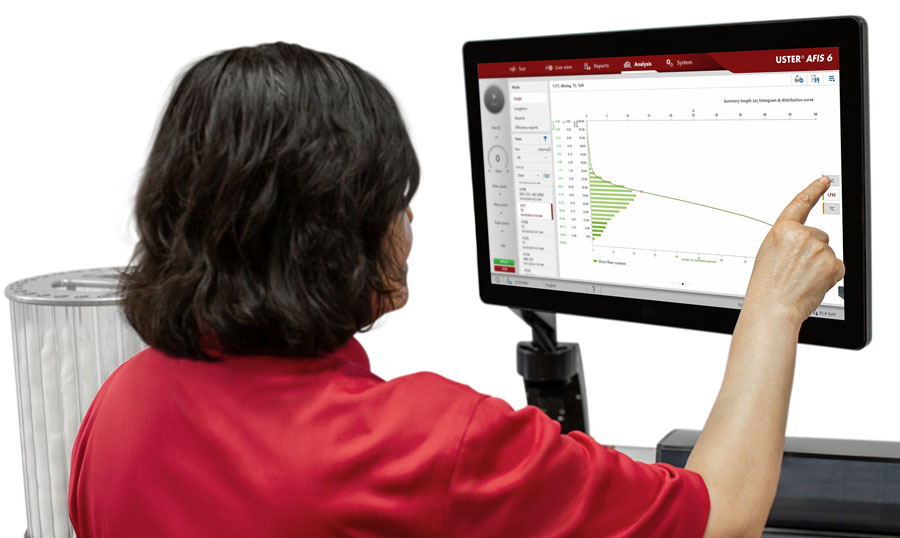
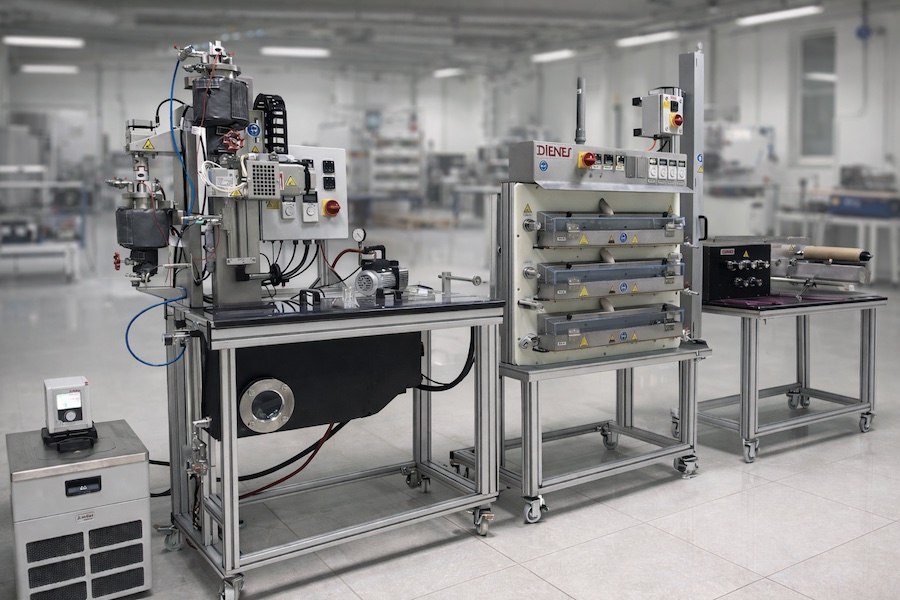
Uster, Switzerland, 15th May 2025 – Fiber quality measurement in spinning preparation is crucial for optimizing waste and meeting yarn quality specifications. The brand-new Uster AFIS 6 – the next-generation laboratory instrument from Uster Technologies – uniquely tests man-made fiber properties in addition to cotton. It provides critical data to optimize fiber process control for cotton, man-made fibers, and blended yarns.
(c) 2025 Uster - Uster AFIS 6

Spinners always strive to preserve the quality of valuable incoming fiber throughout the manufacturing process. Uster AFIS 6 achieves this by testing the material at each stage of preparation, from bale to roving. And, in its latest version, AFIS can now measure 100% synthetic fibers and fiber blends commonly used in short-staple spinning, in the same unit as cotton.

Ongoing fiber quality monitoring

Several different fiber characteristics affect quality and performance through pre-spinning operations – opening, cleaning, carding, combing, roving – so testing needs to take account of the impact of each. AFIS (short for Advanced Fiber Information System) achieves this by measuring the various parameters for the length, fineness, maturity, neps, seed coat neps, trash, and dust in a particular test specimen of fiber.

This intensive monitoring is the only way to detect fiber quality issues before they get into the yarn and lead to a quality claim from the customer. Only industry-leading Uster AFIS 6 can deliver these advantages to give mills better overall control of costs, reduced raw material waste and less off-quality yarn.

AFIS 6 also makes things easier for the spinner, applying the same intuitive new user interface as the famous Uster Tester 6 and other Uster yarn testing instruments, featuring 11 languages. The improved reporting package simplifies data analysis.

What spinners need to know

Neps in yarn can be seriously disturbing if they show up in finished fabrics and garments. Uster AFIS 6 makes the important distinction between fiber neps and seed coat neps – important because seed coat neps are more difficult to remove. In addition to the number of neps, the size of the neps is measured. With the critical neps size report, spinners get an estimate of how many neps are in the yarn.

For the spinning process, it is essential to know about fiber length and short fiber content. AFIS 6 measures the single fiber length, per number and per weight. Next to the length, the maturity and immature fiber count are measured. With its advanced opto-electronic sensors to measure single fiber quality, AFIS 6 proves it can optimize short staple spinning.

An optional sensor also measures dust and trash particles, which can cause serious problems in subsequent fabric manufacturing processes. Knowing the number of trash and dust particles helps the spinner and results in less downtime in weaving, while knitting needles last longer, and cleaning efficiency in the open-end spin box is enhanced.

Managing synthetics the same way

Synthetic fibers are growing in importance, so it’s essential to measure them. The cut length and fiber fineness are particularly relevant, as both are crucial for the spinning process. Uster AFIS 6 can measure the synthetic fibers most commonly used in short staple spinning. As well as length and fineness, fiber neps are determined. New test parameters are also introduced, such as cut length and denier. They are critical for incoming raw material inspection and selection.

Short-staple yarns today include more and more cotton/synthetic blends and 100% synthetics. Cotton can be blended with fibers such as polyester, micro-polyester, viscose, modal, micro-modal, lyocell, micro-lyocell, and acrylic.

Quality and profitability in control

Carding and combing are the two fiber processes in the spinning mill which most influence yarn quality. The carding process is the heart of every spinning mill. Poor performance here cannot be recovered in subsequent processes. The combing process reduces the short fiber content and is the last removal stage for neps, trash and dust. Only with Uster AFIS 6 measurements can spinners optimize these processes and save money.

Uster AFIS 6 can be connected to Quality Expert, hosted in Uster Tester 6. Full control from fiber to yarn in a single inline system illustrates the entire mill operation, with key quality parameters in the right format at the right time. Mill analyses with meaningful quality comparisons, integrated application knowledge and focused management reports are leveraged for even more profound and informed decision-making.

Last but not least, Uster Statistics is already integrated within AFIS 6, making global benchmark comparisons quick and easy. The new AFIS provides two Uster Statistics interactions: one for the whole process and one for each process step. Comparisons to Uster Statistics throughout the process show any unexpected spinning faults.
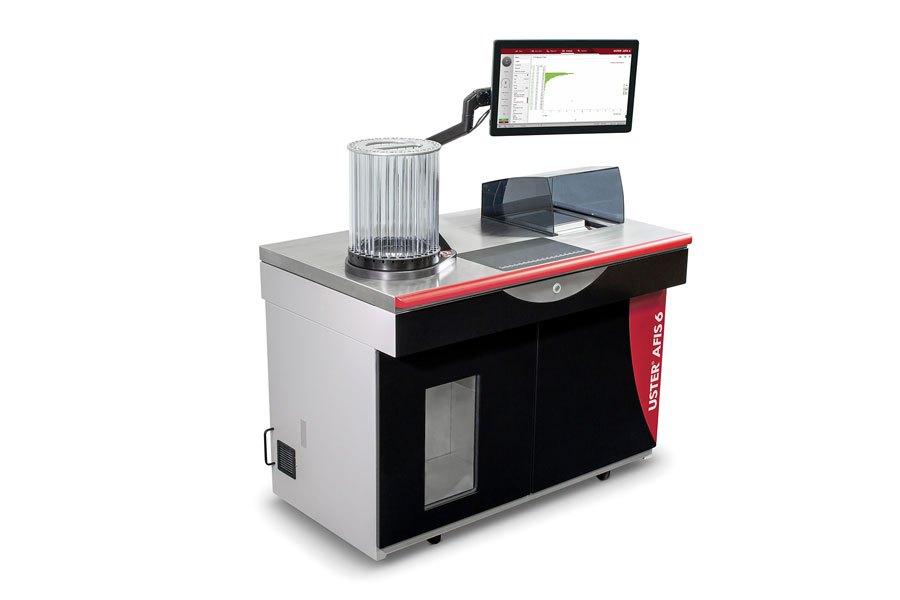
(c) 2025 Uster - Uster AFIS 6

Spinners have it in their own hands! The latest Uster fiber process control system puts them in control of spinning preparation – and the end-product’s success.
More News from Uster Technologies AG

#ITMA Asia + CITME Singapore 2025

Uster presents novelties at ITMA Asia + CITME 2025

There’s news from Uster Technologies to be announced for the industry’s upcoming event in Singapore. The Uster 360Q universe is growing with new products, solutions and services. Innovation developments can also be recorded in the fields of man-made fiber testing and fabric inspection. Uster innovations address the industry’s trending topics as mill management and process control, optimization of delivered fabric quality and yield.

#Spinning

Uster Technologies marks 150 years of empowering quality excellence

Uster Technologies marks 150 years of excellence – a milestone that reflects continuous adaptation to customer needs and industry change. Over the decades, Uster has evolved from manufacturing quality testing instruments into a trusted partner shaping the future of textile production.

#Recycling / Circular Economy

Challenges of making yarn from recycled fibers

What does it take to spin quality yarn from recycled fibers? Uster Technologies brought textile industry leaders together to discuss the role of technology, data and automation – as well as the current challenges in using recycled raw material. Experts from Rieter, Säntis Textiles, Otto Yarns, and TVU commented on the current situation and looked into the future of spinning in a panel discussion organized at Uster headquarters.

#Spinning

Uster Technologies wins another infringement lawsuit

In a ‘victory for innovation in China’ Uster Technologies has secured a decisive judgment in a patent infringement lawsuit against a competitor. The final ruling by the Supreme People’s Court of PR China confirms that the competitor’s actions in copying the patented yarn feeder of the Uster Tester 6 constitute unlawful infringement.

More News on Spinning

#Spinning

First PA66 spinning plant with EvoQuench successfully commissioned

With the successful commissioning of a multi-digit PA66 spinning line for microfiber yarns, Chinese textile company Shandong Nanshan Fashion Technology Co., Ltd. has added yarn production to its textile value chain.

#Spinning

Saurer Technologies Twisting Solutions at ICFE 2026

Saurer Technologies Twisting Solutions, a global leader in textile machinery innovation, will be present at the International Carpet and Flooring Expo ICFE 2026. Join us January 6–9 at the Istanbul Expo Center, Türkiye, as industry leaders, manufacturers, and innovators gather to explore the latest breakthroughs in carpet and flooring technology. Let’s meet at the new established global Center of the Carpet Sector in hall 3, booth 300!

#Spinning

Details matter: How Trützschler cylinder wires boost efficiency in Pakistan’s spinning sector

Pakistan’s textile industry, especially its spinning sector, is the backbone of the national economy and a vibrant hub of innovation. Today’s spinning mills face growing demands for efficiency, quality, and sustainability. From the serene northern valleys to the vibrant port city of Karachi in the south, mills like Suraj Cotton Mills, Liberty, and Nishat Chunian are turning to advanced solutions.

#Exhibitions & Events

Groz-Beckert showcases textile innovation at ShanghaiTex 2025

From December 16 to 19, 2025, the global textile industry will gather at ShanghaiTex at the Shanghai New International Expo Center (SNIEC), where Groz-Beckert will present its latest highlights and innovations across its five product areas – Knitting, Weaving, Nonwovens, Sewing, and Spinning – at Hall N3, Booth A05.

Latest News

#People

Happy Holidays!

Dear reader, the year 2025 is drawing to a close. We are entering what we hope will be a peaceful holiday season, spending time with our families and taking a moment to pause and reflect. We hope we have been able to support you once again this year with relevant news and articles, and we look forward to surprising you with many innovations in the coming year. Enjoy the festive season, stay healthy, and we wish you a happy and joyful holiday season.

#Weaving

Lindauer Dornier announces leadership transition in weaving machine business

After more than ten successful years at Lindauer DORNIER GmbH, Mr Wolfgang Schöffl will leave the family-owned company at the end of the year to enter well-deserved retirement.

#Heimtextil 2026

Texpertise Focus AI: Messe Frankfurt puts Artificial Intelligence centre stage at its international textile and apparel trade fairs

Under the banner 'Texpertise Focus AI, Messe Frankfurt will place a strong emphasis on Artificial Intelligence (AI) across its international textile and apparel trade fairs from 2026 onwards, setting a future-shaping signal for the industry. The initiative highlights the responsible use of AI along the entire textile value chain, from fibre production to the point of sale. The programme will launch at Heimtextil in Frankfurt in January 2026.

#Technical Textiles

Autoneum and Polestar set new benchmarks for passenger experience and sustainability

As the global market leader in sustainable acoustic and thermal management, Autoneum is a key supplier of interior and exterior components for the highly anticipated Polestar 5 model. The successful collaboration between Autoneum and Polestar marks a significant milestone in sustainable automotive engineering: the electric grand tourer sports car features several innovations in lightweight, fully recyclable polyester-based components that ensure a superior driving experience. Polestar 5 was revealed at the IAA Mobility 2025 in Munich and is available in 24 markets.

TOP