#Techtextil 2026
Techtextil 2026: Between innovation pressure & market reality
Why the leading trade fair in Frankfurt is becoming more decisive than ever for success, differentiation, and new textile solutions in a demanding market environment.
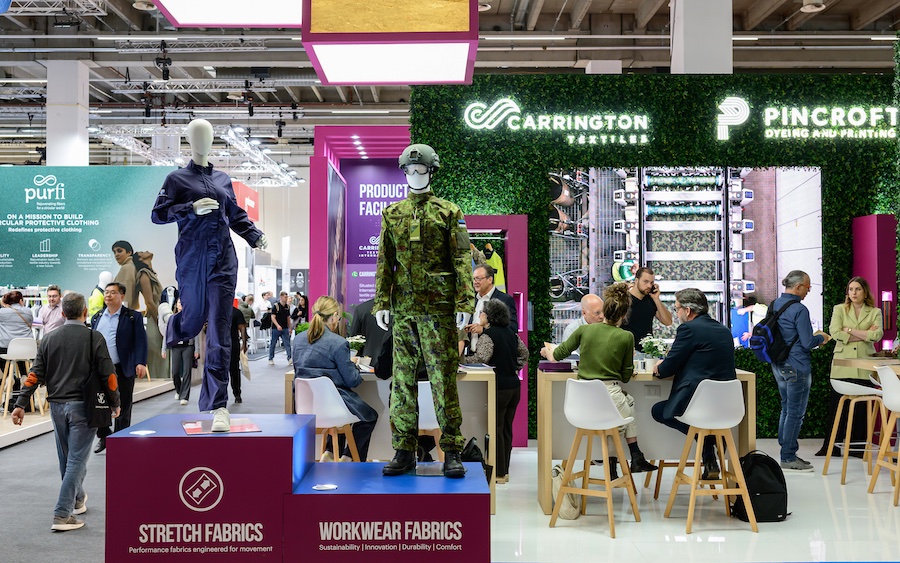
As the leading international trade fair in its segment, Techtextil has traditionally showcased the technological developments shaping the industry. The focus lies on functional materials, high-performance textiles, and innovative applications in areas such as mobility, construction, medical, protection, and apparel. It is precisely here that it becomes evident which developments are successfully making the transition from research into industrial processes, thereby triggering real market change.
The 2026 edition takes place in a market environment shaped by several transformation processes occurring simultaneously. In addition to a strained economic situation and increasing trade policy pressure – including tariffs, regional market fragmentation, geopolitical conflicts, and volatile supply chains – regulatory requirements across the entire textile value chain are also intensifying. Issues such as PFAS regulation, supply chain legislation, and new sustainability requirements are having an ever greater impact on material decisions and product development.
At the same time, technological development continues to accelerate. New fibre and material concepts, advances in textile chemistry, bio-based raw materials, as well as digital and automated production processes are significantly expanding the possibilities of technical textiles. At the same time, however, expectations regarding industrial feasibility are increasing: innovations must not only deliver functional performance, but also be reproducible, economically viable with sustainable margins, and compliant with regulatory requirements at scale.
Against this backdrop, Techtextil is gaining further importance – not only as a showcase for new materials, but as a platform where it becomes clear which technologies will actually make their way into industrial applications and markets.
Why visiting in 2026 is particularly worthwhile
There are many reasons to visit Techtextil – but these have shifted in recent years. While in the past the focus was often on showcasing innovation and searching for specific solutions, today many visitors are increasingly looking beyond their own field to explore adjacent areas. With its current motto, Messe Frankfurt deliberately places the importance of serendipitous encounters at the centre. Sabine Scharrer, Director Brand Management Technical Textiles & Textile Processing, explained in an interview (textile.4U Issue 1/2026) that the new Techtextil motto highlights the value of unexpected encounters as a key asset of the event: “Often, the best solutions are found unexpectedly. The opportunity to discover so many innovative textiles for such a wide range of applications exists only at Techtextil. This is where participants find the best conditions for fruitful encounters. We combine a high level of internationality with exhibitors and visitors from over 100 countries and connect the world through serendipity.”
A key driver for visiting Techtextil is undoubtedly the increasing regulatory pressure. New requirements – ranging from PFAS restrictions and supply chain legislation to expanded sustainability frameworks – are forcing companies to reassess material choices and product concepts. The trade fair provides an opportunity to directly compare alternatives, evaluate technological options, and discuss their industrial feasibility with suppliers.
At the same time, weak demand in many markets combined with intense competition is forcing companies to differentiate more clearly. Standard solutions are increasingly subject to price pressure, while specialised applications and technically sophisticated products are gaining importance. For many suppliers, this means strategically advancing their portfolios – whether through additional functionalities, higher performance, improved processability, or new properties such as recyclability or biodegradability. As a result, there is a growing need to evaluate innovation not in isolation, but in the context of cost, scalability, and specific application benefits. At the same time, technical textiles – with their unique performance characteristics – are increasingly becoming substitute materials for other, less suitable materials. Techtextil offers a compact overview of current solution approaches and their practical relevance.
Another factor is the need for reliable orientation in an increasingly complex market. The range of new materials, chemical solutions, and processing technologies continues to expand. For many companies, it has become essential not only to understand individual innovations, but also to assess how they interact across multiple stages of the textile value chain. The combination of Techtextil and the parallel Texprocess enables precisely this holistic perspective – from raw materials and functional finishing to industrial production.
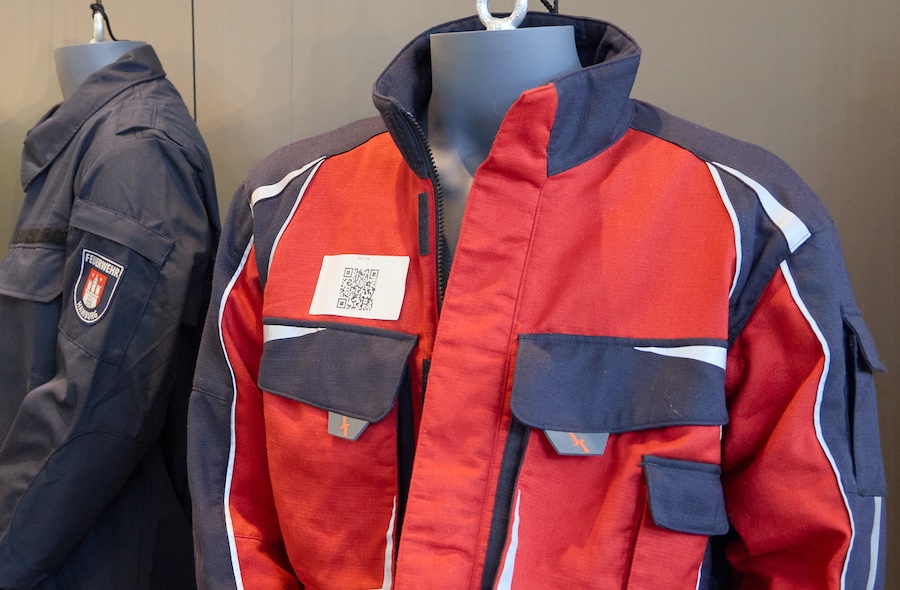
A further important aspect is the growing focus on market-ready applications. Many of the developments on display are no longer conceptual studies, but are already geared towards concrete use cases – for example in protective textiles, functional apparel, or industrial applications. For visitors, this means that innovations can be assessed much more clearly in terms of their practical benefits and economic relevance. This is also linked to the fact that, in rapidly changing markets, time-to-market is becoming increasingly critical for companies.
Finally, the trade fair remains a key platform for direct exchange and networking. Particularly in an environment of growing uncertainty, personal interaction is gaining importance – whether for initiating new partnerships, evaluating technologies, or interpreting market trends. Overall, the nature of visiting the trade fair is shifting noticeably: away from pure inspiration towards a more work-oriented platform for well-founded decision-making along the entire textile value chain.
Figures and Development: Stabilisation and Structural Shifts
A look at recent editions of Techtextil reveals an industry in transition – moving from pandemic-driven recovery towards a phase of consolidation and structural realignment. Following the disruption caused by the pandemic, the international textile trade fairs in Frankfurt marked a clear restart in 2022. By 2024, a process of normalisation had begun to emerge. With around 1,470 exhibitors from approximately 50 countries, the event stabilised at a consistently high level. This was also accompanied by China’s return to the international stage: after just 12 exhibitors in 2022, the number rose to 164 in 2024, even exceeding pre-crisis levels. Countries such as Italy, Turkey, Spain, and France also recorded significant increases.
For 2026, moderate growth is expected, combined with further differentiation. More than 1,500 exhibitors from 49 countries are anticipated, including over 120 first-time participants and 16 country pavilions.
A closer look at the key exhibitor countries shows both continuity and shifts in the global industry structure. Germany remains the largest participant with 338 exhibitors, followed by China with 177 and Italy with 167 exhibitors. They are followed by France (93), Turkey (66), India (65), and Spain (62) as other key players. Switzerland is also strongly represented with 49 exhibitors.
These figures highlight several developments. On the one hand, Europe remains the backbone of the event, led by Germany and Italy. At the same time, China continues to strengthen its role as one of the most important global suppliers of technical textiles, while India and Turkey are expanding their positions as high-growth production and sourcing markets. In addition, the geographical base of exhibitors is broadening. New participating countries as well as additional country pavilions – including from the Netherlands and Tunisia – demonstrate that the event is becoming increasingly diversified and is integrating new markets more strongly.
In terms of content, the breadth of application areas remains a defining feature of Techtextil. From mobility and industrial applications to protection, medical, and functional apparel, all relevant segments are represented. However, the focus within these areas is shifting towards more specialised applications and technologically advanced solutions.
An analysis of product segments shows a continued balanced structure along the textile value chain. Particularly well represented are fabrics (318 exhibitors), coated textiles (275), as well as fibres and yarns (265). The segment of performance apparel textiles continues to gain importance with 203 exhibitors, while nonwovens (97) and composites (96) represent more specialised but technologically important segments.
The full article can be read in the latest issue of textile.4U, available for free download here: