#Texprocess 2026
Interview Elgar Straub (VDMA)
Between investment restraint and modernization pressure
Elgar Straub (VDMA) on market dynamics and key technology drivers ahead of Texprocess 2026

Interview
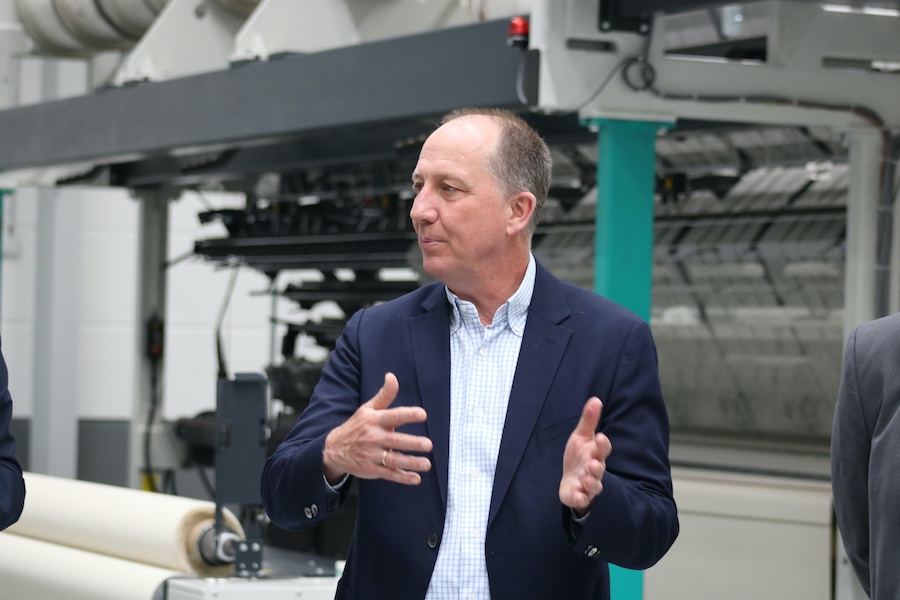
Elgar Straub
VDMA, Managing Director Bavaria, Managing Director Textile Care, Fabric and Leather Technologiesby Oliver Schmidt
In just a few weeks, from April 21 to 24, the trade fair duo Techtextil and Texprocess will once again take place. The last edition was held in 2024 – a year you once described as the most challenging you had experienced in your 25-year career. Where do we stand today? Is the textile industry still under pressure from recession, high energy costs and restrained investment? And how would you currently assess the situation in your specific segment, Textile Care, Fabric and Leather Technologies?
Yes, the pressure is still clearly noticeable – however, compared to 2024 the starting position in our Textile Care, Fabric and Leather Technologies sector has changed. Investments continue to be made cautiously and very selectively, driven by cost pressures, uncertainty and longer decision‑making processes. At the same time, the need for modernization among our global customers is increasing significantly: companies are investing where technologies demonstrably improve efficiency, flexibility and process stability, as well as sustainability. This very tension currently characterizes our industry – and it lies at the heart of Texprocess.
Further challenges for the industry have emerged with the return of U.S. President Trump and the introduction of new tariffs, which are making business with the U.S. more difficult – in some cases even grinding it to a halt. How strongly are your member companies affected by these measures, and what disadvantages do they create not only for European suppliers but also for the U.S. market and consumers?
For companies in the Textile Care, Fabric and Leather Technologies (TFL) sector, US tariffs have a twofold effect: they increase the cost of machines and components in the US target market while simultaneously raising uncertainty regarding investment decisions among global customers whose products are in turn delivered to the US. Particularly in a technology‑driven segment such as TFL, this leads to modernization projects being postponed or subjected to very careful scrutiny.
For the US market itself, this has long‑term consequences: if investments in efficient and productive technologies fail to materialize, productivity and competitiveness come under pressure – an effect that becomes noticeable along the entire value chain and is also clearly addressed in the context of Texprocess.
At the same time, the European Union has concluded two free trade agreements with Mercosur and India, both intended to have a positive economic impact. How are these agreements viewed by your members, and what expectations are associated with them?
For our member companies, reliable and openly structured trade relations represent an important opportunity – especially in an internationally interlinked market environment. Improved market access can facilitate investments, strengthen cooperation and accelerate technological innovation. What is crucial is a practical implementation: if tariff reductions take effect effectively, procedures are efficient and technical as well as regulatory requirements are well aligned, tangible planning security emerges. This creates stable framework conditions for our members, promotes competitiveness and supports sustainable growth. Both regions are important trading partners and we expect a lasting investment boost. Accordingly, we also call on the EU Commission to bring the free trade agreement with Mercosur into provisional force as quickly as possible.Turning to the trade fair itself: as early as August 2025, Messe Frankfurt reported a very strong booking situation for Texprocess. How do you assess the current state of preparations? What are your expectations for this year’s edition of Texprocess?
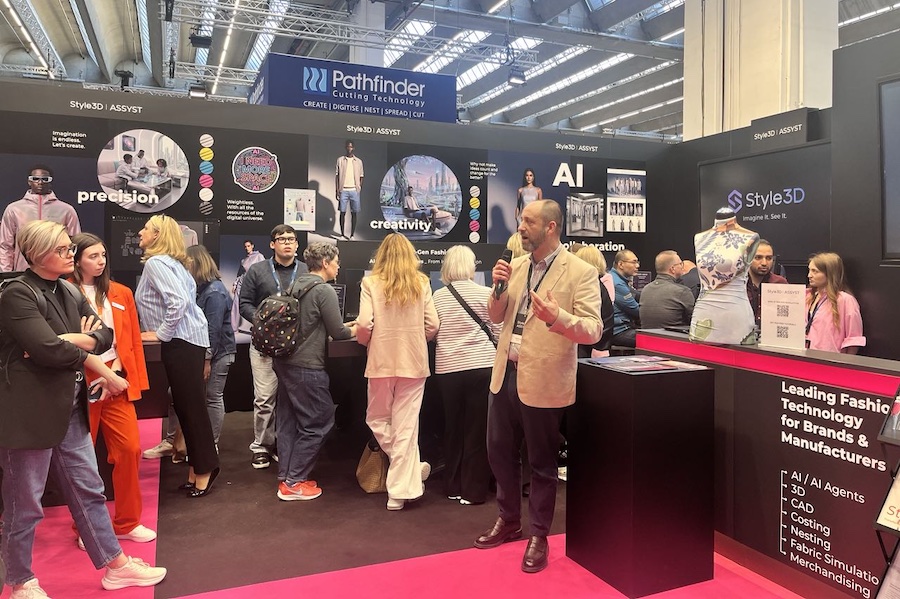
The signs are very positive. A strong booking status was communicated at an early stage: more than 200 exhibitors from 24 countries, including many new exhibitors as well as established brands. In terms of content, Texprocess 2026 is clearly positioned as a platform where the industry provides answers to the major challenges: automation, digitalization and AI, as well as sustainability, are at the center, because these are precisely the drivers of efficiency and flexibility gains.I therefore expect a trade fair of very high relevance for decision‑makers: concrete solutions that can be translated into investment decisions – ranging from intelligent material flow systems and robot‑assisted units to AI‑based real‑time quality control.
Texprocess is regarded as the world’s leading trade fair for your industry – making it worthwhile to visit almost every time. Why might this particular edition be even more relevant than usual?
Texprocess is fundamentally always worth attending, because it is the only global platform that brings together all technologies and services of textile processing – from design and cutting to sewing, finishing and digital printing.
In 2026, from my perspective, an additional factor comes into play: the combination of economic pressure (budget constraints, volatile demand, tariffs/geopolitics) and, at the same time, a strong surge in innovation makes visiting the trade fair particularly valuable. Visitors will find exactly the technological answers that are currently needed to stabilize processes, use resources more efficiently and reduce dependencies in order to remain competitive.
Technologies aimed at increasing efficiency are expected to play a key role at Texprocess 2026. What exactly does this mean in practical terms? Which developments or approaches should visitors pay particular attention to?
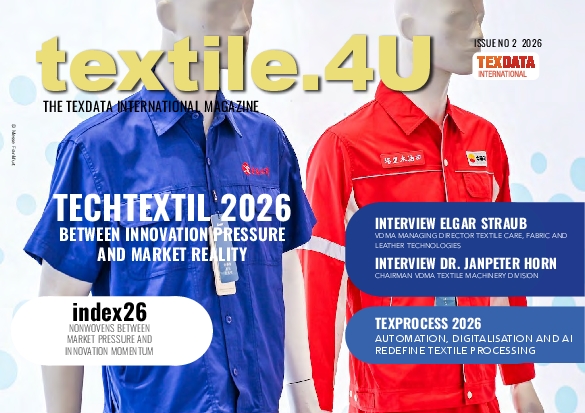
The full interview can be read in the latest issue of textile.4U, available for free download here: