[pageLogInLogOut]

#Textile chemistry

BASF researching CO2-neutral production of bio-based fumarate using bacteria found in cow stomachs
With the bacterium Basfia succiniciproducens, BASF would like to transform sugar and carbon dioxide into fumaric acid, an important intermediate for chemical production. To this end, the company is collaborating with Saarland University, University of Marburg and the University of Kaiserslautern-Landau in a joint research project entitled FUMBIO (FUMarsäure BIObasiert).
With the bacterium Basfia succiniciproducens, BASF would like to transform sugar and carbon dioxide into fumaric acid, an important intermediate for chemical production. To this end, the company is collaborating with Saarland University, University of Marburg and the University of Kaiserslautern-Landau in a joint research project entitled FUMBIO (FUMarsäure BIObasiert). The bacterium will be genetically modified by researchers so that it produces large quantities of bio-based fumaric acid, also known as fumarate, during fermentation.<br />
<br />
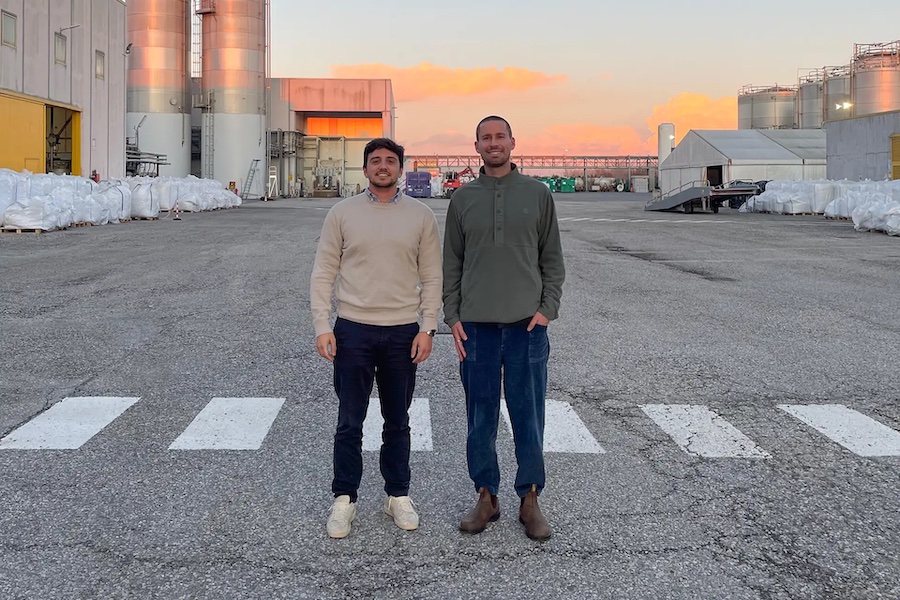
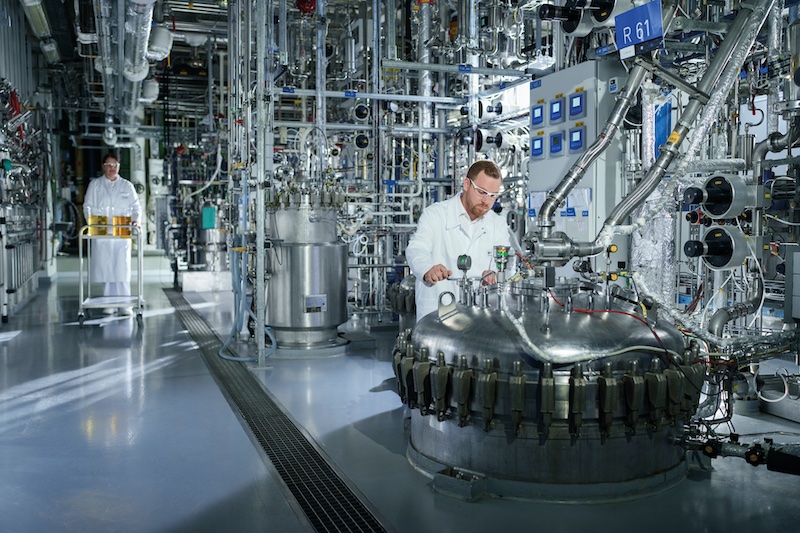
White biotechnology – also known as industrial biotechnology – uses microorganisms and enzymes to produce chemical and biochemical products. Fermenters are used for this (to see on the photo) © 2024  BASF SE
With the bacterium Basfia succiniciproducens, BASF would like to transform sugar and carbon dioxide into fumaric acid, an important intermediate for chemical production. To this end, the company is collaborating with Saarland University, University of Marburg and the University of Kaiserslautern-Landau in a joint research project entitled FUMBIO (FUMarsäure BIObasiert). The bacterium will be genetically modified by researchers so that it produces large quantities of bio-based fumaric acid, also known as fumarate, during fermentation. White biotechnology – also known as industrial biotechnology – uses microorganisms and enzymes to produce chemical and biochemical products. Fermenters are used for this (to see on the photo) © 2024 BASF SE


The bacterium, which was isolated in 2008 from the rumen of a Holstein cow, will be genetically modified by researchers so that it produces large quantities of bio-based fumaric acid, also known as fumarate, during fermentation. With this intermediate, BASF can make a wide range of products with a low carbon footprint, including additives for food and animal feed, starting materials for medication, or building blocks for polymers and detergents and formulators.

“Together with our cooperation partners, we are taking a closer look at the fermentation process. We want to optimize it in such a way that the bacteria use renewable raw materials, such as sugar, and carbon dioxide to produce as much fumarate as possible,” says Dr. Barbara Navé, head of the FUMBIO project and responsible for the evaluation and coordination of new white biotechnology projects at BASF. The research project also focuses on the subsequent refinement of fumarate by enzymes – also known as bio-catalysis – into biodegradable industrial products.

Fumaric acid is very common in nature and is an intermediate product in many metabolic processes in humans, animals and plants. In the chemical industry, it has traditionally been produced primarily from fossil-based raw materials, such as crude oil. The FUMBIO research project will measure the CO2 footprint of fumarate made with biotechnology methods and compare this to petrochemical-based production. The cooperation partners expect the carbon footprint will be significantly lower – or even negative, thanks to the use of CO2 as a raw material.

White biotechnology increasingly important

The CO2 that the bacteria will use as a source of carbon, in addition to sugar, in the fermentation process will come from exhaust gas streams at chemical production plants. “Carbon dioxide is an important raw material for us in the chemical industry,” Navé explains. “If we recycle CO2 from industrial off-gas, this will help us to reduce emissions of this greenhouse gas and achieve our climate targets by 2050.”

Biotechnology processes, such as fermentation, in which microorganisms such as bacteria or fungi use CO2 as a building block for metabolic products, will also become increasingly important for the chemical industry in the future. “White biotechnology is an important tool that will enable us to offer our customers a wider range of bio-based products with a low carbon footprint.”

The FUMBIO project receives financial support from Germany’s Federal Ministry for Education and Research. In total, the Ministry is providing around €2.6 million to the project partners.


More News from BASF Aktiengesellschaft
Performance Chemicals for Textiles Europe

#Recycling / Circular Economy

trinamiX with new management

BASF is examining strategic options for its subsidiary trinamiX GmbH. trinamiX specializes in biometric imaging and mobile material analysis. These activities are not part of BASF’s core business, on which the company is focusing as part of the implementation of its new strategy.

#Research & Development

How innovations drive BASF’s success

“Innovation has always been part of BASF’s DNA. Especially in these volatile times, it is crucial to leverage our innovative strength to develop competitive solutions that differentiate us as a company in our markets and give us a competitive edge,” said Dr. Stephan Kothrade, Member of the Board of Executive Directors of BASF and Chief Technology Officer, at the company’s Research Press Briefing held today. To achieve this, BASF implemented its “Winning Ways” strategy about a year ago with the clear goal of becoming the preferred chemical company to enable its customers’ green transformation.

#Nonwovens

Turning diaper waste into new value: BASF, Essity and TU Wien pioneer circular solutions

BASF, one of the world’s leading chemical companies and manufacturer of superabsorbent polymers (SAP), and Essity, a global leading hygiene and health company, joined forces together with the Technical University of Wien to revolutionize recycling of absorbent hygiene products (AHP).

#Textiles & Apparel / Garment

BASF at SIMAC 2025: Recycling meets Performance – PU solutions for the future of footwear

BASF is presenting new materials, concepts and recycling methods for polyurethanes in footwear at SIMAC Tanning Tech. The leading international trade fair will take place from September 23-25 in Milan, Italy. We will showcase our unique and integrated toolbox of Elastopan® (PU) and thermoplastic polyurethanes Elastollan® and Infinergy®. Together with our partners and customers we bring innovative products to the market offering utmost lightness paired with mechanical performance and automated processing.

More News on Textile chemistry

#Textile chemistry

RUDOLF gets the exclusive global distribution rights for Sanitized® textile technologies

With effect from today, RUDOLF officially assumes exclusive global distribution rights for Sanitized® textile technologies from SANITIZED AG. This is the next milestone in the strategic collaboration announced in 2025, with the partnership between the two companies now fully implemented and expanded worldwide.

#Denim

organIQ seek: smart alternative to potassium permanganate

CHT Group announces new technical findings within its organIQ seek platform that significantly advance the transition toward permanganate-free denim bleaching. Through extensive industrial testing and application research, CHT confirms that organIQ seek can now be used with remarkable effectiveness as a substitute for potassium permanganate in spray bleach, while remaining aligned with sustainability expectations and cost realities in the European market. At the COLOMBIATEX in Medellín as well as at the Exintex in Puebla and the Kingpins Show in Amsterdam the CHT Group will present organIQ seek as an alternative to potassium permanganate.

#Textile chemistry

Archroma brings high-impact textile innovations to Colombiatex 2026

Archroma, a global leader in specialty chemicals towards sustainable solutions, is proud to announce its participation in Colombiatex 2026, one of the most influential textile and apparel industry events in the Americas. The event will take place in Medellín, Colombia, from January 27 to 29, where Archroma will welcome visitors at Booth PC006.

#Textile chemistry

Devan unveils innovative textile solutions to enhance comfort during sleep at Heimtextil 2026

From 13 to 16 January 2026, Devan was exhibiting at Heimtextil in Frankfurt, the world’s leading international trade fair for home and contract textiles. The event brought together key players from across the global textile value chain, providing the ideal platform for Devan to present its latest innovations.

Latest News

#Recycling / Circular Economy

Circulose restarts commercial-scale production at Ortviken plant in Sundsvall

Circulose today announced the restart of its commercial-scale production plant at Ortviken in Sundsvall, Sweden, marking a significant step in scaling next-generation materials for the global fashion industry. The company plans to resume production of CIRCULOSE®, a recycled pulp made entirely from discarded cotton textiles, in the fourth quarter of 2026.

#Textiles & Apparel / Garment

VIATT 2026 to debut German Pavilion, strengthening European participation alongside key Asian textile hubs

Vietnam’s textile and garment sector continues to be a major contributor to the country’s economic growth, with export revenues expected to reach USD 46 billion in 2025, a 5.6% increase from 2024 . From 26 – 28 February, the Vietnam International Trade Fair for Apparel, Textiles and Textile Technologies (VIATT) is set to contribute to economic growth opportunities by accelerating digital transformation and green transition across the entire textile value chain. The upcoming edition will respond to the rising demand for advanced technologies and sustainable materials with the introduction of the German Pavilion, alongside strong exhibitor participation from key Asian sectors, as well as several high-profile fringe events.

#Sustainability

Ying McGuire becomes new CEO of Cascale

Cascale today announced the appointment of Ying McGuire as Chief Executive Officer, effective June 1, 2026.

#Technical Textiles

Sustainable, lightweight, and sound absorbing: Polyester-based front trunk solution for BEVs

As car manufacturers look to further reduce their carbon footprint, Autoneum has developed an innovative front trunk solution for battery electric vehicles (BEVs), made entirely from polyester-based textile. The Ultra-Silent Frunk offers significant weight reduction, improved acoustic and thermal insulation, and uses up to 70 percent recycled material, supporting sustainable and efficient vehicle design. Autoneum, global technology leader in acoustic and thermal management for vehicles, has already received orders for the new frunk from three major OEMs in Asia and Europe to be built in three BEV models. Series production for two BEVs has been underway in China and Germany since last year.

TOP