[pageLogInLogOut]

#Textile chemistry

BASF inaugurates new Catalyst Development and Solids Processing Center in Ludwigshafen
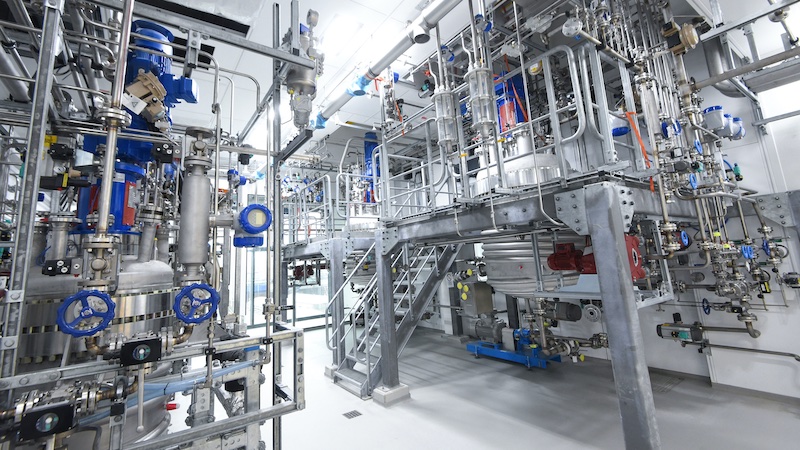
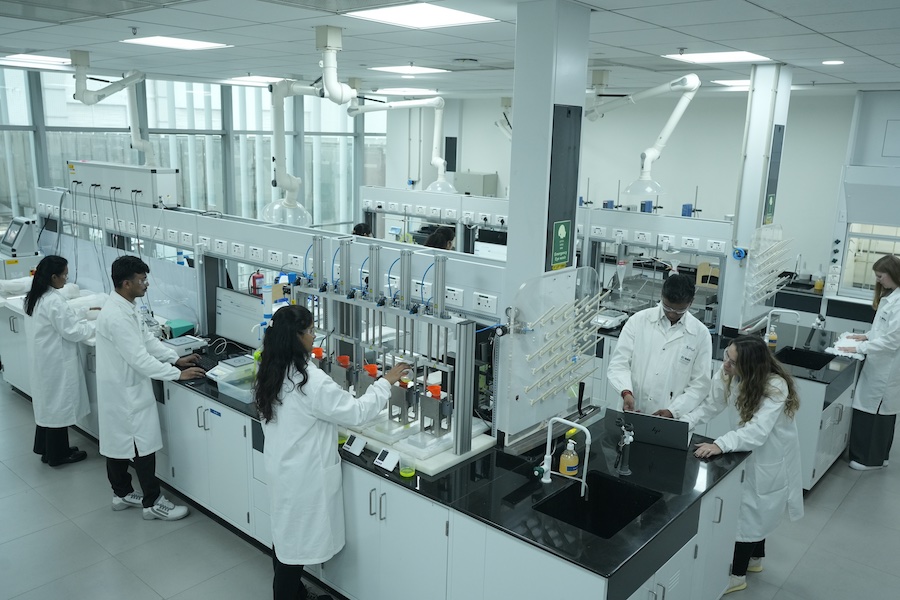
BASF officially opened its new Catalyst Development and Solids Processing Center in Ludwigshafen, Germany, on December 12, 2024. This research facility will serve as a hub for pilot-scale synthesis of chemical catalysts, enabling BASF to offer its global customers faster access to innovative technologies. This pilot plant will also be of central importance for the development of new solids processing technologies.
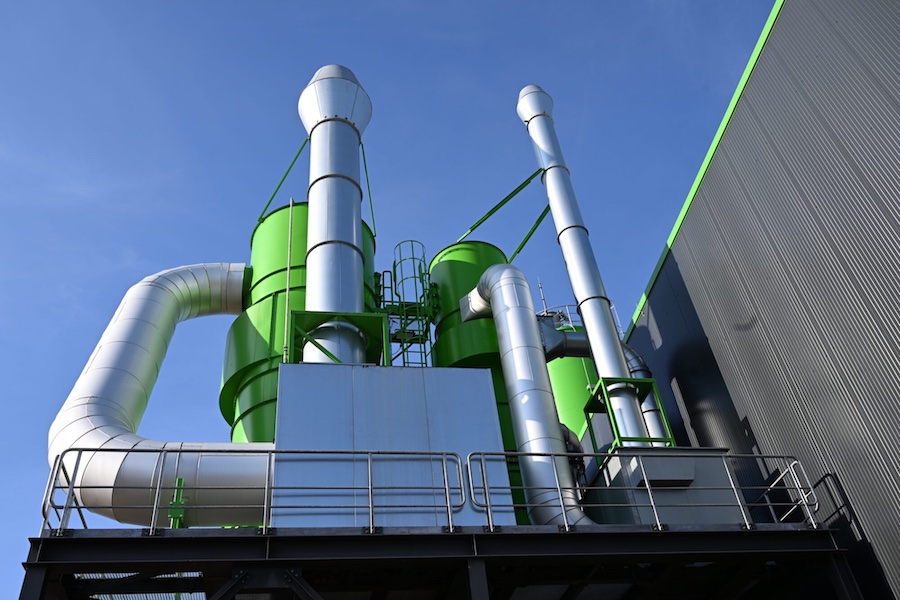
With its new Catalyst Development and Solids Processing Center in Ludwigshafen, Germany, BASF will serve as a hub for pilot-scale synthesis of chemical catalysts, enabling the company to offer its global customers faster access to innovative technologies. This pilot plant will also be of central importances for the development of new solids processing technologies.<br />
The picture shows a reactor for the synthesis of solids © 2024  Photo: BASF SE
With its new Catalyst Development and Solids Processing Center in Ludwigshafen, Germany, BASF will serve as a hub for pilot-scale synthesis of chemical catalysts, enabling the company to offer its global customers faster access to innovative technologies. This pilot plant will also be of central importances for the development of new solids processing technologies. The picture shows a reactor for the synthesis of solids © 2024 Photo: BASF SE


“With cutting-edge process equipment, our new Catalyst Development and Solids Processing Center enables BASF to conduct more focused and rapid development of innovative catalyst and process technologies, which we and our customers urgently need for the green transformation,” said Dr. Helmut Winterling, President Group Research at BASF. “It is also an important investment in the future of our research and development activities at the Ludwigshafen site.”

Catalysts play a key role in industrial chemistry. More than 80 percent of all chemical products come into contact with a catalyst at least once during their production. Catalysts reduce the energy demand and the amount of undesired by-products. Thereby, they minimize raw material consumption and shrink the carbon footprint of products. Catalysts are used in many areas, including the chemical and petrochemical industries, as well as in innovative processes essential for the green transformation. BASF not only develops catalyst and process technologies for its customers worldwide, it also uses them in its own manufacturing plants.

At the new Center, BASF will develop and optimize innovative process technologies and catalysis processes. “The technical capabilities of the new research facility will strengthen our innovative power and improve our competitiveness in a global market environment,” said Dr. Detlef Ruff, Senior Vice President Process Catalysts at BASF. “This new center offers us the ideal conditions to transition lab-developed catalysts to production scale. It will enable us to provide our customers with high-quality pilot samples of new catalysts. We can thus react more flexibly to the needs of the market and supply innovative technological solutions faster – a crucial factor in successfully launching new products.”

BASF constructed the new Center within three years to replace an older building. The new building has state-of-the-art safety features and is equipped with numerous new technologies for R&D activities. In total, the company invested a high double-digit million-euro figure in the new Catalyst Development and Solids Processing Center.


More News from BASF Aktiengesellschaft
Performance Chemicals for Textiles Europe

#Textile chemistry

A flagship for chemical production: BASF inaugurates world-scale Verbund site in China

BASF today (March 26, 2026) celebrated the official inauguration of its newly built, world-scale Verbund site in Zhanjiang, Guangdong Province in southern China. Covering an area of around four square kilometers, it is more than a major BASF project in the chemical growth market of China. “Zhanjiang shows what the future of chemistry looks like: efficient, digital and sustainable by design. The site showcases a smart integrated Verbund structure on an industrial scale,” said Dr. Markus Kamieth, CEO of BASF, at the ceremony attended by representatives from government, customers, business partners and employees.

#Recycling / Circular Economy

trinamiX with new management

BASF is examining strategic options for its subsidiary trinamiX GmbH. trinamiX specializes in biometric imaging and mobile material analysis. These activities are not part of BASF’s core business, on which the company is focusing as part of the implementation of its new strategy.

#Research & Development

How innovations drive BASF’s success

“Innovation has always been part of BASF’s DNA. Especially in these volatile times, it is crucial to leverage our innovative strength to develop competitive solutions that differentiate us as a company in our markets and give us a competitive edge,” said Dr. Stephan Kothrade, Member of the Board of Executive Directors of BASF and Chief Technology Officer, at the company’s Research Press Briefing held today. To achieve this, BASF implemented its “Winning Ways” strategy about a year ago with the clear goal of becoming the preferred chemical company to enable its customers’ green transformation.

#Nonwovens

Turning diaper waste into new value: BASF, Essity and TU Wien pioneer circular solutions

BASF, one of the world’s leading chemical companies and manufacturer of superabsorbent polymers (SAP), and Essity, a global leading hygiene and health company, joined forces together with the Technical University of Wien to revolutionize recycling of absorbent hygiene products (AHP).

More News on Textile chemistry

#Techtextil 2026

Covestro to exhibit solutions for a more sustainable and productive textile industry at Techtextil 2026

Covestro will present a broad portfolio of material innovations for textile coatings, adhesive films and thermoplastic polyurethanes (TPUs) at Techtextil 2026 (Hall 11.0, Booth C79). The exhibits will demonstrate how advanced solutions can enhance durability, recyclability and manufacturing efficiency across applications such as automotive, infrastructure, protective apparel and sportswear. A particular focus will be on more sustainable coating technologies, including antimicrobial systems based on INSQIN® in combination with AGXX from Heraeus Precious Metals, as well as the integration of Pontacol® thermoplastic adhesive films into Covestro’s offering.

#Textile chemistry

Orta and Archroma launch denim collection dyed with wool waste

Archroma, a global leader in specialty chemicals, and Orta Anadolu, the premium Türkiye-based denim manufacturer behind the ORTA brand, today announced a collaboration to bring circular dye chemistry into commercial denim production.

#Denim

Archroma expands denim possibilities at Kingpins Amsterdam

Archroma, a global leader in specialty chemicals, will present a portfolio of six sustainable denim innovations at Kingpins Amsterdam from April 15-16, 2026. Under the theme “Creating Possibilities in Denim”, the showcase reflects Archroma’s commitment to giving brands and mills solutions that are as commercially compelling as they are environmentally responsible.

#Techtextil 2026

TANATEX to spotlight compliance-driven innovation at Techtextil 2026

At Techtextil 2026, TANATEX Chemicals will present a focused innovation story built around a clear market need: helping textile manufacturers meet increasingly demanding sustainability and compliance requirements without compromising critical performance.

Latest News

#Raw Materials

New study shows low environmental impact by Cotton made in Africa Organic Cotton from Tanzania

Today, the Aid by Trade Foundation (AbTF) is announcing the results of a comprehensive life-cycle analysis (LCA) for cotton produced in Tanzania under the Cotton made in Africa Organic (CmiA Organic) standard. The study emphasises the small ecological footprint of CmiA Organic verified cotton. This can largely be traced back to the absence of synthetic pesticides, artificial fertilisers, and artificial irrigation. Consequently, CmiA Organic cotton can help the textile industry meet regulatory requirements as well as science-based targets. The results also show that the consequences of climate change threaten the livelihoods of these cotton farmers, even though the type of agriculture they practise barely contributes to climate change.

#Raw Materials

Better Cotton Initiative strengthens regenerative focus in standard update

The Better Cotton Initiative (BCI) has strengthened the regenerative focus of its field-level standard with the launch of a new version of its Principles & Criteria (P&C), which marks the next step in the organisation’s journey to becoming a regenerative standards system.

#Man-Made Fibers

Selenis and Kintra Fibers partner to scale 100% bio-based synthetic fiber technology

Selenis, a leading global specialty polyester manufacturer, today announced a strategic manufacturing partnership with materials science company Kintra Fibers to scale Kintra’s patented fiber-grade PBS resin - a 100% bio-based and biodegradable material designed for textile applications.

#Functional Fabrics

PERFORMANCE DAYS proves its relevance as the industry’s key meeting point

Held on March 18–19, 2026, PERFORMANCE DAYS once again confirmed its position as a leading international platform for functional textiles. A total of 3.366 trade visitors and around 560 exhibitors gathered in Munich, with the event already kicking off successfully on DAY 0, which received highly positive feedback for its interactive format. Despite challenging conditions caused by the public transport strike in Munich, the event saw strong attendance and a consistently high level of activity across both exhibition days.

TOP