[pageLogInLogOut]

#Yarns

Textile Exchange publishes the final criteria for its new Materials Matter Standard, marking a pivotal shift in connecting certification to impact

Textile Exchange has published the final criteria for its Materials Matter Standard—a major milestone in the organization’s multi-year transition toward a unified, impact-driven standards system for raw material production and primary processing. 

For more than 20 years, the global nonprofit has been developing and maintaining leading material sustainability standards. Today, over 90,000 sites worldwide are certified to one of its programs, including the Global Recycled Standard and Responsible Wool Standard. Now, the release of the Materials Matter Standard criteria marks an important step in connecting this work more directly to measurable outcomes for climate, nature, people, and animals.  

Textile Exchange began developing the new framework in 2021 with a clear goal: to align the ambition, rigor, and expected results across its material-specific standards and transition the industry into a more coherent, science-aligned way to measure and verify impact.  

Since then, the organization has worked closely with stakeholders from across the supply system to design and test a framework that is both robust and workable in real-world production systems. Built on a combination of practice-based and outcome-based expectations, the standard includes comprehensive criteria for land management, animal welfare, human rights and livelihoods, and primary processing, which covers water, chemical, and energy use, as well as waste and emissions management.  

The criteria were developed over five years in close collaboration with a designated International Working Group made up of brands, retailers, suppliers, producers, NGOs, and technical specialists. Two publicly consulted drafts and a pilot version, tested in key material production regions from Peru to Italy, have helped refine the framework, alongside extensive work to ensure alignment with the ISEAL Code of Good Practice for Sustainability Systems.  

The first version of the Materials Matter Standard includes all materials currently covered by Textile Exchange’s Responsible Animal Fiber framework, including wool, alpaca, mohair, as well as recycled materials, as currently covered in the Global Recycled Standard (GRS) and Recycled Claims Standard (RCS). Organic cotton, which has long been an integral part of Textile Exchange’s standards system, will continue to play a central role through a gradual transition pathway for the Organic Content Standard into the Materials Matter System. This pathway will preserve essential functions such as traceability while strengthening the system to enable more holistic, farmer-centered outcomes.  

Looking ahead, Textile Exchange intends to expand the system through partnerships with credible programs that align with their shared vision for climate and nature impact. This includes exploring pathways for fibers such as cotton produced through preferred production systems and man-made cellulosic fibers. By collaborating with established partners and bringing efforts together under one framework, Textile Exchange aims to reduce duplication, ease the burden on suppliers, and enable brands to more easily source materials that deliver measurable benefits on the ground. This partnership-driven approach is designed to broaden opportunity and impact across the industry while accelerating progress for climate, nature, people, and animals.  

Today, the publication of the final criteria marks the first phase of the transition. The Materials Matter Standard will become effective on December 31, 2026, meaning that sites can start to get certified, and will be mandatory from December 31, 2027. Organizations may continue using Textile Exchange’s current standards until this date to ensure a smooth shift for certified sites globally.  

Ultimately, the goal of the Materials Matter Standard is to provide brands, suppliers, and producers with a credible mark that links production practices to measurable outcomes—supporting the industry’s move toward integrity and accountability at scale. To support this transition, Textile Exchange has also released the Materials Matter Claims and Labeling Policy, which guides brands in communicating certification to the Materials Matter Standard with clarity and accuracy, strengthening consumer trust and ensuring claims remain grounded and responsible.  

Together, these documents form the basis of a transparent and trusted framework that provides certification users with a reliable way to substantiate the environmental and social information they share about their products. In the coming months, Textile Exchange will continue to provide its community with practical information on certification to the new standard through the release of further policies and guidance, as well as close collaboration on piloting certification procedures. 

Today, the launch of the final Materials Matter Standard criteria represents a significant step toward Textile Exchange’s vision: a world where materials have lasting value, leading to thriving communities and landscapes. 

Claire Bergkamp, CEO of Textile Exchange, said: “The Materials Matter Standard is more than a certification; it’s a commitment to driving measurable impact at the very start of the supply system. By aligning expectations and outcomes across the industry, this standard accelerates progress toward climate and nature goals and ensures that sustainability becomes a shared responsibility.”  

Ashley Gill, Chief Standards and Strategy Officer at Textile Exchange, said:  “The Materials Matter System strengthens integrity, reduces complexity, and connects best practices to real outcomes. By consolidating our existing standards into one system, we’re creating a clearer, more scalable pathway to systemic change across the textile and apparel industry.”



More News from Textile Exchange

#Raw Materials

Textile Exchange publishes cotton Life Cycle Assessment study to strengthen impact data

Textile Exchange has published the first in a series of seven Life Cycle Assessment (LCA) studies designed to improve the quality and robustness of environmental impact data for raw material production across the fashion, textile, and apparel industry. The first LCA study focuses on cotton and addresses critical data gaps and methodology variability through new high-quality data across key producing countries. The study includes organic, regenerative, recycled, and country averages for conventional cotton production systems, providing a clearer picture of the associated environmental impact.

#Sustainability

Textile Exchange unveils commitment-based pathway for members to accelerate responsible raw material production

Textile Exchange has unveiled further details about its new membership structure, designed to guide the fashion, textile, and apparel industry in a collective course of action toward preferred production systems for raw materials and fibers.

#Sustainability

Textile Exchange evolves its membership structure to unlock the next stage of collective action for climate and nature

Textile Exchange is excited to announce that it is evolving its membership structure to a more action-oriented, impact-driven model designed to provide clearly defined pathways that help organizations respond to the climate and nature crisis.

#Sustainability

Key takeaways from the 2025 Textile Exchange conference

Brands and retailers, suppliers, innovators, recyclers, farmers, non-profit organizations, and academics convened at Textile Exchange’s Annual Conference, held in the Lisbon Conference Centre.

More News on Yarns

#Yarns

From advanced fibres to eco‑focused yarns: Yarn Expo Autumn 2026 set to welcome global industry to Shanghai

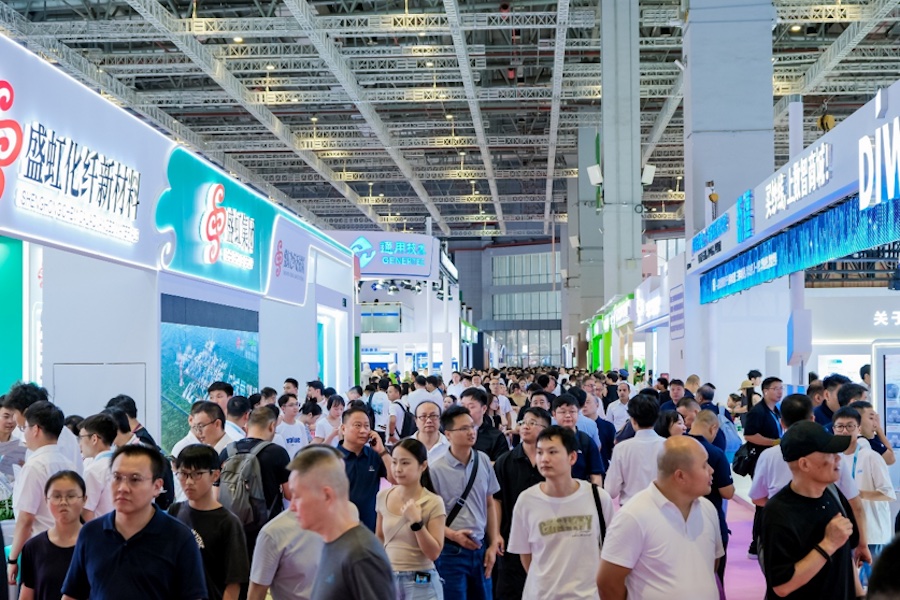
From 25 – 27 August, Yarn Expo Autumn 2026 will return to the National Exhibition and Convention Center (Shanghai) to reinforce its role as a key meeting point for the global yarn and fibre industry. With over 22,000 visitors, the previous edition gathered nearly 580 leading exhibitors from 16 countries and regions, showcasing advanced developments and creative applications that support innovative, sustainable textile design. The upcoming edition will not only present an extensive range of fibre and yarn products, but will also feature a comprehensive fringe programme, including industry forums and trend display areas, providing innovative upstream enterprises with a stage to introduce next‑generation materials and sustainable concepts.

#Man-Made Fibers

Teijin Frontier announces new Stretch Polyester yarn offering exceptional compatibility with high-performance Polyester materials

Teijin Frontier Co., Ltd. announced today that it has developed a new stretch polyester yarn that offers new opportunities to create comfortable, all- polyester fabrics for sports and outdoor wear. The new polyester yarn demonstrates exceptional compatibility with high-performance polyester materials. Further, Teijin Frontier’s proprietary polymer design and spinning technology impart excellent elasticity to the new yarn. In turn, this yarn adds stretchability and recovery to the advanced functionality and excellent texture of high-performance polyester materials.

#Texprocess 2026

Durak Tekstil to drive innovation at Texprocess 2026 with its functional threads

Developing solutions for dozens of industries ranging from apparel and automotive to footwear, protective clothing, furniture, and mattress, Durak Tekstil will showcase its expertise in functional technical threads at Texprocess 2026. As one of the leading manufacturers of industrial sewing and embroidery threads, Durak Tekstil will take part in Texprocess 2026, the trade fair for garment and functional textile processing to be held in Frankfurt from April 21–24, presenting solutions developed through its R&D efforts.

#Man-Made Fibers

Indorama Ventures supports Southeast Asia’s textile customers with reliable regional supply and global innovative portfolio

Indorama Ventures, one of the leading global polyester fiber and filament yarn suppliers globally, will participate in Indo Intertex 2026 in Jakarta this April, making its diverse global portfolio available to apparel, home textile, and hygiene customers across Southeast Asia.

Latest News

#INDEX 2026

INDEX 2026: Reicofil introduces RF 5.10 upgrade boosting output by 10 percent

At INDEX 2026, Reifenhäuser Reicofil will present its latest developments for the nonwovens industry under the guiding themes “Grow Together”, “Expand Together” and “Transform Together”. On this occasion, the leading manufacturer of nonwoven machinery will be unveiling two brand-new technology advancements – RF 5.10 upgrade and RF Core – at the show.

#Recycled Fibers

Lindex and BASF partner to bring textile-­to­-textile recycled polyamide to lingerie sector

Lindex has partnered with BASF’s loopamid® to accelerate textile-­to-­textile recycling and advance the shift towards more circular material solutions in the fashion industry. Together they introduce loopamid to the lingerie sector.

#Dyeing, Drying, Finishing

Tradition and Innovation – Phoenox Textiles Ltd. relies on state-of-the-art carpet back-coating line from Brückner

For more than 70 years, Phoenox Textiles Ltd. has been synonymous with quality, reliability, and inno-vation in the textile industry. Founded in 1954 in Huddersfield (Yorkshire, UK), a region with a long tradition in textiles, this family-owned business has continued to evolve without losing sight of its roots. Today, in its fourth generation under the leadership of the Mosley family, Phoenox successfully combines decades of experience with a clear, forward-looking corporate strategy.

#ITM 2026

Uster FiberQ excels for recycled raw materials too

Uster FiberQ is a complete solution for raw material utilization, supporting spinners to achieve consistent quality and profitability every day, building further growth for the future. The Turkish company ORTA relies on FiberQ with recycled yarn for its denim production. Data-driven knowledge puts the producer in control of raw material utilization – ready to make the correct decisions for process efficiency, quality and productivity.

TOP