[pageLogInLogOut]

#Denim

EIM presents the first global report on the environmental impact of denim finishing
EIM (Environmental Impact Measuring), the leading global platform for measuring the environmental impact of garment finishing—trusted by the world's top brands and textile production centers—presents the "Innovations and Challenges in Denim Finishing: 2024 Report." This pioneering report provides an analysis based on accurate, objective data from over 115,000 denim finishing processes collected through the EIM platform, setting new benchmarks for sustainability in the industry.
Figure from the report © 2025 EIM


It offers a comprehensive view of the industry, setting new sustainability benchmarks and guiding the transition toward more responsible production.

The findings reveal improvements in resource efficiency while underscoring the urgent need to reduce harmful chemicals and practices that threaten both worker health and the environment.

The report reveals that 63% of the analyzed processes are already classified as low environmental impact, reflecting a positive shift toward more responsible practices. However, it also highlights critical challenges, such as the high use of hazardous chemicals (24% of processes), particularly pumice stones and potassium permanganate—practices that urgently require safer and more sustainable alternatives due to their negative effects on both the environment and worker health.

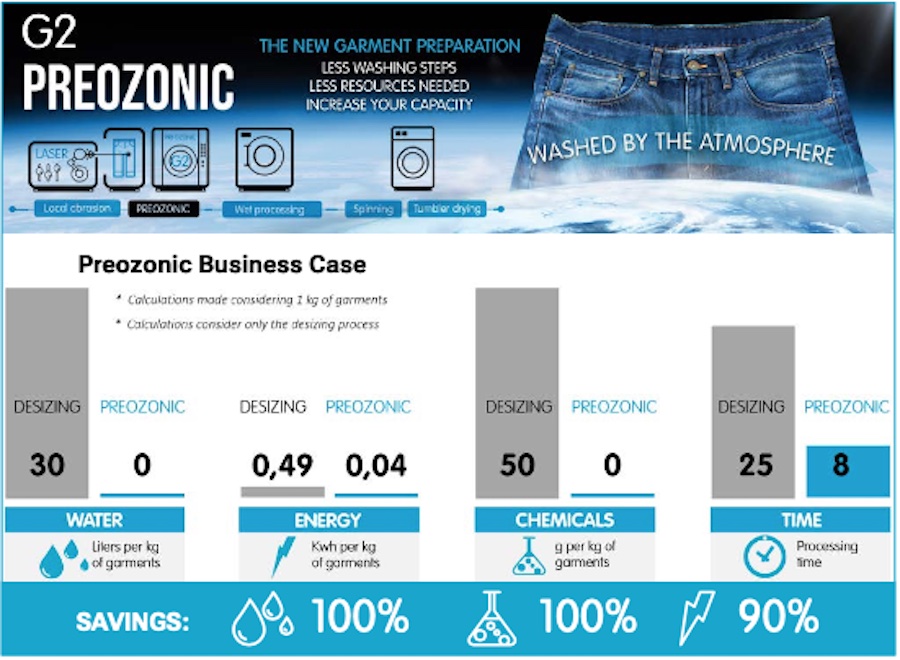
Progress in water consumption management is also considered, as this remains one of the key environmental challenges for the textile sector. The report shows that the current average water usage in denim finishing is 30 liters per garment—still above the recommended benchmark of 22.5 liters per garment. Effective strategies for reducing water consumption include optimizing rinsing processes, selecting fabrics that require less aggressive treatments, and implementing technologies such as ozone, e-flow, and smart foam systems.

Among the proposed improvements are also the adoption of advanced technologies to reduce chemical use and protect worker health, such as the strategic selection of ZDHC-certified chemicals and the automation and digitalization of manual processes.

Begoña García, creator of the EIM platform and co-author of the report, states: “For years, the textile industry has lacked reliable tools to measure its environmental impact, making data-driven decisions difficult. This report marks a crucial step toward transparency and continuous improvement, showing that technology is key to measuring and reducing environmental impact.”

The report aims to support informed decision-making based on verifiable data, positioning EIM as a global standard essential for transparency and ongoing sustainability improvements in the textile industry.
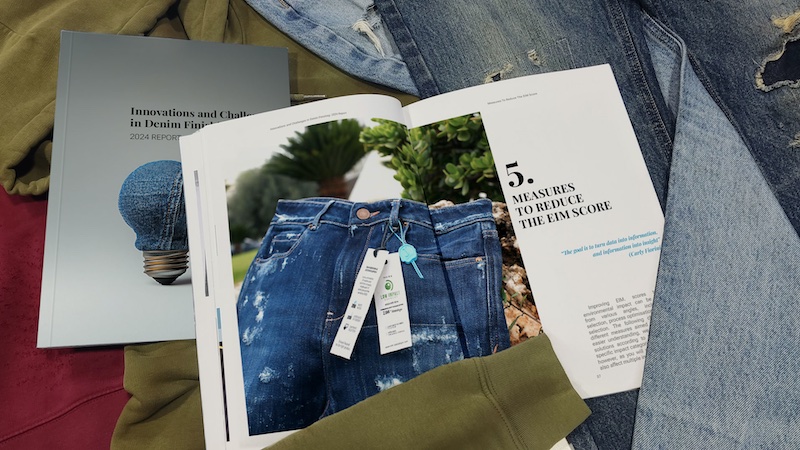
The full report © 2025 EIM


The full report is available for download and will be updated annually, serving as a vital tool for brands and suppliers to collaborate in reducing their environmental footprint and advancing toward a more responsible and sustainable production model.

To access the full report, visit Innovations & Challenges in Denim Finishing – 2024.

https://tinyurl.com/mbehwym5



More News from JEANOLOGIA S.L.

#Textile processing

Jeanologia showcases the future of product development

Jeanologia is showcasing how software is transforming product development in the fashion industry at PI Apparel Europe: The Fashion Technology Show, taking place on March 30–31 in London.

#Denim

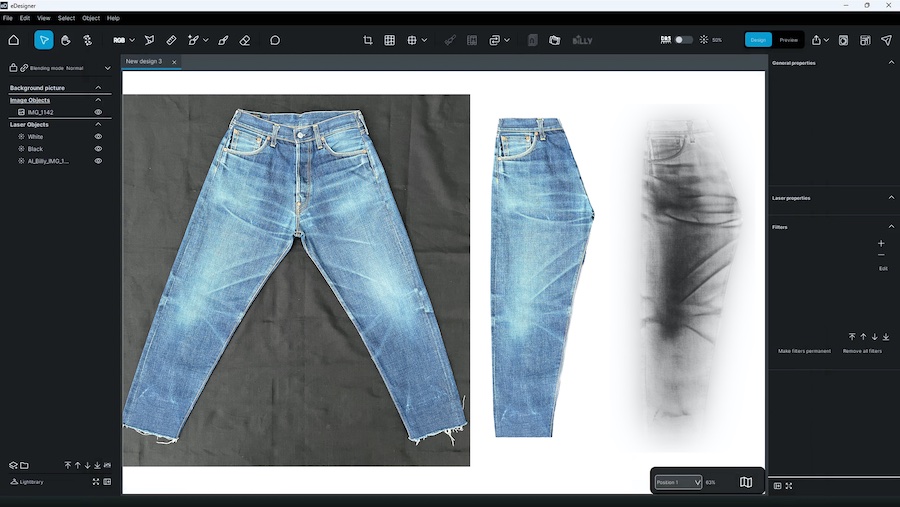
Jeanologia launches Billy

The new AI extracts precise laser designs from a garment image in minutes, transforming how vintage denim is recreated for production. If Jeanologia’s laser changed the way jeans were made at the end of the last century, its AI now takes the next step: moving from reproducing wear to designing it. / archive photo © 2026 Jeanologia

#Textile chemistry

Jeanologia urges industry to accelerate PP Spray phase-out following ZDHC Watchlist update

Potassium permanganate has officially entered the Chemical Watchlist of the ZDHC Foundation, signaling increased scrutiny and potential phase-out of one of the most hazardous chemicals still used in denim finishing. The inclusion confirms an industry shift that Jeanologia anticipated more than a decade ago.

#Denim

Jeanologia celebrates its 30th anniversary transforming how jeans are produced worldwide

Jeanologia celebrates its 30th anniversary reaffirming the mission it was born with in 1994, to transform the textile industry into a more sustainable, efficient, and human-centered sector. Three decades later, that vision has become a global reality. Today, more than 40 percent of all jeans produced worldwide are made using technologies developed by the Valencia-based company.

More News on Denim

#Textile chemistry

Orta and Archroma launch denim collection dyed with wool waste

Archroma, a global leader in specialty chemicals, and Orta Anadolu, the premium Türkiye-based denim manufacturer behind the ORTA brand, today announced a collaboration to bring circular dye chemistry into commercial denim production.

#Denim

Archroma expands denim possibilities at Kingpins Amsterdam

Archroma, a global leader in specialty chemicals, will present a portfolio of six sustainable denim innovations at Kingpins Amsterdam from April 15-16, 2026. Under the theme “Creating Possibilities in Denim”, the showcase reflects Archroma’s commitment to giving brands and mills solutions that are as commercially compelling as they are environmentally responsible.

#Denim

ISKO’s denim language at Bluezone

ISKO returns to Bluezone to showcase its latest advancements in denim innovation, presenting a comprehensive overview of its SS27 collection alongside key creative and technological collaborations. At booth C02, ISKO offers visitors an immersive look into how performance, design, and circular thinking are shaping the future of denim.

#Fabrics

MUNICH FABRIC START: Between Attitude and Sensuality

The future begins where we reimagine it. After seasons of restraint, Spring.Summer 27 marks a conscious counter-trend: optimism, sensuality, and creative freedom are replacing pragmatism and neutrality. Physical presence and individuality are regaining importance – as a response to uncertainty, exhaustion, and algorithmic predictability. The overarching theme of PLEASURE stands for fashion as an emotional space, as an expression of attitude and cultural reflection. Colours, surfaces, and materials become vehicles for self-confidence and joie de vivre.

Latest News

#Raw Materials

New study shows low environmental impact by Cotton made in Africa Organic Cotton from Tanzania

Today, the Aid by Trade Foundation (AbTF) is announcing the results of a comprehensive life-cycle analysis (LCA) for cotton produced in Tanzania under the Cotton made in Africa Organic (CmiA Organic) standard. The study emphasises the small ecological footprint of CmiA Organic verified cotton. This can largely be traced back to the absence of synthetic pesticides, artificial fertilisers, and artificial irrigation. Consequently, CmiA Organic cotton can help the textile industry meet regulatory requirements as well as science-based targets. The results also show that the consequences of climate change threaten the livelihoods of these cotton farmers, even though the type of agriculture they practise barely contributes to climate change.

#Raw Materials

Better Cotton Initiative strengthens regenerative focus in standard update

The Better Cotton Initiative (BCI) has strengthened the regenerative focus of its field-level standard with the launch of a new version of its Principles & Criteria (P&C), which marks the next step in the organisation’s journey to becoming a regenerative standards system.

#Man-Made Fibers

Selenis and Kintra Fibers partner to scale 100% bio-based synthetic fiber technology

Selenis, a leading global specialty polyester manufacturer, today announced a strategic manufacturing partnership with materials science company Kintra Fibers to scale Kintra’s patented fiber-grade PBS resin - a 100% bio-based and biodegradable material designed for textile applications.

#Functional Fabrics

PERFORMANCE DAYS proves its relevance as the industry’s key meeting point

Held on March 18–19, 2026, PERFORMANCE DAYS once again confirmed its position as a leading international platform for functional textiles. A total of 3.366 trade visitors and around 560 exhibitors gathered in Munich, with the event already kicking off successfully on DAY 0, which received highly positive feedback for its interactive format. Despite challenging conditions caused by the public transport strike in Munich, the event saw strong attendance and a consistently high level of activity across both exhibition days.

TOP